 ultimate-guide
Signs of Low Transmission Fluid Symptoms to Watch For
Table of Contents
- What Low Transmission Fluid Does to Your Drivetrain
- Signs of Low Transmission Fluid Symptoms You Should Never Ignore
- Transmission Fluid Leak Symptoms and How to Troubleshoot Them
- How to Check Transmission Fluid on Sealed and Dipstick Transmissions
- How Often to Change Transmission Fluid and Fluid Type Compatibility
- Safety Precautions Before You Add Fluid or Diagnose a Leak
- Frequently Asked Questions
Last Updated: September 21, 2026
What Low Transmission Fluid Does to Your Drivetrain
Low transmission fluid is one of the most overlooked causes of expensive drivetrain damage, and the warning signs rarely announce themselves loudly at first. This guide from Speedy Roo Motorsports breaks down the symptoms worth watching for, how to check your fluid correctly, and when to stop driving and call a professional.
Signs of Low Transmission Fluid Symptoms You Should Never Ignore
The most common signs of low transmission fluid symptoms are gear slippage, delayed engagement, a burning smell, unusual noises, and a check engine light. Catching these early usually means a simple top-off or leak repair instead of a rebuild.
- Gear slippage, the engine revs but the car doesn't accelerate in step
- RPM flare, engine speed spikes between shifts without a matching speed increase
- Delayed engagement, a pause before the car moves when you shift into drive or reverse
- Burning smell, a sharp, acrid odor from overheated fluid
- Whining, grinding, or clunking, noises that change with speed or gear
- A check engine light, often the transmission's only electronic complaint
Gear Slippage, RPM Flare, and Delayed Engagement
Gear slippage happens when hydraulic pressure drops too low to clamp the clutches inside the transmission. You'll feel the engine rev while the car hesitates, or notice the tachometer climb during a shift that used to feel instant. RPM flare is the same problem in a different costume: the engine races between gears because the transmission can't hold the shift.
Burning Smell, Overheating, and Whining or Grinding Noises
A burning smell is the transmission telling you it's overheating. Fluid that's low, old, or contaminated can't carry heat away efficiently, and the result is a burnt odor that lingers after you park. If you smell it, stop driving and let the transmission cool before checking anything.
Transmission Fluid Leak Symptoms and How to Troubleshoot Them
Transmission fluid leak symptoms range from obvious puddles to subtle seeps that only show up as a low level on the dipstick. The single most useful skill here is telling a minor seep apart from a critical leak, because the two call for very different responses. Most guides skip that distinction and leave drivers guessing whether a few drops on the driveway is a weekend project or a stop-driving-now emergency.
Seep vs. Leak vs. Failure: How to Tell Them Apart
A seep is a slow, oily film or a few dime-sized spots over weeks. The fluid level barely moves between checks, and you may only notice it as grime caked around a seal or pan bolt. A seep is worth monitoring and scheduling, but it rarely demands immediate action.
Where These Leaks Actually Come From
- Pan gasket and drain plug. The most common source. Gaskets harden and shrink with heat cycles, and a drain plug that was over-torqued or under-torqued seeps over time.
- Output and input shaft seals. These wear with mileage and often show as fluid thrown onto the underside of the car rather than a clean drip.
- Cooler lines and fittings. Rubber hose sections crack, and metal fittings loosen. Cooler-line leaks can worsen suddenly under pressure, so a damp line is worth watching closely.
- Torque converter seal. A leak at the bellhousing (the joint between engine and transmission) is a bigger job and usually needs a shop.
- Case and servo seals. Less common, but they produce slow seeps that are hard to trace without cleaning the area first.
A Practical Troubleshooting Sequence
- Clean the area first. Spray the suspect zone with brake cleaner, drive briefly, then re-inspect. A clean surface is the only way to trace a leak to its source.
- Park over clean cardboard. Note the color and position of any drips. Reddish or dark brown fluid under the middle of the car points to the transmission; lighter, amber fluid toward the front is usually engine oil.
- Check the fluid level and color. Fresh fluid is reddish and translucent. Dark, burnt, or gritty fluid means heat damage is already underway, and the leak is the least of the problems.
- Look high, not just low. Fluid travels. A leak at the cooler line can drip from the pan area, so trace upward along lines and fittings.
- Recheck after a week. If the level moved, you have an active leak, not a seep. That single data point tells you how urgently to act.
A common pattern is a slow seep that goes ignored for months until the level drops far enough to cause slipping, at which point the driver notices the symptom but not the cause. If you find a leak you cannot trace, a shop can pressure-test the system and pinpoint the source before it worsens.
How to Check Transmission Fluid on Sealed and Dipstick Transmissions
How you check transmission fluid depends on whether your car has a dipstick or a sealed transmission. Older vehicles and many Japanese models use a dipstick; many newer cars use a sealed system with no dipstick, checked through a fill plug instead.
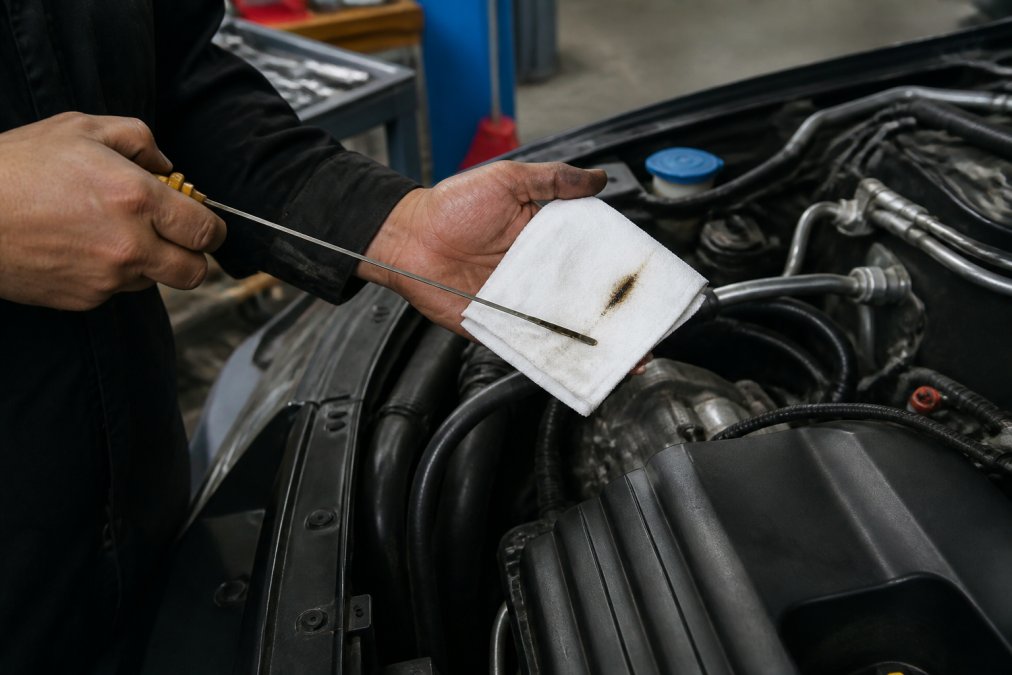
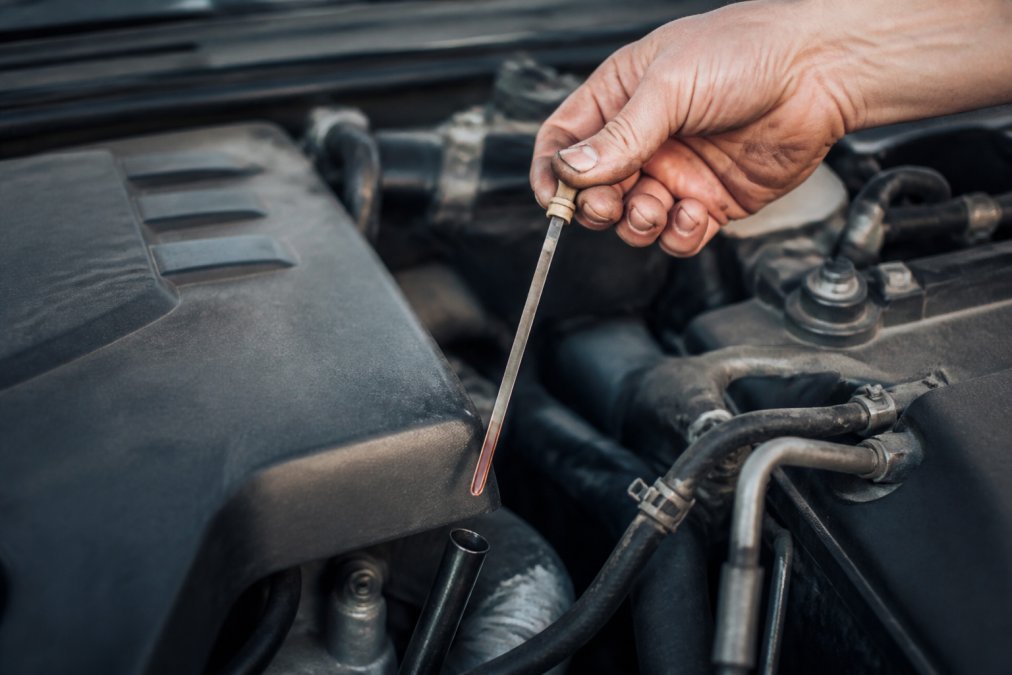
On a dipstick transmission:
- Park on level ground and let the engine reach normal operating temperature.
- With the engine idling in park, pull the dipstick and wipe it clean.
- Reinsert it fully, pull it out again, and read the level against the hot marks.
- Check the color and smell while you're there.
How Often to Change Transmission Fluid and Fluid Type Compatibility
How often to change transmission fluid varies by vehicle, but most manufacturers fall somewhere between 30,000 and 60,000 miles for normal driving, with shorter intervals for towing, hauling, or heavy stop-and-go use. Your owner's manual is the final word for your specific model, and it will also tell you whether the fluid is even serviceable on your interval.
Why Fluid Type Compatibility Is Not Optional
Automatic transmission fluid (ATF), manual transmission fluid, and continuously variable transmission (CVT) fluid are not interchangeable, and neither are the many ATF specifications within the automatic category. Manufacturers publish a specific spec in the owner's manual, often a short code or standard number. Using the wrong fluid can change friction characteristics, cause shuddering or slipping, and accelerate clutch and belt wear.
Sealed Transmissions Change the Service Conversation
Many newer vehicles use a sealed transmission with no dipstick. The manufacturer may describe the fluid as "lifetime," but that usually means "for the expected life of the transmission under normal conditions," not "never service it." Severe-duty use (towing, extreme heat, frequent short trips) shortens that window.
Drain-and-Fill vs. Flush: What the Difference Means for You
- Drain-and-fill replaces only the fluid in the pan, typically a fraction of the total system capacity. It is gentle, repeatable, and a common choice for high-mileage units.
- A flush exchanges most of the fluid by circulating it through the system. It removes more old fluid but can dislodge debris on a neglected transmission and push it into narrow passages.
If your fluid is dark but not burnt and the level is correct, a drain-and-fill is often enough. If it is burnt and gritty, changing the fluid alone will not fix internal damage, and a diagnostic check should come first.
When to Shorten the Interval
Even if your manual lists a long interval, consider a shorter one if you regularly tow, drive in stop-and-go traffic, live in a hot climate, or make many short trips that never let the transmission reach full operating temperature. Heat is the primary enemy of transmission fluid, and these conditions raise it.
Safety Precautions Before You Add Fluid or Diagnose a Leak
Safety comes before diagnosis. Transmission fluid gets hot enough to cause serious burns, and a car that's been driven needs time to cool before you touch anything under it.
Follow these precautions:
- Let the vehicle cool before opening anything under the hood or chassis.
- Never crawl under a car supported only by a jack. Use jack stands on level ground.
- Wear gloves and eye protection when handling fluid.
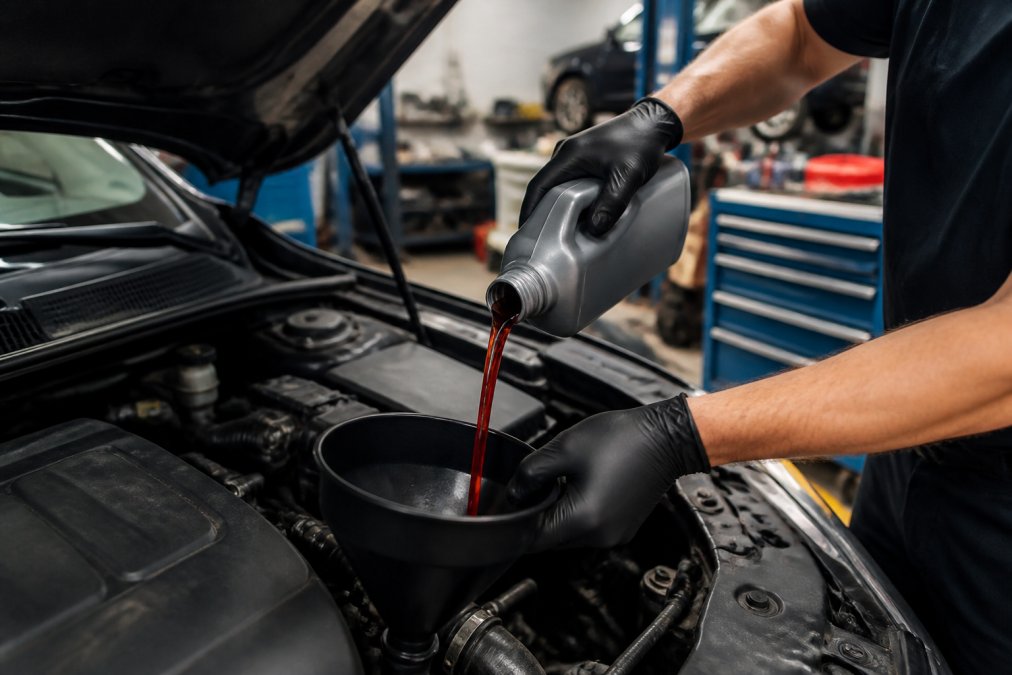
- Don't overfill. Too much fluid foams and causes the same slipping as too little.
- Dispose of used fluid properly at a recycling center, never down a drain.
Frequently Asked Questions
How does a car act when the transmission fluid is low?
Low transmission fluid reduces hydraulic pressure, so the car often hesitates before engaging Drive or Reverse, flares in RPM between shifts, and slips out of gear under acceleration. You may notice a burning smell, whining or grinding noises, and a check engine light on some models. Because the torque converter and clutch packs rely on fluid for lubrication and cooling, ignoring these signs of low transmission fluid symptoms can lead to expensive transmission damage.
Can I just add transmission fluid if it's low?
You can top off the fluid if you know the correct type for your vehicle and the level is only slightly low, but adding fluid treats the symptom, not the cause. Fluid does not evaporate, so a low reading usually means a leak at the pan gasket, seals, or cooler lines. If you keep topping off without finding the source, the leak worsens. Have a shop pressure-test and inspect the system so the real problem gets fixed.
Will I get a warning if my transmission fluid is low?
Not always. Many vehicles, especially sealed transmissions, have no dipstick and no dedicated fluid-level warning. You may get a check engine light if a sensor detects a shifting fault, but often the first clues are physical: delayed engagement, RPM flare, slipping, or a burnt odor. Checking the fluid level on schedule and watching for transmission fluid leak symptoms is the most reliable way to catch a problem early.
What color should transmission fluid be?
Fresh automatic transmission fluid is typically red or reddish-pink and translucent. As it ages it darkens toward brown, and black fluid with a burnt odor means it has overheated and needs replacement. Manual transmission fluid is often amber or yellow-brown. Milky or pinkish-foam fluid suggests coolant or water contamination, which requires immediate attention. Color alone is not a full diagnosis, but it tells you a lot about fluid health.