 ultimate-guide
How Often to Change Transmission Fluid in Automatic Cars
Table of Contents
- How Often to Change Transmission Fluid in Automatic Cars: The Mileage Ranges That Matter
- Signs of Bad Transmission Fluid You Should Never Ignore
- Transmission Flush vs Drain and Fill: Which Service Does Your Car Need?
- What Happens If You Never Change the Fluid
- Transmission Fluid Change Cost: What Drives the Price
- High-Mileage Risks and Lifetime Fluid Myths
- Frequently Asked Questions
Last Updated: September 20, 2026
How Often to Change Transmission Fluid in Automatic Cars: The Mileage Ranges That Matter
Most drivers never think about their transmission until it starts slipping, and by then the damage is done. This guide from Speedy Roo Motorsports breaks down how often to change transmission fluid in automatic cars, the warning signs that mean you're already late, and why the "lifetime fluid" claim on your dipstick deserves skepticism. Transmission fluid is the hydraulic lifeblood of your gearbox: it lubricates moving parts, transfers torque through the torque converter, and carries heat away from clutch packs.
Normal vs. Severe Driving Conditions
Automakers publish two service intervals, and most drivers fall into the "severe" category without realizing it. Normal driving means long highway stretches, mild temperatures, and light loads. Severe conditions include heavy stop-and-go traffic, short trips under 10 miles, extreme heat or cold, dusty roads, and towing.
| Driving Pattern | Typical Interval | What Counts |
|---|---|---|
| Normal | 60,000-100,000 miles | Highway cruising, mild climate, light loads |
| Severe | 30,000-60,000 miles | Stop-and-go, short trips, towing, extreme temperatures |
Signs of Bad Transmission Fluid You Should Never Ignore
Transmission fluid degrades gradually, which is why it's easy to miss. Oxidation, thermal breakdown, and contaminants strip away the friction modifiers and viscosity that keep your transmission shifting cleanly. By the time you feel a problem, the fluid has usually been failing for thousands of miles.
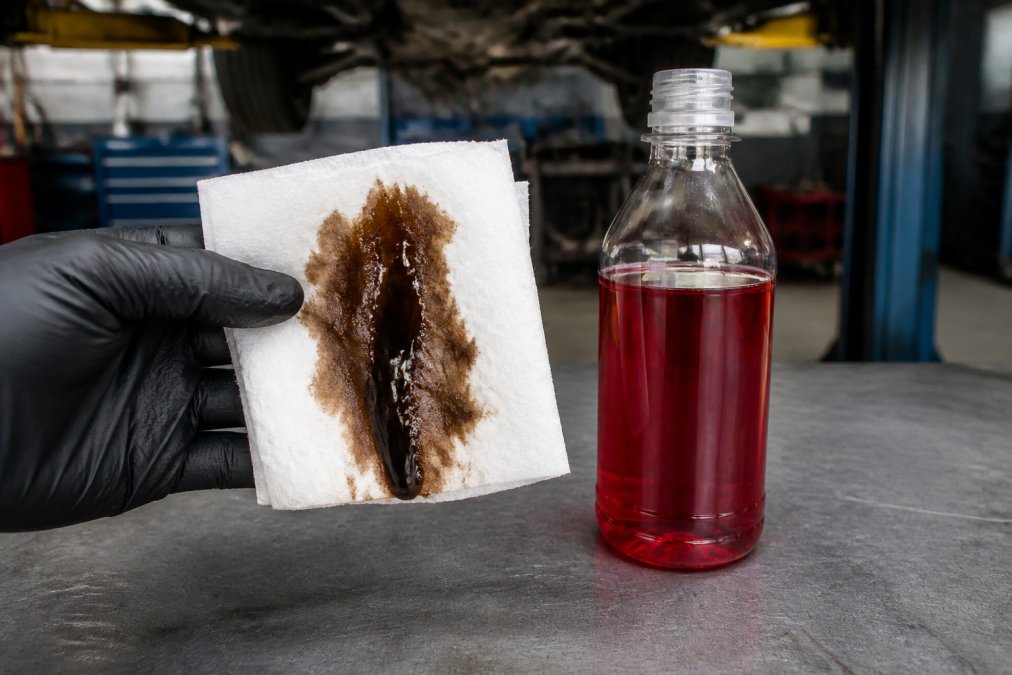
Watch for these warning signs:
- Shifting hesitation or delayed engagement when you move from park to drive
- Gear slippage, where the engine revs but the car doesn't accelerate
- Rough or jerky shifts, especially between lower gears
- Overheating, sometimes accompanied by a burning smell
- A burnt smell on the dipstick, which signals thermal breakdown
- Fluid discoloration, from healthy red toward dark brown or black
- Metal shavings or grit visible on the dipstick
Fluid Color and Smell Indicators
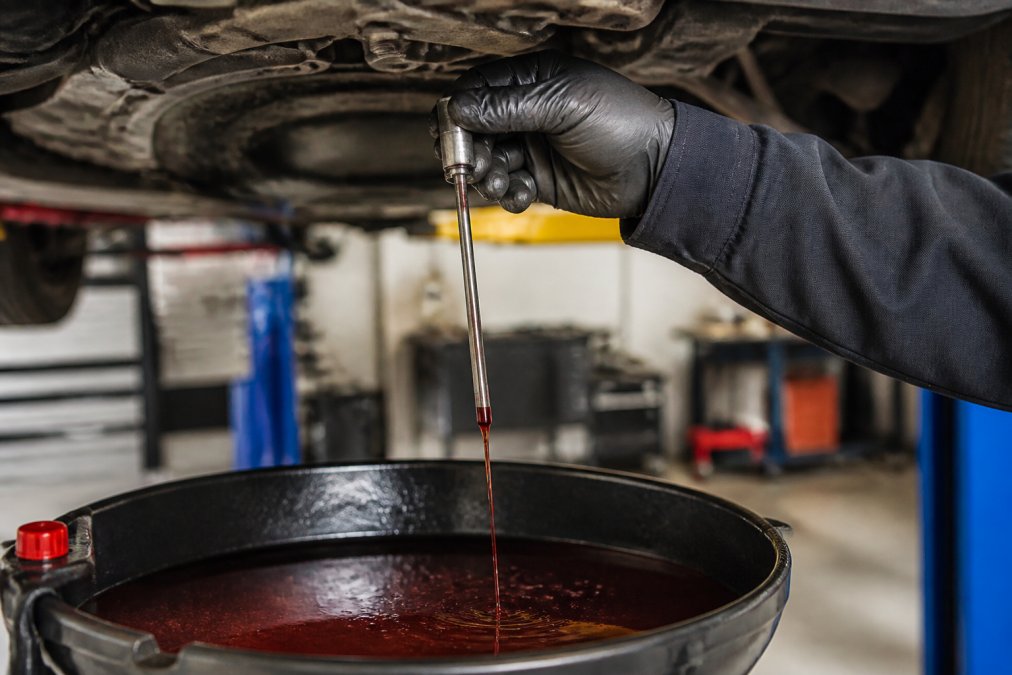
Color and smell tell you more about fluid health than mileage alone. Healthy automatic transmission fluid is translucent red or reddish-brown and smells slightly sweet. As it ages, it darkens toward brown, then black, and picks up a burnt odor.
Transmission Flush vs Drain and Fill: Which Service Does Your Car Need?
These two services are not interchangeable, and choosing wrong can cost you. A drain and fill removes only the fluid in the transmission pan, typically 30-50% of the total. A transmission flush uses a machine to push old fluid out and new fluid through the entire system, including the torque converter and cooler lines.
| Service | Fluid Replaced | Best For | Risk Level |
|---|---|---|---|
| Drain and Fill | 30-50% | Routine maintenance, high-mileage cars | Low |
| Transmission Flush | 90%+ | Well-maintained transmissions, severe-use cars | Higher on neglected units |
What Happens If You Never Change the Fluid
Skipping transmission fluid service doesn't cause immediate failure, which is why so many drivers do it. The damage compounds quietly: contaminants build up, friction modifiers wear out, and the fluid stops lubricating and cooling.
The consequences stack up over time:
- Overheating accelerates wear on clutch packs and seals
- Shifting performance degrades, then fails outright
- Gear slippage becomes permanent rather than occasional
- Metal shavings circulate and grind internal components
- Drivetrain longevity drops, often by tens of thousands of miles
Transmission Fluid Change Cost: What Drives the Price
Transmission fluid change cost varies widely, driven by the type of service, the fluid your transmission requires, and the labor involved. A simple drain and fill on a common automatic is cheapest; a full flush, filter replacement, or pan gasket adds parts and labor.
Several factors push the price up or down:
- Fluid type, synthetic fluid costs more than conventional, and many modern transmissions require a specific formulation (for example, a manufacturer-specific low-viscosity fluid) that cannot be substituted
- Fluid volume, a flush uses far more fluid than a drain and fill; some units hold 8-12 quarts total, and a flush may consume most of that
- Transmission design, sealed transmissions with no dipstick and CVTs can be more labor-intensive to service correctly
- Filter and gasket, some services include these, others charge separately; on units with a serviceable pan filter, skipping the filter is false economy
- Shop labor rates, independent shops typically charge less than dealerships, but the gap narrows on vehicles that require proprietary fluid or a scan-tool relearn procedure
DIY vs. Professional: What Each Path Actually Requires
Most guides tell you when to change transmission fluid and stop there. The harder question is who should do it. The honest answer depends on your transmission, your tools, and your tolerance for a very messy job.
What a DIY drain and fill requires:
- A floor jack and jack stands, or ramps, rated for your vehicle's weight
- A drain pan large enough to hold 4-6 quarts
- The correct fluid, verified against the owner's manual or the fluid spec printed on the dipstick or pan, not guessed from color
- A new pan gasket and, on many units, a new filter
- A torque wrench, because pan bolts are small and easy to strip or over-tighten
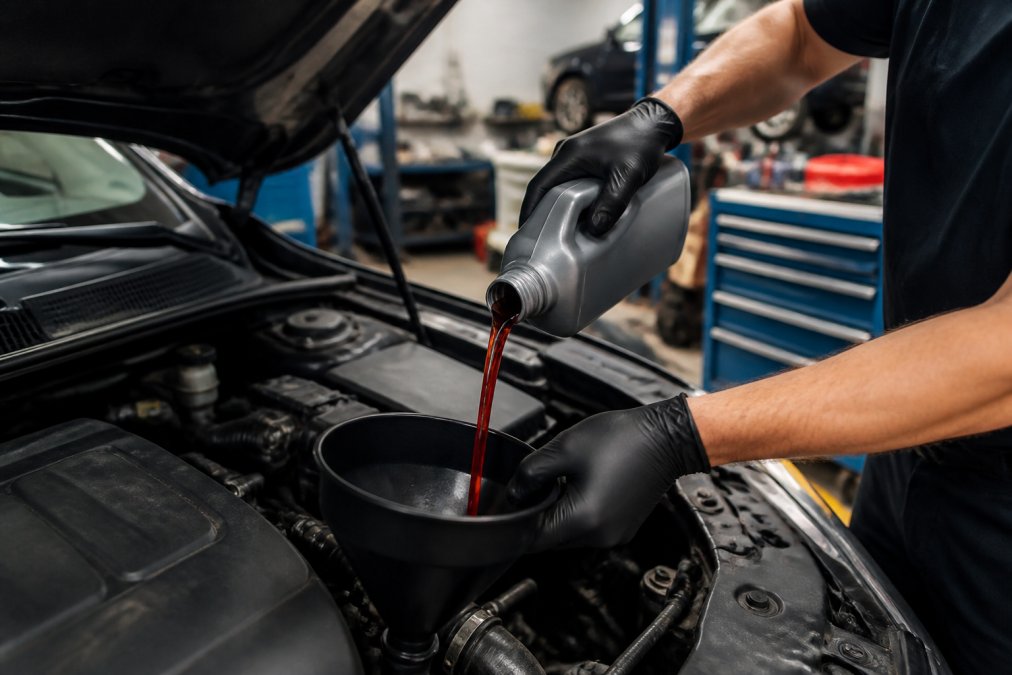
- A funnel and a way to check fluid level at the correct temperature, many automatics require the engine running, in park, at a specific fluid temperature, which on some vehicles means a scan tool
Where DIY goes wrong:
- Using the wrong fluid. "Universal" or "multi-vehicle" fluid is not always compatible with a specific transmission's clutch friction characteristics, and can cause shudder or premature wear.
- Over- or under-filling. Too much fluid can aerate and overheat; too little causes slipping.
- Skipping the filter. On units with a serviceable filter, a drain and fill without a filter change leaves a saturated filter in place.
- Cross-threading or over-torquing pan bolts, which leads to leaks.
- Failing to reset the fluid life monitor or perform a relearn on transmissions that require it.
What a shop brings:
- The correct fluid in bulk, matched to your transmission spec
- A lift, so the job is done safely and the pan drains fully
- A scan tool to read fluid temperature and perform any required relearn
- Disposal of used fluid, which is regulated and not something most homeowners can handle
- A warranty on the work
How to Keep the Cost Down Without Cutting Corners
- Service on the severe-duty interval rather than waiting for symptoms, preventative drain and fills are far cheaper than a rebuild
- Ask for a drain and fill instead of a flush unless your manual specifies a flush
- Combine the fluid service with other maintenance (oil change, tire rotation) to reduce labor overlap
- Keep records, a documented service history protects resale value and helps the next shop make better decisions
Transmission fluid service is easy to postpone and expensive to ignore. If you're unsure when your automatic last had its fluid changed, or you've noticed any warning signs above, don't wait for a slip to become a failure. Speedy Roo Motorsports offers reliable transmission maintenance, transparent communication, and a team that treats every customer with respect. We've built our reputation across the Denver Metro area on honest diagnostics and quality work under the hood.
High-Mileage Risks and Lifetime Fluid Myths
Two myths cause more transmission failures than almost anything else: that "lifetime fluid" means you never change it, and that a high-mileage transmission should never be touched. Both are half-truths, and the wrong half is expensive.
A Decision Framework for High-Mileage Transmissions
Use your service history and current symptoms to pick a path, not just your odometer:
- Under ~100,000 miles with documented fluid services, stay on schedule. Drain and fill at the severe interval, or a flush if the manufacturer permits it. Low risk.
- 100,000-150,000 miles, fluid serviced at least once, drain and fill only. Replace the filter if the pan is serviceable. Skip the flush machine.
- Over 150,000 miles, never serviced, still shifting cleanly, a single drain and fill is the conservative move. It refreshes roughly a third of the fluid, restores some additive package, and rarely shocks the unit. Do not flush.
- Over 150,000 miles, never serviced, already slipping or flaring, the transmission is likely on borrowed time regardless. A drain and fill may buy time; a flush often accelerates the failure. Have a shop inspect the pan for clutch material and metal before spending money.
- Any mileage with a burnt smell or black fluid, treat it as a diagnostic, not a maintenance item. The fluid is a symptom of an existing problem, and a change alone will not fix it.
Why a Drain and Fill Is the Safer High-Mileage Choice
A drain and fill removes only what gravity lets out of the pan, typically 30-50% of capacity, and replaces it with fresh fluid of the same specification. Because it doesn't pressurize the system, it doesn't force debris through narrow passages. Done two or three times with a short drive between services, it gradually dilutes old fluid without the shock of a full exchange, the staged approach most independent transmission shops recommend for a neglected unit that still drives acceptably.
What "Lifetime" Actually Means in Practice
Manufacturers that print lifetime fluid intervals generally do so to lower advertised cost of ownership, not because the fluid is chemically immortal. Automatic transmission fluid is a blend of base oil and an additive package, friction modifiers, anti-wear agents, detergents, viscosity improvers, that depletes with heat cycles. Every 20°F above roughly 175°F roughly doubles the rate of fluid oxidation, which is why towing, mountain grades, and summer stop-and-go traffic shorten fluid life far faster than the odometer suggests.
Frequently Asked Questions
Is 150,000 miles too late to change transmission fluid?
It depends on the transmission's current condition. If the fluid has never been changed and the car shifts fine, a drain and fill can still help. However, if the transmission already slips or hesitates, new fluid may accelerate wear because the old fluid's friction modifiers were masking existing damage. A qualified technician should inspect the fluid and pan before recommending service at this mileage.
Why do some mechanics advise against changing transmission fluid?
The concern applies mainly to neglected, high-mileage transmissions. Old fluid collects clutch material that helps worn components grip. Replacing all of it at once can remove that grip and trigger slipping. This is why many shops recommend a drain and fill over a full flush on high-mileage vehicles, and why an inspection before service matters more than the service itself.
What is the average cost to change transmission fluid?
Cost depends on your vehicle, the fluid type, and whether you choose a drain and fill or a flush. A drain and fill uses less fluid and costs less, while a flush uses more fluid and takes longer. Some sealed transmissions require specialized equipment. For a quote specific to your Japanese vehicle, contact a shop directly with your make, model, and mileage.
Do I actually need to change my transmission fluid if the manual says it's 'lifetime'?
Lifetime fluid usually means the life of the warranty, not the life of the car. Many automakers consider 100,000 miles the end of that window. Real-world driving with stop-and-go traffic, towing, or mountain grades accelerates thermal breakdown. A drain and fill every 60,000 to 90,000 miles is a reasonable preventative maintenance habit even on sealed transmissions.