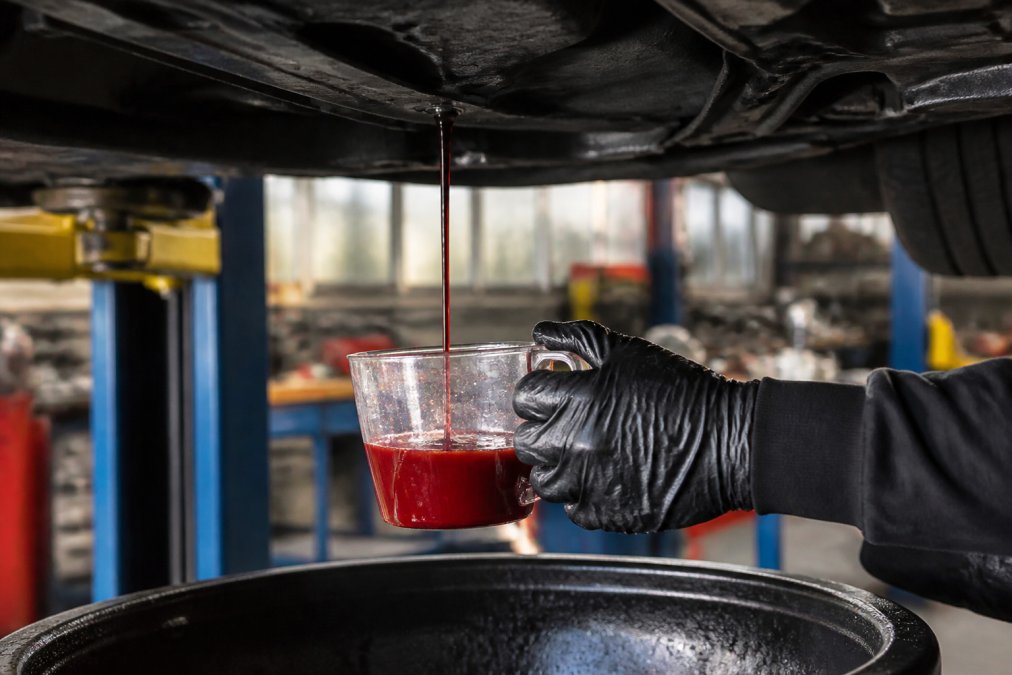
 how-to
Symptoms of Overfilled Transmission Fluid
Table of Contents
- What Happens When You Overfill Transmission Fluid
- Common Symptoms of Overfilled Transmission
- Transmission Fluid Foaming Symptoms and Why They Matter
- How to Check Transmission Fluid Level Correctly
- How to Drain Excess Transmission Fluid
- Vehicle-Specific Sensitivity and Diagnostic Distinctions
- Conclusion
- Frequently Asked Questions
Last Updated: September 18, 2026
What Happens When You Overfill Transmission Fluid
Pour in too much automatic transmission fluid and it stops behaving like a liquid and starts behaving like foam, which explains almost every symptom of overfilled transmission fluid.
Your transmission pan holds a set amount of fluid for a reason. The rotating assembly spins fast and needs clear space to throw fluid around without whipping air into it. Add extra fluid and the level rises above the dipstick mark, so the spinning parts churn through fluid instead of air and the fluid picks up bubbles.
Foamy fluid cannot do its job. It is compressible, so hydraulic pressure drops, and it carries less heat away from the clutches and gears. The result is a transmission that slips, overheats, and eventually damages itself, so catching it early matters.
Common Symptoms of Overfilled Transmission
The symptoms of an overfilled transmission build as the fluid aerates and heat climbs:
- Erratic shifting - gears hunt, hesitate, or engage hard
- Slipping gears - the engine revs but the car does not accelerate
- Whining or clunking - unusual noise from the transmission area
- Burnt smell - hot fluid cooking inside the case
- Fluid leaks - red fluid under the car near the vent tube
- Overheating - the transmission runs hotter than normal
- Acceleration lag - delayed response when you press the gas
One symptom alone might mean something else. Two or three together, especially right after a fluid change, point straight at overfilling.
Erratic Shifting and Slipping Gears
Aerated fluid cannot build steady hydraulic pressure, which the valve body needs to move the shift valves at the right moment. When pressure drops, shifts arrive late, early, or with a jolt, drivers call it "hunting" for the right gear.
Slipping is the more serious version: the clutches clamp down with less force, slide instead of locking, and that friction burns the clutch material. Keep driving and you turn a cheap drain-and-fill into an expensive rebuild.
Whining, Clunking, and Unusual Noises
Foam does not lubricate bearings or gears the way clean fluid does. Metal starts touching metal. That contact shows up as a whine that rises with engine speed, or a clunk when the transmission engages.
A whine usually means the fluid pump is straining to move foam instead of fluid; a clunk points to a hard engagement where pressure spikes and slams a gear or clutch into place. Both mean something is wrong.
Transmission Fluid Foaming Symptoms and Why They Matter
Transmission fluid foaming symptoms are easy to spot. Pull the dipstick: healthy ATF is clear and reddish, while foamy fluid looks like a milkshake full of tiny bubbles, or appears milky and pale.
Foaming happens because the rotating assembly whips air into the fluid, and the pump pushes that air-filled mix through the hydraulic system. Air compresses, so pressure never builds properly: the valve body gets weak signals and the torque converter cannot lock up.
Heat makes it worse: foam carries heat poorly, so the fluid runs hotter and thins out, weakening the film that protects moving parts. That combination of heat and poor lubrication is what kills transmissions.
That is why foaming symptoms matter more than the fluid level itself: the level is just a number, but the foam is the real damage.
How to Check Transmission Fluid Level Correctly
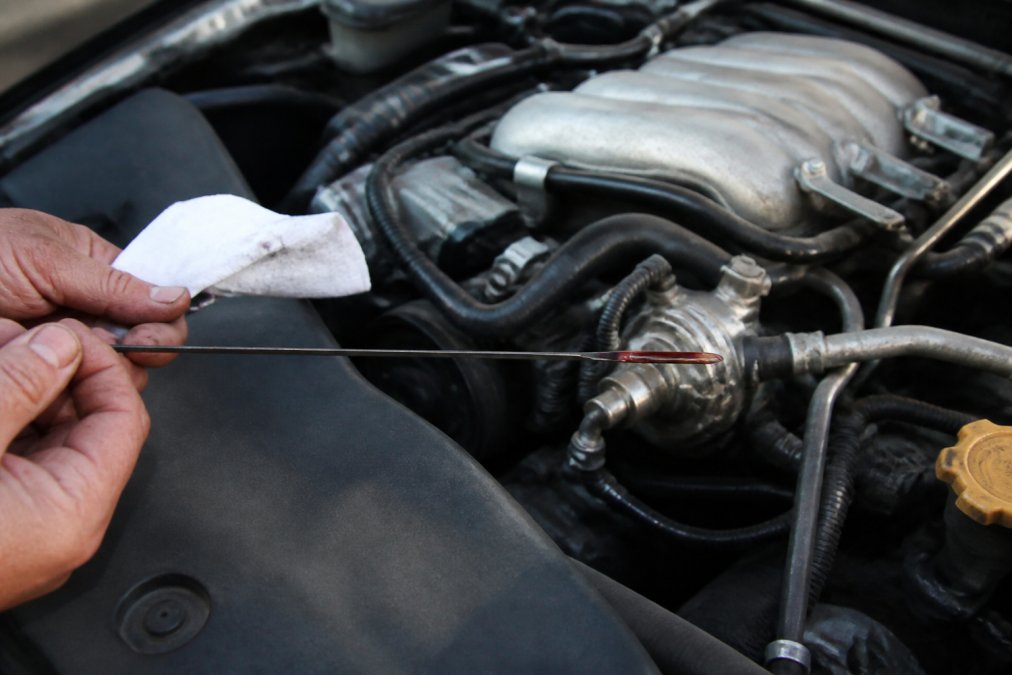
The correct way to check transmission fluid level depends on your car, but most older Japanese vehicles with a dipstick follow this routine:
- Park on level ground and set the parking brake
- Start the engine and let it reach normal operating temperature
- Shift through each gear, pausing in each one, then return to Park
- Leave the engine running
- Pull the dipstick, wipe it clean, and reinsert it fully
- Pull it again and read the level against the hot marks
- Look at the fluid color and texture while you are there
How to Drain Excess Transmission Fluid
Draining excess transmission fluid is a measurement job, not a flush. Remove only what pushed the level above the hot mark, then recheck. Removing fluid a few ounces at a time is far safer than a full drain, because a half-quart too little causes the same slipping and whining as a half-quart too much.
DIY Extraction Methods
Treat a fluid extractor like a lab pipette, not a siphon. Here is the sequence that avoids overshooting:
- Warm the transmission to normal operating temperature and shut the engine off.
- Let it sit two to three minutes so fluid drains back from the valve body into the pan.
- Insert the extractor tube down the dipstick tube until it touches fluid, you will feel a slight change in resistance.
- Pump out 4 to 8 ounces into a graduated container so you know exactly how much you removed.
- Restart the engine, shift through the gears, return to Park, and recheck the dipstick hot.
- Repeat until the level is at or just below the high hot mark.
What Not to Do
Do not open the drain plug and let the pan empty completely to "reset" the level. A full drain removes far more fluid than the overfill, and refilling to the correct mark requires the exact specified capacity, which varies by transmission and torque converter. Partial removal is almost always the right call.
Vehicle-Specific Sensitivity and Diagnostic Distinctions
Not every transmission reacts to an overfill the same way. Two transmissions with the same extra half-quart can behave completely differently, and the reason comes down to pan volume, vent placement, and whether the unit is sealed.
Why Modern Sealed Transmissions Are More Sensitive
Older automatics with a dipstick and a generous pan gave you slack. The pan held enough fluid that a small overfill stayed below the rotating assembly, and the vent tube sat high enough that minor excess did not push out. You could be a few ounces over and never notice.
Overfilled vs. Underfilled: Why the Symptoms Overlap
An overfilled transmission and an underfilled one can produce nearly identical complaints: slipping, erratic shifts, whining, and delayed engagement. Both reduce the hydraulic pressure the valve body needs to time shifts, which is why so many DIY fluid changes end with the owner adding fluid when they should be removing it.
| Symptom | Overfilled | Underfilled |
|---|---|---|
| Fluid on dipstick | Above hot mark, foamy or bubbly | Below hot mark, clean |
| Leaks | Fluid from vent tube or breather | Usually none |
| Noise | Whine from pump churning foam | Whine from low pressure and cavitation |
| Fluid color | Milky, pale, or full of tiny bubbles | Normal or dark |
| After a fluid change | Symptoms appear within miles | Symptoms appear within miles |
| Fluid smell | Burnt, from overheating foam | Burnt, from slipping clutches |
Reading the Dipstick Without False Positives
The dipstick is your best diagnostic tool, but only if you read it correctly. The most common false positive is checking cold: ATF expands as it heats, so a cold reading looks low when the fluid is fine, and adding fluid based on it creates the overfill you were trying to prevent.
Conclusion
An overfilled transmission is one of the few transmission problems you can fix without a rebuild, but only if you catch it early. Foaming, erratic shifting, whining, and fluid leaks all trace back to too much fluid churning into foam. Check the level hot, drain the excess in small steps, and watch for bubbles.
Frequently Asked Questions
What happens if my transmission fluid is too high?
When transmission fluid is too high, the rotating assembly whips air into the fluid, causing aeration and foaming. Foam does not build hydraulic pressure properly, so clutches slip, shifts become erratic, and the transmission overheats. Excess pressure can also force fluid out of the vent tube or past seals, leading to leaks and potential gasket blowout. Over time, this accelerates wear on the torque converter, valve body, and fluid pump.
What does an overfilled transmission feel like?
Drivers often describe it as acceleration lag, slipping gears, or harsh engagement when shifting from park to drive. You may notice clunking or whining noises, a burnt smell from the fluid, and erratic shifting that does not match your throttle input. In severe cases, the transmission may hesitate before engaging or shudder during light acceleration. These symptoms often worsen as the fluid heats up and expands further.
Can overfilled transmission fluid cause shifting problems?
Yes. Overfilled transmission fluid causes shifting problems because foamy fluid cannot maintain consistent hydraulic pressure. The valve body relies on clean, air-free fluid to direct shifts at the right moment. When aeration occurs, shift timing becomes unpredictable, clutches slip, and the transmission may hold gears too long or slam into the next gear. Correcting the fluid level usually resolves these issues if caught early.
How long can you drive with an overfilled transmission?
You should correct an overfilled transmission as soon as possible. Driving short distances to a repair shop is usually safe if you avoid hard acceleration and monitor for overheating. Continued driving with foamy fluid accelerates wear on internal components and can turn a simple drain-and-fill into a rebuild. If you notice slipping, burning smells, or warning lights, stop driving and have the vehicle towed.