 ultimate-guide
Honda Civic Common Suspension Problems: 2026 Guide
Table of Contents
- Honda Civic Suspension Problems by Generation: What Fails and When
- Honda Civic Suspension Problems: 8 Symptoms You Should Not Ignore
- Signs of Bad Struts on Honda Civic: How to Tell Before They Fail
- How Long Do Honda Civic Shocks Last? Real-World Lifespan and Replacement Timing
- Honda Civic Suspension Repair Cost: DIY vs. Professional
- Preventative Maintenance Schedule for Your Civic's Suspension
- OEM vs. Performance Suspension Upgrades: What to Choose
- Frequently Asked Questions
Last Updated: September 25, 2026
Honda Civic Suspension Problems by Generation: What Fails and When
Honda Civic common suspension problems tend to cluster around specific model generations, and knowing which parts fail on your year helps you catch issues early. At Speedy Roo Motorsports, we've serviced Civics since 2002. Below, we break down what fails and when.
8th and 9th Gen (2006-2015): Bushings and Bump Stops
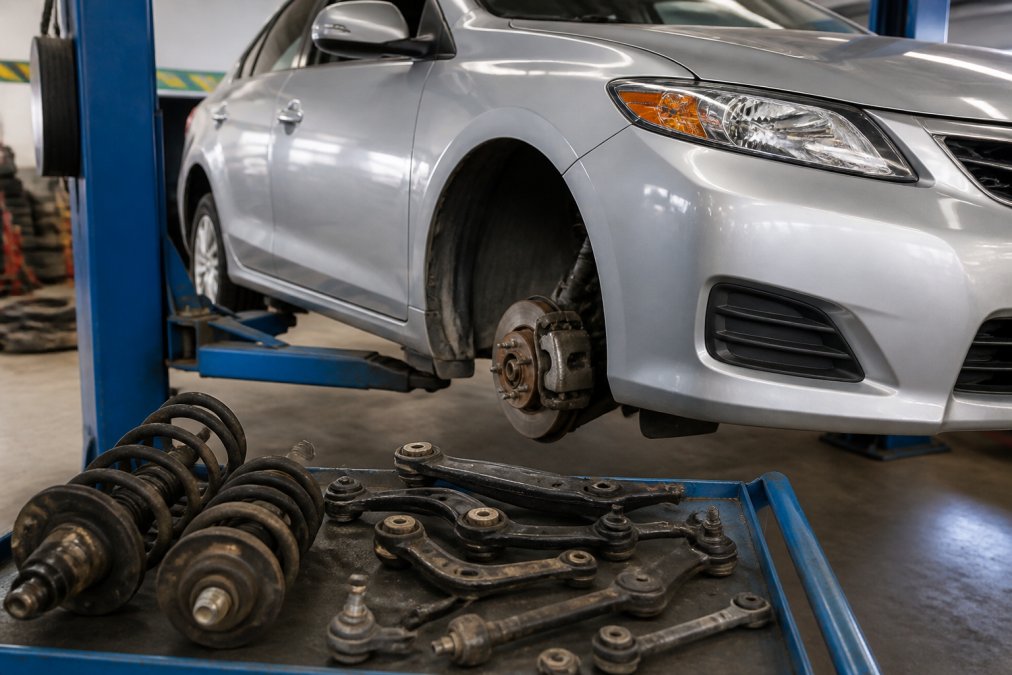
These Civics are now well past 100,000 miles, and rubber components are the weak point. Front lower control arm bushings crack and separate, producing clunking over bumps and vague steering. Bump stops crumble, letting the suspension bottom out harshly. Sway bar links and tie rod ends also loosen with age, adding rattles to the mix.
10th and 11th Gen (2016-Present): Struts and Electronic Steering
Newer Civics shift the failure pattern toward strut assemblies and steering. Worn dampers cause a floaty ride and uneven tire wear, while electronic steering racks can develop a faint clunk or heavy feel at full lock turns. These aren't universal failures, but they show up more often than on older cars.
NHTSA vehicle safety and recall database
Honda Civic Suspension Problems: 8 Symptoms You Should Not Ignore
Suspension wear rarely announces itself loudly. These eight symptoms are the ones we see most often, ranked roughly by how quickly you should act.
- Clunking over bumps, usually worn sway bar links or control arm bushings
- Creaking or groaning, dried-out bushings or failing ball joints
- Popping on turns, tie rod ends or steering rack wear
- Uneven or cupped tire wear, bad dampers or misalignment
- Vague steering, worn bushings or tie rod ends
- Nose dive when braking, weak struts or shocks
- Tramlining, the car follows road grooves, often from worn suspension geometry
- High-frequency vibration, often a wheel bearing or damper issue
If you notice two or more of these at once, get an inspection before the problem spreads to other components.
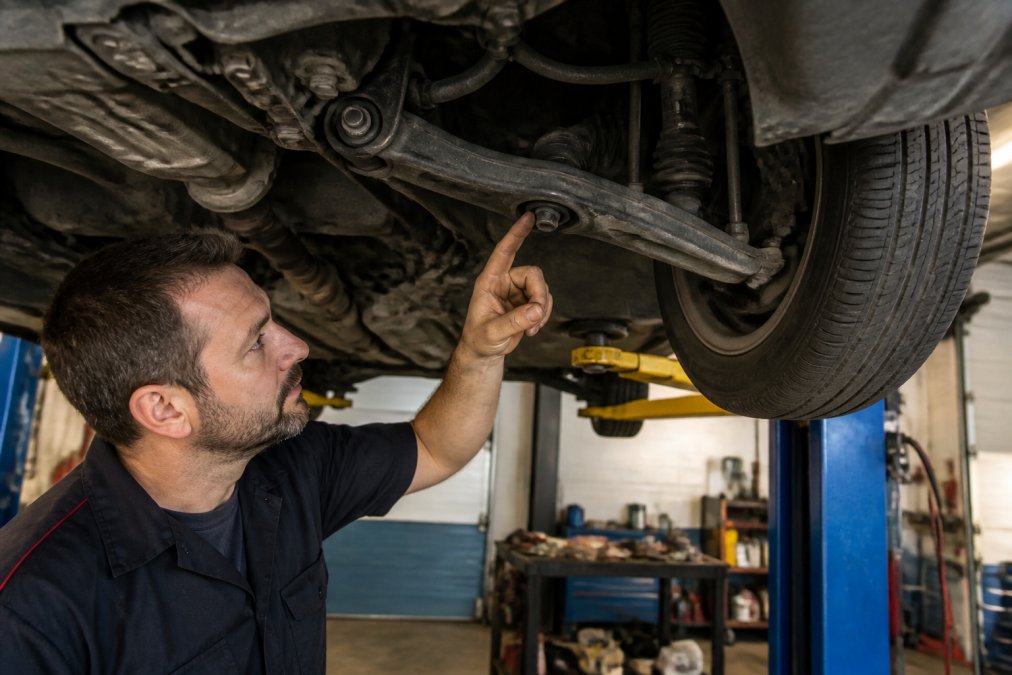
Signs of Bad Struts on Honda Civic: How to Tell Before They Fail
The clearest signs of bad struts on Honda Civic models are a bouncy ride, nose dive under braking, and oil streaks on the strut body. A quick test: push down hard on one corner of the car and release. If it bounces more than once or twice, the damper is weak.
Other clues include:
- Cupped or scalloped tire wear
- Leaking fluid around the strut
- A floating feeling at highway speed
- Uneven ride height side to side
How Long Do Honda Civic Shocks Last? Real-World Lifespan and Replacement Timing
Most Civic shocks and struts last between 50,000 and 80,000 miles, but that range shrinks fast on rough roads or with a loaded car.
| Component | Typical Lifespan | Replace When |
|---|---|---|
| Shocks/struts | 50,000-80,000 mi | Bouncy ride, leaks |
| Control arm bushings | 80,000-120,000 mi | Clunking, cracking |
| Bump stops | 60,000-100,000 mi | Crumbling, bottoming out |
| Sway bar links | 60,000-90,000 mi | Rattling over bumps |
| Ball joints | 100,000+ mi | Play, popping |
Honda Civic Suspension Repair Cost: DIY vs. Professional
Honda Civic suspension repair cost depends on three things: which part failed, whether the job needs a spring compressor or an alignment rack, and whether you already own the tools. Most guides stop at "some jobs are DIY, some aren't." Here's the breakdown that actually helps you decide.
What drives the cost
Every suspension repair on a Civic splits into three buckets:
- Parts, the component itself, plus any one-time-use hardware (new nuts, cotter pins, alignment bolts, and often new bushings when you replace a control arm).
- Labor, book time for the job, which varies widely. A sway bar link is a 30-minute job on a lift. A front strut replacement is closer to 1.5-2 hours per side because the spring has to be compressed and transferred.
- Follow-up work, the hidden line item. Any time you remove a strut, control arm, or tie rod end, the front end needs a wheel alignment afterward. Skip it and you'll pay for it in uneven tire wear.
DIY-friendly jobs
These are realistic for a driveway mechanic with hand tools, jack stands, and a torque wrench:
- Sway bar links, two nuts per side, no spring compression, no alignment needed if you don't touch the tie rods.
- Bump stops, cheap rubber parts, but access depends on whether you're pulling the strut to get to them.
- Some control arm bushings, pressed-in bushings usually need a shop press or a bushing driver kit, so "DIY" here often means buying a loaded control arm with the bushing already installed.
Jobs better left to a shop
- Struts and shocks, coil spring compression is the risk. A spring compressor that slips under load can cause serious injury, and reusing worn springs is a false economy.
- Ball joints, many Civic ball joints are riveted or pressed into the control arm, not bolted. That's a press job.
- Control arms, doable at home, but the alignment afterward is not optional.
- Steering rack and electronic steering work, diagnostic equipment and calibration are typically required on 10th and 11th Gen cars.
The parts-vs-labor split
A useful rule of thumb: on most Civic suspension jobs, labor is often a significant share of the bill, and it grows when the job requires an alignment.
NHTSA vehicle safety and recall database
Preventative Maintenance Schedule for Your Civic's Suspension
A simple schedule keeps small problems from becoming expensive ones.
- Every oil change: visual undercarriage inspection
- Every 30,000 miles: check bushings, bump stops, and sway bar links
- Every 50,000 miles: inspect struts and shocks for leaks
- Every 60,000 miles: check ball joints and tie rod ends for play
- Annually: alignment check, especially after pothole season
AAA guidance on vehicle maintenance schedules
OEM vs. Performance Suspension Upgrades: What to Choose
OEM replacement is the right call for most commuters: it restores factory ride quality and matches Honda's original engineering. Aftermarket components make sense when you want firmer handling, better damping, or a specific ride height. But the more useful question is which failures an upgrade actually fixes, and which ones it doesn't.
What actually changes when you upgrade
Three variables drive how a Civic feels after a suspension swap:
- Damping rate, how quickly the shock or strut controls the spring. Firmer damping reduces float and body roll but transmits more road texture into the cabin.
- Spring rate, how stiff the coil is. Higher rates reduce dive and squat but can overwhelm stock dampers if they aren't matched.
- Bushing durometer, how hard the rubber or polyurethane is. Stiffer bushings sharpen steering response but add noise, vibration, and harshness.
Failures an upgrade fixes
- Worn struts and shocks, a quality aftermarket damper (or OEM) restores control. This is the single biggest improvement per dollar.
- Soft, floaty ride on 10th/11th Gen cars, a mild performance damper tightens things up without turning the car harsh.
- Worn control arm bushings, replacing with fresh OEM rubber fixes clunking. Polyurethane bushings fix the clunk and sharpen steering, at the cost of NVH.
Failures an upgrade does NOT fix
- A worn steering rack or electronic steering clunk, no damper or bushing swap addresses this. It's a rack issue.
- Misalignment and cupped tires, geometry problems need an alignment, not stiffer parts.
- A cracked or sagging coil spring, replace the spring; don't mask it with a firmer damper.
The rough-road trade-off
Stiffer isn't always better. On broken pavement, a firm performance damper can feel busier and less controlled than a well-valved OEM unit, because the suspension can't absorb sharp impacts as quickly. For daily drivers, a mild upgrade, quality dampers paired with fresh OEM bushings, usually delivers the best balance of comfort and control. Aggressive spring rates and poly bushings are a better fit for track use or cars that rarely see rough roads.
Cheap performance parts vs. OEM
For daily drivers, OEM or quality aftermarket dampers paired with fresh bushings deliver the best balance of comfort and control.
Frequently Asked Questions
What are the most common suspension problems in a Honda Civic?
The most frequent issues are worn control arm bushings, leaking struts, damaged bump stops, and loose sway bar links. These cause clunking noises, uneven tire wear, and vague steering. High-mileage Civics often need multiple components replaced at once. Regular undercarriage inspections catch these early.
How much does Honda Civic suspension repair cost?
Repair costs vary widely depending on the parts needed and labor rates. A simple sway bar link replacement is on the lower end, while a full strut and spring assembly replacement costs more. For an accurate estimate, contact a qualified shop with your specific model year and symptoms.
Do certain Honda Civic model years have more suspension issues than others?
Yes. Maintenance history matters as much as model year.
How long do Honda Civic shocks and struts last?
Most Honda Civic shocks and struts last between 50,000 and 100,000 miles. Factors like road conditions, driving style, and cargo weight affect lifespan. Signs of bad struts include a bouncy ride, nose-diving during braking, and fluid leaks. Replacing them in pairs maintains balanced handling.
Suspension wear is one of those problems that quietly worsens until it affects safety and tire life. At Speedy Roo Motorsports, our technicians have diagnosed and repaired Honda suspension issues since 2002, with transparent communication, quality work under the hood, and a team that treats every customer with respect. Get started with Speedy Roo Motorsports and keep your Civic riding the way it should.