 how-to
2026 Honda Civic Spark Plug Replacement Guide
Table of Contents
- What Type of Spark Plugs Does a 2026 Honda Civic Use?
- 2026 Honda Civic Spark Plug Replacement Interval
- Signs Your 2026 Honda Civic Needs New Spark Plugs
- Tools and Parts You'll Need for the Job
- Honda Civic Spark Plug Replacement DIY: Step-by-Step
- Honda Civic Spark Plug Replacement Cost: DIY vs. Shop
- Post-Replacement Checks and Troubleshooting
- Frequently Asked Questions
Last Updated: October 4, 2026
What Type of Spark Plugs Does a 2026 Honda Civic Use?
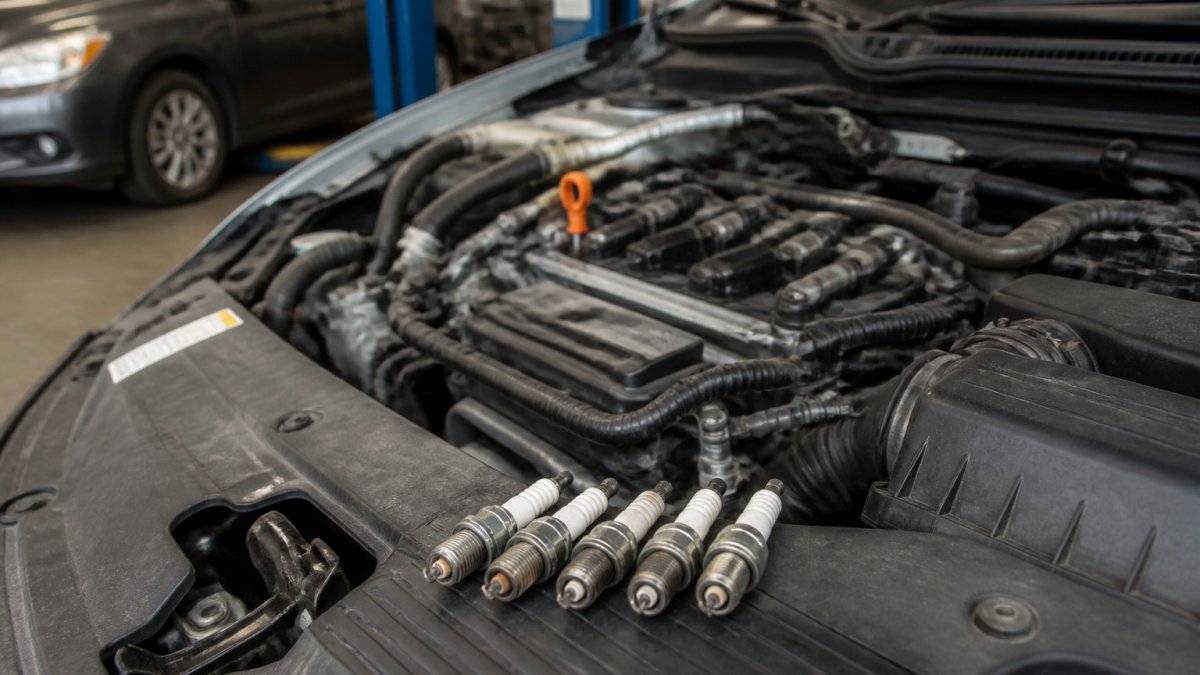
The 2026 Honda Civic uses iridium-tipped spark plugs with a platinum ground electrode, and the exact plug depends on which engine sits under your hood.
Here's the part most guides gloss over: Honda changed the ignition layout across recent Civic generations, and the 2026 model continues that pattern. The 2.0-liter naturally aspirated four-cylinder and the 1.5-liter turbocharged four-cylinder do not always share the same plug.
Spark plug is the component that carries the ignition coil's voltage across a small gap to create the spark that lights the air-fuel mixture.
| Engine Option | Plug Type | Electrode Material | Service Notes |
|---|---|---|---|
| 2.0L four-cylinder | OEM iridium | Iridium tip, platinum ground | Standard gap from factory |
| 1.5L turbo four-cylinder | OEM iridium | Iridium tip, platinum ground | Heat range matched to boost |
| Hybrid powertrain | OEM iridium | Iridium tip | Verify with VIN before ordering |
Two things decide which plug you buy: the engine code and the trim. A Civic LX and a Civic Sport can share an engine, but a hybrid model is a different animal entirely. Always confirm with your VIN before you order.
2026 Honda Civic Spark Plug Replacement Interval
Honda's recommended replacement interval for iridium plugs in the 2026 Civic is typically around 100,000 miles under normal driving, though the owner's manual for your specific trim is the final word.
What counts as severe duty? Short commutes, stop-and-go traffic, extreme cold, and lots of idling. If your Civic spends its life in city traffic, the plugs work harder than the mileage suggests.
- Normal highway commuting: follow the manual's long interval
- Frequent short trips under 5 miles: inspect earlier
- Cold-climate starts and heavy idling: inspect earlier
- Turbocharged engines: heat cycles add stress
We tell customers to treat the manual interval as a ceiling, not a target.
The Honda owner's manuals and maintenance schedules list the interval by model year and trim, so check the exact schedule for your car rather than relying on a generic number.
Signs Your 2026 Honda Civic Needs New Spark Plugs
A rough idle, an engine misfire, hard starting, and a check engine light are the classic signs your Civic needs new plugs. Poor fuel economy and sluggish acceleration often show up first, before any warning light appears.
Catching the symptoms early saves you from a bigger repair. Here's what to watch for:
- Rough idle: the engine shakes or stumbles at stoplights
- Misfire: a hesitation or stutter under acceleration
- Hard starting: the engine cranks longer than it used to
- Warning light: a flashing or steady check engine light
- Weak performance: the car feels down on power
- Worse mileage: you're filling up more often
A flashing check engine light means stop driving and get it checked. That's an active misfire, and raw fuel can damage the catalytic converter.
Diagnosis comes before replacement. A misfire code doesn't always mean bad plugs. A failing ignition coil or a worn spark plug wire can throw the same code. Reading the codes and inspecting the plugs tells you what's actually wrong.
Tools and Parts You'll Need for the Job
You'll need a spark plug socket, a ratchet with an extension, a torque wrench, a gap gauge, and dielectric grease, plus a set of four OEM-spec iridium plugs. A few extras make the job smoother.
Gather these before you start:
- Spark plug socket sized to your plug
- 3/8-inch ratchet with a short extension
- Torque wrench rated for low torque values
- Gap gauge to confirm the gap
- Dielectric grease for the coil boots
- Anti-seize only if the plug maker specifies it
- Four iridium plugs matched to your engine
The National Institute for Automotive Service Excellence stresses using the right tools and torque specs, because an overtightened plug can strip the aluminum head. That turns a simple job into an expensive one.
One insider note: a magnetic spark plug socket beats a rubber-grip one. The magnet holds the plug so it doesn't drop into the cylinder well, and it makes pulling the old plug out far easier.
Honda Civic Spark Plug Replacement DIY: Step-by-Step
Honda Civic spark plug replacement DIY is a job most home mechanics can finish in about an hour with basic hand tools. The steps below follow the order that keeps you from dropping parts into the engine bay, and they call out the engine-specific details most generic guides skip.
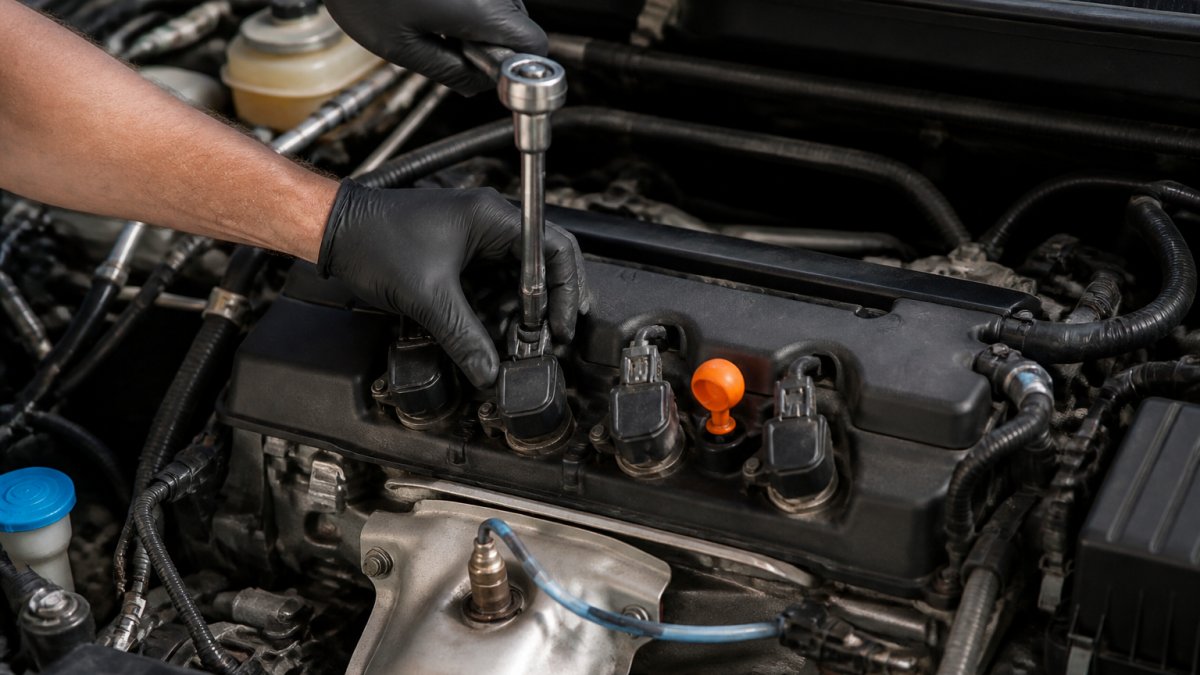
Work on a cool engine, keep the area clean, and take your time. Rushing is how bolts get lost and threads get damaged.
Step 1: Cool the Engine and Disconnect the Battery
Let the engine cool completely before you touch anything. Hot components cause burns, and aluminum threads are more fragile when hot. On the turbocharged 1.5L, the exhaust-side heat soak is worse than on the 2.0L, so give it extra time.
Then disconnect the negative battery terminal. This cuts power to the ignition system so you don't risk a shock or a stray spark.
- Park on a level surface
- Wait until the engine is cool to the touch
- Disconnect the negative battery cable
- Lay a towel over the fender to protect paint
Step 2: Remove the Ignition Coils
On the 2026 Civic, each cylinder runs a coil-on-plug ignition coil that sits directly on top of the spark plug, so there are no plug wires to trace. Unplug each coil connector and remove the coil retaining bolt, typically a 10mm bolt on these engines, then lift the coil straight out of its well.
Label the coils if you plan to reuse them. Keep them in order so you can put each one back where it came from.
- Release the connector clip, don't yank the wire
- Remove the coil bolt with your ratchet
- Pull the coil straight up, not at an angle
- Check the coil boot for cracks or oil
Step 3: Remove and Install the Spark Plugs
Use a spark plug socket, most Civics take a 5/8-inch (16mm) socket, to break each plug loose, then thread it out by hand once it's free. Inspect the old plug's tip and color before you set it aside.
Install the new plugs by hand first. Turn each one until it seats, then tighten with the torque wrench.
- Blow or brush debris from the plug well first
- Thread the new plug in by hand to avoid cross-threading
- Tighten to the manufacturer's torque spec
- Apply dielectric grease to the coil boot
- Reinstall coils and reconnect the battery
A common mistake is guessing at torque. Too loose and the plug can back out; too tight and you strip the head. Use the torque wrench every time.
Honda Civic Spark Plug Replacement Cost: DIY vs. Shop
Honda Civic spark plug replacement cost splits into parts and labor, and where you have it done changes the total. DIY keeps you paying for parts only. A shop adds labor on top.
Here's how the two paths compare:
| Path | What You Pay For | Time Involved | Best For |
|---|---|---|---|
| DIY | Parts and tools | About an hour | Confident home mechanics |
| Independent shop | Parts plus labor | Same-day service | Most drivers |
| Dealer service | Parts plus higher labor rate | Often longer wait | Warranty-sensitive owners |
Parts cost covers the four iridium plugs. Labor cost reflects the time to remove the coils, swap the plugs, and reassemble. Dealer service usually carries a higher labor rate than an independent shop, which is why the same job costs more at a dealership.
Treat those as ballpark figures, not a quote: the real number depends on your engine, your trim, your location, and current parts availability. The honest move is to call and ask for a quote based on your VIN.
If you'd rather not crawl over a hot engine, that's where we come in. Speedy Roo Motorsports has worked on Japanese vehicles since 2002, and a Civic plug swap is routine for our team. We'll give you a clear quote before we start.
Post-Replacement Checks and Troubleshooting
After you install the plugs, start the engine and listen. A smooth idle and no warning light mean the job went well. Any stumble or new code means something needs a second look.
Run through these checks:
- Start the engine and let it idle
- Listen for a steady, even idle
- Watch for a check engine light
- Take a short test drive
- Recheck that coils are seated and connected
If a misfire code returns, the plug gap, coil seating, or a connector is the likely cause. Pull the code, then inspect the plug you just installed.
One more thing: keep your receipts. If a plug fails early, the part warranty covers the replacement, but only with proof of purchase. And if your Civic is still under warranty, having service records matters.
For drivers around Aurora and the Denver metro who want the job done right the first time, our team at Speedy Roo Motorsports can handle the diagnosis and the replacement.
Frequently Asked Questions
How often should spark plugs be replaced in a 2026 Honda Civic?
Honda's manufacturer recommendation for the 2026 Civic with the 2.0L four-cylinder engine is replacement around 100,000 miles under normal driving conditions. If you frequently tow, idle in heavy traffic, or make short trips that prevent full warm-up, inspect plugs sooner. Turbocharged trims and hybrid models may have different maintenance intervals listed in your owner's manual. Always follow the replacement schedule in your specific trim's documentation.
Can I replace the spark plugs on a 2026 Honda Civic myself?
Yes, if you have basic hand tools and some mechanical confidence. The 2.0L engine gives reasonable access to all four plugs once you remove the engine cover and ignition coils. A Honda Civic spark plug replacement DIY job typically takes one to two hours for a first-timer. The most critical steps are using the correct socket size, threading plugs by hand before tightening, and applying the proper torque specification with a torque wrench.
What are the signs that a 2026 Honda Civic needs new spark plugs?
Common symptoms include rough idle, engine misfire (often felt as hesitation or stumbling during acceleration), starting problems, decreased fuel economy, and a check engine light with misfire codes. A flashing check engine light means active misfire and you should stop driving to avoid catalytic converter damage. If you notice any of these, have the ignition system inspected before assuming plugs are the only cause.
Should spark plugs be replaced as a set?
Yes. Replace all four plugs at the same time. Mixing new and worn plugs creates uneven combustion across cylinders, which can cause rough running and make diagnosis harder if a problem develops later. It also wastes labor since you will need to remove the ignition coils again to reach the remaining old plugs. Buying a matched set of four also ensures consistent heat range and electrode wear.
A misfire that shows up at the worst time is a problem no commuter wants. If you'd rather hand the job to someone who knows Japanese engines inside and out, Speedy Roo Motorsports is ready to help. We offer reliable service, quality work under the hood, and friendly customer service backed by more than two decades of experience. Get started with Speedy Roo Motorsports and keep your Civic running the way it should.