 how-to
Car Makes Grinding Noise Turning Wheel: Causes & Fixes
Table of Contents
- Why Your Car Makes a Grinding Noise When Turning the Wheel
- Power Steering Grinding Noise: Hydraulic vs. Electric Systems
- Bad Wheel Bearing Noise When Turning: How to Spot It
- CV Joint Grinding Noise When Turning: Axle and Boot Checks
- Brake Dust Shield, Rotor, and Caliper Contact
- Is It Safe to Drive With a Noisy Wheel Bearing?
- A Symptom-Based Diagnostic Decision Tree
- Frequently Asked Questions
Last Updated: October 20, 2026
Why Your Car Makes a Grinding Noise When Turning the Wheel
A grinding noise turning is metal-on-metal contact, and it rarely fixes itself. We hear this most from drivers who noticed a faint rub weeks ago and now hear a loud grind on every turn.
Below, we'll sort those five causes by symptom so you can decide what's safe to drive on and what needs a shop. The timing of the noise, and whether it changes with speed, braking, or steering direction, narrows the cause faster than any part swap.
Grinding vs. Squealing, Clicking, and Humming
Each noise points to a different system.
- Grinding: metal dragging on metal. Usually a brake rotor, dust shield, or failed bearing.
- Squealing: high-pitched, often brake pads wearing down or a glazed belt.
- Clicking: rhythmic and speed-based, classic worn CV joint, especially on tight turns.
A grinding noise turning is distinct from all four. It shows up under load, in a turn, and often at low speed.
Stationary vs. Moving: What the Timing Tells You
This is the fastest test you can run, free, and it takes one minute. If the grind happens while the car sits still and you turn the wheel, the problem is in the steering system, not the wheels; nothing is rolling, so bearings and axles are out. If the grind only appears while driving, the cause is a rotating part: bearing, axle, brake, or shield.
Power Steering Grinding Noise: Hydraulic vs. Electric Systems
A power steering grinding noise comes from the pump or the electric assist motor, and the two systems fail differently.
On a hydraulic system, check fluid level and color. Dark, burnt fluid or a whine that follows engine speed points to a tired pump, and a loose or glazed belt can slip and groan on full lock.
One rule applies to both: don't hold the wheel at full lock. That strains the pump and motor and can make an existing noise worse.
Bad Wheel Bearing Noise When Turning: How to Spot It
Bad wheel bearing noise when turning is a low rumble that grows with speed and shifts when you change direction. Bearings are sealed hubs; when the internal races wear, the wheel develops play and heat.
Here's how to confirm it:
- Drive at low speed and weave gently left and right. A bearing that quiets when unloaded is the bad one.
- Jack up the suspect corner and grip the tire at 12 and 6 o'clock. Rock it. Any wobble means play.
- Spin the wheel by hand and listen for a rough, gravelly sound.
A common mistake is replacing both bearings "while you're in there." Only the noisy side needs it unless the other shows play too.
CV Joint Grinding Noise When Turning: Axle and Boot Checks
CV joint grinding noise when turning usually starts as a click on tight turns and gets worse from there. The constant-velocity joint sits at each end of the axle, wrapped in a rubber boot packed with grease.
When that boot tears, grease flings out and grit gets in. The joint wears fast. Look for:
- Grease splatter on the inside of the wheel or fender liner.
- A torn or cracked boot at the axle.
- A clicking or popping sound on full-lock turns.
A clicking joint can often be rebooted if caught early. A grinding joint is worn out and needs the axle replaced. That distinction saves real money.
Brake Dust Shield, Rotor, and Caliper Contact
Brake-related grinding is the most misdiagnosed cause on this list because it can sound exactly like a bad wheel bearing. The difference is timing: brake noise usually changes when you press or release the pedal, while bearing noise tracks road speed and steering load. Work through the four brake contact points below, cheapest and most common first.
1. Dust shield rub (most common, cheapest fix)
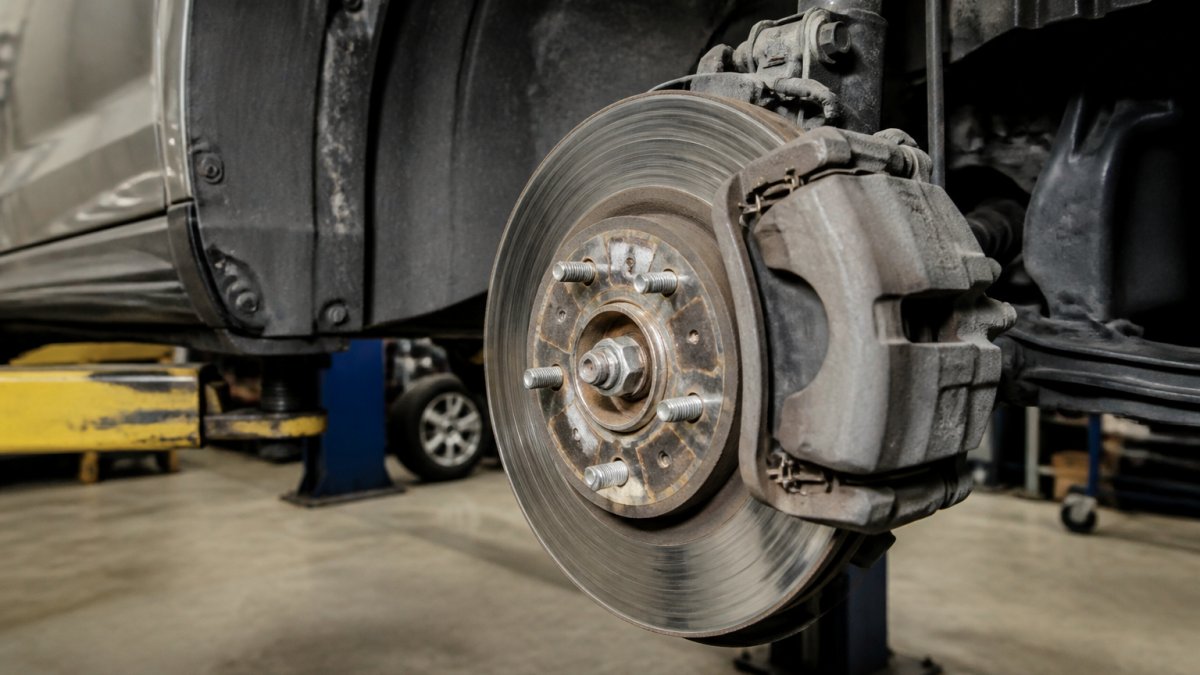
A thin stamped-metal dust shield sits behind each rotor to keep road debris off the braking surface. It is only a few thousandths of an inch from the rotor, so a curb strike, pothole, tire change, or brake job can bend it into contact.
How to check it without lifting the car:
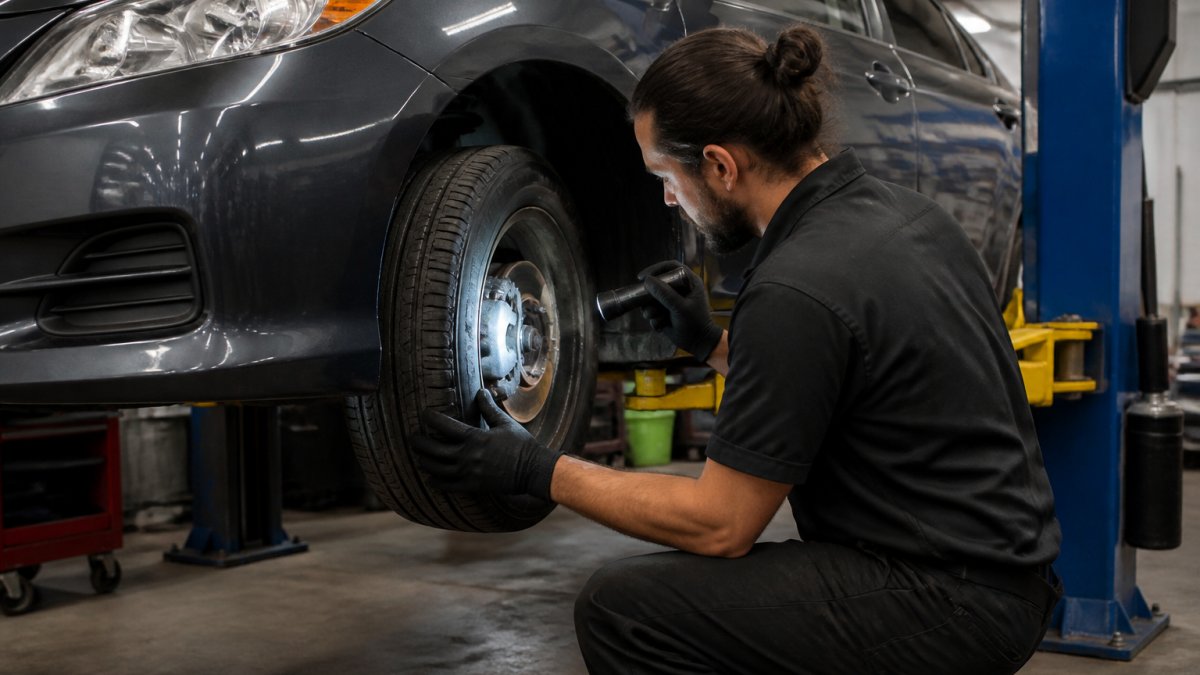
- Look through the wheel spokes with a flashlight at the shield edge nearest the rotor.
- A bright, polished rub mark on the shield or a matching shiny ring on the rotor face confirms contact.
- With the wheel off the ground and the car on a jack stand, spin the tire by hand. A shield rub makes a light, tinny scrape that stops when you push the shield back.
A shield can usually be bent back by hand or with a screwdriver. If it is cracked or rusted through, replacement is inexpensive. This is a five-minute fix owners can often do themselves.
2. Worn pads and metal-on-metal contact
Brake pads have a friction material bonded to a steel backing plate. When the friction material wears down, the backing plate contacts the rotor and produces a hard, continuous grind that gets worse under braking.
Check pad thickness through the caliper window or by removing the wheel. Most pads start around 10-12 mm of friction material and should be replaced before about 2-3 mm.
3. Sticking caliper or seized slide pin
A caliper that sticks keeps a pad pressed against the rotor after you release the pedal (Brake Calipers). That drag creates heat, a burning smell, and a grind that may come and go.
A quick owner-level check: after a short drive, carefully feel the center of each wheel (not the rotor). A wheel noticeably hotter than its opposite is suspect.
4. Warped or scored rotor
A rotor with deep grooves, heavy rust scaling, or uneven wear can produce a rhythmic grind that pulses with wheel speed. Every rotor has a minimum thickness stamped on it, and a rotor worn below that spec must be replaced, not resurfaced. A recent brake job is a strong clue, a pad clip installed wrong, a shield bumped during the work, or a rotor installed without cleaning the hub face can all start a grind the same day.
If the grind started within a few days of brake work, return to the shop that did the job before spending money elsewhere. Misinstalled hardware and bent shields are common and usually covered.
What brake repairs typically involve
Repair scope depends on how far the wear has gone:
- Dust shield: bend back or replace, the lowest-cost brake-related fix.
- Pads only: replace the pad set on the affected axle; rotors are inspected and resurfaced or replaced if scored or below minimum thickness.
- Pads and rotors: the common outcome once metal-on-metal grinding has scored the rotor face.
Prices vary widely by vehicle, parts quality, and labor rates, so ask for a written estimate that lists parts and labor separately. A brake inspection is the right first step, guessing between a shield, a pad, and a bearing by sound alone is how owners pay for the wrong repair.
Do not ignore a grind that appears only under braking or that pulls the car to one side. Brake contact problems worsen quickly and affect stopping distance.
Is It Safe to Drive With a Noisy Wheel Bearing?
Short answer: it depends on what else is happening, and the safe default is to stop driving once grinding is combined with any of the warning signs below. A worn wheel bearing can seize, and a seized bearing at highway speed can cause loss of wheel control.
Stop driving now, arrange a tow
Treat any of these as a do-not-drive condition:
- Grinding that has become constant or noticeably louder over a few days.
- Visible wheel play, the tire rocks when you grip it at 12 and 6 o'clock.
- A hub that is hot to the touch after a short drive compared with the opposite side.
A tow costs far less than a wheel failure at speed. If you are unsure which category you are in, park the car and have it inspected.
Drive gently to a shop, book service promptly
These signs suggest wear that should be diagnosed soon but is less likely to fail without warning:
- A faint hum or rumble that rises with speed and changes when you steer left or right.
- Grinding that appears only in tight, low-speed turns.
- A grind that occurs only while parked and turning the wheel (steering system, not a rolling part).
Even in this group, avoid highway speeds and hard cornering until the cause is confirmed.
What you can safely check yourself
Owner-level checks are limited on purpose. Do these with the car parked on level ground, engine off, parking brake set, and, if you raise a wheel, the car supported on a jack stand, never on the jack alone.
- Listen and locate: have a helper turn the wheel slowly while parked and the engine running. Note whether the sound comes from the steering column area, the wheel wells, or underneath.
- Tire and wheel visual: look for grease splatter on the inner fender or wheel, a torn CV boot, or a shiny rub mark on a dust shield.
- Rock the wheel: with the suspect corner raised and supported, grip the tire at 12 and 6 o'clock and rock it. Any clunk or wobble is a red flag, stop and book service.
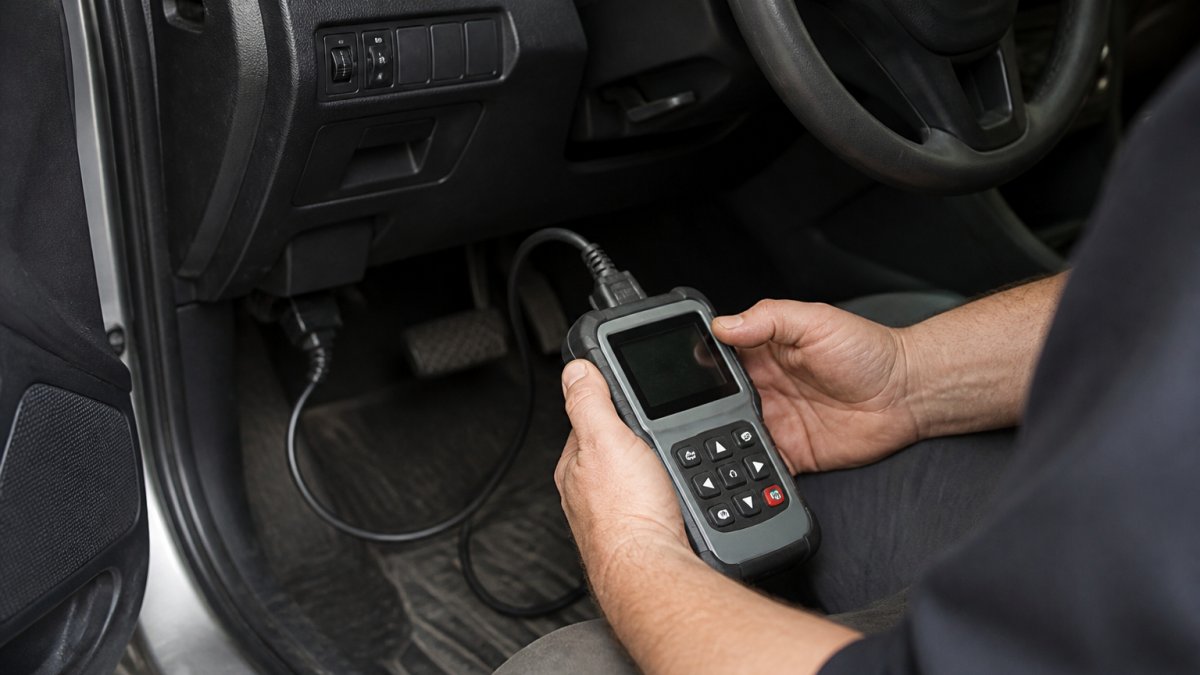
Leave these to a technician: removing an axle nut, pressing a bearing, separating a ball joint, bleeding brakes, and any diagnosis that requires a scan tool (especially electric power steering faults).
Why the answer is not a simple yes or no
A wheel bearing that is merely noisy but tight, cool, and vibration-free may survive a short, gentle trip to a shop. A bearing with play, heat, or vibration is already in a failure mode. The triage above separates those two states so you are not guessing. When the signs point to a bearing, axle, or brake fault, a proper inspection is the only way to confirm the cause before parts are replaced.
Grinding plus wheel play, heat, vibration, or brake symptoms means stop driving. A faint speed-related hum with none of those signs means book service now and keep speeds low until then.
A Symptom-Based Diagnostic Decision Tree
Work through this in order. Each answer sends you to the likely cause.
- Does it grind while parked and turning? Yes: steering system. No: go to step 2.
- Does it change with speed? Yes: rotating part. No: check shields and trim.
- Does it worsen in one turn direction? Yes: loaded-side bearing or CV joint.
- Is there a click or grease splatter? Yes: CV axle.
- Is there wheel play or a hot hub? Yes: wheel bearing.
- Did it start after brake work? Yes: dust shield or caliper.
If the tree points to a bearing, axle, or brake issue, that's our cue.
A grinding noise when turning is your car asking for attention, and the answer is rarely a guess-and-swap. Whether it's a bearing, a CV axle, a dust shield, or the power steering pump, the fix starts with the right diagnosis.
Frequently Asked Questions
What causes a car to make a grinding noise when turning the wheel?
The most common causes are a worn wheel bearing, a failing CV joint or axle, a brake dust shield rubbing against the rotor, and brake pad or caliper contact. Power steering problems, especially low fluid on hydraulic systems, can also produce a grinding noise turning the wheel. Where the noise happens matters: grinding while stationary usually points to the steering system, while grinding at low speed during a tight turn often points to a wheel bearing or CV joint. A shop can confirm with a lift inspection.
Is it safe to drive with a noisy wheel bearing?
Treat a noisy wheel bearing as urgent, not routine. A bearing that is already grinding has lost lubrication and is wearing fast, and in the worst case the wheel can seize or separate. If the noise is loud, comes with vibration or play in the wheel, or has gotten worse quickly, park the car and arrange a tow. A faint hum that only appears at speed is less immediate but still needs diagnosis soon. Do not plan long highway trips on a bearing you know is bad.
Can low power steering fluid cause a grinding noise?
Yes, on hydraulic power steering systems. Low fluid, a worn pump, or air in the system can produce a grinding or whining noise, usually most noticeable at full lock or when turning at low speed. Check the reservoir level and look for leaks at the hoses and rack. Electric power steering has no fluid, so a grinding noise on an EPS car points toward the column motor, the rack, or a non-steering cause like a bearing or brake component.
How can I tell whether the noise is coming from the steering system or a wheel?
Timing is the fastest test. Turn the wheel with the engine running but the car stationary: noise here points to the steering system, such as the pump, rack, or fluid. If the noise only appears while the car is rolling, especially in a tight turn at low speed, suspect a wheel-end part like a bearing, CV joint, or brake component. A helper listening outside near each front wheel while you creep forward in a slow circle can narrow down which side is making the grinding noise turning.