 how-to
7 Symptoms of a Snapped Timing Belt You Should Never Ignore
Last Updated: October 25, 2026
Quick Summary
A snapped timing belt usually shows up as a no-start where the engine cranks fast and easily, because the camshaft no longer turns with the crankshaft. You may also hear clicking, ticking, or metallic noises, or notice misfires, backfires, and sudden power loss. On an interference engine, pistons can strike valves the moment the belt lets go.
- Fast, easy cranking with no start is the strongest at-home clue for a snapped timing belt.
- Stop cranking and arrange a tow once you suspect the belt has failed.
- Most automakers recommend a timing belt replacement interval between 60,000 and 105,000 miles.
- A timing belt is rubber and fails suddenly, while a timing chain usually stretches first.
- Interference engines can suffer bent valves and head damage when a belt snaps.
Table of Contents
- How to Tell If Your Timing Belt Snapped: The Symptoms That Matter
- The 7 Symptoms of a Snapped Timing Belt
- What Happens When a Timing Belt Snaps While Driving
- Broken Timing Belt Engine Damage: Interference vs. Non-Interference Engines
- How to Confirm a Snapped Belt and Rule Out Other No-Start Causes
- Timing Belt Replacement Interval and the Risk Factors That Shorten It
- Timing Belt vs. Timing Chain: Why the Symptoms Differ
- Book a Timing Belt Inspection at Speedy Roo Motorsports
- Frequently Asked Questions
How to Tell If Your Timing Belt Snapped: The Symptoms That Matter
A snapped timing belt can turn a bad morning into a destroyed engine in seconds. At Speedy Roo Motorsports, we've seen how quickly a worn belt becomes a no-start, and the symptoms follow a clear pattern.
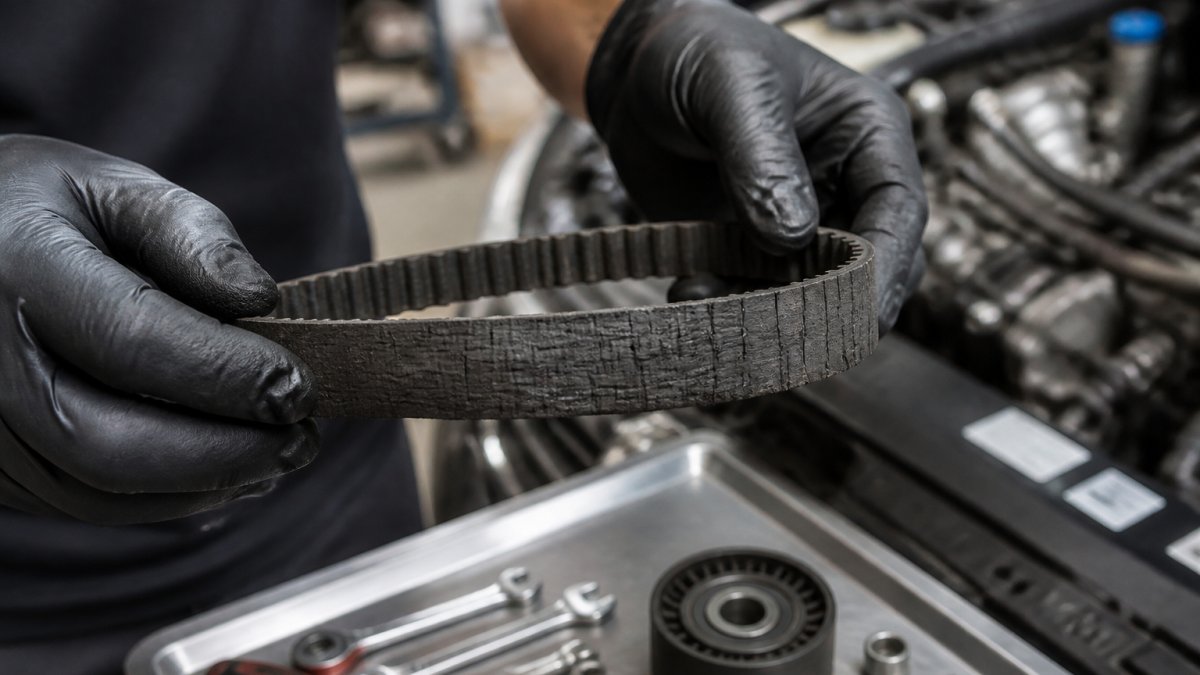
The short version: the engine won't start, it cranks too fast or too easily, and it may make clicking or metallic noises, misfire, or lose power suddenly.
The 7 Symptoms of a Snapped Timing Belt
A snapped timing belt shows up through seven main symptoms. The belt keeps the camshaft and crankshaft in sync, so when it breaks, the engine loses timing and the signs appear fast:
- The engine won't start or cranks without catching
- The engine cranks unusually fast or easily
- Clicking, ticking, whining, or metallic noises
- Misfires, backfires, and power loss
- Sudden engine shutdown while driving
- Visible belt wear, cracking, or fraying
- A no-start after the engine dies with no warning
Engine Won't Start or Cranks Without Catching
The most common sign is a no-start. The starter turns the engine over, but it never fires, because the camshaft isn't turning with the crankshaft, so the valves don't open and close at the right time.
Don't assume a no-start means a dead battery or bad starter. If the engine cranks normally but won't catch, the belt is a strong suspect.
Fast or Unusually Easy Cranking
When the belt snaps, the camshaft stops turning, so the engine spins with less resistance and the starter turns it faster and easier than usual. Fast cranking with no start is a red flag for lost valve timing.
Clicking, Ticking, Whining, or Metallic Noises
A worn timing belt often warns you before it breaks. You may hear:
- Ticking or clicking as the belt slips or the tensioner fails
- Whining or chirping from a worn bearing or pulley
- Metallic knocking if valves have already contacted pistons
These sounds usually get worse over time. If you catch the ticking early, you can replace the belt before it snaps.
Misfires, Backfires, and Power Loss
A belt that's stretched or jumped a tooth throws off timing, causing misfires, backfires, or power loss, plus shaking at idle or a flashing check engine light. A jumped belt can snap, so we treat misfires on a high-mileage engine as a timing concern, not just a spark plug issue. If your check engine light is flashing, see the next steps for a flashing check engine light.
What Happens When a Timing Belt Snaps While Driving
A snapped timing belt stops the camshaft instantly while the pistons keep moving and the valves freeze.
If you're weighing whether to keep driving a car with a worn belt, read about the risks of driving with a worn timing belt before you turn the key again.
Broken Timing Belt Engine Damage: Interference vs. Non-Interference Engines
Whether a snapped belt costs a few hundred dollars or several thousand comes down to engine design, interference versus non-interference, plus engine speed, load, and how quickly the engine was shut down.
What Actually Happens Inside the Engine
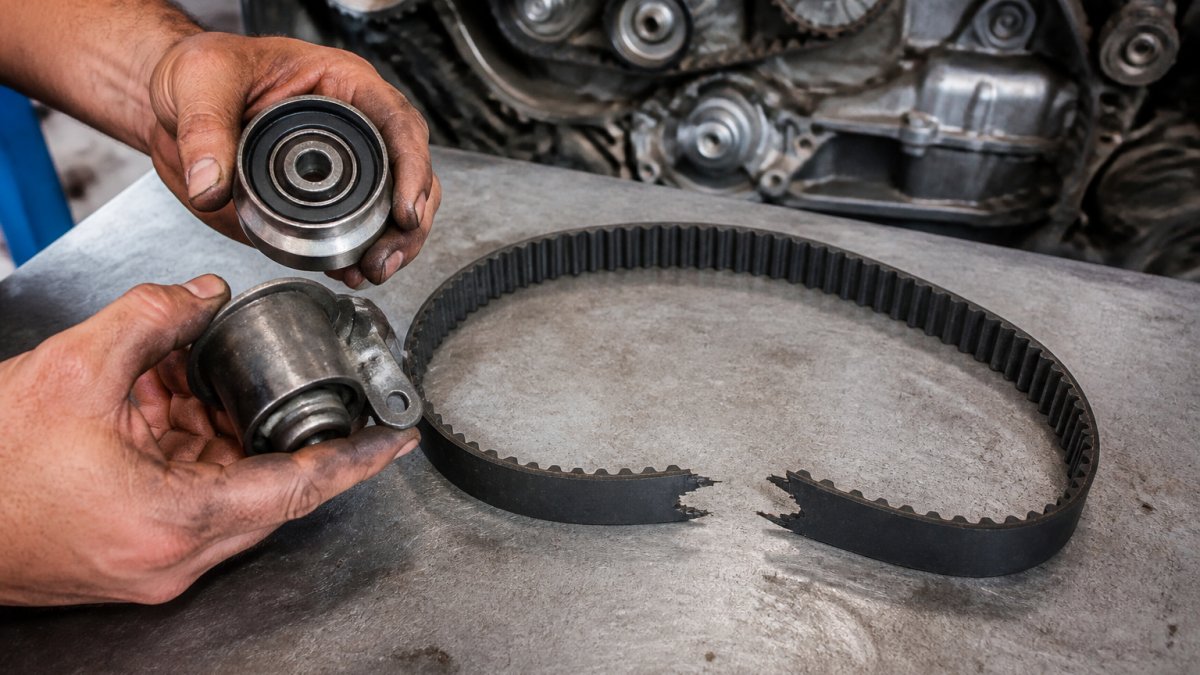
The timing belt keeps the camshaft and crankshaft synchronized. When it snaps, the camshaft stops almost instantly, so the valves freeze while the pistons keep moving. On an interference engine, pistons and valves occupy the same space at different points in the cycle, so a piston can strike an open valve, typically bending valves, damaging valve guides, and sometimes cracking or warping the cylinder head; in severe cases a valve head can break off and score the cylinder wall or damage the piston crown.
| Engine Type | What Happens When the Belt Snaps | Typical Damage | Typical Repair Scope |
|---|---|---|---|
| Interference | Pistons strike valves | Bent valves, damaged guides, possible head damage | Cylinder head removal, valve replacement, sometimes piston work |
| Non-interference | Pistons clear the valves | Belt and related components | Belt, tensioner, and often water pump replacement |
Why the Outcome Varies Even on the Same Engine
Two vehicles with the same interference engine can end up with very different repair bills. What matters:
- Engine speed at failure: a belt that snaps at idle often does less damage than one that fails at highway speed.
- Load: a belt that fails under acceleration or while climbing sends more force through the valvetrain.
- How quickly the engine stops: an engine shut off immediately may escape with less damage than one cranked repeatedly.
No honest technician can promise a specific repair cost before the cylinder head is inspected. A compression test, leak-down test, or borescope inspection is usually needed to see whether valves are bent.
Interference Engines Are Common
Many engines today are interference designs, including a large share of modern four-cylinder and V6 engines, so a snapped belt is a potential engine-out repair on most vehicles. If you're unsure which type yours is, the owner's manual or a repair-information service will list it.
What to Do After a Suspected Belt Failure
If you suspect the belt has snapped, the next few minutes matter:
- Pull over safely. You will lose power steering and power brake assist, so shift to neutral and coast to a safe spot.
- Switch off the ignition. Do not try to restart the engine.
- Do not crank it again. Repeated cranking can turn a valve strike into a destroyed piston or cylinder head.
- Arrange a tow. Have the vehicle towed rather than driven or tow-started.
- Ask for a proper inspection. A compression test and, if needed, a borescope inspection will show whether valves are bent before any repair estimate is given.
Repair Realities
On a non-interference engine, the repair is usually a timing belt job: belt, tensioner, idler pulleys, and often the water pump and camshaft and crankshaft seals. If you're facing major engine damage on an older car, keeping an old car running in Lone Tree can help you decide whether the repair is worthwhile.
How to Confirm a Snapped Belt and Rule Out Other No-Start Causes
A no-start is a symptom, not a diagnosis. A snapped timing belt is only one of several reasons an engine will crank and not catch, so confirm or rule out the belt before you spend money or cause more damage. Work through these checks in order.
Never put your hands, tools, or clothing near the belts, pulleys, or fan while the engine is running or being cranked. A running engine can pull in loose clothing and cause serious injury. If you are not comfortable removing a cover or turning the engine by hand, stop and call a professional.
Step 1: Listen to How It Cranks
Turn the key (or press the start button) for one or two seconds and listen:
- Cranks slowly and sounds labored: suspect the battery, battery cables, or a failing starter.
- Cranks at normal speed but never fires: could be fuel, ignition, or timing. The belt is a suspect but not confirmed.
- Cranks noticeably faster and easier than usual: the classic snapped-belt signature. With the camshaft no longer turning, the engine spins with less resistance.
If the engine cranks fast and easy, move to Step 2. If it cranks slowly, charge or test the battery first, then retry.
Step 2: Rule Out the Battery and Starter
A battery only a few years old can still fail suddenly, and a starter can fail without warning. Quick checks:
- Battery: look for a date sticker, check for corroded or loose terminals, and test voltage with a multimeter. A resting battery in good condition typically reads around 12.6 volts; near 12.0 volts or lower suggests a weak charge. Load-testing at a parts store is usually free.
- Starter: a single heavy click or grinding noise points to the starter or its circuit. A starter that does not engage at all will not produce the fast, easy cranking that points to a snapped belt.
If the battery and starter check out and the engine still cranks fast without firing, the belt is the leading suspect. If the starter itself turns out to be the problem, see starter replacement service in Aurora.
Step 3: Inspect the Belt Safely
With the engine off and the key out, locate the timing cover, on many engines a plastic or metal cover at the front of the engine, sometimes behind an accessory belt. Remove the fasteners and inspect the belt:
- A clean break or missing section confirms a snapped belt.
- Cracks, fraying, glazing, or missing teeth indicate a belt close to failure even if it has not snapped yet.
- A loose or slack belt can point to a failed tensioner or a belt that has jumped timing.
If the belt is intact but you suspect it jumped a tooth, do not crank the engine repeatedly, a jumped belt can still cause valve-to-piston contact on an interference engine.
Step 4: Check Whether the Camshaft Turns
With the engine off, remove the oil filler cap or cam cover if accessible, and have a helper crank the engine briefly while you watch. If the camshaft doesn't rotate while the engine cranks, the belt isn't turning it. On some engines you can instead turn the crankshaft by hand with a breaker bar and watch whether the cam gear moves in sync.
Step 5: Rule Out Fuel and Ignition
If the belt looks intact and the camshaft turns, the problem may be fuel or spark:
- Fuel: listen for the fuel pump prime when you turn the key to the run position, and check whether the engine will fire briefly on starting fluid. An engine that runs briefly on starting fluid but not on its own fuel supply points to a fuel delivery problem.
- Ignition: a flashing check engine light during cranking, or a scan tool showing misfire or crank/cam correlation codes, points to ignition or timing rather than a snapped belt.
A camshaft-to-crankshaft correlation code is a strong clue that timing has been lost, but it does not by itself prove the belt snapped.
When to Stop and Call for Help
Stop cranking and arrange a tow if any of these are true:
- The engine cranks fast and easy with no start.
- You see a broken or badly worn belt.
- You hear metallic contact or knocking while cranking.
Repeated cranking on a snapped belt can turn a valve strike into a damaged piston or cylinder head, a tow is almost always cheaper.
Timing Belt Replacement Interval and the Risk Factors That Shorten It
Most automakers recommend a timing belt replacement interval between 60,000 and 105,000 miles. Check your owner's manual for the exact number, because it varies by model and engine.
Several risk factors shorten belt life:
- Heat and age break down the rubber
- Oil leaks soften and crack the belt
- A worn tensioner or water pump adds stress
A worn belt rarely fails without warning. Skipped maintenance causes bigger repairs than a belt swap, and our guide to repairs caused by neglected maintenance shows what else neglect can cost you.
Timing Belt vs. Timing Chain: Why the Symptoms Differ
Timing chains and timing belts fail differently, which changes the symptoms. A timing belt is rubber and fails suddenly, often with a clean snap and an instant no-start.
So if you hear a steady rattle that worsens on cold starts, think chain. If the engine dies suddenly with fast cranking and no start, think belt.
Book a Timing Belt Inspection at Speedy Roo Motorsports
A timing belt doesn't give much warning, and the difference between a belt swap and a wrecked engine comes down to timing.
At Speedy Roo Motorsports, we've specialized in Japanese vehicles since 2002, including Subaru, Toyota, Lexus, Honda, Acura, Nissan, Infiniti, Mitsubishi, and Mazda.
Get started with Speedy Roo Motorsports and catch a worn belt before it snaps.
Frequently Asked Questions
Will a broken timing belt destroy my engine?
It depends on the engine type. On an interference engine, the pistons and valves share the same space, so a snapped timing belt lets the pistons strike the open valves, which can bend valves and damage pistons and cylinder heads. On a non-interference engine, the valves and pistons never meet, so the engine usually stalls without internal damage but still needs a new belt. Many Japanese engines, including several Honda and Mitsubishi designs, are interference engines, so treat a snapped belt as urgent until a technician confirms otherwise.
Can a car start with a broken timing belt?
No. The timing belt drives the camshaft, which opens and closes the valves. Without it, the camshaft stops turning, so the engine cannot build compression or fire. You may hear the starter motor crank the engine over, and on some engines it cranks faster and more smoothly than normal because there is no compression to fight. That fast cranking is one of the clearest symptoms of a snapped timing belt and a good reason to stop cranking and call for a tow.
What should I do if my timing belt snapped while driving?
Pull over safely as soon as the engine quits and shift into park or neutral. Turn on your hazard lights, stay off the shoulder if you can reach a lot or side street, and do not try to restart the engine. Cranking a broken timing belt can turn a simple belt replacement into valve and piston damage on an interference engine. Call for a tow to a shop that works on your vehicle, and ask them to inspect the belt and check for valve damage before quoting a repair.
How often should you replace the timing belt?
Most manufacturers call for a timing belt replacement interval between 60,000 and 105,000 miles, and the owner's manual for your specific model is the final word. Time matters as much as mileage, so a low-mileage car that is 10 or more years old may still be due. Heat, oil leaks, and stop-and-go commuting shorten belt life. If you are near the interval or unsure when the belt was last changed, have it inspected before it fails.