 how-to
Toyota Corolla Overheating at Idle: Fix Guide
Last Updated: October 23, 2026
Quick Summary
Overheating at idle in a Toyota Corolla is almost always an airflow or coolant circulation problem at low engine speed, most commonly a radiator fan that is not working. Test the fan first by turning on the AC to command it on, then check the fuse, relay, connector, and ground before replacing the motor. If the fan checks out, check coolant level and flow.
- An idle-only overheat points at the fan, coolant level, or a flow restriction, not the engine itself.
- Turn on the AC to max cold to command the radiator fan on for a quick functional test.
- Check the cooling fan fuse first, using the diagram printed on your model year's fuse box lid.
- A fan that spins with direct power but not on its own points to the relay, fuse, wiring, or coolant temperature sensor.
- Run a 15- to 20-minute idle test with the AC on to confirm the repair held.
Table of Contents
- Why Your Toyota Corolla Overheats at Idle
- Toyota Corolla Radiator Fan Not Working: Step-by-Step Checks
- Toyota Corolla Coolant Leak and Overheating: Where to Look
- Toyota Corolla Thermostat Symptoms and Coolant Flow Problems
- Toyota Corolla Overheating in Traffic but Not While Driving
- When to Stop Driving and Escalate the Diagnosis
- How to Confirm the Overheating at Idle Fix Worked
- Conclusion
- Frequently Asked Questions
Why Your Toyota Corolla Overheats at Idle
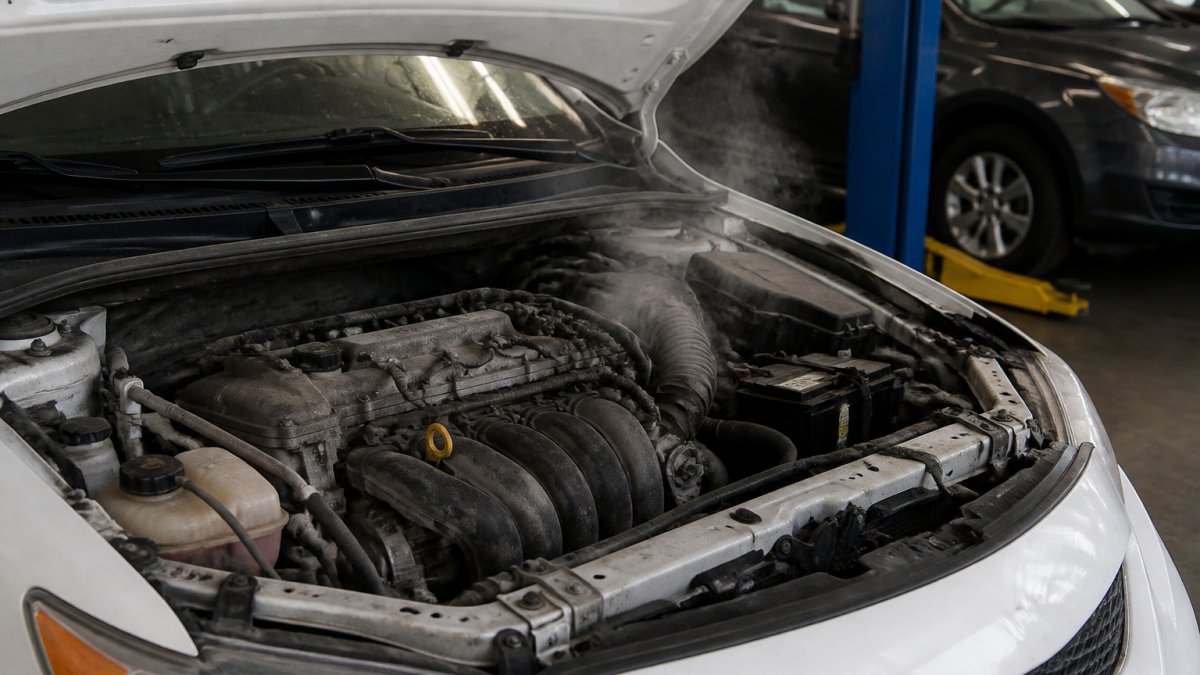
If your Toyota Corolla is overheating at idle, the problem is almost always airflow or coolant circulation at low engine speed. At Speedy Roo Motorsports, we see this pattern often: the temperature gauge climbs while you sit in traffic or a drive-thru, then drops once you start moving. That single clue narrows the diagnosis fast.
An engine overheating at idle means heat is building with no way out. When the car moves, outside air pushes through the radiator. When it sits still, only the radiator fan moves that air. So an idle-only overheat points at the fan, the coolant level, or a flow restriction.
Below, we walk through the checks we run in our shop, in the order that saves the most time.
Toyota Corolla Radiator Fan Not Working: Step-by-Step Checks
A Toyota Corolla radiator fan not working is the most common cause of idle-only overheating, but "the fan is dead" is rarely the whole story.
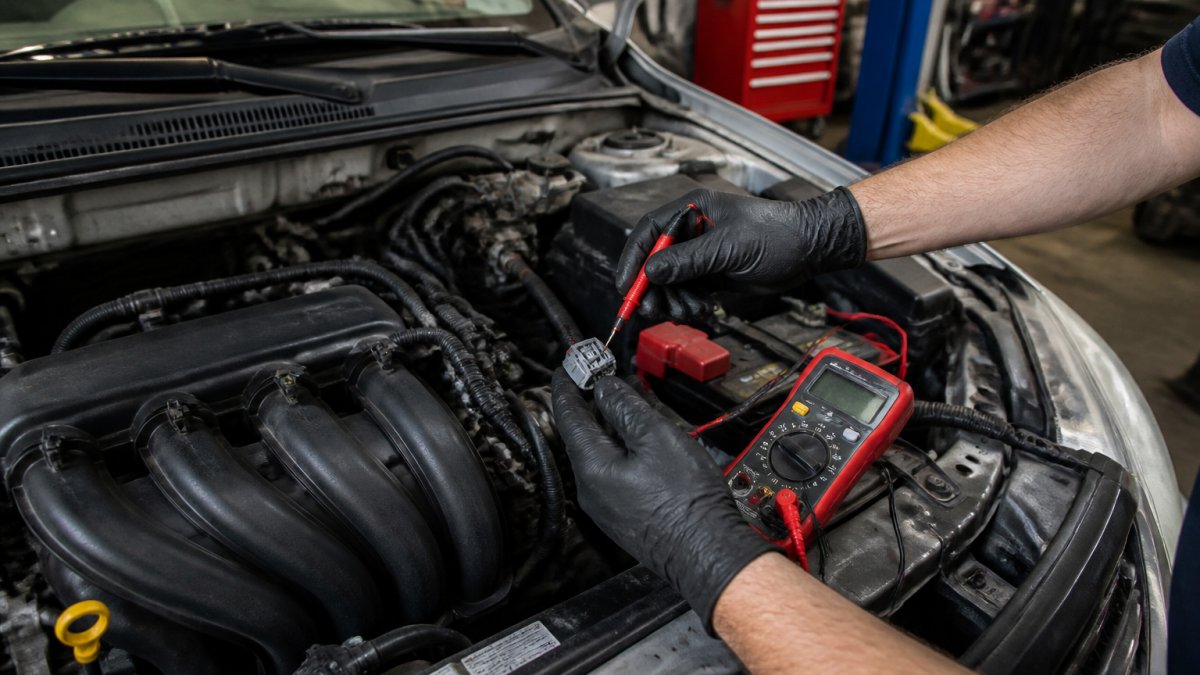
Before you start: the engine must be cold, the car in Park or Neutral with the parking brake set, and the key out of the ignition before you reach into the fan shroud.
- Start the engine cold and let it idle with the hood open. Note the temperature gauge position.
- Turn on the air conditioning to max cold. On most Corollas this commands the condenser fan and the radiator fan on, which gives you a quick functional test without waiting for the engine to heat up.
- Watch and listen for one to two minutes. The fan should spin. If it does, the motor and its power circuit are likely good and the problem is elsewhere (thermostat, coolant level, or a fan that only fails on high speed).
- Check the cooling fan fuse first. It is the cheapest and fastest check. Consult the under-hood fuse box label for your model year, fuse names and locations vary by generation, so use the diagram printed on the fuse box lid rather than a generic list.
- Test the fan relay by swapping it with an identical relay nearby (many Corollas use several identical relays in the under-hood box). If the fan starts working after the swap, the relay was the fault.
- Inspect the fan connector and ground for corrosion, a loose plug, or a chafed wire. A poor ground at the fan or at the body can mimic a dead motor.
- Test the fan motor directly with a multimeter or a fused jumper to battery power. If it spins with direct power but not on its own, the motor is fine and the fault is upstream: fuse, relay, wiring, or the coolant temperature sensor signal.
How to tell a motor fault from a control fault: if the fan runs with direct power, stop replacing the motor. The next suspects are the relay, the fuse, the wiring, and the coolant temperature sensor.
Two-speed fans: some Corolla generations use a fan that runs at low speed for normal cooling and high speed when AC pressure or coolant temperature climbs.
Toyota Corolla Coolant Leak and Overheating: Where to Look
A Toyota Corolla coolant leak and overheating usually travel together. Low coolant means less liquid to carry heat away, and the engine runs hot fast. RepairPal's Toyota Corolla overheating symptom guide lists coolant leaks from the water pump, radiator, or hose as common causes, along with fan problems and a failed thermostat.
Check these spots when you suspect a leak:
- Radiator seams and the lower tank for crusty white or green residue
- Upper and lower radiator hoses for cracks, soft spots, or swelling
- Water pump weep hole for a slow drip
- Coolant bypass valve and thermostat housing for seepage
- Reserve tank and overflow tank for a cracked body or a cap that will not seal
Look under the car after it sits overnight. A fresh puddle or a wet spot on the splash shield tells you where to start. If you spot leaking fluid and are unsure whether it is safe to keep driving, what to do about a fluid leak walks through the next steps.
Toyota Corolla Thermostat Symptoms and Coolant Flow Problems
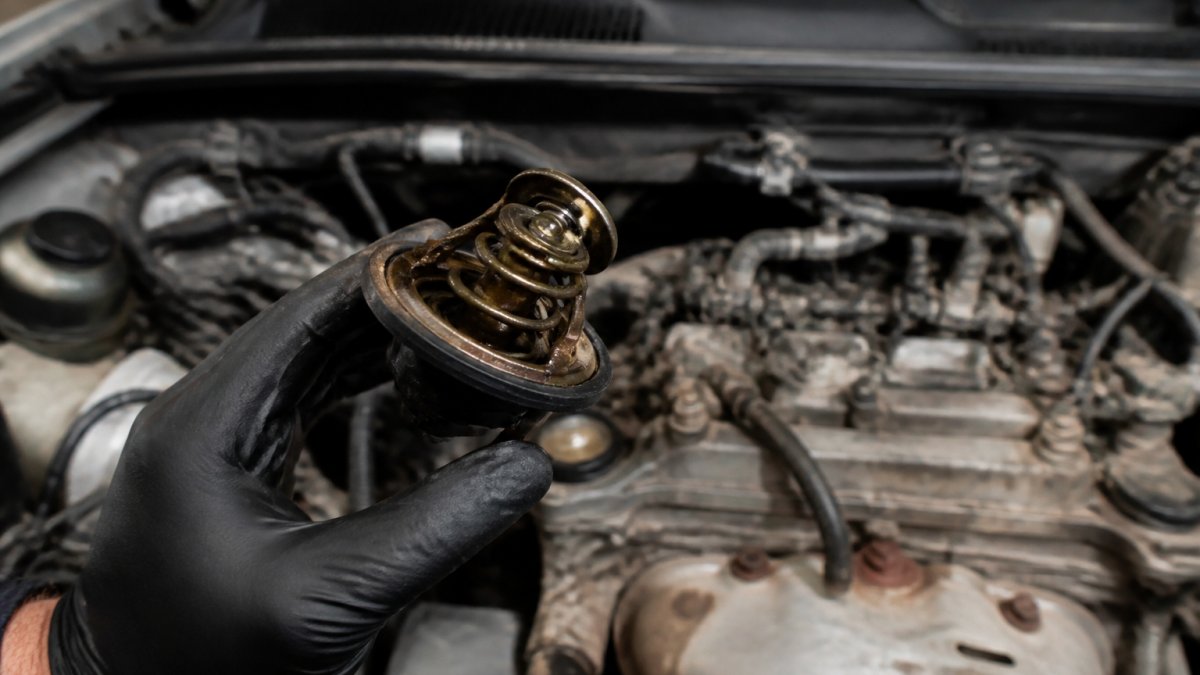
Toyota Corolla thermostat symptoms show up as coolant flow problems, not just temperature swings. A thermostat that sticks closed blocks coolant from reaching the radiator. The engine overheats while the radiator stays cool to the touch.
Watch for these signs:
- Gauge climbs fast after a cold start
- Radiator hoses feel cold while the engine is hot
- Heater blows cold even with the engine warm
- Temperature swings between normal and hot
- Boiling coolant or steam from the overflow tank
A clogged or blocked radiator causes similar trouble. If the thermostat checks out, look at radiator restriction next. A coolant flush helps when the system is dirty, but it will not fix a failed thermostat or a cracked hose. For a deeper Toyota-specific symptom breakdown, see our guide to bad Toyota thermostat signs.
Toyota Corolla Overheating in Traffic but Not While Driving
Overheating in traffic but not while driving confirms the problem is airflow, not the engine itself. When the car moves, outside air is forced through the radiator. When you stop, the radiator fan has to move that air on its own.
Why the pattern matters: the engine is making the same heat at idle as it is at low speed, the difference is how that heat leaves the radiator.
Here is how idle and driving overheat compare:
| Condition | Likely Cause | First Check |
|---|---|---|
| Hot at idle, normal while driving | Radiator fan failure or fan relay | Fan spin test with AC on |
| Hot while driving, normal at idle | Blocked radiator or low coolant | Coolant level and radiator flow |
| Hot in both conditions | Coolant leak or failed thermostat | Pressure test and thermostat |
| Hot only with AC on | Fan not engaging on high speed | Fan high-speed circuit |
Run a controlled idle test to confirm the pattern. With the engine cold, top off coolant to the correct level, start the engine, and let it idle with the AC on max cold. Watch the gauge and the fan for 15 to 20 minutes.
Model-year and engine differences matter. Cooling-system layout, fan configuration, and relay and fuse locations vary across Corolla generations and between engines.
If your Corolla only runs hot while sitting still, start with the fan. That one check solves most of these cases.
When to Stop Driving and Escalate the Diagnosis
Stop driving the moment the temperature gauge hits the red or you see steam. Continuing to drive an overheating engine can warp the head, blow a head gasket, and turn a small repair into a major one.
Pull over safely, shut the engine off, and let it cool fully before opening anything. Never open a hot radiator cap. Coolant pressure can send boiling coolant out and cause burns.
Escalate to a shop when:
- The gauge reaches red or steam appears
- Coolant keeps dropping with no visible puddle
- The fan and thermostat both check out but it still runs hot
- You smell coolant inside the cabin, which can point to a heater core leak
If you want to pull codes before you book, our guide on using an OBD-II scanner covers the basics. When you are ready to hand it off, our team can diagnose and repair the overheating and confirm the fix.
How to Confirm the Overheating at Idle Fix Worked
Confirming the overheating at idle fix worked takes more than a short drive. You need to recreate the conditions that caused it: sitting still, engine hot, air conditioning on.
Run this check:
- Top off coolant to the correct level and burp the system.
- Let the engine idle for 15 to 20 minutes with the AC on.
- Watch the gauge the whole time. It should hold steady.
- Confirm the fan cycles on and off as temperature rises.
- Check for leaks under the car after it cools.
- Take a short drive, then let it idle again to double-check.
If the gauge stays put and the fan cycles normally, the repair held. If it climbs again, the cause is still there and needs another look.
Conclusion
An idle-only overheat is a solvable problem, but it punishes guesswork. Check the fan first, then coolant level, then flow. That order finds the fault fast.
If the diagnosis stalls or you would rather hand it off, Speedy Roo Motorsports has worked on Japanese vehicles since 2002. We offer honest communication, quality work under the hood, and towing and local rentals for added convenience. Get started with Speedy Roo Motorsports and get your Corolla running cool again.
Frequently Asked Questions
Why does my Corolla cool down when I start driving?
At idle the radiator depends almost entirely on the electric fan to pull air through the fins. Once you drive, ram air does that job, so a car with a dead fan or a partially blocked radiator can sit at normal temperature above 30 mph and climb only when stopped. That pattern points at airflow, not at the thermostat. Test the fan first: warm the engine with the A/C on and watch whether the fan spins within a few minutes. If it stays still, check the fuse, relay, and connector before replacing the motor.
How can I tell if my Corolla's radiator fan is working?
Start the engine cold, turn the A/C to max, and open the hood. The condenser fan and radiator fan should both run within a minute or two on most Corolla generations. If nothing spins, tap the fan motor housing gently with a screwdriver handle while the key is on. A fan that starts after a tap has a worn motor and needs replacement. Also check the fan fuse in the under-hood box and swap the relay with an identical one nearby to rule out a $15 part before buying a motor.
Can low coolant cause a Toyota Corolla to overheat at idle?
Yes. A low coolant level is the most common reason a Corolla overheats when stopped, because the water pump can cavitate and the temperature sensor reads steam instead of liquid. Let the engine cool completely, then check the reserve tank and the radiator neck itself, not just the plastic bottle. Top up with the correct Toyota coolant, but treat any repeat loss as a leak. Pressure-test the system or look for crusty pink residue at hose clamps, the water pump weep hole, and the radiator seams.
Is it safe to drive a Corolla that overheats at idle?
Short answer: no, not for long. Aluminum heads warp around 230 to 240 degrees Fahrenheit, and a Corolla that pegs the gauge can blow a head gasket in a single commute. If the needle climbs while you are stopped, shut off the A/C, turn the heater to full hot, and get moving at steady speed to buy airflow. Pull over and shut down if the gauge reaches the red or you see steam. A tow costs far less than a head gasket job, and driving on an overheating engine can turn a $200 fan repair into a $2,000 engine repair.