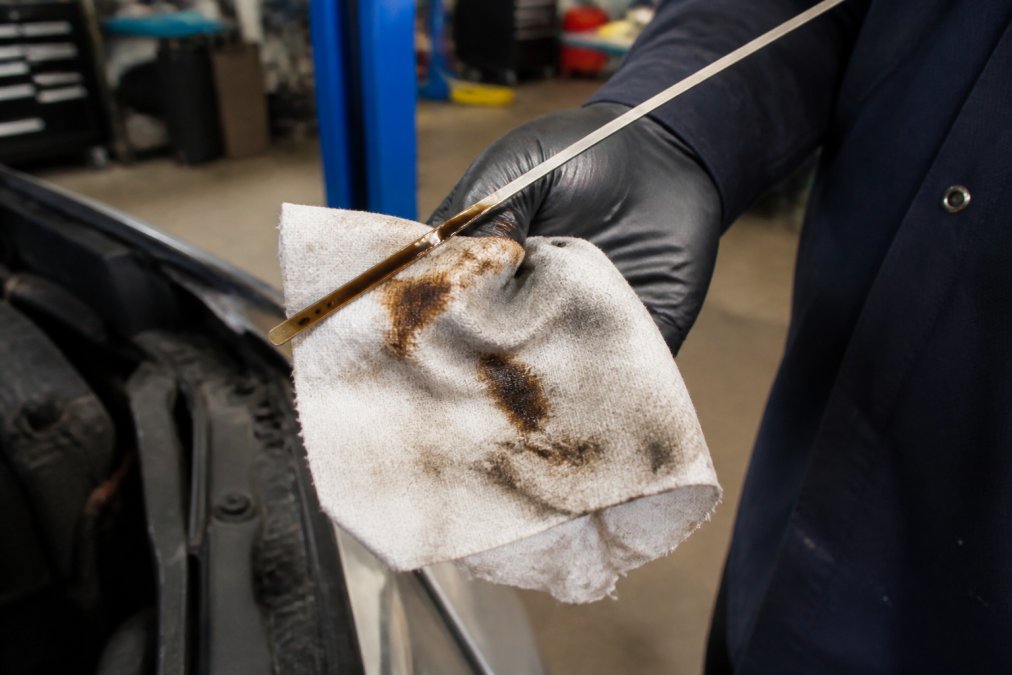
 how-to
How to Tell If Transmission Fluid Is Burnt: 7 Signs
Table of Contents
- What Burnt Transmission Fluid Smells and Looks Like
- Transmission Fluid Color Chart: Reading the Dipstick
- Symptoms of Bad Transmission Fluid You Should Not Ignore
- What Causes Transmission Fluid to Burn
- Burnt Fluid vs. Exhaust Leaks: Avoiding a False Positive
- DIY vs. Professional Fluid Testing Kits
- Transmission Fluid Change Interval and Post-Change Maintenance
- Conclusion
- Frequently Asked Questions
Last Updated: September 16, 2026
What Burnt Transmission Fluid Smells and Looks Like
Learning how to tell if transmission fluid is burnt starts with your nose and eyes, not a scan tool. Burnt transmission fluid smells acrid and sweet, like scorched toast or toasted almonds, and looks dark brown or black instead of the clear red it was when new. At Speedy Roo Motorsports, we've checked fluid on thousands of Japanese vehicles since 2002, and those two cues catch many problems before a transmission fails.
Transmission fluid is a hydraulic oil that lubricates gears, clutch packs, and bearings while carrying heat away from the torque converter. When it overheats, the fluid oxidizes and its additives break down, and the burnt smell begins.
A burnt smell is never normal and never fixes itself. Oxidized fluid loses the friction properties the transmission depends on, so damage compounds with every mile.
The Smell Test: Burnt Toast and Toasted Almonds
Healthy automatic transmission fluid has a faint, slightly sweet petroleum odor; burnt fluid smells acrid and scorched, closer to burnt toast, with a toasted almond note underneath.
A common mistake is checking the smell right after a long highway drive, since heat amplifies every odor. Let the car sit 15 to 20 minutes before judging; if the smell lingers on the dipstick after the engine cools, the fluid is burnt.
The Dipstick Check: Color and Consistency
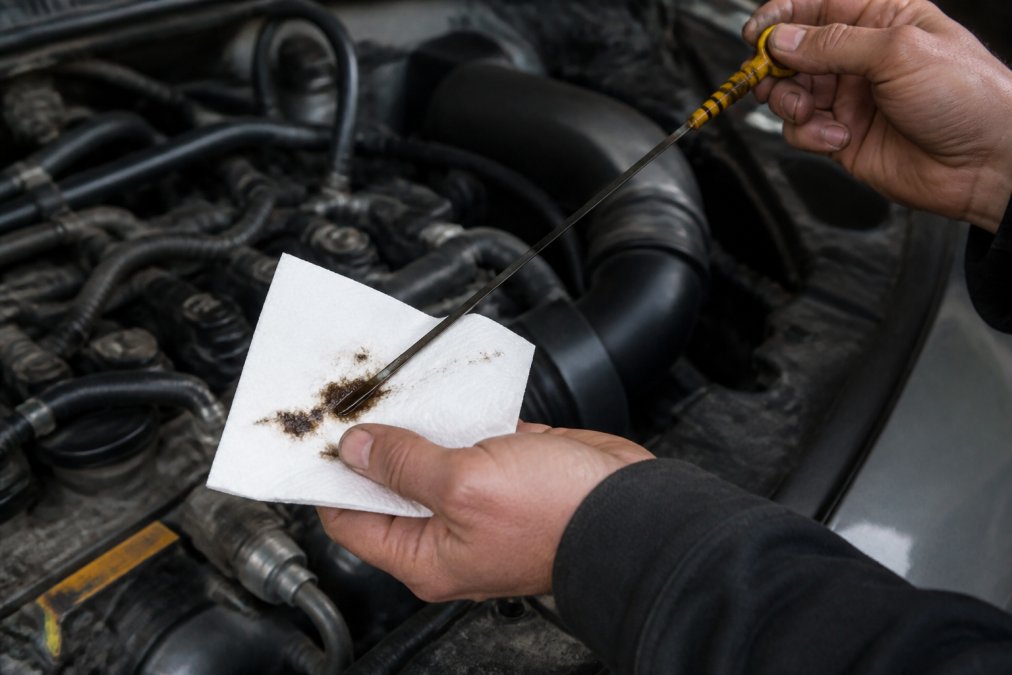
Pull the dipstick with the engine warm and running, wipe it clean, reinsert it fully, then pull it again. Fresh fluid is translucent red or reddish-pink; oxidized fluid turns muddy brown then black, and may feel gritty from suspended clutch material.
Transmission Fluid Color Chart: Reading the Dipstick
A transmission fluid color chart turns a vague "it looks dark" into a working diagnosis, but only against the right baseline. Color alone doesn't confirm failure, and the same shade means different things depending on your transmission's fluid. Use the chart below as a starting point, then adjust for transmission type.
| Fluid Color | What It Means | Recommended Action |
|---|---|---|
| Clear red / pink | Healthy automatic transmission fluid, within service life | Keep to your maintenance schedule |
| Light brown | Early degradation, often heat-related | Test the fluid, plan a change soon |
| Muddy brown | Oxidation underway, additives wearing out | Change fluid and inspect for leaks |
| Dark black | Severe thermal breakdown, possible friction material | Stop driving, get a professional diagnosis |
| Milky or pink foam | Coolant contamination from a failed cooler | Do not drive, repair immediately |
| Amber / honey (CVT) | Normal for many continuously variable transmissions | Compare against a fresh sample of the same fluid |
| Dark amber to brown (manual) | Normal aging in gear oil, not necessarily burnt | Rely on smell and metal content, not color alone |
Why the Same Color Means Different Things by Transmission Type
Automatic transmission fluid is dyed red so leaks and contamination are easy to spot, and it shifts toward brown and black as the dye and additives oxidize.
Reading Color Correctly: Three Rules That Prevent Misdiagnosis
First, sample from the dipstick or check plug, not a puddle, fluid that dripped onto a hot exhaust or sat in a drain pan picks up soot and looks darker than it is.
Symptoms of Bad Transmission Fluid You Should Not Ignore
The symptoms of bad transmission fluid show up in how the car drives long before a warning light appears, and they differ by transmission type. Slipping gears, delayed engagement from park to drive, and harsh or shuddering shifts are the classic trio on a conventional automatic, along with hunting between gears on inclines or hesitation from a stop.
What Each Symptom Actually Means
Slipping is the engine revving without a matching increase in road speed. Oxidized fluid has lost the friction properties the clutch packs need to grip, so they slip instead of locking, and each slip sheds more friction material into the fluid, which is why slipping accelerates once it starts.
How Symptoms Differ by Transmission Type
On a continuously variable transmission, the signs differ. Instead of distinct shifts, you may feel a rubber-band sensation, a drone or whine that changes with speed, or hesitation from a rolling stop. CVTs are especially sensitive to fluid condition because the steel belt or chain relies on precise hydraulic pressure against the pulleys, and degraded fluid distorts it.
Temperature and Load as Early Warnings
Temperature is the other signal, and it often arrives before drivability symptoms. Degraded fluid carries heat poorly, so the transmission runs hotter and breaks down faster. If the pan feels unusually hot after a short drive, or you catch a burnt smell after a long grade or towing, treat it as a warning.
What Causes Transmission Fluid to Burn
Heat is the root cause, and most of it comes from how the vehicle is used rather than a defect. Every time the torque converter multiplies torque it generates heat, and the transmission cooler keeps that heat in check; when heat in exceeds heat out, fluid degradation follows.
Heat, Towing, and Stop-and-Go Driving
Towing, hauling, and mountain driving push operating temperature higher for longer, as does the stop-and-go commute, where the converter never locks up and keeps generating heat without steady airflow through the cooler. Short trips are quietly hard on fluid too, since the transmission rarely reaches normal operating temperature.
Low Fluid Level and a Clogged Transmission Cooler
A low fluid level reduces lubrication and heat transfer, and it's often the first thing to check on a high-mileage drivetrain. A clogged transmission cooler traps heat in the fluid, and a failing cooler can push coolant into the transmission, producing that milky color from the chart. Both burn fluid fast and are inexpensive to catch early. Neglecting these cooling components often leads to secondary mechanical strain, much like how the symptoms of failing drive belts signal an impending breakdown in the engine accessory system.
Burnt Fluid vs. Exhaust Leaks: Avoiding a False Positive
Not every burnt smell under a car comes from the transmission. Oil dripping onto a hot exhaust manifold, a failing catalytic converter, or a plastic bag melted against the exhaust all produce a scorched odor that drifts into the cabin, a common false positive that sends drivers toward unnecessary repairs.
DIY vs. Professional Fluid Testing Kits
A DIY fluid test kit gives you a lab-style read on fluid condition without pulling the pan. Most kits have you draw a sample through the dipstick tube, mail it in, and receive a report covering viscosity, oxidation, and wear metals, a reasonable option for a high-mileage vehicle where you want data before committing to a fluid service.
Transmission Fluid Change Interval and Post-Change Maintenance
Your transmission fluid change interval depends on the vehicle and how it's driven, so check the owner's manual rather than a generic number. Severe-duty use, which includes towing, mountain driving, and heavy stop-and-go commuting, calls for shorter intervals than the "normal" schedule in the manual. For general guidance on how driving conditions affect service schedules, the U.S. Department of Energy fuel economy and maintenance resources is worth a look.
| Maintenance Step | When | Why It Matters |
|---|---|---|
| Check fluid level and color | Every oil change | Catches degradation early |
| Recheck after a fluid service | Within 300-500 miles | Confirms the fluid is holding up |
| Inspect the transmission cooler | At every fluid service | Prevents heat and coolant contamination |
| Scan for transmission codes | At the first symptom | Separates fluid issues from internal faults |
Conclusion
A burnt smell that lingers on the dipstick is a countdown, not a coincidence. Catching it early, through the smell test, the color chart, and a prompt diagnosis, is the difference between a fluid service and a rebuilt gearbox.
Frequently Asked Questions
What color is burnt transmission fluid?
Fresh automatic transmission fluid is a translucent red. As it degrades, it turns reddish-brown, then muddy brown, and eventually dark black. Burnt transmission fluid is usually dark brown or black and may look cloudy or gritty on the dipstick. If you wipe it on a white paper towel and see black specks or a scorched smell, the fluid has oxidized from thermal breakdown and needs attention.
What does burnt transmission fluid smell like?
Burnt transmission fluid smells acrid and scorched, similar to burnt toast or toasted almonds. That smell comes from fluid degradation inside the transmission, where normal operating temperatures can exceed 200 degrees Fahrenheit and climb much higher under heavy load. If the dipstick smells sweet and slightly petroleum-like, the fluid is likely still fine. A sharp, burnt odor is the clearest early warning sign.
Does burnt transmission fluid always mean a rebuild is necessary?
No. Burnt fluid means the fluid overheated, but the internal components may still be intact. A fluid and filter change, plus a look at the transmission cooler, often resolves the issue if caught early. If you also notice slipping gears, shifting delay, or metal debris in the transmission pan, internal damage to clutch packs or the torque converter is more likely. A professional diagnosis is the only way to know for sure.
How long does it take for transmission fluid to burn?
It depends on driving conditions and maintenance. Under normal commuting, quality fluid can last 30,000 to 60,000 miles before it degrades enough to discolor. Towing, mountain driving, or a low fluid level can burn fluid in a fraction of that time. Once fluid overheats repeatedly, oxidation accelerates, so checking the dipstick every few thousand miles is the simplest way to catch it early.