 how-to
How to Use an OBD-II Scanner for Engine Diagnostics
Table of Contents
- What an OBD-II Scanner Does and What You Need
- How to Connect an OBD-II Scanner to Your Vehicle
- How to Read OBD-II Codes and Interpret Them
- Pending vs. Stored OBD-II Codes: What's the Difference?
- Freeze-Frame Data Meaning and Why It Matters
- After the Code: A Repeatable Diagnostic Workflow
- Common Mistakes and Scanner Limitations
- Conclusion
- Frequently Asked Questions
Last Updated: October 18, 2026
What an OBD-II Scanner Does and What You Need
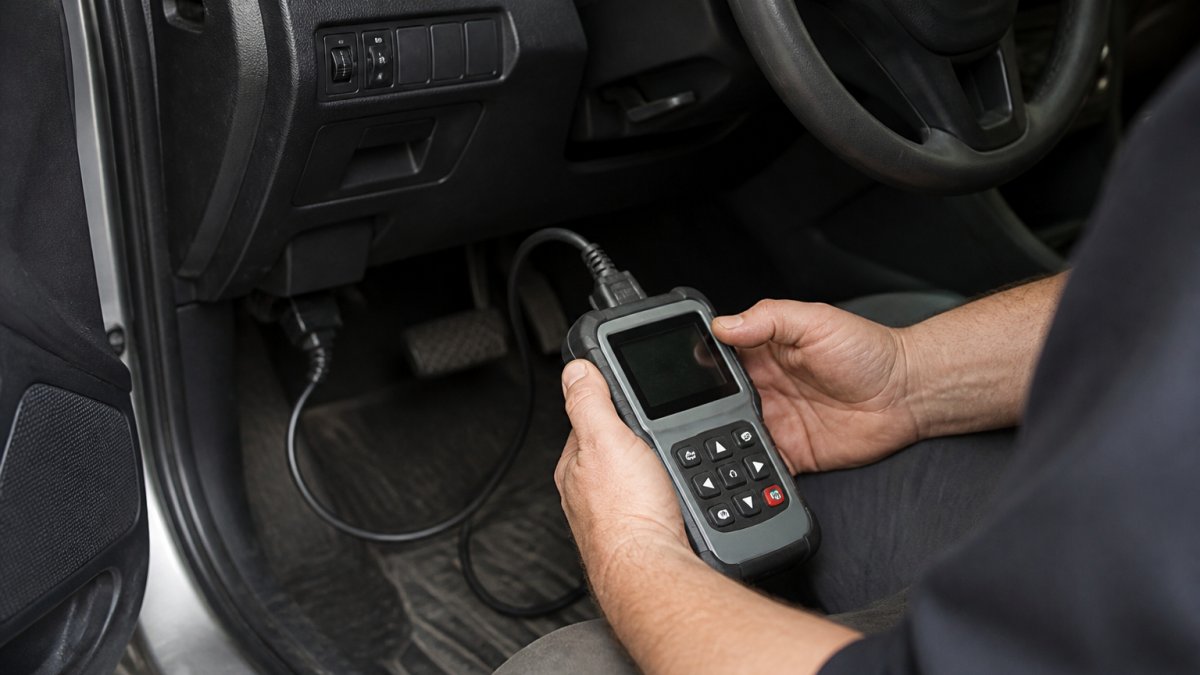
An OBD-II scanner is a handheld or app-based tool that plugs into your car's diagnostic port and talks to the engine control module. It pulls the diagnostic trouble codes stored when your check-engine light comes on.
Here at Speedy Roo Motorsports, we use scanners daily on Subaru, Toyota, Honda, Nissan, and Mazda vehicles. The tool itself is simple. Reading the code is the easy part.
You need three things to start:
- A scanner that supports your vehicle (a basic code reader or a Bluetooth dongle with an app)
- Your car's diagnostic port location (usually under the dash, driver's side)
- The ignition key, so you can power the system
A cheap code reader will pull generic codes. A full scan tool reads manufacturer-specific data, live sensor readings, and freeze-frame information. Know which one you have before you start.
How to Connect an OBD-II Scanner to Your Vehicle
Connecting an OBD-II scanner takes about two minutes. Find the 16-pin diagnostic port under the driver's side of the dashboard, near the steering column. Plug the connector in firmly.
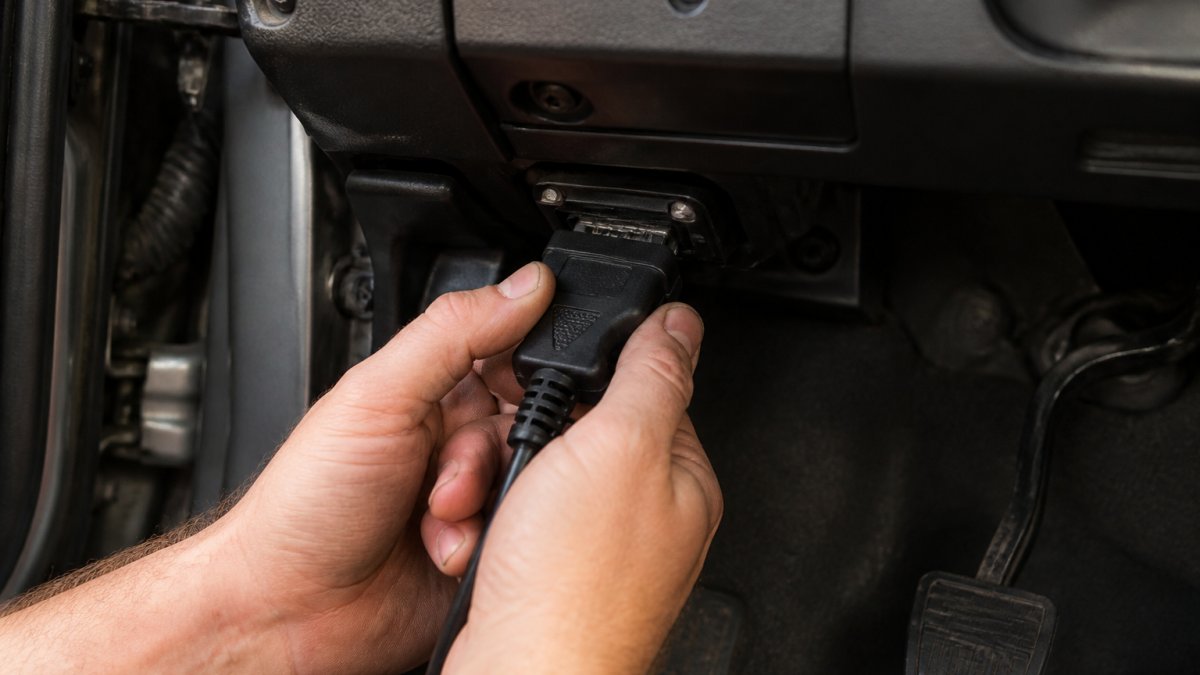
Here is the connection sequence we follow in the shop:
- Turn the ignition to the "on" position with the engine off (or start the engine if the tool requires it).
- Plug the scanner into the diagnostic port.
- Wait for the tool to power up.
- Turn on the scanner or pair it with your phone via Bluetooth.
- Select your vehicle make and model if the tool asks.
- Let the scanner establish communication with the ECU.
If the screen says "no communication," check the connection first. A loose plug causes most of these errors. Some scanners need the engine running, others need it off. Check your tool's instructions.
How to Read OBD-II Codes and Interpret Them
Reading OBD-II codes means pulling the diagnostic trouble codes (DTCs) your ECU has stored. Once connected, select "read codes" on your scanner. The tool displays a letter and four digits, like P0301.
Here's what the first letter tells you:
- P = powertrain (engine and transmission)
- B = body
- C = chassis
- U = network communication
The number after the letter matters too. Codes starting with P0 are generic and apply to all makes. Codes with P1 are manufacturer-specific, so a P1 code on a Subaru may mean something different on a Honda.
Code status: pending, confirmed, and permanent
A scanner doesn't just hand you a code, it tells you what state the code is in, and that state changes how you should react.
- Pending code. The ECU saw a fault once but hasn't confirmed it across enough drive cycles to light the check-engine light. A pending code is often an intermittent problem, a sensor that acts up only when cold, or a misfire that shows up under a specific load. Watch it for a few drive cycles before assuming the worst.
- Confirmed (stored) code. The fault has repeated across multiple drive cycles and the ECU has turned on the check-engine light. This is the code you act on.
- Permanent code. This is the one that trips people up. A permanent code stays in the ECU until the vehicle's own self-tests confirm the repair, even if you clear codes with a scanner. You cannot erase a permanent code with a code reader. If you clear a confirmed code and the light comes back a few days later, a permanent code may be why.
When you scan, write down which status each code carries. A single pending code and a stack of confirmed codes call for very different responses.
A code is a starting point, not a diagnosis
P0301 means "cylinder 1 misfire." It does not tell you whether the cause is a bad spark plug, a failing coil, a vacuum leak, or a wiring problem. That takes testing.
This is the distinction most drivers miss. Reading a code is retrieval. Diagnosing the fault is investigation. The scanner points you toward the problem area; a technician then tests components to find the actual cause. A P0420 for catalyst efficiency is a classic example, it can mean a tired catalytic converter, but it can also mean an exhaust leak or a lazy oxygen sensor.
How to verify a cause before replacing parts
A repeatable way to move from code to cause:
- Record the code and its status before you touch anything.
- Pull freeze-frame data (covered below) to see the conditions when the fault set.
- Check for related codes. Multiple codes often share one root cause, a lean condition can set misfire, oxygen sensor, and fuel trim codes at once.
- Inspect the circuit the code names. Look for loose connectors, cracked hoses, chafed wiring, or visible damage.
- Test the component with a multimeter or live data rather than replacing it on suspicion.
- Repair the actual fault, then clear codes and drive a full drive cycle to confirm the fix.
Pending vs. Stored OBD-II Codes: What's the Difference?
Pending and stored codes tell you different things about how serious a problem is. A pending code is a fault the ECU detected once but hasn't confirmed.
There's a third type: permanent codes.
Why does this matter? A pending code often means an intermittent issue, like a sensor acting up only when cold.
When you scan, note which type you see. If you only have a pending code, watch it for a few days before assuming the worst.
Freeze-Frame Data Meaning and Why It Matters
Freeze-frame data is a snapshot of engine conditions at the exact moment a fault was set.
This is one of the most useful features on a scanner, and most drivers never look at it. Freeze-frame data tells you what the engine was doing when the problem happened.
A technician uses this snapshot to recreate the conditions and confirm the fault. Without it, you're guessing. With it, you have a repeatable test scenario.
Live data goes a step further. It shows real-time sensor readings while the engine runs.
After the Code: A Repeatable Diagnostic Workflow
A code is where diagnosis starts, not where it ends. Here is the workflow we use to move from a code to a confirmed repair:
- Record the codes and freeze-frame data before touching anything.
- Check for related codes. Multiple codes often share one root cause.
- Inspect the obvious. Look for loose connectors, cracked hoses, or visible damage in the circuit the code names.
- Test the component. Use a multimeter or live data to check the sensor or circuit, not just the part the code points to.
- Repair the actual fault, not the symptom.
- Clear codes and drive the vehicle through a full drive cycle.
- Verify the fix. Confirm the light stays off and readiness monitors set.
That last step matters. A repair isn't done until the vehicle proves it. Readiness monitors are the ECU's self-tests, and they must complete before an emissions inspection passes.
Common Mistakes and Scanner Limitations
The biggest mistake is treating the code as the answer. A P0420 code for catalyst efficiency doesn't automatically mean you need a new catalytic converter. It could be an exhaust leak or a bad oxygen sensor. Replacing parts on a code alone gets expensive fast.
Other common errors:
- Clearing codes before writing them down
- Ignoring pending codes until they become confirmed
- Using a basic code reader on a problem that needs live data
- Assuming a cheap scanner reads everything a manufacturer-specific tool can
- Chasing a code without checking freeze-frame data first
Generic vs. enhanced scanners: what each can actually see
This is where most drivers get surprised. A basic code reader pulls generic powertrain codes, the P0 codes that apply across all makes.
An enhanced scanner adds manufacturer-specific powertrain codes (the P1 codes), plus access to modules a basic reader can't reach: ABS, airbag (SRS), transmission, body control, and climate systems.
So when someone says "the scanner didn't show any codes" but the ABS light is on, the likely explanation is the tool, not the car. A basic reader simply doesn't talk to the ABS module.
Vehicle compatibility and year matters
OBD-II has been required on cars sold in the United States since 1996, but the electronics behind that port have grown more complex every generation. A scanner that works flawlessly on a 2005 Honda may not read every module on a 2024 model with more networked control units. Before relying on a tool, confirm it supports your vehicle's year, make, and the specific systems you need to access. Manufacturer-specific coverage is the usual weak point on budget tools.
What to do with a flashing check-engine light
Not every warning light is equally urgent, and this is the one place where the right response is immediate.
- Steady check-engine light. The ECU has set a confirmed code. You can usually drive to a safe place and scan it at your convenience.
- Flashing check-engine light. Stop driving as soon as it's safe to pull over. A flashing light signals a severe misfire, unburned fuel is reaching the catalytic converter and can destroy it in a short time (Environmental Fact Sheet Frequently Asked Questions About On-Board Diagnostics). Continuing to drive can turn a spark plug or coil job into a converter replacement.
If a code points to a system beyond a basic reader's reach, ABS, airbag, transmission, or a manufacturer-specific module, that's when a shop with professional diagnostic equipment saves you time and money. We see this often with newer Japanese vehicles that carry more modules than a handheld reader can talk to.
Conclusion
Reading a code is simple. Turning that code into a confirmed repair takes a workflow, the right tool, and honest testing. Most drivers can handle the connection and the code read. The diagnosis is where professional equipment and experience earn their keep.
If your check-engine light is on and you drive a Japanese vehicle around Aurora or the Denver Metro, bring it to Speedy Roo Motorsports. We've serviced Subaru, Toyota, Lexus, Honda, Acura, Nissan, Infiniti, Mitsubishi, and Mazda vehicles since 2002. Our team reads the codes, tests the actual fault, and verifies the repair before you get the keys back.
Frequently Asked Questions
Should the engine be running when you use an OBD-II scanner?
For most code reading, turn the ignition to the ON position with the engine off. This powers the scanner and lets it communicate with the ECU without the engine running. Some live-data tests require the engine running, so follow your scanner's instructions. If the check-engine light is flashing, stop driving and have the vehicle towed to a shop.
Can an OBD-II scanner tell you exactly what is wrong with your car?
No. A scanner retrieves diagnostic trouble codes (DTCs) that point to a system or circuit, not a specific failed part. For example, a P0301 code means a misfire on cylinder 1, but the cause could be a spark plug, coil, injector, or wiring. Use freeze-frame data and live data to narrow it down, or have a technician perform further tests.
Should you clear a check engine code after reading it?
Don't clear codes right away. Clearing them erases freeze-frame data and resets readiness monitors, which can prevent an emissions test from passing. First, record the codes and freeze-frame data, then diagnose and repair the fault. Clear codes only after the repair is verified, and be aware that permanent codes may remain until the vehicle completes several drive cycles.
What should you do after an OBD-II scanner finds a code?
Write down the code and freeze-frame data, then look up the definition for your specific make and model. Check for technical service bulletins (TSBs) and inspect the related components. If you're not comfortable diagnosing further, take the vehicle to a qualified shop. For Japanese vehicles in the Aurora area, Speedy Roo Motorsports can perform a full diagnostic and explain your options.