 ultimate-guide
Can You Drive With a Bad Timing Belt? What Happens Next
Last Updated: November 4, 2026
Quick Summary
No, you should not drive with a bad timing belt. If you can see fraying, cracking, or worn teeth, or hear it whining or slapping, park the car and arrange a tow, because a belt that fails while the engine is running can destroy the engine in seconds.
- A chirping or squealing from the front of the engine at cold start is an early warning sign.
- More than about a half inch of belt deflection between the cam gears signals a stretched belt or weak tensioner.
- Most modern Japanese four-cylinders are interference engines, where a snapped belt bends valves.
- Many belts are called out around 60,000 to 105,000 miles depending on the model.
- Replace the water pump and tensioner with the belt on most Japanese engines to avoid paying labor twice.
Table of Contents
- Can You Drive With a Bad Timing Belt? The Short Answer
- Symptoms of a Bad Timing Belt You Should Never Ignore
- Interference vs Non-Interference Engine: Why It Changes Everything
- What Happens When a Timing Belt Breaks While Driving
- Timing Belt Replacement Interval: When to Replace Before It Fails
- Timing Belt Replacement Cost vs. Engine Rebuild Cost
- Aftermarket vs. OEM Belts: Which One Belongs in Your Engine
- Book a Timing Belt Inspection Before It Leaves You Stranded
- Frequently Asked Questions
Can You Drive With a Bad Timing Belt? The Short Answer
No. If you can see fraying, cracking, or worn teeth on the belt, or hear it whining or slapping, the answer to can you drive with a bad timing belt is a firm no.
The pattern with timing belts is that they often give little real warning before they let go. According to ESG International's guidance on worn timing belts, professional guidance consistently advises against driving with a visibly worn, cracking, or noisy belt because sudden failure and severe internal damage are real risks.
Below, we break down the symptoms worth checking tonight, which engines survive a snap and which do not, and what a replacement actually protects you from.
Symptoms of a Bad Timing Belt You Should Never Ignore
A bad timing belt usually announces itself quietly before it fails. The trouble is that most of the early signs are easy to mistake for something minor, and by the time the belt is loud, you may be down to days or hours of safe driving.
Sounds, Smells, and Visual Clues
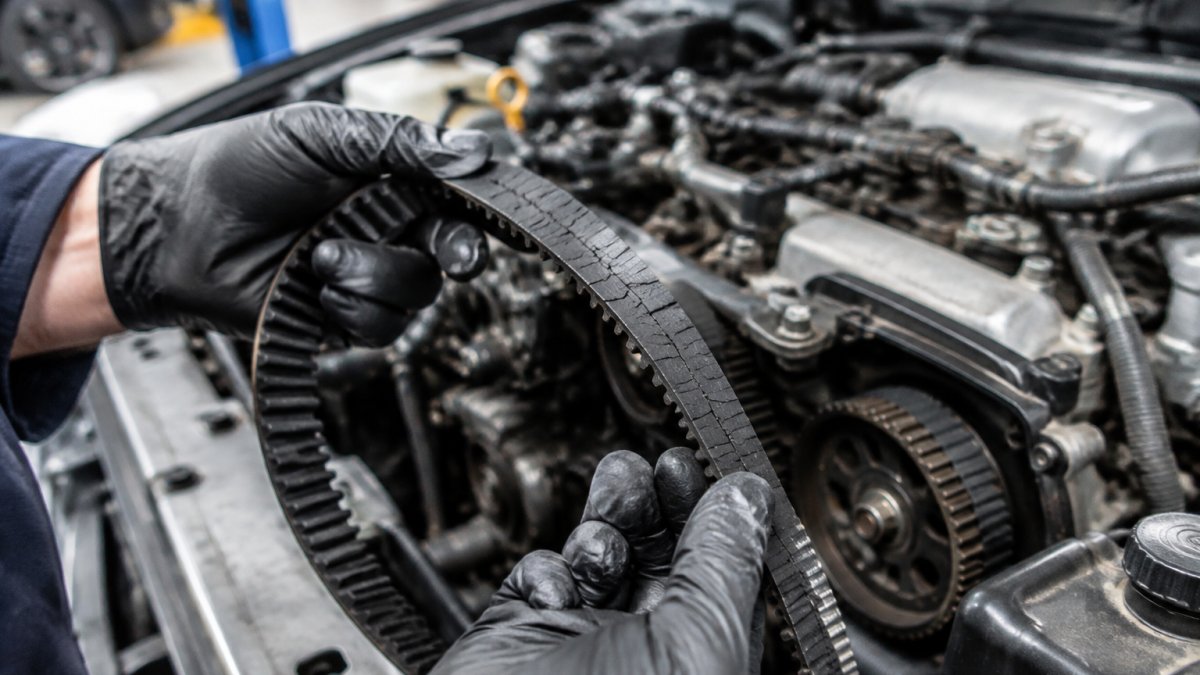
Listen for a chirping or squealing from the front of the engine, especially at cold start. A rhythmic slapping or ticking that speeds up with the engine points to a loose belt or a failing tensioner.
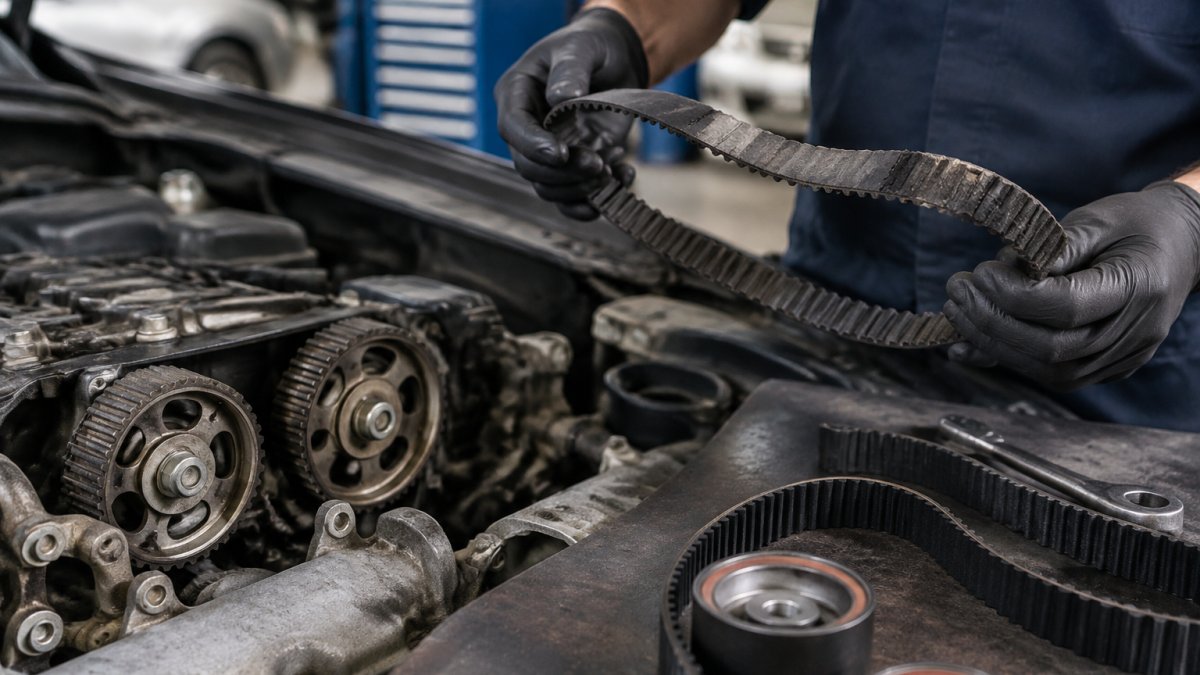
Visually, look for glazing, cracking between the teeth, frayed edges, or missing chunks of ribbing. Any of these means the belt is past its service life.
How to Inspect a Belt Yourself
With the engine cold and off, remove the plastic timing cover if your engine has an accessible one. Use a flashlight and check the full length of the belt for cracks, oil soaking, and worn teeth.
Watch out: never rotate the engine by hand or crank it with the cover off to "see if the belt moves." On an interference engine, a belt that is already off a tooth can turn a cheap inspection into bent valves the moment the starter engages.
The Decision Tree: Drive, Limp, or Tow
What you find should determine what you do next. Use this sequence:
- Visible cracking, fraying, missing teeth, or oil soaking: Do not drive. Park the car and arrange a tow or a mobile inspection. The belt is already past its service life, and the next start could be the one that breaks it.
- Loud chirp, slap, or ticking that changes with engine speed: Do not drive at highway speed. If the shop is a short, low-speed drive away and the noise is intermittent, a slow limp with hazard lights is a judgment call, but a tow is the safer default, especially on an interference engine.
- No noise, no visible damage, but you are past the mileage or time interval: You can drive normally to a shop for inspection, but do not postpone the service. Being over interval is a scheduling problem, not an emergency, until a symptom appears.
A common pattern in the shop is an owner who heard the chirp for a month and booked the appointment the week the belt let go. The decision tree exists to move that appointment earlier. If any symptom on this list is present, the cheapest move is an inspection, not another week of driving.
Interference vs Non-Interference Engine: Why It Changes Everything
An interference engine is an engine design where the pistons and valves share the same space in the combustion chamber at different points in the cycle. If the timing belt snaps, the pistons strike the valves, bending them and often cracking the cylinder head. A non-interference engine has enough clearance that a snapped belt usually just stops the engine without piston-to-valve contact.
Most modern Japanese four-cylinders are interference designs. That single fact is why the answer to can you drive with a bad timing belt is not "it depends on how lucky you feel." On an interference engine, there is no safe margin. Chloe's Auto Repair's explanation of interference engine failure notes that on interference engines, a broken timing belt can cause catastrophic engine failure in seconds.
How to Tell Which Engine You Have
This is the step most guides skip, and it is the one that decides your risk. There are four reliable ways to identify your engine type, in order of certainty:
- Check the owner's manual or the underhood emissions label. The manual's maintenance section often states whether the engine is interference and lists the belt interval. The emissions label under the hood gives the engine family and displacement, which you can cross-reference.
- Look up the engine code. Japanese engines are identified by codes stamped on the block or printed on a sticker in the door jamb or engine bay. A shop that specializes in your make can tell you in one phone call whether that code is interference. This is the fastest path for most owners.
- Search by year, make, model, and engine. Community forums and enthusiast sites maintain lists of interference engines by code. Treat forum lists as a starting point, not gospel, because the same model year can carry two different engines.
- Ask a technician who works on your make. A general shop may not know; a specialist will. If you are already booking an inspection, ask this question at the same time.
A common pattern is that owners assume their engine is non-interference because the car has been reliable. Reliability has nothing to do with valve clearance. Assume interference until you have confirmed otherwise in writing.
What Changes If You Are Interference
On an interference engine, a worn belt is not a maintenance item you can defer to next quarter. The belt, tensioner, and water pump should be treated as a single service, replaced on the manufacturer's mileage or time interval, whichever comes first.
Watch out: do not rely on a parts-store counter person or a generic online fitment tool to tell you whether your engine is interference.
What Happens When a Timing Belt Breaks While Driving
The engine stalls immediately, and you lose power steering and power brakes. You coast to the shoulder, and the car will not restart. Matt's Auto Service Center's breakdown of a snapped belt at speed advises against attempting to restart the engine after a failure, because cranking a broken belt can drive the valves deeper into the pistons and turn a bad day into a rebuild.
From there, you need a tow. A snapped belt means the vehicle cannot be driven, and industry consensus is that it requires towing to a repair facility. For a closer look at how quickly a worn belt turns into a stranded car, read our guide on the risks of driving with a worn timing belt.
Timing Belt Replacement Interval: When to Replace Before It Fails
Follow the manufacturer's schedule for your specific engine, not a generic number. Many belts are called out around 60,000 to 105,000 miles depending on the model, and owner discussions on Reddit's MechanicAdvice forum show how widely those intervals vary between manufacturers. We have also seen real-world maintenance records with service markers set at 63,000 miles, which tells you technicians track this precisely for a reason.
Two rules matter more than the exact number. First, mileage and time both count; a low-mileage belt that is 10 years old is still aged rubber. Second, replace the water pump and tensioner with the belt on most Japanese engines. If you drive a Honda and want to see where this fits into a larger service visit, our Honda 90k maintenance guide walks through the inspections and fluid checks that pair with a belt job.
Timing Belt Replacement Cost vs. Engine Rebuild Cost
A timing belt replacement is scheduled maintenance. An engine rebuild after a snapped belt is a repair bill with a comma in it. That gap is the entire argument for replacing on time.
| Scenario | What It Involves | Cost Reality |
|---|---|---|
| Belt replacement (on schedule) | Belt, tensioner, often water pump, several hours labor | Predictable, quoted up front |
| Belt snap on non-interference engine | Tow, new belt, possible head inspection | Moderate, mostly labor and towing |
| Belt snap on interference engine | Bent valves, head work, possible piston damage | Major repair, often approaching engine replacement |
Pricing depends on your engine and what else is due, so contact Speedy Roo Motorsports directly or visit our website for a current quote. If your car is past 150,000 miles and you are weighing repair against replacement, our high mileage vehicle service guide covers how to make that call without guessing.
Aftermarket vs. OEM Belts: Which One Belongs in Your Engine
When replacing a timing belt, OEM or known OE-quality parts are generally a better choice than the cheapest option, since the belt is a small part of the total job cost and the labor is the same either way.
Aftermarket belts vary widely in compound quality and tooth construction. A budget belt may fit and run fine for a while, then crack early or stretch and throw off engine timing.
Book a Timing Belt Inspection Before It Leaves You Stranded
Here is the challenge: you have a mileage number in your head, a faint chirp you keep turning the radio up to ignore, and no idea whether your engine is interference or not.
Speedy Roo Motorsports specializes in Japanese vehicles and has been in business since 2002. Get started with Speedy Roo Motorsports and find out exactly where your timing belt stands by scheduling an inspection through our automotive service page.
Frequently Asked Questions
How long can you drive with a timing belt?
There is no safe mileage buffer once a timing belt shows wear. Professional guidance advises against driving with a visibly worn, cracking, or noisy belt because failure can happen without warning. On an interference engine, a snapped belt can cause piston-to-valve contact and catastrophic engine damage in seconds. If you are near your manufacturer's replacement interval, schedule service before the belt fails rather than driving on borrowed time.
What are the most common symptoms of a bad timing belt?
Watch for a ticking or chirping noise from the engine, visible cracking or fraying on the belt, worn teeth, rough idling, and a check engine light. Some drivers notice a coolant or oil leak near the timing cover, which can degrade the belt faster. If you spot any of these symptoms of a bad timing belt, stop driving and have it inspected. A snapped belt can leave you stranded on the highway and require towing.
Will a broken timing belt cause permanent engine damage?
On an interference engine, yes. The pistons and valves occupy the same space at different times, and the belt keeps them synchronized. When it snaps, the pistons can strike the valves, bending them and damaging the cylinder head. Repairs can run into the thousands of dollars. Non-interference engines usually escape with a tow and a new belt, which is why identifying your engine type matters before you gamble on driving.
How much does a timing belt replacement cost compared to an engine repair?
Timing belt replacement cost depends on your vehicle, engine layout, and whether the water pump and tensioner are replaced at the same time. Pricing varies, so ask for a quote based on your specific model. An engine rebuild after a snapped belt costs far more, often several times the price of preventative service. Replacing the belt on schedule is generally the less costly path, and it helps keep your car on the road instead of in the shop.