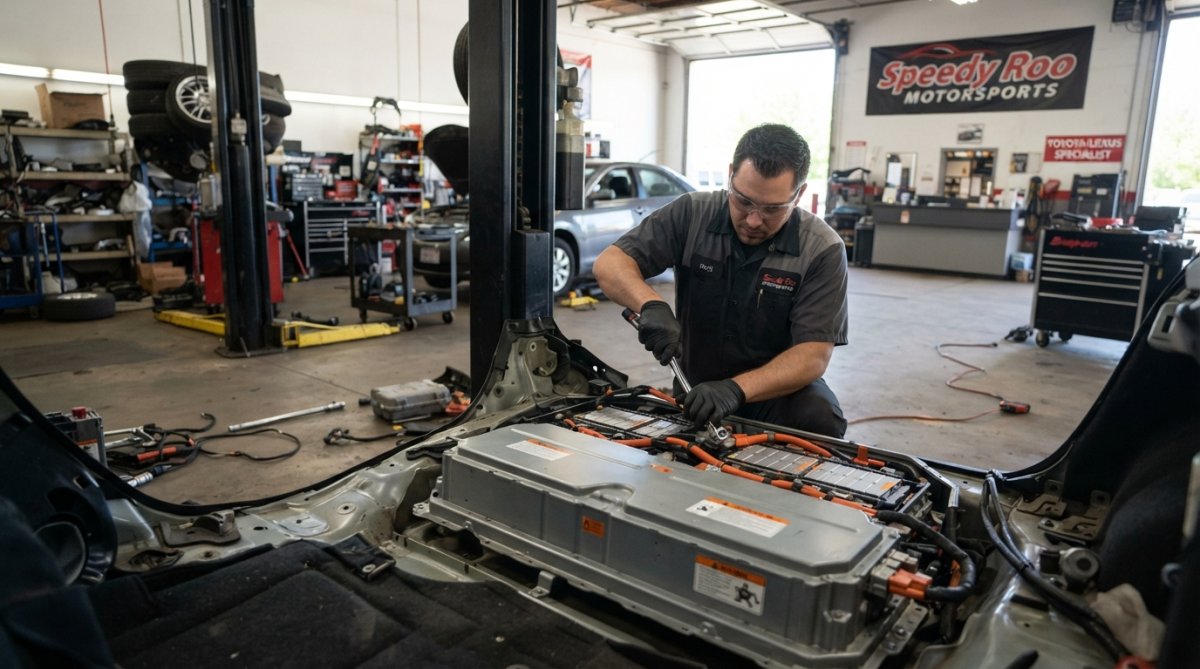
 ultimate-guide
Toyota Hybrid Battery Replacement Cost: 2026 Pricing Guide
Table of Contents
- Understanding Toyota Hybrid Battery Replacement Cost
- Signs of a Failing Hybrid Battery Toyota Owners Should Know
- Toyota Hybrid Battery Warranty: What's Actually Covered
- New vs. Refurbished vs. Aftermarket Toyota Hybrid Battery Options
- Toyota Hybrid Battery Lifespan and Replacement Timeline
- Real-World Diagnostic Costs and Decision Framework
- Professional Installation vs. DIY: Why It Matters for Hybrid Batteries
- Geographic Cost Variance and Insurance Considerations
- Frequently Asked Questions
Last Updated: July 26, 2026
Understanding Toyota Hybrid Battery Replacement Cost
When facing a failing hybrid battery in your Toyota, understanding the full scope of toyota hybrid battery replacement cost is essential. Replacement costs vary dramatically based on your specific model, whether you choose OEM or remanufactured components, and warranty coverage. This guide walks you through every factor influencing your final bill, helping you understand where your money goes when you invest in a new hybrid battery system.
What Influences Your Final Bill
Several interconnected variables determine your actual out-of-pocket expense. The vehicle's age and mileage directly impact whether warranty coverage applies, which can mean the difference between a $5,000 repair and one that costs nothing. Your Toyota's specific model matters significantly, a Prius battery replacement differs substantially from a RAV4 Hybrid or Highlander Hybrid in both parts cost and labor requirements.
Geographic location influences pricing in ways many owners overlook. Urban service centers typically charge more than rural shops, reflecting higher overhead and labor rates. The choice between a Toyota dealership and an independent repair facility like Speedy Roo Motorsports can shift your costs considerably, often without sacrificing quality or warranty protection.
Whether you select an OEM battery, remanufactured unit, or aftermarket alternative creates a significant price differential. OEM batteries command premium pricing but offer manufacturer backing and guaranteed compatibility. Remanufactured batteries cost substantially less while maintaining reliability through rigorous testing protocols. Aftermarket solutions present the lowest upfront cost but may carry longer-term risks regarding longevity and resale value.
| Cost Factor | Impact Range | Key Variables |
|---|---|---|
| Battery type | $3,000-$8,000+ | OEM vs. remanufactured vs. aftermarket |
| Labor hours | $1,000-$3,000 | Dealership vs. independent shop |
| Diagnostics | $150-$500 | Complexity of issue assessment |
| Core charge | $500-$1,500 | Recycling/core return credit |
| Warranty coverage | $0-$8,000 | Powertrain warranty status |
Labor Hours vs. Parts: Where Your Money Goes
The parts themselves typically represent 60-70% of your total toyota hybrid battery replacement cost, with labor consuming the remaining 30-40%. Most installations require 4-8 hours of specialized work, depending on your vehicle model and technician experience. Independent shops like Speedy Roo Motorsports often complete this work faster than dealerships due to simplified processes and specialization in Japanese vehicles. A dealership might charge $150-$200 per labor hour, while independent facilities typically range from $100-$150 per hour.
The diagnostic fee, typically $150-$500, determines whether your battery genuinely needs replacement or whether a less expensive repair might restore function.
Signs of a Failing Hybrid Battery Toyota Owners Should Know
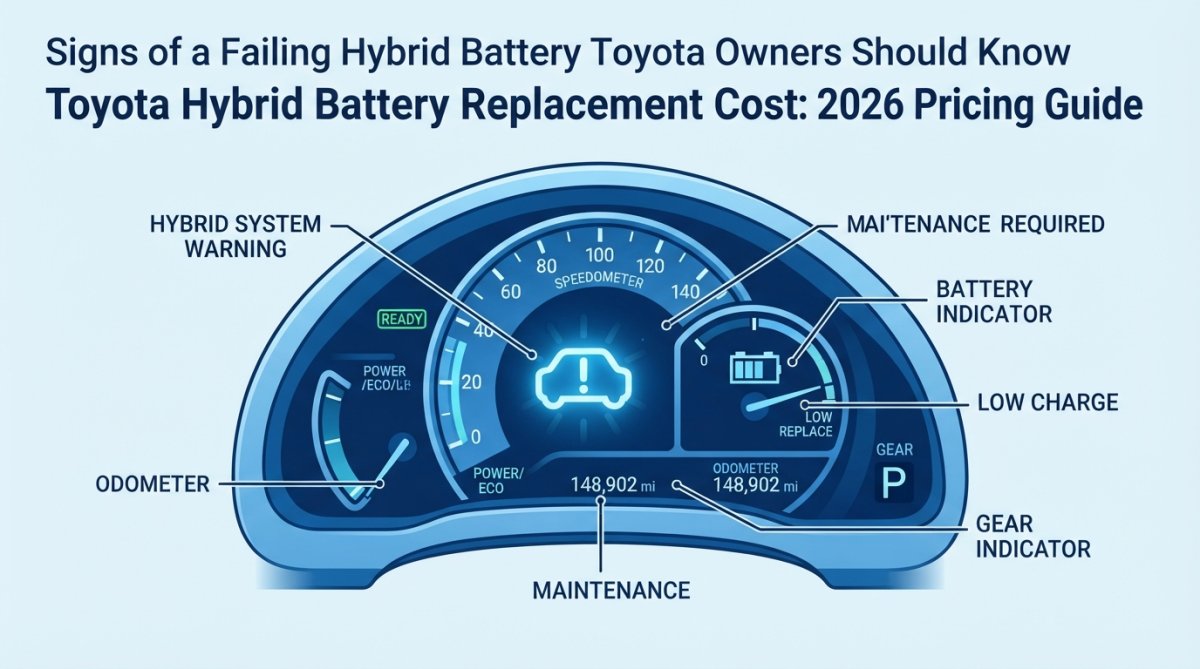
Your Toyota will display specific warning indicators before complete battery failure occurs, giving you time to plan for replacement rather than facing an emergency breakdown.
Dashboard Warning Indicators
When your hybrid battery degrades, the Toyota hybrid system indicator light activates, typically an amber or red warning symbol on your instrument cluster. This warning signals that diagnostic testing is necessary to assess the battery's state of charge and overall health.
Some vehicles display a "Check Engine" light alongside or instead of the hybrid indicator. Your vehicle's onboard diagnostic system detects voltage drops, temperature anomalies, or other parameters outside normal operating ranges. These diagnostic trouble codes (DTC) provide technicians with specific information about which battery modules or systems are failing.
The hybrid system may enter "limp mode," restricting power output to protect the battery from further damage. You'll notice reduced acceleration and the gas engine running more frequently.
Performance Changes That Signal Battery Degradation
Before warning lights appear, you might notice your vehicle switching to gas engine operation more frequently, even during normal driving conditions. A healthy hybrid battery handles low-speed city driving on electric power alone; a failing battery forces the gas engine to engage constantly, reducing fuel efficiency dramatically.
Reduced fuel economy represents one of the earliest signs of battery degradation. If your typically efficient Prius suddenly drops from 50 mpg to 35 mpg, the hybrid battery's diminished capacity likely explains the change. Battery cooling system issues create thermal problems that accelerate degradation, potentially accompanied by unusual noises or burning smells near the battery location.
Toyota Hybrid Battery Warranty: What's Actually Covered
Understanding your warranty coverage is critical before spending money on replacement, as many Toyota owners discover they have protection they didn't realize.
Powertrain Warranty vs. Extended Coverage
Toyota's standard powertrain warranty covers hybrid batteries for 8 years or 100,000 miles, whichever comes first, on most models. This coverage applies to the original owner and transfers to subsequent owners with some limitations. If your vehicle falls within this timeframe, your replacement cost drops to zero, Toyota covers parts and labor completely.
Extended warranty options become valuable once you approach the 8-year/100,000-mile threshold. Toyota Care and third-party extended warranties can provide coverage beyond standard terms, though these must typically be purchased before the original warranty expires. The cost of extended coverage, usually $1,500-$3,000, makes financial sense if you plan to keep your vehicle beyond 100,000 miles.
How to File a Warranty Claim
Contact your Toyota dealership with your VIN and explain the symptoms you're experiencing. The dealership will perform diagnostic testing at no cost if your vehicle is within warranty. If the battery qualifies for coverage, the dealership schedules the replacement at no charge for parts or labor. The entire process typically takes 1-2 business days.
New vs. Refurbished vs. Aftermarket Toyota Hybrid Battery Options
Your battery replacement choice determines not only your immediate out-of-pocket cost but also long-term reliability, warranty protection, and resale value.
OEM Batteries: Cost, Reliability, and Peace of Mind
Original Equipment Manufacturer (OEM) batteries range from $5,000-$8,000 depending on your model and carry the manufacturer's full warranty, usually 3 years or 36,000 miles for non-warranty replacements. OEM batteries offer the highest reliability because they're manufactured to exact Toyota specifications and tested to the same standards as original batteries.
The peace of mind factor shouldn't be underestimated. OEM batteries eliminate concerns about compatibility or premature failure. For owners planning to keep their vehicles long-term or concerned about resale value, OEM batteries justify the premium cost.
Remanufactured Batteries: A Middle Ground
Remanufactured batteries cost 40-60% less than OEM units, typically ranging from $2,500-$4,500 installed. These batteries undergo complete disassembly, testing of individual modules, replacement of failed components, and reassembly to like-new specifications. Quality remanufactured batteries are functionally equivalent to new units when sourced from reputable suppliers.
Remanufactured batteries make financial sense for owners with vehicles worth $8,000-$15,000 who plan to keep them 3-5 years longer.
Aftermarket Solutions: Pros, Cons, and Real-World Performance
Aftermarket batteries from third-party manufacturers cost $1,500-$3,000, representing the lowest upfront investment. The primary risk involves compatibility and longevity. Your Toyota's battery management system was calibrated for specific voltage characteristics; an aftermarket battery with slightly different specifications might trigger warning lights, reduce fuel economy, or fail prematurely.
Aftermarket warranties typically run 1-2 years, shorter than OEM or remanufactured coverage. Additionally, some Toyota dealerships refuse to service vehicles with aftermarket batteries, potentially limiting your service options.
Toyota Hybrid Battery Lifespan and Replacement Timeline
Most Toyota hybrid batteries last 8-10 years or 100,000-150,000 miles under normal driving conditions, though some vehicles exceed 200,000 miles with original batteries.
Expected Mileage and Age Thresholds
The 8-year/100,000-mile warranty threshold reflects Toyota's confidence in battery longevity. Many vehicles reach 150,000-200,000 miles with functioning original batteries, particularly those driven primarily on highways where the hybrid system operates most efficiently.
City driving accelerates battery degradation because constant acceleration and deceleration cycle the battery more heavily. Climate also influences lifespan, vehicles in hot climates experience faster degradation due to increased thermal stress on battery cells.
Preventative Maintenance to Extend Battery Life
Maintaining your hybrid system's cooling system is critical for battery longevity. The battery cooling fan should operate smoothly, and coolant levels should be checked regularly. A failing cooling system allows battery temperatures to rise, accelerating degradation and reducing lifespan by 20-30%.
Avoid aggressive acceleration and hard braking when possible. Smooth driving patterns reduce stress on the battery pack. Keep your vehicle's software current by following Toyota's recommended service intervals, battery management software updates optimize charging patterns and thermal management.
Real-World Diagnostic Costs and Decision Framework
Before committing to replacement, invest in professional diagnostics to confirm that the hybrid battery actually requires replacement rather than repair or software updates.
What a Hybrid Battery Diagnostic Involves
A comprehensive hybrid battery diagnostic begins with connecting specialized equipment to read diagnostic trouble codes (DTC) from your vehicle's hybrid system computer. The technician measures the battery pack's voltage under various conditions and tests individual battery modules to identify whether the entire pack is failing or whether specific modules need replacement.
Thermal imaging assesses whether the cooling system is maintaining proper battery temperature. State of charge (SOC) testing measures the battery's current capacity relative to its design capacity. A battery at 60% of original capacity is degrading but might function acceptably; one at 30% capacity requires replacement.
The diagnostic fee typically ranges from $150-$500. This investment often saves thousands by confirming whether replacement is truly necessary or whether maintenance can extend your battery's life another 12-24 months.
Cost-Benefit Analysis: Repair, Replace, or Trade In
Once diagnostics confirm the battery's condition, evaluate three options: repair other failing components that might restore performance, replace the battery, or trade in your vehicle.
If diagnostics reveal that your cooling system is failing rather than the battery itself, repairing the cooling system ($500-$1,500) might restore battery function and extend its life 2-3 years. If the battery genuinely requires replacement, compare your vehicle's current value to the replacement cost. A vehicle worth $8,000 doesn't justify a $6,000 battery replacement. However, a vehicle worth $15,000 with 80,000 miles remaining useful life makes replacement financially sensible.
Professional Installation vs. DIY: Why It Matters for Hybrid Batteries
Hybrid battery replacement is not a DIY project for most owners. The high-voltage system poses genuine safety risks, and improper installation creates warranty complications and performance issues that far exceed the labor cost savings.
Certified Technician Requirements and Safety
Hybrid battery systems operate at 200+ volts, creating serious electrocution risk if proper safety procedures aren't followed. The battery pack must be isolated and discharged before removal, requiring specialized equipment and training. A certified technician has completed manufacturer training and understands the specific safety protocols for your vehicle's hybrid system.
Improper installation can damage the battery management system, create voltage imbalances between modules, or trigger warning lights that persist even after replacement. Toyota's powertrain warranty explicitly requires that hybrid batteries be installed by certified technicians. DIY installation voids warranty coverage, leaving you responsible for any subsequent failures.
The hybrid synergy drive system requires calibration after battery installation. The battery management computer must be reset and the new battery's characteristics must be learned by the vehicle's systems.
Why Independent Shops Like Speedy Roo Offer Better Value
Independent repair facilities specializing in Japanese vehicles often provide superior value compared to dealerships while maintaining the same safety standards and warranty protections. Our technicians have extensive experience with Toyota hybrid systems across multiple model years, allowing faster, more efficient installations.
Independent shops typically charge 30-50% less for labor than dealerships while maintaining identical quality standards. Warranty coverage remains intact when repairs are performed by ASE-certified technicians using quality parts. Independent facilities offer more flexibility in battery options, allowing cost savings without sacrificing reliability or warranty protection.
Geographic Cost Variance and Insurance Considerations
The location where you have your hybrid battery replaced significantly impacts your final cost, with variations of 30-50% between regions.
How Location Affects Hybrid Battery Replacement Pricing
Urban areas with higher cost of living see toyota hybrid battery replacement cost running 20-40% higher than rural regions. Labor rates in major metropolitan areas reflect higher overhead, rent, and technician salaries. The availability of qualified independent shops influences pricing, as areas with multiple specialized Japanese vehicle repair facilities see more competitive pricing.
Does Insurance Cover Hybrid Battery Failure?
Standard auto insurance policies do not cover hybrid battery failure, treating it as a maintenance item rather than accident or mechanical breakdown damage. Your comprehensive or collision coverage won't apply to battery degradation or failure.
Extended warranty plans and service contracts sometimes include hybrid battery coverage, though this must be explicitly stated in the policy. Some Toyota Care plans include hybrid battery coverage as part of their comprehensive service packages. Check your coverage details to determine whether your plan includes battery replacement.
The decision to replace your Toyota hybrid battery deserves careful analysis of your vehicle's value, your ownership timeline, and your financial situation. Understanding the true cost of replacement, including parts, labor, diagnostics, and warranty options, helps you make the right choice for your specific circumstances.
Whether you choose an OEM battery, remanufactured unit, or explore alternative solutions, working with experienced technicians ensures proper installation and maximum battery lifespan. At Speedy Roo Motorsports in Aurora, Colorado, our team has helped thousands of Toyota owners navigate hybrid battery replacement with transparent pricing, honest diagnostics, and quality workmanship that protects your investment for years to come. Contact us for a diagnostic evaluation and transparent quote on your specific vehicle's needs.
Frequently Asked Questions
How much does it cost to replace a Toyota hybrid battery?
Toyota hybrid battery replacement costs depend on several factors including your vehicle model, whether you choose an OEM or remanufactured battery, labor rates in your area, and diagnostic fees. For an accurate quote specific to your situation, contact Speedy Roo Motorsports or your local service center. Pricing varies significantly between dealerships and independent repair shops, with independent facilities often offering competitive alternatives to dealer pricing.
How long do Toyota hybrid batteries last, and when should I replace mine?
Toyota hybrid battery lifespan typically ranges from 150,000 to 200,000 miles, though many last longer with proper maintenance. Most Toyota hybrid batteries are covered under an 8-year/100,000-mile powertrain warranty. Signs you may need replacement include reduced fuel economy, the hybrid system indicator light, loss of power during acceleration, or diagnostic trouble codes. A certified technician can perform a voltage test and state of charge assessment to determine your battery's actual condition.
What are the signs of a failing hybrid battery in Toyota vehicles?
Common signs of a failing hybrid battery include the hybrid system warning light on your dashboard, decreased fuel efficiency, difficulty starting the vehicle, reduced acceleration power, or strange noises from the engine bay. You might also notice the battery cooling system working harder than usual. If you experience any of these symptoms, get a diagnostic performed by a certified technician who can run diagnostic trouble codes and perform a voltage test to confirm battery degradation.
Should I choose a new OEM battery, remanufactured battery, or aftermarket option?
New OEM batteries offer maximum reliability and warranty coverage but cost the most. Remanufactured batteries provide a middle ground, they're tested, reconditioned, and typically come with a warranty, making them a cost-effective choice for many owners. Aftermarket batteries are the least expensive but may have shorter lifespans and limited warranty support. Consider your vehicle's age, remaining ownership plans, and budget. A certified technician can help you weigh the cost-benefit of each option for your specific situation.
Does Toyota's hybrid battery warranty cover replacement costs?
Toyota's powertrain warranty covers hybrid battery defects for 8 years or 100,000 miles, whichever comes first. Some Toyota Care extended warranty plans offer additional coverage. However, warranty claims don't cover batteries damaged by accidents, modifications, or lack of maintenance. Check your vehicle identification number (VIN) and service records to confirm your coverage. Contact your service center or dealership to verify warranty status and initiate a claim if eligible.