 listicle
Top 6 Japanese Car Winter Driving Tips for 2026
Table of Contents
- 1. Winter Tires and Traction: Your First Line of Defense
- 2. Winter Car Maintenance Checklist for Japanese Vehicles
- 3. Signs of a Failing Car Battery in Winter
- 4. Winter Emergency Car Kit Essentials for Every Trunk
- 5. Driving Techniques for Icy Roads and Reduced Visibility
- 6. Japanese Car Winter Driving Tips for Highway and Rental Situations
- Conclusion: Preparing Your Japanese Car for Winter
- Frequently Asked Questions
Last Updated: September 13, 2026
1. Winter Tires and Traction: Your First Line of Defense
The single most effective upgrade for Japanese car winter driving is proper winter tires, not all-seasons. Winter rubber stays flexible below freezing, where all-seasons harden and lose grip. This guide from Speedy Roo Motorsports covers the six tips that matter most once temperatures drop.
Snow Tires vs. All-Seasons: What Actually Works
All-season tires are a compromise, and winter exposes it: their rubber stiffens in the cold, reducing the contact patch's ability to bite into snow and ice.
Dedicated winter tires use softer compounds and deeper tread. The Bridgestone Blizzak WS90 leans toward maximum ice grip, while the Michelin X-Ice Snow favors tread life and a quieter ride for long commutes.
Tire Chains and Snow Socks: When and How to Use Them
Chains and snow socks are emergency tools, not daily drivers. AutoSock Snow Socks install in minutes and won't damage bodywork, which matters on lower-clearance Japanese sedans. Metal chains bite harder but can damage wheel wells if clearance is tight.
2. Winter Car Maintenance Checklist for Japanese Vehicles
A winter car maintenance checklist prevents most cold-weather breakdowns. Japanese engines are reliable, but they still need the right fluids, a healthy battery, and a few model-specific checks to start in freezing temperatures. The items below are ordered by what strands drivers first.
Fluids, Filters, and Belts: What to Check Before the First Freeze
- Antifreeze and coolant: Test the concentration with a refractometer or hydrometer. A 50/50 mix of coolant and distilled water protects to roughly -34°F; a weak mix can freeze, expand, and crack the block or a freeze plug. Top up with the coolant type your owner's manual specifies, many Japanese engines use a long-life formula, and mixing incompatible types can gel the system.
- Engine oil: Cold thickens oil, and too-heavy viscosity starves the top end on a cold start. Check the owner's manual's viscosity chart. Many modern Japanese engines spec 0W-20 or 0W-16, which flows well below freezing; older ones may call for 5W-30. The "W" is the cold-flow rating, lower is better in winter.
- Belts and hoses: Cold makes old rubber brittle. Squeeze the upper radiator hose and look for cracks, glazing, or a spongy feel. A belt that squeals on a cold morning is about to fail.
- Windshield washer fluid: Use a winter-rated formula rated to at least -20°F. Summer fluid freezes in the reservoir and can crack the tank or burn out the pump.
- Battery terminals: Clean corrosion and check that the terminals are tight. A loose terminal mimics a dead battery on the first cold morning.
Tire Pressure and Wheel Alignment in Cold Weather
Tire pressure drops roughly one PSI per 10°F of ambient temperature (tirerack.com). Set to the door-jamb placard on a 70°F afternoon, tires can be several PSI low by a 20°F morning, enough to trip a TPMS light and hurt fuel economy and grip. Check monthly with a gauge, cold, before driving.
Wheel alignment matters more on icy roads. A car that pulls is harder to control when traction is limited, and uneven toe or camber wears one tire edge faster, the edge you need biting into snow.
The Rental-Car Version of This Checklist
If you're renting, the checklist changes. At pickup, ask the agency directly:
- What tires are fitted? Many fleets run all-seasons year-round. Ask whether the car has winter tires or only all-seasons.
- Are chains or snow socks included? Some agencies provide them; many don't. Confirm before you leave the lot, along with the policy on using them.
- Is there an emergency kit? Rentals often ship with no scraper, blanket, or jumper cables. Plan to bring your own.
- What's the roadside-assistance number? Save it in your phone before you drive.
Owner's manual viscosity and coolant specifications
A Note on Model-Specific Quirks
Japanese vehicles are not interchangeable. A few patterns worth knowing:
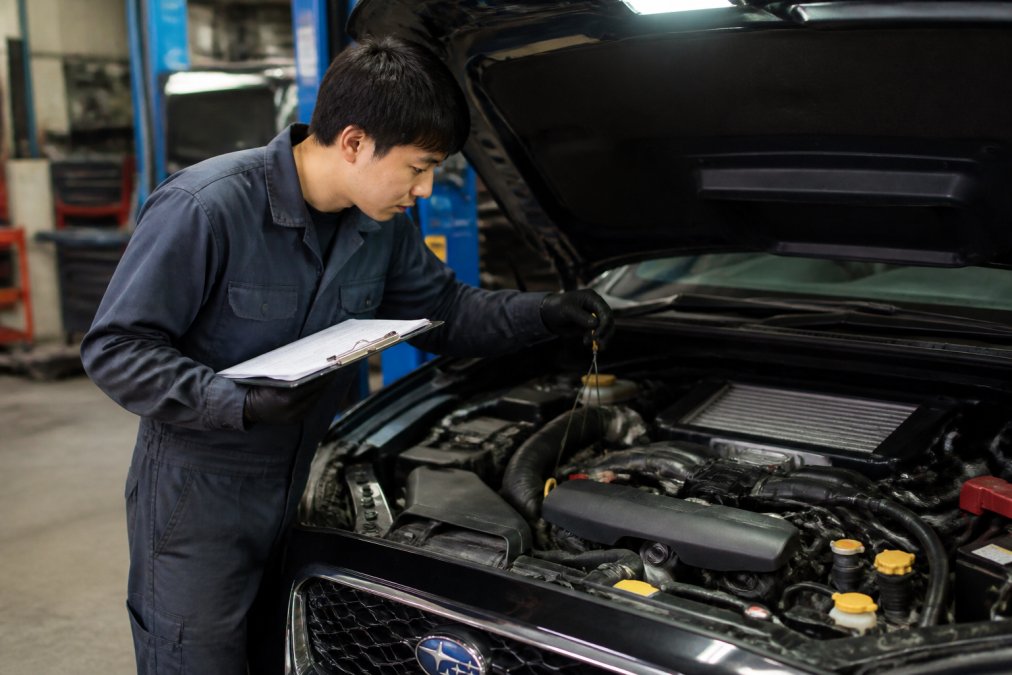
- Boxer engines (common in Subaru models) are more sensitive to oil level and can consume oil between changes, check the dipstick more often in winter.
- Hybrids (common across Toyota, Honda, and others) rely on the battery for cold starts and may crank differently; a weak 12-volt auxiliary battery can still strand you even with a healthy hybrid pack.
- CVT transmissions (used widely across the brands) can feel sluggish until the fluid warms; that's normal, but one that shudders or slips when cold is worth a shop visit.
None are reasons to avoid a Japanese car in winter, they're reasons to know your model before the first freeze.
3. Signs of a Failing Car Battery in Winter
The signs of a failing car battery in winter show up fast: slow cranking, dim headlights, and a click instead of a start. Cold cuts a battery's available power while the engine needs more to turn over.
How Cold Starts Drain Japanese Car Batteries
A cold start demands more current than a warm one. If voltage is already low, the first freezing morning is when it quits. Test the battery and charging system before winter, not after a no-start.
4. Winter Emergency Car Kit Essentials for Every Trunk
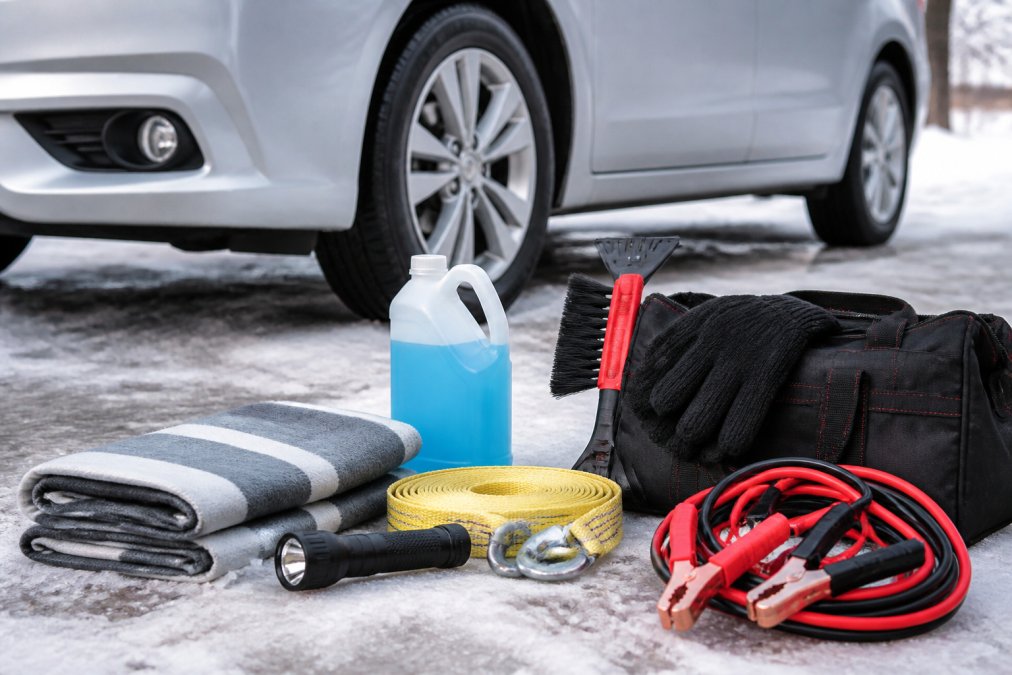
Winter emergency car kit essentials belong in every trunk before the first storm. A kit turns a breakdown into an inconvenience instead of a crisis.
Pack these:
- Jumper cables or a portable jump starter
- Ice scraper and snow brush
- Blanket, gloves, and hand warmers
- Flashlight with spare batteries
- Non-perishable snacks and water
- Small shovel and bag of sand or kitty litter for traction
- Phone charger and a printed list of emergency contacts
Must-Have Tools and Supplies for Local Winters
Around Aurora and the Denver metro, sudden snow accumulation and black ice are common. Add a reflective vest and hazard triangle so other drivers see you if you're stopped on the shoulder.
5. Driving Techniques for Icy Roads and Reduced Visibility
Driving techniques for icy roads come down to one rule: do less, more gently. Every input, steering, braking, and acceleration, should be slow and smooth.
Braking Distance, Speed, and Traction Control
Braking distance on ice can be several times longer than on dry pavement. Leave extra following distance and brake early. If your car has traction control, let it work; don't fight it by flooring the pedal.
If you start to skid, ease off the gas and steer where you want to go. Slamming the brakes makes it worse.
Windshield Care and Defroster Use
Visibility is safety. Replace worn wipers with beam-style blades like Rain-X Latitude, which resist ice buildup. Keep the defroster running and use a windshield de-icer rather than hot water, which can crack cold glass.
6. Japanese Car Winter Driving Tips for Highway and Rental Situations
Highway and rental situations add logistics a maintenance checklist won't cover, the part most winter-driving guides skip, and where a long winter drive is won or lost. Planning tolls, reading snow-specific signage, and knowing your rental's winter setup keeps a long drive predictable.
ETC Cards and Highway Tolls in Winter
An ETC (Electronic Toll Collection) card lets you pass toll plazas without stopping, which matters when lanes are icy and you'd rather not brake hard. Confirm your rental includes one, or ask how tolls are billed, before you leave the lot:
- ETC lanes vs. general lanes. ETC lanes are marked and have a barrier that lifts on read. If your card fails, you're stuck at the barrier, know where the general (cash) lanes are as a fallback.
- Speed through the gate. ETC gates are designed for a slow roll-through, not a highway-speed pass. In snow, slow down earlier than you think you need to.
- Billing. Some rentals bundle tolls into the rental fee; others bill you after the fact. Ask which, so you're not surprised by a charge weeks later.
- Icy plazas. Toll plazas are often the iciest part of a winter highway, lots of braking, idling, and exhaust moisture. Approach slowly and leave extra room.
Reading Snow-Specific Road Signage
Japanese winter roads use signage and road systems most visitors have never seen. A few worth knowing:
- Chain-required zones. Some mountain passes and rural routes require chains or winter tires in winter months. Ignoring them isn't just unsafe, it can be a violation. On all-seasons, turn around.
- Snow-melting and sprinkler systems. Some snowy-region roads have built-in sprinklers or heating elements that melt snow and ice. They work, but can leave the surface wet and refreeze overnight, treat a wet-looking winter road as potentially icy.
- Snow poles and edge markers. Tall roadside poles mark the road edge when it's buried. Use them to judge where the pavement is.
- Falling-rock and avalanche warnings. Common on mountain routes; take them seriously and don't stop in marked zones.
Rental Car Winter Protocols
Rentals often ship with all-seasons and no emergency kit. Before you drive off, ask:
- What tires are fitted? All-seasons are common; winter tires aren't guaranteed.
- Are chains or snow socks included, and may I use them? Some rental agreements restrict or prohibit chains.
- Is there an emergency kit? Usually not, bring or buy a scraper, blanket, and jumper cables.
- What's the roadside-assistance number, and does it cover my region? Coverage varies by area.
- Is there a mileage or region restriction? Some rentals limit winter driving areas.
Parking Etiquette in Snowy Regions
How you park matters as much as how you drive:
- Lift your wipers overnight so they don't freeze to the glass and tear when you start up.
- Don't park where snow accumulates against the exhaust. A blocked exhaust can push carbon monoxide into the cabin, never leave a running car in an enclosed or snow-banked space (the CDC).
- Park facing out where you can. It's easier to drive out than reverse out with limited visibility.
- Respect snow-clearing zones. Plowed-in cars get ticketed or towed in many areas, and blocking a plow route hurts everyone.
- Clear the whole car, not just the windshield. Roof snow can slide onto the windshield when you brake, and hood snow can blow back into your line of sight.
| Situation | What to Check | Why It Matters |
|---|---|---|
| Rental pickup | Tire type, kit, ETC card, region limits | All-seasons and no kit raise risk |
| Highway driving | Toll payment method, ETC lane location | Avoid hard braking at icy plazas |
| Mountain pass | Chain-required signage | Ignoring it can be a violation |
| Overnight parking | Exhaust clearance, wiper position | Blocked exhaust traps carbon monoxide |
| Cold start | Battery age and voltage | Old batteries fail first in cold |
Conclusion: Preparing Your Japanese Car for Winter
Winter exposes every weak point in a vehicle at once, from a tired battery to bald tires. Getting ahead of it takes one afternoon of checks and the right gear. At Speedy Roo Motorsports, our team has specialized in Japanese vehicles since 2002, with the diagnostic tools and experience to prep your Subaru, Toyota, Lexus, Honda, Acura, Nissan, Infiniti, Mitsubishi, or Mazda for the season. Get started with Speedy Roo Motorsports and head into winter knowing your car is ready.
Frequently Asked Questions
What are the 3 P's of winter driving?
The 3 P's are preparation, patience, and precaution. Preparation means winterizing your Japanese car with a maintenance checklist and emergency kit. Patience involves slowing down and increasing following distance on icy roads. Precaution covers checking weather forecasts, avoiding unnecessary trips, and knowing your vehicle's limits. These principles reduce skidding risk and keep you safe when road traction drops.
How does cold weather affect Japanese vehicle battery life?
Cold temperatures reduce battery voltage and slow the chemical reactions that generate power. Japanese cars with smaller batteries, common in models like the Honda Civic or Toyota Corolla, may struggle on cold starts. Watch for signs of a failing car battery in winter: dim headlights, slow cranking, or a dashboard warning. A portable jump starter or a battery health check at a shop can prevent being stranded.
Why is tire pressure critical for winter driving?
For every 10°F drop in temperature, tire pressure can drop by about 1 PSI. Under-inflation reduces road traction, increases braking distance, and hurts fuel economy. Check tire pressure weekly in winter and inflate to the manufacturer's recommendation. Proper pressure also helps winter tires and tire chains perform as designed on snow and ice.
What specific winter maintenance do Japanese cars require?
Japanese cars benefit from a winter car maintenance checklist that includes testing antifreeze and coolant concentration, checking battery voltage, inspecting windshield wipers and de-icer fluid, and verifying tire tread depth. Replace engine oil with the correct viscosity for cold starts. Also inspect belts and hoses for cracks. A professional winterization service can catch issues before they leave you stranded.
How can I prepare my car for freezing temperatures?
Prepare by installing winter tires, packing winter emergency car kit essentials like a jump starter, blanket, and flashlight, and checking all fluids. Keep your fuel tank at least half full to prevent fuel line freeze. Use a windshield de-icer and replace wiper blades with beam-style options. Park in a garage when possible and avoid using parking brakes in extreme cold to prevent frozen brake pads.