 listicle
Essential Track Day Fluids for Mazda Miatas
Table of Contents
- Why Track Day Fluids Matter More Than You Think
- The Essential Track Day Fluids Checklist for Mazda Miatas
- Best Brake Fluid for Miata Track Days
- Miata Track Day Oil: Grade, Viscosity, and Change Timing
- Miata Transmission Fluid Change Interval for Track Use
- Miata Differential Fluid for Track Use
- Coolant and Cooling-System Checks Before a Track Day
- How to Spot Fluid Overheating and Degradation
- Frequently Asked Questions
Last Updated: October 17, 2026
Why Track Day Fluids Matter More Than You Think
Brake fluid is the most overlooked safety item on a Miata before a track weekend, and the one most likely to end your day early. Speedy Roo Motorsports has more than two decades in business servicing Japanese vehicles, and the pattern holds: drivers upgrade tires and pads, then run factory-fill fluid at triple-digit temperatures.
Most guides list fluids without telling you which ones fail first. On a Miata, brake fluid and engine oil do the heavy lifting. Transmission and differential fluid matter, but degrade on a slower clock, and coolant matters most in hot conditions and long sessions.
This guide from Speedy Roo Motorsports covers the essential track day fluids for Mazda Miatas, generation by generation, with check intervals, capacity guidance, and the warning signs that tell you a fluid is done.
The Essential Track Day Fluids Checklist for Mazda Miatas
Six fluids carry a Miata through a track day: brake fluid, engine oil, transmission fluid, differential fluid, coolant, and (on older cars) power steering fluid. Each has a different job and a different failure mode when heat builds.
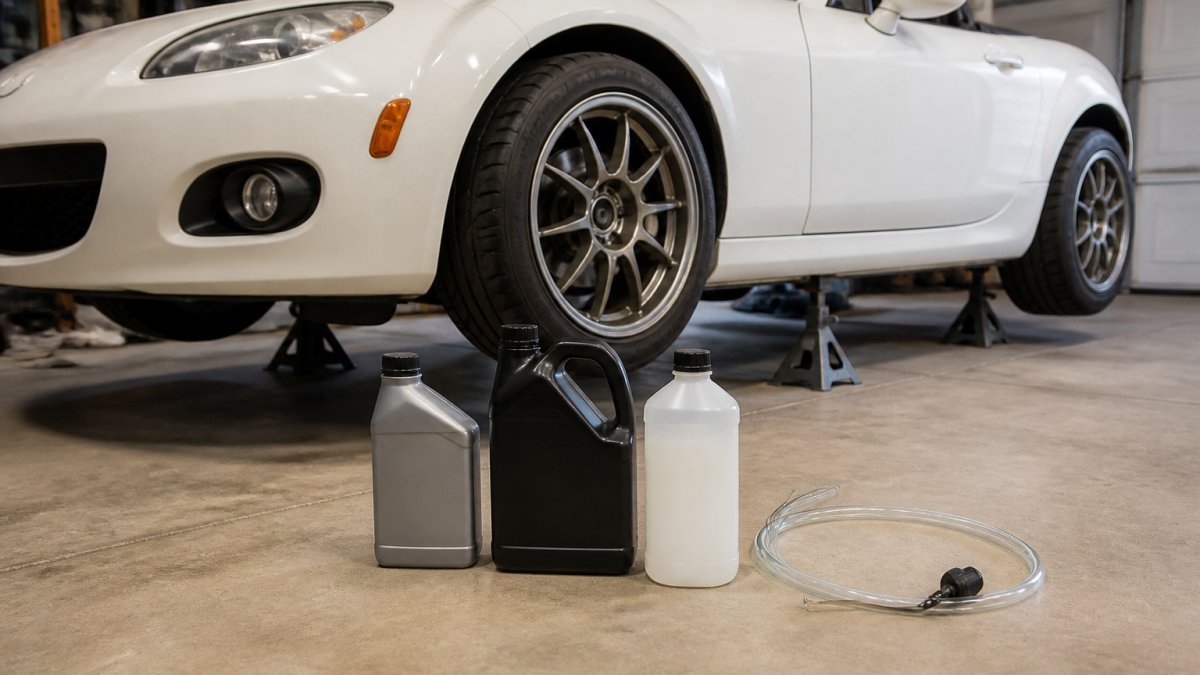
Brake fluid transfers pedal force to the calipers and absorbs water over time, lowering its boiling point. Engine oil lubricates and cools the rotating assembly under sustained load.
NHTSA guidance on brake system safety treats brake fluid condition as a safety-critical inspection item, and track use accelerates every degradation path. We group the checklist into three tiers so you can prioritize.
| Priority | Fluid | Check Before Event | Typical Track-Use Interval |
|---|---|---|---|
| 1 | Brake fluid | Level, color, moisture | Flush before each event or every few events |
| 2 | Engine oil | Level, condition, filter | Change after track weekend |
| 3 | Coolant | Level, strength, hoses | Inspect before every event |
| 4 | Transmission fluid | Level, smell, color | Per severe-service schedule |
| 5 | Differential fluid | Level, color | Per severe-service schedule |
| 6 | Power steering (NA/NB) | Level, whine | Inspect before every event |
Pre-Event Inspection and Top-Ups
Start under the hood with the car cold. Check brake fluid level against the reservoir marks and look at color: fresh DOT 4 is nearly clear, and dark amber or black fluid has absorbed heat and contaminants. Inspect engine oil on the dipstick for level and grit, check coolant in the overflow bottle, and squeeze the upper radiator hose for stiffness or cracks. Walk the car for leaks at the calipers, differential cover, and transmission drain plug. Top up only with the fluid already in the system, and never mix DOT 4 with DOT 5.
Spare Fluids to Pack
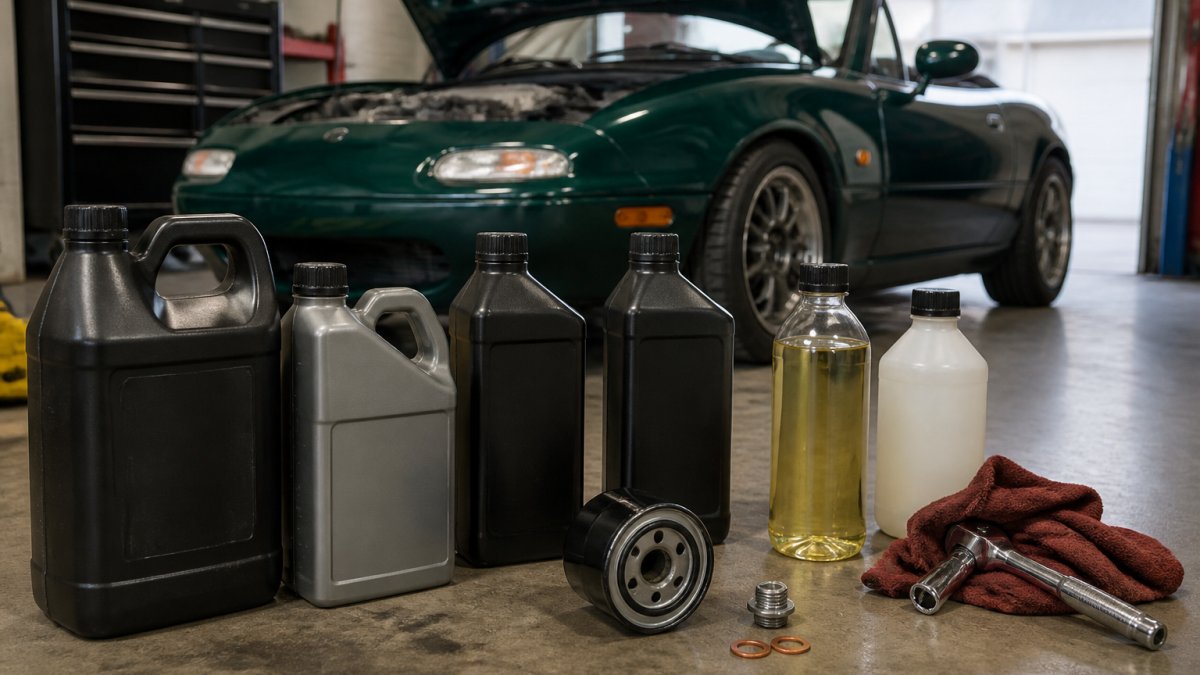
Pack one sealed bottle of the brake fluid you run, a quart of your engine oil, and a gallon of premixed coolant. Add a clear bleeder hose, a catch bottle, a hand bleeder if you bleed at the track, a funnel, and shop towels. NA and NB owners should include a small bottle of power steering fluid. Label everything and store it out of sunlight, because brake fluid absorbs moisture once opened.
Best Brake Fluid for Miata Track Days
The best brake fluid for Miata track days is a high-temperature DOT 4 fluid with a dry boiling point well above what street fluid offers.
ATE Typ 200 is the cost-conscious pick, described in forums as a lower-cost, effective track option and listed in Miata track-day starter guides as a DOT 4 recommendation. Motul RBF 600 is the middle ground, named specifically as a high-temperature DOT 4 choice for a track-day starter pack.
| Fluid | Type | Best For | Notes |
|---|---|---|---|
| ATE Typ 200 | DOT 4 | Budget-minded track drivers | Named as a cost-conscious option |
| Motul RBF 600 | DOT 4 | Most occasional track Miatas | High-temperature starter-pack pick |
| Motul RBF 660 | DOT 4 | Heavier track use | Forum favorite for track duty |
DOT brake fluid specifications sets the minimum performance standards these fluids must meet, and the "high-temperature" label means the fluid exceeds the baseline wet and dry boiling points.
Bleeding and Flushing Before an Event
Flush the system before an event if the fluid is more than a year old, dark, or of unknown history. Bleed in the factory order, usually starting at the caliper farthest from the master cylinder. Attach a clear hose to the bleeder screw and run it into a catch bottle, have a helper hold pressure on the pedal while you crack the screw, and close it when the fluid runs clean and bubble-free. Keep the reservoir topped up so you never pull air into the system; a hand bleeder makes the job a one-person task.
Miata Track Day Oil: Grade, Viscosity, and Change Timing
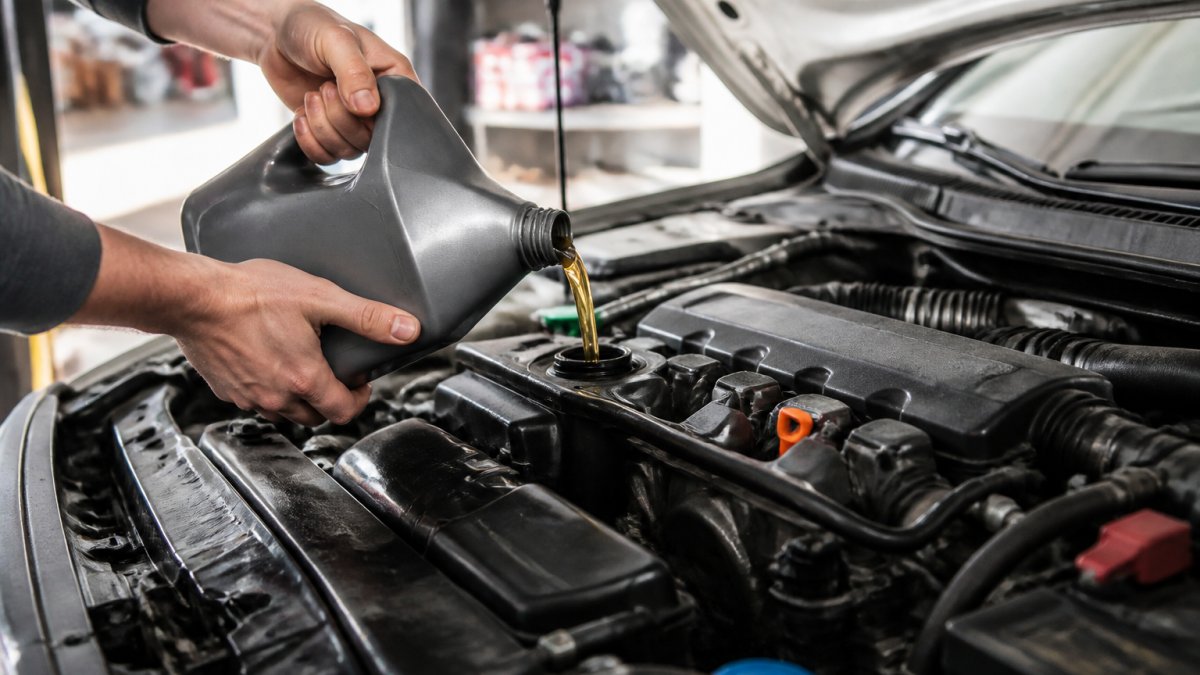
Miata track day oil should match the grade your generation calls for, with fresh fluid and a quality filter before the event. For the ND Miata, forum participants discuss 0W-20 oil and name Mobil 1 Extended Performance 0W-20 as a choice that meets the API/ILSAC requirement they were after. Older generations commonly run 10W-30 or 5W-30 depending on engine and climate. Check the owner's manual for your specific year, and never guess based on a forum post about a different generation.
Heat thins oil at operating temperature and accelerates oxidation, shortening the additive package's life. Track driving holds high rpm and high oil temperature for twenty-minute stretches, far harder on oil than commuting, which is why the change interval after a track weekend is shorter than the street schedule.
Change the oil and filter after a track weekend, or before the next event if the oil already has significant street miles on it. Use a genuine Mazda oil filter where you can. Check the level cold, and look for a burnt smell or gritty texture on the dipstick, either one means the oil is done.
Miata Transmission Fluid Change Interval for Track Use
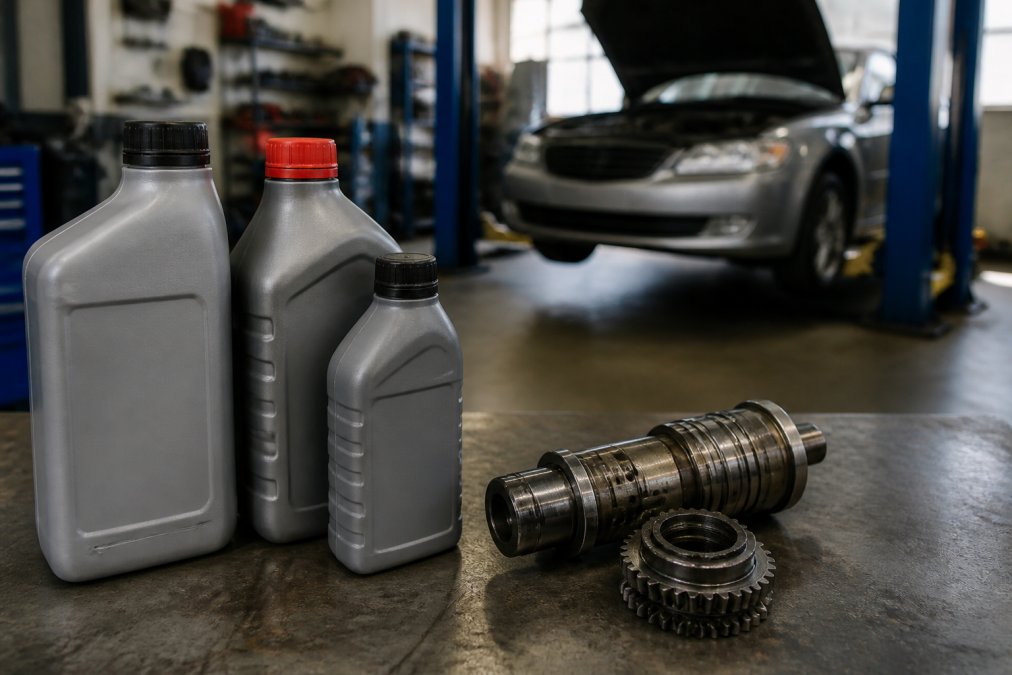
The Miata transmission fluid change interval for track use is shorter than the street schedule, and most owners should treat track weekends as severe service. Mazda publishes normal and severe-service intervals in the owner's manual, and repeated track driving fits the severe category, follow that number for your generation rather than the longer street interval.
Gearbox fluid in a Miata lubricates the gear surfaces and helps the synchros engage cleanly. Heat thins it and breaks down the friction modifiers over time, showing up as notchy shifts, especially into second and third when cold. If shifting has gotten harder since your last track day, the fluid is a likely suspect.
Miata Differential Fluid for Track Use
Differential fluid for track use in a Miata protects the ring and pinion and the limited-slip clutch packs, if the car has them. The diff sees constant load and heat on track and holds a small volume of fluid, so degradation happens faster than owners expect.
Change the differential fluid on the severe-service schedule, and consider changing it after a heavy track season. Use the grade the manual specifies, and if your car has a limited-slip differential, confirm the fluid is compatible. Refill until fluid runs out of the fill hole, then reinstall the plug. Watch the diff cover and drain plug for weeping after the first drive, since track heat can expose a marginal seal.
Coolant and Cooling-System Checks Before a Track Day
Coolant checks before a track day focus on level, strength, and the condition of the hoses and cap. A Miata that runs fine in traffic can still overheat on track if the coolant is weak or the system has a small leak. Check the overflow bottle cold, confirm the mix is correct for your climate, and inspect the upper and lower radiator hoses for soft spots or cracks.
coolant and overheating guidance covers the basics of cooling-system failure, and the track-day version is simpler: fix any leak before the event, not at the track. Bring premixed coolant as a spare, and never open a hot radiator cap. If the temperature gauge climbs during a session, pit immediately rather than trying to finish the lap.
How to Spot Fluid Overheating and Degradation
Fluid overheating shows up as a soft or long brake pedal, burnt smells, dark fluid, and notchy shifting. Brake fluid is the most urgent signal: a pedal that sinks toward the floor after a few hard laps means the fluid is boiling, and the fix is fresh high-temperature DOT 4 and a proper bleed, not more laps.
Engine oil tells you through smell and appearance: burnt odor, dark color, or grit on the dipstick. Transmission fluid shows up as harder shifts and a sharp smell at the fill plug. Differential fluid turns dark and can show a metallic sheen.
If any of these signs show up, stop driving hard and address the fluid before the next session. Speedy Roo Motorsports has been trusted by thousands in repairing Japanese automobiles since 2002, and the pattern is consistent: the drivers who check fluids before the event are the ones who finish the weekend. For a pre-track inspection or fluid service, our technicians work on every Miata generation and can tell you exactly what your car needs.
A track weekend exposes every weak point in your fluid system, and the repair bill for a boiled brake system or a cooked differential is far higher than a pre-event service.
Frequently Asked Questions
What fluids should I check before a Miata track day?
Check six fluids before any track day: brake fluid level and condition, engine oil level, transmission fluid, differential fluid, coolant, and windshield washer fluid. Brake fluid and engine oil deserve the closest look because they take the most heat on track. Top up engine oil to the full mark, confirm brake fluid sits at the max line with no darkening, and verify coolant is at the correct level when the engine is cold. Inspect for leaks under the car after it sits overnight, and pack spare quarts of oil and brake fluid for the event.
How much brake fluid does a Miata need for a track day?
A full flush on a Miata typically uses about one quart of brake fluid, and a bleed at the calipers uses far less. Buy a fresh sealed quart for a flush and keep a second unopened bottle as a spare for the event. Brake fluid absorbs moisture once opened, so a bottle that has sat on a shelf for months is not a safe top-up. Check the fluid level at the reservoir before each session and look for dark or cloudy fluid, which signals it is time for a flush.
How often should I change Miata engine oil after track days?
Change engine oil after every two to four track weekends if the car is driven hard, and sooner if oil temperatures run high. Track sessions push oil temperatures well above street driving, which breaks down the additive package faster. If your Miata is mostly a street car with occasional track use, a shorter interval than the manual's standard schedule is still wise. Check the level before every session, since sustained high RPM can consume a small amount of oil.
Can I use the same fluids in a daily-driven Miata and a track car?
Mostly yes, with one important exception. A high-quality DOT 4 brake fluid and the factory-recommended engine oil grade work for both street and occasional track use, provided you shorten change intervals for track duty. Dedicated track cars running repeated hot sessions benefit from higher-temperature brake fluid and more frequent transmission and differential changes. If your Miata sees more than a few track weekends a year, move to track-focused fluids and log every change so intervals stay consistent.