 listicle
Best Honda CR-V Aftermarket Parts: 2026 Buyer's Guide
Table of Contents
- Quick Comparison: Top Honda CR-V Aftermarket Parts Retailers
- Aftermarket vs OEM Honda Parts: What Actually Matters
- Best Honda CR-V Aftermarket Parts by Category
- Common Honda CR-V Repair Parts You'll Actually Need
- Honda CR-V Performance Mods That Make a Real Difference
- Compatibility and Fitment: Matching Parts to Your CR-V Generation
- DIY Installation Tips and When to Call a Shop
- Frequently Asked Questions
Last Updated: September 26, 2026
Quick Comparison: Top Honda CR-V Aftermarket Parts Retailers
Shopping for the best Honda CR-V aftermarket parts starts with knowing which retailers stock parts that fit your generation. At Speedy Roo Motorsports, we've spent more than two decades in business, specializing in expert maintenance and repair for Japanese automobiles. This guide sorts the market by category, flags fitment traps, and explains where OEM and aftermarket differ.
| Retailer | Strength | Best For | Watch Out For |
|---|---|---|---|
| Speedy Roo Motorsports | Installation, inspection, honest sourcing advice | Owners who want parts fitted and verified | Service area limited to the Denver metro |
| Honda DreamShop | Factory fitment and warranty integrity | Warranty-sensitive owners | Higher cost than third-party options |
| CarParts.com | Broad replacement catalog | Routine maintenance and repairs | Brand quality varies by listing |
| AutoAccessoriesGarage | Price-match guarantee, wide catalog | Comparison shoppers | Shipping times vary by maker |
| Redline360 | Performance-focused components | Enthusiasts chasing power gains | Some parts may not be emissions-compliant |
| Amazon | Cheap interior organizers | Budget convenience upgrades | Quality control varies by seller |
Aftermarket vs OEM Honda Parts: What Actually Matters
Aftermarket parts are made by companies other than Honda; OEM parts are manufactured to Honda's specifications. The real difference shows up in fitment tolerances, material grade, and warranty interaction.
Warranty and Legal Considerations
Under the Magnuson-Moss Warranty Act, a dealer cannot void your entire warranty simply because you installed an aftermarket part. The dealer must show the part caused the failure. That protection is real, but it only covers you when the part is installed correctly.
Best Honda CR-V Aftermarket Parts by Category
The best Honda CR-V aftermarket parts split into three groups: comfort and interior upgrades, exterior and lighting, and cargo protection. Your category tells you how much fitment risk you're taking on.
Interior Accessories and Comfort Upgrades
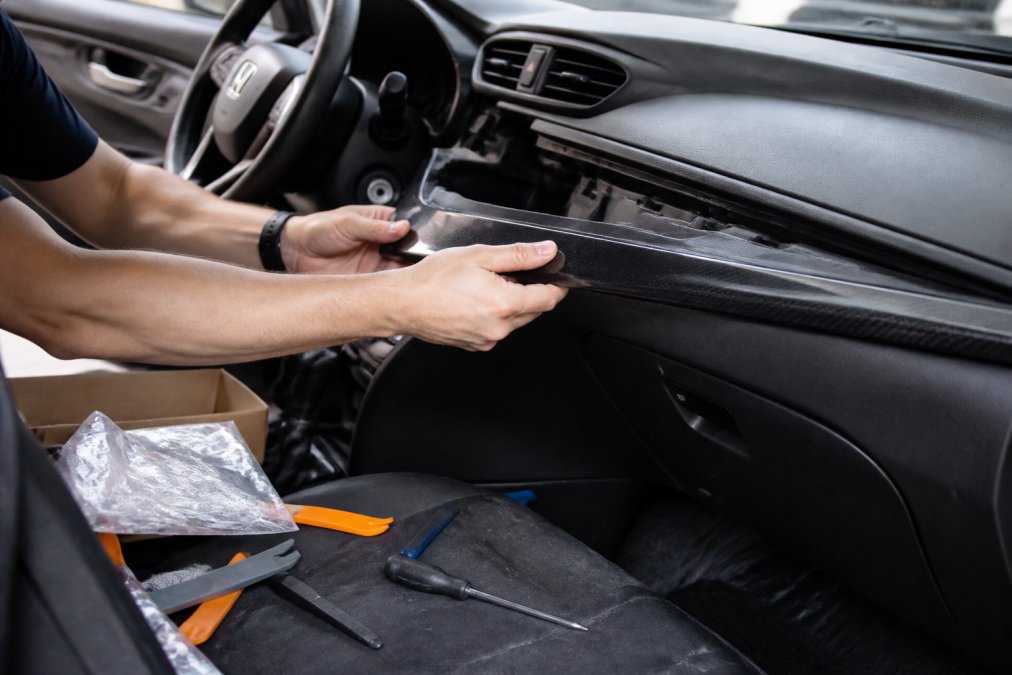
Interior upgrades are the lowest-risk category because most don't touch the drivetrain. Console covers, all-weather floor liners, and armrest organizers install in minutes and rarely trigger warranty questions.
Exterior Body Panels, Trim, and Lighting
Body panels and trim are where fitment gets serious. A replacement fender or bumper cover that's a few millimeters off will fight you through every bolt hole.
Cargo Management and Protection
Cargo upgrades protect resale value more than almost anything else. Weather mats, cargo liners, and seat-back protectors keep spills and dog hair off the factory carpet.
Common Honda CR-V Repair Parts You'll Actually Need
- Brake pads and rotors: the most frequent replacement, and quality varies enormously by brand
- Engine and cabin air filters: cheap, easy, and worth replacing on schedule
- Serpentine belts and tensioners: inspect at every oil change once you pass 60,000 miles
- Press-in bushings and chassis components: these need a shop press, not a driveway jack
- Head gasket and cooling components: rare on well-maintained CR-Vs, expensive when ignored
For anyone in the Denver metro who'd rather not crawl under the car, Speedy Roo Motorsports handles this work daily and can tell you whether a part is worth replacing or just cleaning.
Honda CR-V Performance Mods That Make a Real Difference
The CR-V is a crossover, not a sports platform, so performance spending follows a predictable order: tires and suspension first, brakes second, intake and exhaust last. Spend in that order to feel a difference per dollar; spend out of order and you get a louder car that laps a parking lot no faster.
Tires and Wheels
Tires are the highest-return upgrade on any CR-V, quality all-season or all-terrain tires change grip, ride, and road noise more than any bolt-on. When changing wheel diameter, stay within roughly 3% of factory rolling diameter to keep your speedometer and odometer honest.
Suspension
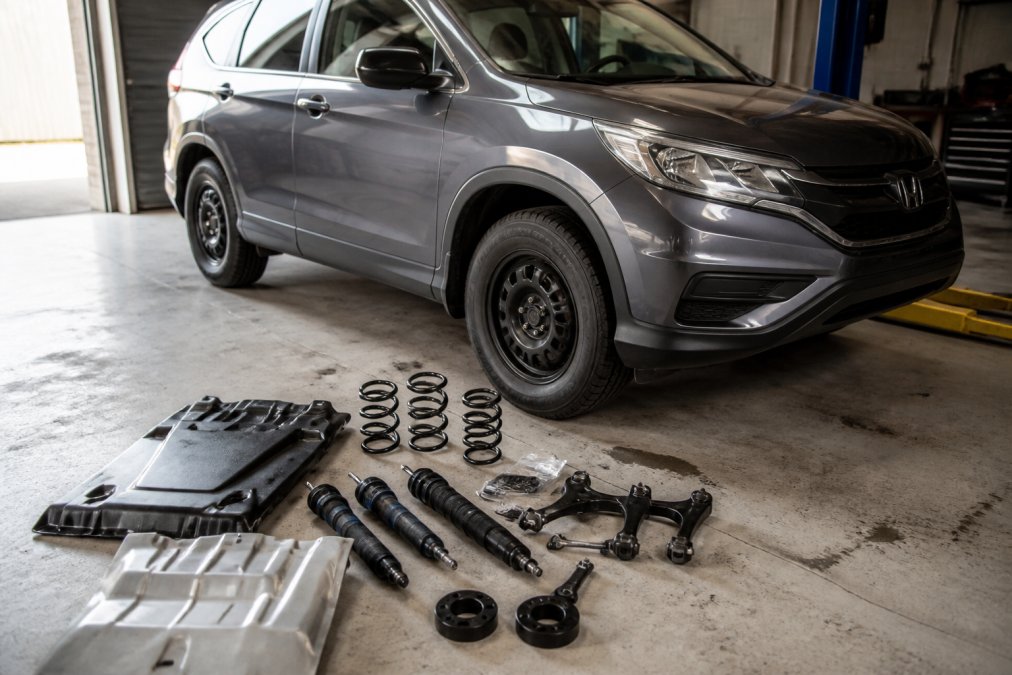
Suspension is the second-highest return: a quality strut and spring package or modest lift kit changes body roll, ride height, and tracking on uneven pavement. Rough Country lift kits are a common entry point for light off-road clearance, but raising ride height changes suspension geometry and can accelerate CV axle and ball joint wear if you go too high without supporting components.
Brakes
Brake upgrades pay off if you tow, haul, or drive mountain grades. Slotted rotors and higher-temperature pads resist fade better than stock, but track-oriented pads dust heavily and can be noisy when cold. For most owners, a quality OEM-equivalent pad and rotor set is the better daily choice.
Intake and Exhaust
Cold air intakes and cat-back exhausts deliver modest gains on a CR-V, often single-digit horsepower at the wheels, sometimes a low-RPM torque dip that makes the car feel slower around town. The real benefit is sound and throttle response, not power. Two cautions: an intake pulling air from the engine bay can raise intake temperatures and reduce its advertised gain, and any exhaust change upstream of the catalytic converter can run afoul of emissions rules in states that test.
ECU Tunes and Throttle Controllers
Throttle controllers remap pedal sensitivity and make the car feel quicker without adding power, a perception upgrade, not a performance one. ECU tunes on a naturally aspirated CR-V return small gains and can complicate warranty claims if the dealer can show the tune contributed to a failure. Under the Magnuson-Moss Warranty Act, the dealer still has to prove causation, but a flashed ECU is easy for them to point at.
What to Skip
- Cold air intakes on a stock daily driver, sound, not power
- Cat-back exhausts on a hybrid or turbo model, minimal gain, real drone
- Lowering springs without matched struts, premature strut failure
- Big brake kits on a commuter, unsprung weight and cost with no real benefit
Do one change at a time and drive it for a few weeks. Stacking tires, suspension, and an intake at once makes it impossible to tell which change helped and which one you should undo.
Long-Term Durability: What Actually Holds Up
Forum posts praise a part the week it's installed; the useful question is what still works after a year. Quality suspension components and name-brand tires hold up past 12 months, while budget intake filters, cheap coilover kits, and no-name throttle controllers are most often removed within the first year. Look for reviews that mention mileage and time in service, not just the initial impression.
Compatibility and Fitment: Matching Parts to Your CR-V Generation
Fitment is the biggest reason aftermarket purchases get returned, and most competitor pages handle it one model year at a time. A generation-level matrix is more useful because it shows which parts carry over between years and which break at a model-year boundary.
Generation-by-Generation Compatibility Matrix
| Generation | Model Years | Body Code | Parts That Carry Over Broadly | Parts That Break at a Boundary |
|---|---|---|---|---|
| First | 1997-2001 | RD1-RD3 | Universal interior organizers, floor liners, most 12V accessories | Body panels and trim, parts are often mislabeled as universal |
| Second | 2002-2006 | RD4-RD9 | Floor liners, cargo trays, seat covers | Bumper covers and trim mounts differ from later years; headlight housings are year-specific |
| Third | 2007-2011 | RE1-RE4 | Floor liners, cargo trays, most interior trim | Console geometry changed mid-cycle; lighting assemblies vary by trim |
| Fourth | 2012-2016 | RM1-RM4 | Cargo trays, floor liners, most suspension wear parts | Camera and sensor locations vary by trim; mirror assemblies are trim-specific |
| Fifth | 2017-2022 | RW1-RW2, RT | Cargo trays, floor liners, brake pads, filters | Lighting assemblies are trim-specific; hybrid and gas models diverge on some underhood parts |
| Sixth | 2023-present | RS | Floor liners, cargo trays, universal accessories | Limited aftermarket catalog; verify every body and electronic part before ordering |
Why Model-Year Searches Fail
Two CR-Vs built in the same model year can carry different trim packages with different mounting hardware, sensor suites, and lighting connectors. A model-year filter doesn't know which you own, a VIN does.
Parts That Are Safe to Swap Without Warranty Risk
Owners worry about voiding their factory warranty, and the fear is usually larger than the reality. Under the Magnuson-Moss Warranty Act, a dealer cannot void your entire warranty just because you installed an aftermarket part, they have to show the part caused the specific failure. In practice, that means the risk profile depends on what the part touches:
- Low risk: floor liners, cargo trays, seat covers, interior organizers, tablet mounts, and most cosmetic trim. These don't interact with any monitored system.
- Moderate risk: brake pads and rotors, filters, belts, and suspension wear parts. A failure here can be attributed to the part, so keep receipts and document torque specs.
- Higher risk: sensors, body control modules, lighting assemblies tied to driver-assist systems, and anything that requires a software recalibration. A dealer can argue an aftermarket sensor caused a downstream fault.
A poorly routed wiring harness that shorts a body control module is the classic example of an aftermarket install giving a dealer grounds to deny a specific repair claim. Route and fuse every added circuit as if the dealer will inspect it, because they might.
The Compatibility Check That Saves the Most Returns
Before ordering any part that bolts to the body, chassis, or electrical system, confirm three things: the part number against your VIN, the connector type if electronic, and the mounting hardware count and spacing if structural. Photograph the factory part before removal, if the replacement doesn't match, return it rather than forcing it.
VIN-based fitment checks catch the errors that model-year searches miss. Enter your VIN at checkout whenever a retailer offers the option, and keep the order confirmation with the part number in your records.
DIY Installation Tips and When to Call a Shop
DIY installation works well for interior trim, floor liners, tablet mounts, and most lighting. It does not work for suspension, press-in bushings, or anything requiring a torque spec you can't verify.
- Confirm the part number against your VIN
- Read the installation instructions fully before touching a tool
- Photograph the factory part before removal
- Torque fasteners to spec, not by feel
- Test the part's function before reinstalling trim panels
Frequently Asked Questions
Are aftermarket parts safe for my Honda CR-V?
Quality aftermarket parts from reputable brands are safe when they meet fitment and material standards. The risk comes from unbranded, ultra-cheap components that skip quality control. Stick with established retailers that publish fitment data and carry warranties. For safety-critical items like brake pads, suspension bushings, or airbag sensors, verify the part carries relevant certifications. If you are unsure, have a shop inspect the part before installation. Poorly made aftermarket parts can compromise crash protection and void portions of your warranty.
What are the most common Honda CR-V parts that need replacing?
Across most CR-V generations, the most frequently replaced parts include brake pads and rotors, cabin and engine air filters, spark plugs, struts and shocks, sway bar links, and the serpentine belt. Older models (2002-2011) also see regular valve cover gaskets, water pumps, and timing chain tensioners. Interior wear items like floor mats and console covers also get swapped often. Keeping a maintenance schedule and replacing these common Honda CR-V repair parts on time prevents bigger failures down the road.
What are the best performance mods for a Honda CR-V?
The most effective Honda CR-V performance mods start with a cold air intake and a cat-back exhaust for modest gains in throttle response. Suspension upgrades like coilovers or lift kits improve handling and ground clearance. A rear sway bar upgrade tightens cornering noticeably. For turbocharged CR-V models, an ECU tune can add meaningful power. Always check emissions compliance in your state before installing engine-related mods, and confirm the part is designed for your specific model year and trim.
How do I distinguish between high-quality and low-quality aftermarket parts?
Look for brands that publish material specs, fitment data by generation, and warranty terms. High-quality aftermarket parts usually include installation hardware and detailed instructions. Check user reviews for fitment complaints and long-term durability feedback. Retailers with price-match guarantees and clear return policies tend to carry better products. Avoid listings with no brand name, no specifications, and prices far below market average. When in doubt, ask a trusted mechanic whether the part meets OEM-equivalent quality standards for your CR-V.
Modern CR-Vs are reliable, but aftermarket parts only help when they actually fit and get installed correctly. Speedy Roo Motorsports has served Denver metro drivers since 2002, with technicians experienced across Honda and other Japanese brands, transparent communication, and local rental and towing options when your car needs to stay with us. Get started with Speedy Roo Motorsports and get your CR-V upgrades fitted right the first time.