 ultimate-guide
Subaru Head Gasket Repair Cost: Complete 2026 Pricing Guide
Table of Contents
- What Determines Subaru Head Gasket Repair Cost
- Signs and Symptoms of a Blown Head Gasket in Subaru
- Why Subaru Head Gaskets Fail: Common Root Causes
- What's Included in a Complete Head Gasket Job
- How Long Does Subaru Head Gasket Repair Take
- Is It Worth Fixing a Blown Head Gasket on Your Subaru
- Diagnostic Testing Costs and Compression Tests
- Frequently Asked Questions
Last Updated: August 4, 2026
A blown head gasket ranks among the most expensive repairs a Subaru owner can face. Understanding repair costs upfront helps you decide whether to fix or replace your vehicle. At Speedy Roo Motorsports, we've helped countless Aurora and Denver Metro drivers navigate this costly repair. Price variance often surprises people, some shops quote $1,200 while others demand $3,500 or more for the same job. The difference comes down to labor hours, parts selection, and whether your mechanic simply replaces the gasket or performs a complete cylinder head overhaul. Below, we'll break down every factor that influences head gasket repair cost, what's included in the work, and how to determine if fixing your Subaru makes financial sense.
What Determines Subaru Head Gasket Repair Cost
The total price depends on multiple interconnected factors beyond the gasket itself. Labor hours dominate the final bill because accessing the head gasket requires complete engine teardown on most Subaru models. Your specific engine type, model year, and whether additional damage exists during disassembly all affect the final labor tally.
Labor hours and flat-rate pricing
Most mechanics and dealerships use flat-rate labor estimates for head gasket work rather than hourly billing. A flat rate means you pay a predetermined amount regardless of how long the job actually takes, typically ranging from 8 to 12 labor hours for a standard replacement on common Subaru models like the Legacy, Outback, or Impreza. This protects you from unexpected overages if the job runs longer than anticipated.
Dealerships typically charge 30-50% higher labor rates per hour than independent shops, which compounds across an 8-12 hour job. However, dealerships often have faster turnaround times and access to specialized diagnostic equipment that can catch secondary damage before it becomes catastrophic.
OEM vs. aftermarket parts
Original Equipment Manufacturer (OEM) gasket sets and head bolts cost significantly more than aftermarket alternatives. OEM parts carry Subaru's warranty and are engineered to exact specifications. Aftermarket gaskets from reputable suppliers like Fel-Pro or Victor Reinz perform adequately for most drivers, though some mechanics report slightly higher failure rates with the cheapest alternatives.
Head bolts deserve special attention because Subaru head bolts are torque-to-yield fasteners that stretch slightly during installation to create the proper seal. Reusing old head bolts is a false economy that can lead to gasket failure within months. New OEM head bolts cost more upfront but virtually eliminate the risk of leaks caused by inadequate clamping force.
Dealership vs. independent mechanic pricing
Dealership pricing typically runs 20-40% higher than independent shops, reflecting higher overhead and facility costs. Independent mechanics often charge less while maintaining the same quality standards because they operate with lower overhead and longer-term customer relationships. Dealerships pull directly from Subaru's parts inventory and warranty system, which matters if your vehicle is still under warranty. Independent shops may source parts from suppliers and offer their own warranties, which can be equally solid if the shop has been in business for years.
Signs and Symptoms of a Blown Head Gasket in Subaru
Recognizing a failing head gasket early can sometimes prevent complete failure. Symptoms vary depending on which part of the gasket has failed, coolant-side leaks produce different signs than combustion-side leaks.
Engine overheating and coolant leaks
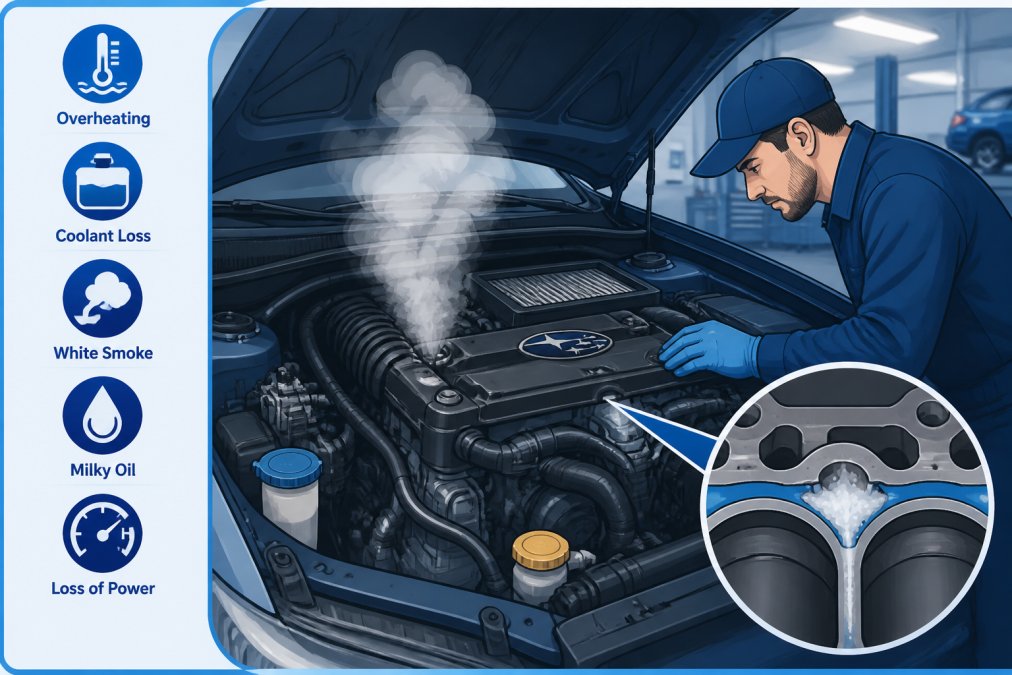
A blown head gasket on the coolant side causes your engine to overheat because coolant escapes into the oil passages or combustion chambers instead of circulating through the radiator. You'll notice the temperature gauge climbing into the red zone, often accompanied by a sweet-smelling coolant odor under the hood. The radiator may stay full while the overflow tank empties, a telltale sign that coolant is leaking internally rather than from a visible hose.
Some drivers experience intermittent overheating that seems to resolve itself after the engine cools, only to return during highway driving or heavy acceleration. This pattern indicates a partial gasket failure that worsens as combustion pressures increase. Continuing to drive with an overheating engine risks catastrophic damage to the cylinder head, engine block, and pistons.
White smoke and oil contamination
White smoke pouring from the exhaust tailpipe, especially during cold starts, signals that coolant is entering the combustion chamber and burning off. This smoke smells distinctly sweet and often leaves a visible mist behind your vehicle. The smoke may disappear once the engine warms up, then reappear after the vehicle sits overnight.
Pull the dipstick and look for a milky, tan-colored residue on the stick or in the oil filler cap, this is an emulsion of oil and coolant caused by combustion gases and coolant mixing in the crankcase. Contaminated oil loses its lubricating properties and can cause rapid engine wear if ignored. A compression test will reveal whether combustion pressure is leaking past the gasket into the cooling system.
Why Subaru Head Gaskets Fail: Common Root Causes
Subaru's flat-four engine design and particular head gasket materials made certain model years notorious for premature gasket failure. Subaru's earlier-generation head gaskets, particularly on 1999-2009 models with the 2.5-liter engine, were prone to failure around 100,000 miles due to material composition and design limitations. Subaru redesigned the gasket and engine block sealing surface starting around 2010, significantly improving durability, though failures still occur on newer models when preventative maintenance is neglected.
Overheating is the leading cause of premature gasket failure. A thermostat that sticks open or a failing water pump prevents coolant from circulating properly, causing localized hot spots that degrade the gasket. Regular coolant flushes and thermostat replacement at manufacturer intervals prevent this cascade of failure.
Poor maintenance accelerates gasket degradation. Driving on old, acidic coolant that hasn't been flushed in years creates corrosion inside the engine block, which weakens the sealing surface where the gasket makes contact. Neglecting oil changes allows sludge buildup that restricts coolant flow and increases combustion chamber pressure, both of which stress the gasket beyond its design limits.
What's Included in a Complete Head Gasket Job
A proper head gasket repair involves far more than simply removing the old gasket and installing a new one. The complete job includes multiple components and processes that directly affect repair longevity and final cost.
Cylinder head resurfacing vs. replacement
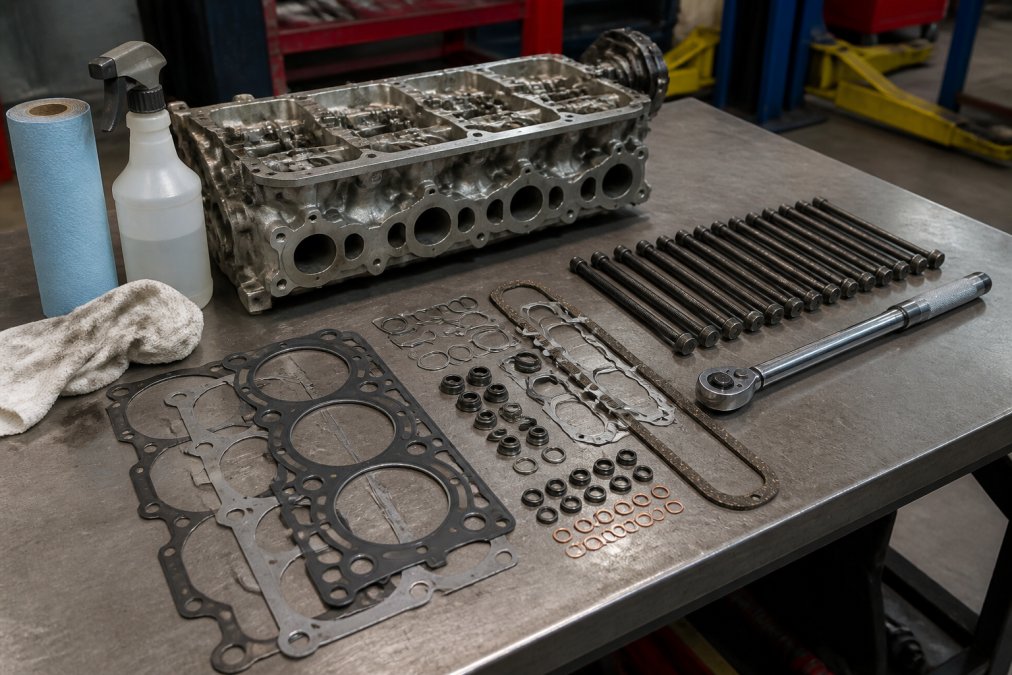
After removing the cylinder head, your mechanic must inspect the sealing surface, the flat area where the gasket contacts the engine block. If the surface shows minor warping or corrosion, it can be resurfaced at a machine shop, which involves grinding away a thin layer of metal to restore a perfectly flat sealing plane. Resurfacing costs less than replacing the entire head but requires removing the head, transporting it to the machine shop, and waiting for completion, typically adding 3-5 days to the repair timeline.
If the head is cracked, severely warped, or shows signs of internal damage during teardown, replacement becomes necessary. A used head from a salvage yard costs far less than a new one but carries unknown history. A new cylinder head from Subaru carries a full warranty but represents a significant cost increase. Your mechanic's assessment during disassembly determines which path makes sense.
Engine teardown and reassembly
Accessing the head gasket requires removing the timing belt or timing chain, valve cover, intake manifold, exhaust manifold, and numerous other components. Each has its own gaskets and seals that should be replaced while the engine is open. A complete gasket set includes not just the head gasket but the valve cover gasket, intake manifold gasket, oil pan gasket, and other seals that may be worn.
Reassembly must follow precise torque specifications and sequences. Head bolts must be tightened in a specific pattern and to exact torque values, typically 45-55 foot-pounds depending on the engine, to ensure even pressure across the gasket. The timing belt or chain must be reinstalled at precise valve timing, verified with special tools. One bolt overtightened or one tooth off on the timing belt can cause catastrophic engine damage.
How Long Does Subaru Head Gasket Repair Take
Most Subaru head gasket repairs take 8-12 labor hours to complete, though this timeline varies based on your specific model and shop efficiency. The total calendar time depends on whether additional work is discovered during disassembly. If the cylinder head needs resurfacing at an external machine shop, add 3-5 business days. If the shop must order parts, add 1-3 days. A shop that keeps common gasket sets and head bolts on hand can often complete the repair within 2-3 business days once work begins.
Is It Worth Fixing a Blown Head Gasket on Your Subaru
The decision to repair or replace your vehicle hinges on three factors: your car's age and mileage, the total repair cost relative to vehicle value, and your attachment to the vehicle.
Age, mileage, and vehicle condition factors
A 2010 Subaru Legacy with 140,000 miles and a blown head gasket presents a different calculation than a 2020 Outback with 95,000 miles. The older vehicle may have other aging components, transmission fluid that needs flushing, a radiator approaching failure, suspension components wearing out, that will require attention within the next 12-24 months. Spending $2,500 on a head gasket repair only to face $1,500 in transmission work six months later changes the math.
Conversely, a newer Subaru with a blown gasket and otherwise solid maintenance history often justifies repair. The vehicle likely has many years of reliable service remaining, and the repair cost is a one-time expense that restores full functionality.
Warranty and post-repair break-in procedures
After head gasket repair, your engine needs a careful break-in period. Avoid aggressive acceleration, towing, and sustained high RPMs for the first 500 miles. This allows the new gasket to properly seat under the head bolts and prevents premature failure.
Reputable shops offer warranties on head gasket repairs, typically 12 months or 12,000 miles. This warranty covers gasket failure caused by improper installation but not failure caused by overheating or lack of maintenance. Ask about warranty terms before authorizing work and get the warranty in writing.
Diagnostic Testing Costs and Compression Tests
Before authorizing a head gasket repair, your mechanic should perform diagnostic testing to confirm the diagnosis. A compression test costs between $100 and $150 and involves removing spark plugs and measuring combustion pressure in each cylinder. Low compression in one or more cylinders suggests a blown gasket, while even compression across all cylinders points to a different problem.
A coolant combustion leak test uses a special chemical that changes color in the presence of exhaust gases. If exhaust gases are present, the chemical changes color, confirming a blown gasket. This test costs $75-$150 and provides definitive proof before you commit to a $2,500+ repair.
Some shops perform these diagnostics at no charge if you authorize the repair, while others charge a diagnostic fee that's credited toward repair costs if you proceed. Ask your mechanic about their diagnostic policy upfront.
A blown head gasket repair represents a significant investment, but understanding the factors that influence cost, labor hours, parts quality, machine shop work, and your vehicle's condition, helps you make the right decision. At Speedy Roo Motorsports, we've guided thousands of Subaru owners through this repair, offering transparent communication about what's included in the work, realistic timelines, and honest assessments of whether repair makes sense for your specific situation. Contact Speedy Roo Motorsports today for a diagnostic evaluation and written estimate, we'll help you understand exactly what your repair entails and why the price is what it is.
Frequently Asked Questions
What are the early warning signs of a failing Subaru head gasket?
Watch for white smoke from the exhaust, coolant leaking from under the engine, a milky or foamy appearance in the oil, overheating, or rough idling. Coolant loss without visible puddles under the car often signals internal combustion chamber leakage. Don't ignore these signs, catching a head gasket problem early can prevent catastrophic engine damage and reduce overall repair costs.
How much does diagnostic testing cost to confirm a blown head gasket?
Diagnostic fees typically range from $100 to $300 at independent mechanics, though pricing varies by location and shop. A compression test, combustion leak test, or coolant analysis helps confirm whether the head gasket is actually the culprit. Getting a proper diagnosis before committing to repair prevents unnecessary work and gives you an accurate picture of what needs fixing.
Is it worth fixing a blown head gasket on an older Subaru?
That depends on the vehicle's age, mileage, condition, and remaining value. If your Subaru has low mileage and runs well otherwise, repair makes financial sense. For vehicles over 150,000 miles or with other significant issues, weigh the repair cost against the car's market value. A shop can help you evaluate whether investing in a head gasket job aligns with your vehicle's long-term viability.
Does a head gasket repair include cylinder head resurfacing?
Not always, it depends on the damage. If the cylinder head is warped or damaged, a machine shop will resurface it to restore the sealing surface. A basic head gasket replacement uses the existing head; resurfacing adds labor and machine shop costs but ensures a better seal. Your mechanic will inspect the head during teardown and recommend resurfacing if needed to prevent premature failure.
What should I do after a head gasket repair to protect my investment?
Follow the shop's break-in procedures, which typically include gentle driving for the first 50-100 miles, regular coolant checks, and monitoring oil condition. Use the correct coolant type specified in your service manual. Have the head bolts torqued to manufacturer specifications, and schedule follow-up inspections as recommended. Proper post-repair care extends the life of your repair and prevents complications.