 ultimate-guide
Signs of Failing Toyota Water Pump: A Diagnostic Guide
Table of Contents
- Common Signs of a Failing Toyota Water Pump
- What Causes a Toyota Water Pump to Fail
- How Long Does a Water Pump Last on a Toyota
- How to Inspect Your Water Pump for Axial and Radial Play
- Toyota Water Pump Replacement Cost and Your Options
- Preventative Maintenance to Extend Water Pump Life
- Frequently Asked Questions
Last Updated: August 17, 2026
Common Signs of a Failing Toyota Water Pump
A failing Toyota water pump shows itself through warning signals that shouldn't be ignored. The water pump circulates coolant through the engine block, radiator, and back again to maintain proper operating temperature. When it begins to fail, you'll notice symptoms ranging from obvious leaks to subtle noises.
At Speedy Roo Motorsports, we've diagnosed countless water pump failures across Toyota models. Catching these signs early saves you from engine overheating that could cause catastrophic damage.
Coolant Leaks and Puddles Under Your Car
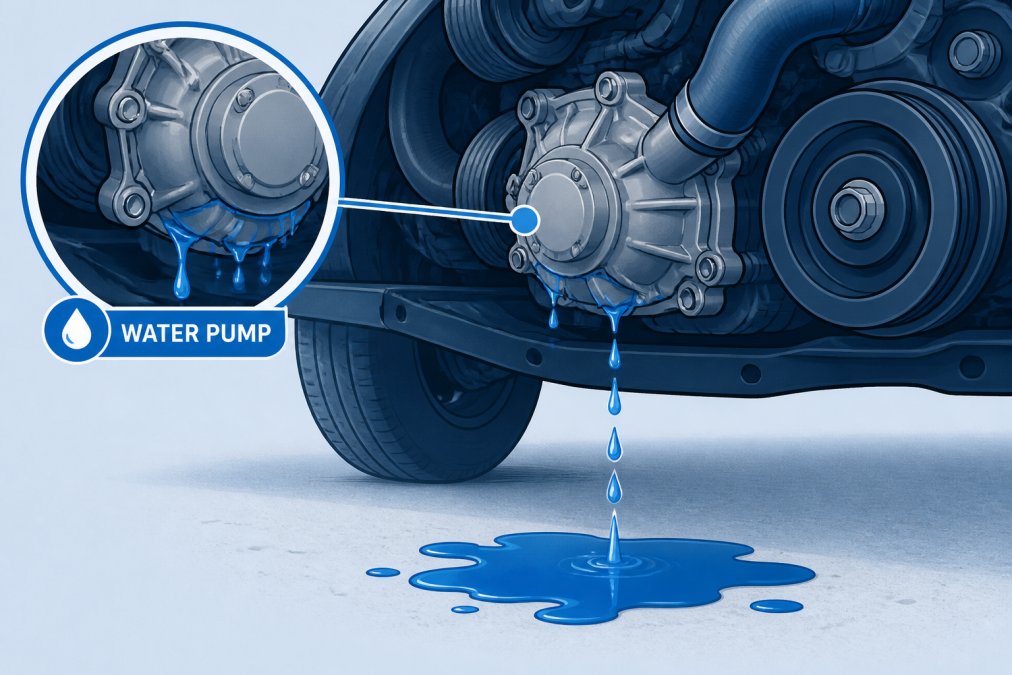
The most visible sign of a failing Toyota water pump is a coolant leak beneath your vehicle. The water pump's shaft seal keeps pressurized coolant contained inside the pump housing. When this mechanical seal degrades, coolant seeps past it and drips onto the ground.
You'll typically find these puddles in the center-front area of your engine bay. Coolant has a distinctive sweet smell and appears as bright green, orange, or pink liquid depending on your Toyota's coolant type. The weep hole, a small drain hole on the pump's side, serves as an early warning system. Coolant dripping from this hole indicates seal degradation before complete failure occurs.
Engine Overheating and Temperature Gauge Warnings
When your water pump can't circulate coolant effectively, engine temperature climbs. You'll see this on your dashboard temperature gauge, which may creep higher than normal or spike suddenly during driving. Modern Toyotas often trigger a temperature warning light before the gauge reaches the red zone.
Engine overheating occurs because coolant isn't moving through the engine block and radiator efficiently. The impeller, the internal fan-like component inside the pump, may be damaged or corroded, reducing its ability to push coolant. Cavitation, where air pockets form in the coolant flow, can also interrupt the cooling cycle.
If your temperature gauge climbs during highway driving or stays elevated after warm-up, suspect the water pump, especially if your radiator and thermostat are functioning normally.
Squealing or Whining Noises from the Engine
A high-pitched squealing noise from the front of your engine often points to water pump bearing wear. The pump is driven by either the serpentine belt or timing belt, depending on your Toyota model. As the bearing deteriorates, it creates friction that translates into squealing.
This noise typically appears when you first start the engine and may fade slightly as it warms up. Whining indicates bearing failure is more advanced. The bearing allows the pump's shaft to spin freely. When it wears out, the shaft wobbles slightly, creating vibration and noise. Ignoring this sound risks complete bearing failure, which can seize the pump and damage your serpentine belt.
Grinding Sounds and Bearing Failure Indicators
A grinding noise indicates bearing failure is well advanced. When the bearing has deteriorated significantly, metal-to-metal contact occurs inside the pump, creating a grinding or growling sound. This is a red flag that replacement is urgent.
Grinding often appears alongside coolant leaks or overheating. Avoid driving long distances if you hear this sound. A seized pump can snap your serpentine belt, leaving you stranded and potentially causing additional engine damage.
What Causes a Toyota Water Pump to Fail
Understanding failure causes helps you recognize why your pump may be failing and what preventative steps matter most.
Shaft Seal Degradation and Mechanical Seal Wear
The shaft seal is the most common failure point. This mechanical seal keeps pressurized coolant from leaking past the pump shaft where it enters the housing. Over time, thermal cycling causes the seal materials to expand and contract repeatedly, gradually wearing the seal surfaces.
Coolant additives break down over time, reducing their ability to lubricate and protect the seal. Using non-OEM or incompatible coolant accelerates seal wear significantly. The seal can also fail prematurely if the pump shaft develops play due to bearing wear.
Corrosion, Cavitation, and Impeller Damage
Corrosion inside the water pump housing weakens the metal and can cause the impeller to crack. This happens when coolant breaks down and loses its corrosion-inhibiting properties. Old coolant becomes acidic and attacks the pump's internal surfaces.
Cavitation occurs when air pockets form in the coolant flow inside the pump. These pockets collapse suddenly, creating shock waves that pit and damage the impeller surface. Over time, cavitation can severely damage the impeller, reducing its ability to circulate coolant.
The impeller can also suffer direct damage from debris in the cooling system. Particles breaking loose from the radiator or engine block can strike and chip the impeller blades, reducing pump efficiency.
Timing Belt and Serpentine Belt Issues
Your water pump is driven by either your timing belt or serpentine belt. If the timing belt is worn or misaligned, it transmits vibration to the pump, accelerating bearing wear. A serpentine belt that's worn or slipping also affects the pump by reducing coolant flow and generating heat that damages the seal prematurely.
Belt tension is critical. A belt that's too tight strains the pump bearing, while a belt that's too loose reduces pump speed. Many pump failures occur within a few thousand miles of belt replacement if the new belt wasn't tensioned correctly.
How Long Does a Water Pump Last on a Toyota
Most Toyota water pumps are designed to last between 60,000 and 100,000 miles, though this varies based on driving conditions and maintenance habits. Some pumps fail earlier, while others exceed 150,000 miles without issues.
Severe driving conditions, frequent towing, stop-and-go city driving, or extreme heat, reduce pump lifespan. Vehicles in hot climates experience more thermal cycling, which stresses the seal. Short trips where the engine never fully warms up also accelerate wear because condensation can contaminate the coolant.
The best indicator isn't mileage alone but your vehicle's age and coolant condition. A 12-year-old pump with 80,000 miles has likely experienced more thermal cycling than a 5-year-old pump with 120,000 miles. Checking your coolant condition, color, clarity, and pH gives you insight into how much life remains in both your coolant and pump.
How to Inspect Your Water Pump for Axial and Radial Play
You can perform a basic inspection to check if your water pump bearing is developing play. With the engine off and completely cool, grasp the water pump pulley firmly and try to move it.
Axial play is movement along the pump shaft's length, pushing and pulling the pulley toward and away from the engine. A healthy pump allows no perceptible movement. If the pulley moves noticeably, the bearing is worn and replacement is needed soon.
Radial play is side-to-side movement of the pulley perpendicular to the shaft. A healthy pump has no play. If you can rock the pulley side to side, the bearing has significant wear and the pump is nearing failure.
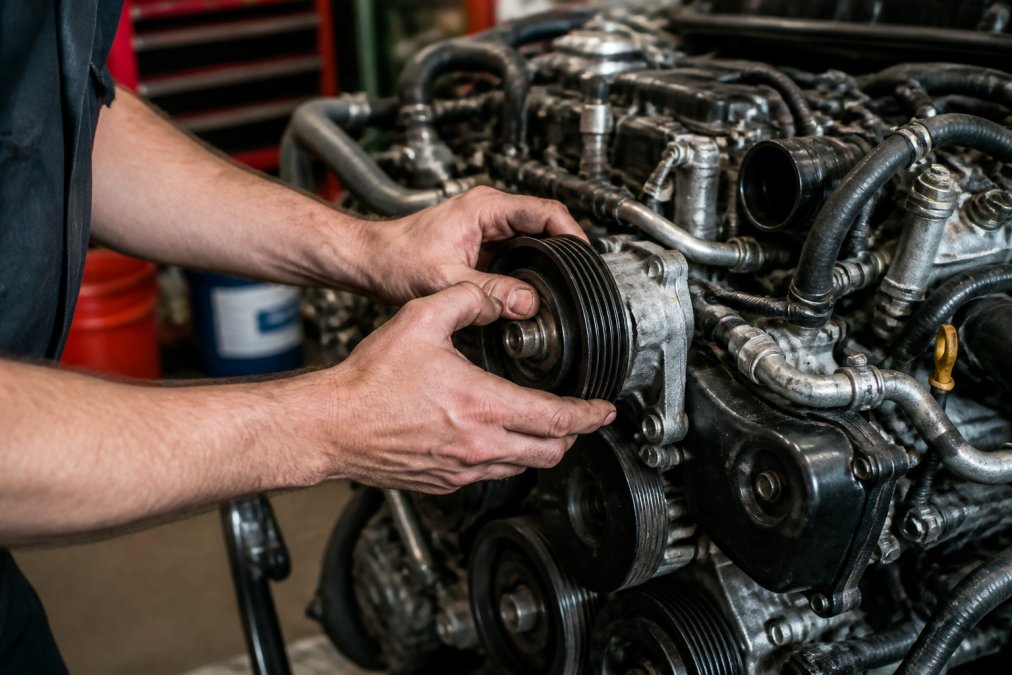
If you detect play, schedule pump replacement within the next week or two. Never attempt this on a hot engine as you can burn yourself.
Toyota Water Pump Replacement Cost and Your Options
Water pump replacement cost depends on your specific Toyota model, whether you choose OEM or aftermarket parts, and whether you tackle the job yourself or have a professional handle it. On some models, replacement takes 1-2 hours of labor. On others, particularly where the timing belt must be removed, the job can take 4-6 hours.
OEM Toyota water pumps come with Toyota's quality guarantee. Aftermarket pumps cost less but may have shorter warranties. Many independent shops recommend OEM pumps for Toyota vehicles because the cost difference is modest and reliability is superior.
If you're mechanically inclined, DIY replacement saves labor costs but requires proper tools and coolant disposal. Mistakes during installation can cause premature pump failure or other cooling system problems. For most Toyota owners, having a trusted independent shop handle the replacement makes sense.
Preventative Maintenance to Extend Water Pump Life
Change your coolant at the intervals specified in your Toyota's maintenance schedule. Modern long-life coolants degrade over time and lose their corrosion inhibitors, becoming acidic and attacking pump seals and the impeller.
Inspect your serpentine belt and timing belt regularly. A worn belt creates vibration that accelerates pump bearing wear. Replace belts before they fail. When you have a new belt installed, verify that it's tensioned correctly.
Keep your coolant level topped up. Low coolant can cause cavitation, which damages the impeller. Check your coolant reservoir monthly. A consistently low level indicates a leak somewhere in your cooling system.
Avoid overheating your engine. Extreme heat accelerates seal degradation and can warp pump components. If your temperature gauge climbs into the red zone, pull over and let the engine cool.
Monitor your coolant color and condition. Coolant should be bright and clear. If it becomes brown, cloudy, or rusty-looking, contamination has occurred and a flush is needed.
A failing Toyota water pump demands attention before it fails completely. The signs are clear: coolant leaks, overheating, squealing noises, and bearing play. Catching these early gives you control over the repair timeline and prevents the engine damage that comes with catastrophic cooling system failure.
When you're ready for inspection or replacement, Speedy Roo Motorsports has been serving Toyota owners across the Denver Metro area since 2002. Our technicians understand Toyota cooling systems and can diagnose pump issues quickly with transparent communication about your options. Contact Speedy Roo Motorsports for a cooling system inspection and get your water pump checked by technicians who know Japanese vehicles.
| Symptom | Severity | Action Required |
|---|---|---|
| Coolant puddle under car | High | Schedule inspection within 1 week |
| Squealing from engine | Medium | Have inspected within 2 weeks |
| Engine overheating | Critical | Stop driving, have inspected immediately |
| Grinding noise | Critical | Schedule replacement urgently |
| Bearing play detected | High | Replace within 1-2 weeks |
| Coolant discoloration | Medium | Flush system and inspect pump |
Frequently Asked Questions
What are the most common symptoms of a failing water pump in a Toyota?
The clearest warning signs are coolant leaks beneath your car, engine overheating despite normal coolant levels, and squealing or whining noises from the serpentine belt area. Some owners also notice grinding sounds when the bearing fails or a sweet smell from leaking coolant. If you spot any of these, have your water pump inspected promptly, ignoring them risks catastrophic engine damage from overheating.
Can I drive my car if the water pump is failing?
Driving with a failing water pump is risky. Even a slow coolant leak will eventually cause overheating, which damages the engine block, gasket, and thermostat. If you notice symptoms, stop driving and get a diagnosis as soon as possible. Continuing to operate the vehicle can turn a water pump replacement into a much costlier engine repair.
How long does a water pump last on a Toyota?
Most Toyota water pumps last 60,000 to 100,000 miles under normal driving conditions. Some last longer if you maintain proper coolant viscosity and change it on schedule; others fail earlier due to corrosion or cavitation in the coolant system. Check your owner's manual for the recommended replacement interval, and consider replacing it during timing belt service if the mileage aligns.
What's the difference between DIY replacement and professional service?
Replacing a water pump requires removing the serpentine belt, draining coolant, and accessing the pump, a job that takes 2-4 hours depending on your model. If you're experienced with engine work and have the right tools, DIY is possible. Professional service ensures proper coolant refill, air bleeding, and verification that the shaft seal and bearing are functioning correctly, plus you get a warranty on the work.