 ultimate-guide
How to Prepare a Mazda Miata for Track Days
Table of Contents
- Start With a Full Mechanical Inspection
- Miata Track Day Safety Inspection Checklist
- Best Track Day Brake Pads for Miata
- Mazda Miata Track Day Tire Pressure Guide
- Safety Gear and Roll Bar Requirements
- What to Pack in Your Track Day Kit
- Know Before You Go: Briefing and Track Etiquette
- Conclusion: Your Miata Is Ready for the Track
- Frequently Asked Questions
Last Updated: September 5, 2026
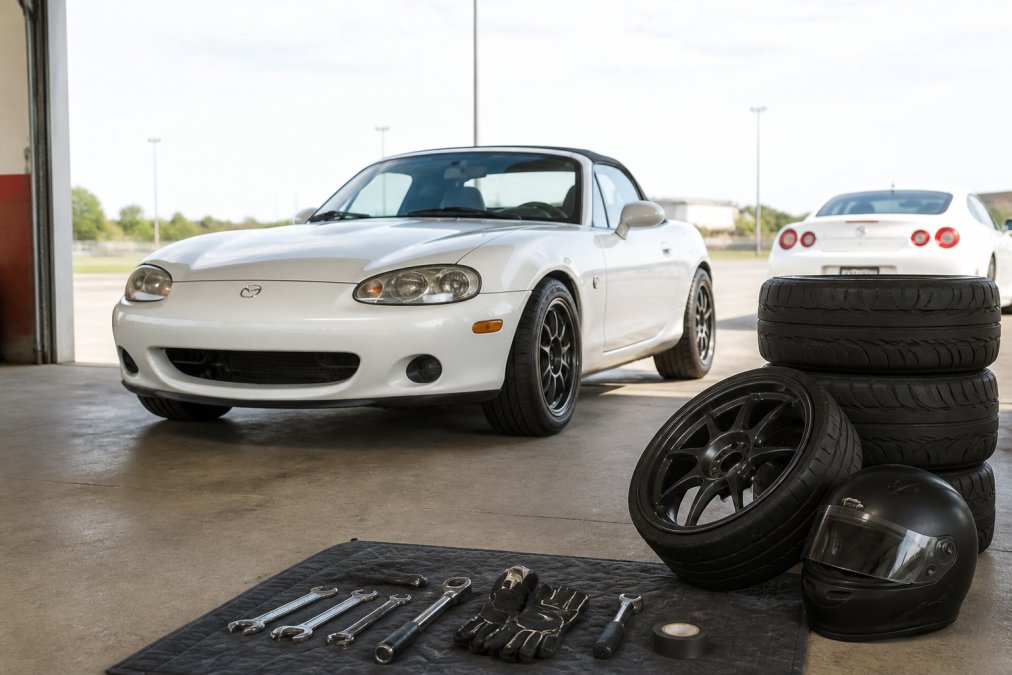
Preparing a Mazda Miata for a track day is a systematic process of verifying safety systems, upgrading consumables, and understanding the car's limits. The Miata rewards driver skill over horsepower, but that accessibility leads many owners to underestimate the preparation required. This guide from Speedy Roo Motorsports covers the mechanical checklist, safety gear, and driving protocols you need to get your car home in one piece.
A track day is a severe stress test. Sustained high RPMs, heavy braking, and lateral loads expose weaknesses a daily commute never will. Treat the event as a race weekend for your car's consumables. The single most important takeaway? Brakes and fluids are the difference between a fun day and a trip home on a flatbed.
Start With a Full Mechanical Inspection
A full mechanical inspection is the foundation of track prep, but it must be tailored to your Miata's generation. The NA (1989-1997), NB (1998-2005), NC (2005-2015), and ND (2015-present) share a basic recipe, but each has unique failure points. Here’s what to check on your specific car.
Generation-Specific Failure Points
NA and NB (1.6L and 1.8L): These cars are prone to crankshaft pulley failure on the 1.6L (short-nose crank) and should be inspected for wobble. The cooling system is the Achilles’ heel: the plastic radiator tanks crack at the seams, and the heater core hoses fail. Replace any radiator that is brown or green at the top tank, and consider a metal expansion tank. Also, check the shift boots, they tear and allow heat into the cabin, but more importantly, they can cause the shifter to pop out of gear under hard driving.
NB (1998-2005): The NB2 (2001-2005) has a stronger engine, but the cam position sensor (CPS) is known to fail when hot, causing the car to stall. Carry a spare CPS and a 10mm socket. The fuel injectors on the NB are also prone to clogging if the car sits; run a fuel system cleaner before the event.
NC (2005-2015): The NC’s 2.0L engine (MZR) has a known issue with oil starvation during sustained high-G corners, especially on sticky tires. If you have an NC, install an oil cooler and consider an oil pressure gauge. The NC’s coolant expansion tank is plastic and cracks; replace it with an aluminum unit. Also, the transmission’s 5th gear synchro is weak, check for grinding before the event.
ND (2015-present): The ND’s transmission is the weak point. The early ND (2016-2017) had a high failure rate, and even later versions can fail under hard track use, especially with upgraded tires. Check for any signs of grinding or notchiness. The ND’s engine also runs hot; a coolant re-route or upgraded radiator is a common fix. The ND’s brake calipers are prone to sticking, lubricate the slide pins.
Fluid Maintenance and Brake Fluid Flush
Brake fluid is the most critical fluid on a Miata track day. Standard DOT 3 fluid has a dry boiling point around 401°F, but under hard braking it can boil, creating air bubbles and sending your pedal to the floor (federalregister.gov). This is brake fade, the leading cause of off-track excursions.
A full brake fluid flush with a high-temperature fluid is non-negotiable. You need a fluid with a dry boiling point of at least 500°F, such as Motul RBF 600 (594°F) or Castrol SRF (590°F). Castrol SRF is more expensive but absorbs less water over time. Always use a fresh, sealed bottle, brake fluid is hygroscopic and absorbs moisture, lowering its boiling point.
On NA and NB models, the clutch and brake systems share the same reservoir, so flushing the brakes also refreshes the clutch fluid. On NC and ND, they are separate, don’t forget the clutch.
For engine oil, use a high-quality synthetic. Many owners prefer a slightly thicker oil, such as 5W-40 or 10W-40, to maintain pressure at high temperatures. A common pattern is 5W-30 for street and 5W-40 for track. For high-mileage NA or NB models, consider a high-zinc oil to protect flat-tappet lifters.
Coolant: Use a 50/50 mix of distilled water and ethylene glycol. Some owners run up to 70% water with a water-wetter additive for better heat transfer, but this reduces freeze protection, only do this in a warm climate.
Fastener Check and Torque Specs
Vibration from track use can loosen fasteners that have been tight for years. Verify the torque on critical suspension and brake components with a torque wrench, do not guess. Here are common torque specs (always verify against your factory service manual):
- Lug nuts: 65-80 lb-ft (NA/NB), 80-100 lb-ft (NC/ND)
- Caliper bracket bolts: 60-80 lb-ft (NA/NB), 80-100 lb-ft (NC/ND)
- Lower control arm bolts: 80-100 lb-ft (NA/NB), 100-120 lb-ft (NC/ND)
- Ball joint pinch bolts: 30-40 lb-ft (NA/NB), 40-50 lb-ft (NC/ND)
Re-torque lug nuts after the first session, as wheels can settle and loosen.
Miata Track Day Safety Inspection Checklist
Most reputable track day organizations require a tech inspection before you are allowed on the asphalt. This formal checklist verifies the car is mechanically sound, covering tires, brakes, suspension, and safety equipment to protect you and other drivers.
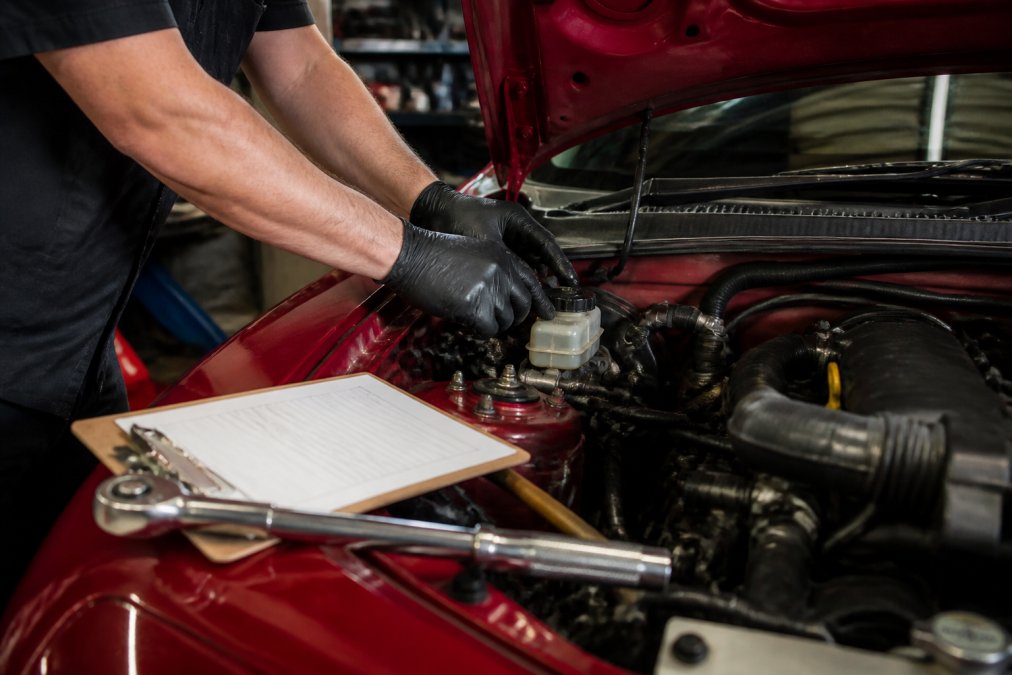
Here is a condensed version of the standard tech inspection checklist you will encounter:
- Tires: Minimum tread depth and no visible cords, cracks, or bubbles. DOT-approved tires are required; track-only slicks are usually prohibited without a roll bar.
- Brakes: Thick brake pads (check the friction material level), no fluid leaks, and a firm pedal.
- Suspension: No excessive play in ball joints or tie rods, and no leaking shock absorbers.
- Safety: Battery tied down securely, no loose items in the cabin or trunk, and a functioning throttle return spring.
Best Track Day Brake Pads for Miata
Choosing the best track day brake pads for Miata involves a trade-off between cold bite and heat tolerance. Street pads glaze over when overheated, leading to a hard pedal with zero stopping power. Track pads work at high temperatures but can be noisy and perform poorly when cold.
For a dual-purpose car, a "street/track" pad is often the best compromise, handling moderate track heat without requiring a change for the drive home. If you run sticky tires or a high-horsepower build, you will likely need a dedicated track pad. Bring a spare set of front pads and tools to swap them at the track, as fronts wear significantly faster than rears.
| Pad Type | Best For | Cold Performance | Heat Tolerance | Dust & Noise |
|---|---|---|---|---|
| Street OEM | Daily driving | Excellent | Poor | Low |
| Street/Track | Novice track days | Good | Moderate | Medium |
| Full Track | Advanced/Competitive | Poor | High | High |
Mazda Miata Track Day Tire Pressure Guide
The correct Mazda Miata track day tire pressure is lower than your street pressure. As tires heat up, the air inside expands, increasing pressure and reducing the contact patch. Leaving the pressure at the factory street setting results in a small, stiff contact patch and reduced grip.
Start with a cold pressure significantly lower than street spec, usually 26-28 psi for street tires, and monitor after each session. Aim for a hot pressure of roughly 32-34 psi. You will need a quality tire pressure gauge and an air compressor or nitrogen tank.
:::tip The "chalk test" is the best way to find your optimal pressure. Draw a chalk line across the tread face, drive a few laps, and check the wear. If the chalk is worn off the edges but not the center, you have too much pressure. If it is worn in the center only, you have too little.
Safety Gear and Roll Bar Requirements
Safety requirements are dictated by the track day organizer and are strict and non-negotiable. The most significant requirement for a convertible like the Miata is a roll bar. Many organizations require one for any convertible, regardless of experience, to protect your head in a rollover.
The roll bar must meet specific standards, often requiring a pass-through for the seat belt and sufficient clearance between your helmet and the bar. For helmets, look for an SA2020 rating or newer, a standard for auto racing offering better fire protection than a motorcycle helmet (smf.org). SA2020 is the current minimum for most clubs.
- Roll Bar: Must be a recognized brand, properly installed with backing plates.
- Helmet: SA2020 or newer rating is mandatory.
- Gloves & Suit: Recommended for novice drivers, often required for advanced groups.
- Arm Restraints: Required if you have an aftermarket steering wheel without an airbag.
What to Pack in Your Track Day Kit
Packing a dedicated kit saves you from being sidelined by a minor issue. Beyond your helmet and driving shoes, pack basic tools, spare parts, and fluids so you can handle small problems at the track and drive home.
- Tools: Torque wrench, socket set, screwdrivers, and a breaker bar for lug nuts.
- Spare Parts: Extra brake pads, a spare set of spark plugs, and a serpentine belt.
- Fluids: Brake fluid, engine oil, and coolant.
- Comfort: A canopy for shade, a chair, and plenty of water.
Know Before You Go: Briefing and Track Etiquette
Attending the driver’s briefing is mandatory, it’s where the organizer outlines flag signals and passing rules. Do not skip it, even if you’ve driven the track before. Track etiquette manages the speed differential between cars, the primary cause of incidents.
The most important rule is point-by passing. In novice groups, the car being passed has the right of way, and the faster car must wait for a point-by before overtaking. Know flag signals: yellow means no passing and prepare for a hazard; red means the session is stopped and you must return to the pits immediately; black means you have a mechanical issue or are driving erratically, pull off and talk to the organizer.
Track-Day Insurance: Don’t Skip This
Your standard auto insurance policy likely excludes track use. If you crash at a track day, your daily driver policy will not cover the damage, and you could be on the hook for thousands of dollars in repairs, not to mention damage to the track or other cars.
Track-day insurance is available from specialty providers like Lockton Motorsports, Hagerty, and RLI. These policies cover your car during the event, typically with a deductible. Costs are commonly around 1-2% of your car’s value per event, for a $5,000 Miata, that’s $50-100 per day (hagerty.com). Some policies also cover liability for damage to the track or other vehicles.
Check the policy details: some require a tech inspection, and most exclude timed events or racing. Always read the fine print.
Data Logging: Your Secret Weapon for Improvement
Beyond mechanical prep, the best way to improve lap times is data logging. You don’t need a $1,000 system, start with a smartphone app like Harry’s LapTimer or RaceChrono and a $20 OBD-II Bluetooth adapter. These apps use GPS to record lap times and can overlay speed, throttle, and braking data on video.
For a more precise setup, consider a used Garmin Catalyst or a basic AIM Solo 2. These units provide real-time lap timing and help you identify where you’re losing time. Novices commonly brake too early and too hard; data logging shows you exactly where you can brake later.
Set up your phone or logger before the event and make sure it’s charged. Use a secure mount, a loose phone is a hazard. After each session, review your data and compare laps to find consistent improvements.
Cool Down Procedures
After your final session, do not shut the car off immediately. Drive a cool down lap at moderate speed to allow air over the brakes and reduce the risk of warping rotors. When you return to the pits, idle for at least one minute before shutting off to allow the turbo (if equipped) to cool and prevent heat soak. This habit extends the life of your components.
Conclusion: Your Miata Is Ready for the Track
The difference between a successful track day and a mechanical failure comes down to the quality of your preparation and the condition of your consumables. You now have the blueprint for how to prepare Mazda Miata for track days, from the brake fluid flush to the torque specs on your suspension. If you need a professional pre-track inspection or help with a brake fluid flush, the technicians at Speedy Roo Motorsports have more than two decades of experience keeping Japanese performance cars like the Miata running reliably. Get started with Speedy Roo Motorsports and book your inspection so your focus stays on the apexes, not on your temperature gauges.
Frequently Asked Questions
Which Miata generation is best for track use?
All four generations, NA, NB, NC, and ND, can be prepared for track days. The NA and NB are lighter and cheaper to run, but they lack the structural rigidity of the NC and ND. The ND is the most capable out of the box, but it also costs more to replace consumables like brakes and tires. For a budget-conscious first track car, an NB with a fresh cooling system is a smart choice.
Do I need performance modifications for my first track day?
No. A stock Mazda Miata in good mechanical condition is more capable than most drivers. Spend your money on fresh high-temperature brake fluid, quality track day brake pads, and a thorough safety inspection instead of power mods. Focus on learning the line and car control first. You will have more fun and spend less money than trying to build a race car before your first event.
How often should I change my brake fluid for track driving?
Flush your brake fluid with a high-boiling-point fluid, like DOT 4, before every track day event. Brake fluid absorbs moisture over time, which lowers its boiling point and causes brake fade. If your pedal feels soft or spongy during a session, you boiled the fluid. A fresh flush before each event is the cheapest insurance against a trip off track.
What tire pressure should I run on a Miata at the track?
Start with a cold pressure significantly lower than street spec, usually 26-28 psi for street tires, and monitor after each session. Aim for a hot pressure of roughly 32-34 psi. You will need a quality tire pressure gauge and an air compressor or nitrogen tank.
Frequently Asked Questions
Q: Which Miata generation is best for track use?
A: All four generations, NA, NB, NC, and ND, can be prepared for track days. The NA and NB are lighter and cheaper to run, but they lack the structural rigidity of the NC and ND. The ND is the most capable out of the box, but it also costs more to replace consumables like brakes and tires. For a budget-conscious first track car, an NB with a fresh cooling system is a smart choice.
Q: Do I need performance modifications for my first track day?
A: No. A stock Mazda Miata in good mechanical condition is more capable than most drivers. Spend your money on fresh high-temperature brake fluid, quality track day brake pads, and a thorough safety inspection instead of power mods. Focus on learning the line and car control first. You will have more fun and spend less money than trying to build a race car before your first event.
Q: How often should I change my brake fluid for track driving?
A: Flush your brake fluid with a high-boiling-point fluid, like DOT 4, before every track day event. Brake fluid absorbs moisture over time, which lowers its boiling point and causes brake fade. If your pedal feels soft or spongy during a session, you boiled the fluid. A fresh flush before each event is the cheapest insurance against a trip off track.
Q: What tire pressure should I run on a Miata at the track?
A: Start with a cold pressure significantly lower than street spec, usually 26-28 psi for street tires, and monitor after each session. Aim for a hot pressure of roughly 32-34 psi. You will need a quality tire pressure gauge and an air compressor or nitrogen tank.