 ultimate-guide
Maintenance for Older Japanese Cars: A Complete Guide
Table of Contents
- Why Maintenance for Older Japanese Cars Demands a Different Approach
- High Mileage Japanese Car Maintenance Schedule: What Actually Matters
- Common Problems with Aging Japanese Engines: Recognition and Prevention
- Best Aftermarket Parts for Older Japanese Cars: OEM vs. Alternatives
- Rust Prevention and Chassis Preservation for Long-Term Ownership
- Diagnostic Tools and Pre-Purchase Inspection: OBD1 vs. OBD2 Reality
- Storage and Preservation Strategies for Low-Mileage Classics
- Frequently Asked Questions
Last Updated: August 14, 2026
Why Maintenance for Older Japanese Cars Demands a Different Approach
Maintenance for older Japanese cars requires a fundamentally different strategy than dealership recommendations for newer models. As vehicles age, systems fatigue and parts designed to last 100,000 miles show wear at 150,000 or beyond. The issue isn't that older Japanese cars are unreliable, they're known for longevity, but that owners often treat them like new vehicles, ignoring specific wear patterns that come with age.
At Speedy Roo Motorsports, we've spent over two decades working on aging Japanese imports and seen firsthand how preventive maintenance separates cars that run forever from those that fail unexpectedly. Conventional wisdom about "just change your oil" falls apart after a certain mileage threshold. By that point, you're managing mechanical fatigue across multiple systems simultaneously.
The real challenge is timing: knowing which components are about to fail before they do. A 180,000-mile Subaru needs different attention than a 180,000-mile Honda because engine design, transmission type, and chassis design all influence what matters at higher mileage. Miss the timing on a timing belt, and you face catastrophic engine damage. Miss valve clearance adjustments, and you'll gradually lose compression until the car barely runs.
This guide covers what actually matters when maintaining older Japanese cars, not the manufacturer's original service intervals, but the real-world maintenance schedule that keeps these vehicles running reliably for another 100,000 miles.
High Mileage Japanese Car Maintenance Schedule: What Actually Matters
Factory service intervals were designed for cars traded in by 100,000 miles. If you own a high mileage Japanese car, those intervals are a starting point, not a destination. Maintenance shifts focus from scheduled replacements to condition-based monitoring and preventive intervention.
Oil Changes and Fluid Flushes
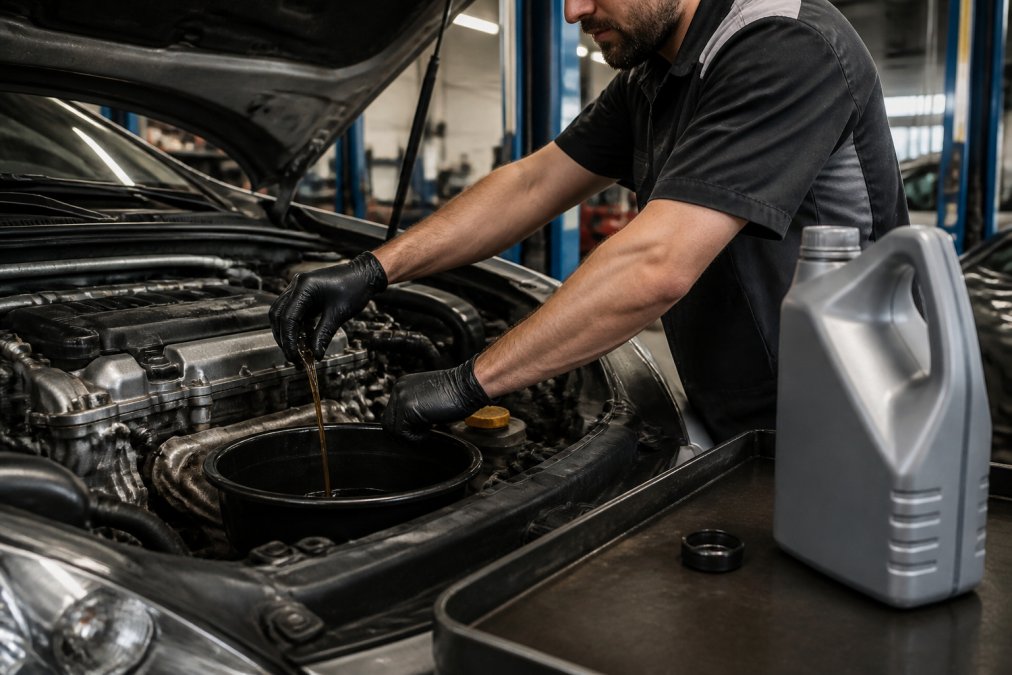
Oil changes remain the foundation of engine longevity, but the approach changes as mileage climbs. At 150,000 miles and beyond, you're managing accumulated wear inside the engine. Older Japanese engines develop sludge buildup if oil changes are missed, accelerating wear on bearings and valve components.
For high mileage Japanese car maintenance, reduce your oil change interval from 5,000 to 3,000 miles once you pass 120,000 miles. Use synthetic or high-quality mineral oil matching your engine's original specification. Synthetic oils perform better at temperature extremes and resist breakdown longer, which matters when your engine's internal components have more clearance than when new.
Transmission fluid flushes are critical. By 120,000 miles, the fluid has lost much of its ability to protect transmission bands and clutches. A full fluid and filter change every 30,000 miles after 100,000 total miles prevents gradual slippage that turns into catastrophic failure.
Coolant system flushes matter too. Old coolant loses its corrosion inhibitors, meaning cooling passages corrode from the inside. Flush the coolant every 30,000 miles once your car reaches 100,000 miles.
Timing Belt and Cooling System Intervals
The timing belt separates a reliable older Japanese car from a very expensive repair. Most Japanese manufacturers recommend timing belt replacement at 60,000 to 100,000 miles. If your car is past that mark and the belt hasn't been replaced, this becomes your immediate priority.
A broken timing belt on an interference engine (which includes most Japanese cars) means pistons collide with valves, destroying the engine. Replacing the belt before it fails is non-negotiable.
When you replace the timing belt, replace the water pump at the same time. The water pump shares the same access point and is usually belt-driven. This prevents another complete timing belt removal later.
Inspect the belt every 10,000 miles after 80,000 total miles. Look for cracks, fraying, or glazing on the belt surface. If you see any damage, replace it immediately.
Brake System and Suspension Wear Points
Brake fluid degrades invisibly over time. At higher mileage, brake fluid absorbs moisture from the air, lowering its boiling point and causing brake fade under hard braking. Bleed and replace brake fluid every 30,000 miles on a high mileage Japanese car.
Suspension bushings harden and crack as they age. When they fail, you'll notice increased noise over bumps, wandering steering, or clunking when turning. Replace them proactively before they cause alignment problems that damage tires.
Brake rotors on older Japanese cars often develop uneven wear because suspension geometry has shifted slightly over time. Have rotors resurfaced or replaced every 50,000 miles at higher mileage.
Common Problems with Aging Japanese Engines: Recognition and Prevention
Older Japanese engines are remarkably durable but fail in predictable ways. Understanding these failure modes lets you catch problems before they become catastrophic.
Valve Clearance and Mechanical Fatigue
Many Japanese engines require periodic valve clearance adjustments. As the engine runs, valve seats wear and the clearance between the valve stem and rocker arm changes. If clearance gets too tight, the valve doesn't close fully and you lose compression. If too loose, you hear a distinctive ticking noise.
Check valve clearance every 30,000 miles on cars with over 120,000 miles. This prevents power loss and compression loss. A simple measurement with feeler gauges tells you whether adjustment is needed.
Mechanical fatigue affects every metal component. Springs lose tension, cam lobes flatten slightly, and bearing clearances increase. By 150,000 miles these changes are cumulative, which is why a well-maintained 150,000-mile Japanese car still runs smoothly while a neglected one feels rough and tired.
Electrical and Fuel System Degradation
Electrical connectors corrode over time, especially in areas exposed to moisture. A corroded oxygen sensor connection can trigger a check engine light and cause the engine computer to run in a default rich fuel mixture, reducing fuel economy.
Inspect all electrical connectors under the hood every 20,000 miles. Look for white or green corrosion on the terminals. Clean corroded connectors with electrical contact cleaner and apply dielectric grease to protect them.
Fuel injectors accumulate carbon deposits as the engine ages, causing rough idle and hesitation during acceleration. Fuel system cleaning every 50,000 miles after 100,000 total miles prevents this buildup.
The fuel pump relay and fuel pump itself wear out over time. A failing fuel pump causes hard starting, stumbling during acceleration, or stalling while driving.
Best Aftermarket Parts for Older Japanese Cars: OEM vs. Alternatives
The choice between genuine OEM parts and aftermarket alternatives becomes more critical as your car ages. For maintenance for older Japanese cars, this decision affects both reliability and long-term ownership cost.
When Genuine OEM Parts Are Worth the Cost
OEM parts are engineered specifically for your vehicle and fit perfectly. For critical components like timing belts, water pumps, and head gaskets, OEM parts are worth the premium. These are components where failure costs far more than the parts themselves.
OEM spark plugs are worth buying for older Japanese engines. The electrode gap and heat range are tuned to your specific engine. Using the wrong spark plug type can cause starting problems or rough idle.
Transmission fluid is another area where OEM specification matters. Using the wrong fluid type can cause shifting problems or accelerated wear.
Reliable Aftermarket Options That Don't Compromise Reliability
Quality aftermarket parts from established manufacturers work well for many components. Air filters, cabin air filters, and engine gaskets from reputable aftermarket brands perform as well as OEM parts at lower cost.
Brake pads from quality aftermarket manufacturers like Akebono or Brembo work reliably. Rotors are less critical; a quality aftermarket rotor works fine as long as it's the correct size and thickness.
Suspension components are where aftermarket quality matters most. Shocks and struts from reputable brands like KYB or Bilstein last longer than cheap alternatives.
Hoses and belts can be sourced from quality aftermarket suppliers. Make sure the part number matches your vehicle exactly.
The rule for maintenance for older Japanese cars: use OEM parts for anything affecting engine reliability or transmission operation. Use quality aftermarket parts for wear items like pads, filters, and hoses. Avoid the cheapest options in both categories.
Rust Prevention and Chassis Preservation for Long-Term Ownership
Rust is the silent killer of older cars. A car with a solid engine but a rusted frame becomes unsafe and loses value rapidly. Preventing rust on an older Japanese car requires consistent effort, especially in regions with road salt or high humidity.
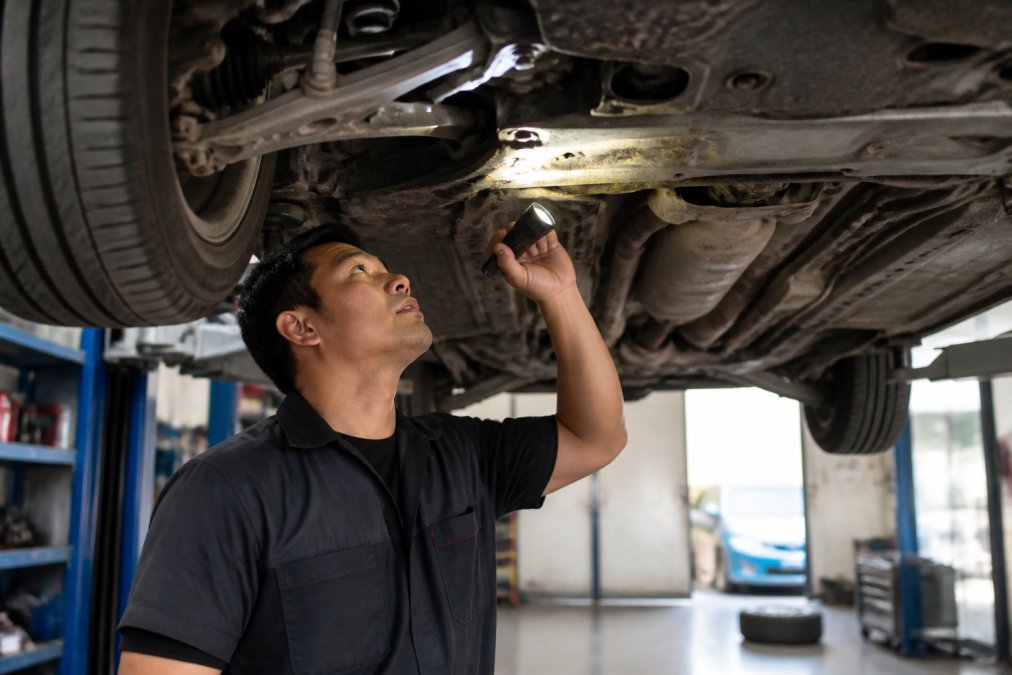
Wash the undercarriage every month during winter months if you live in an area that uses road salt. Salt accelerates rust formation on exposed metal. A simple undercarriage wash removes salt before it corrodes the frame and suspension components.
Apply a rust inhibitor coating to the undercarriage every year. Products like POR-15 create a protective barrier against moisture and salt. This is especially important for areas where the original coating has worn away.
Check the door sills and bottom edges of doors for rust. These areas trap moisture and rust from the inside out. Drill small drainage holes if rust has started and treat the area with rust converter to stop active rust.
Inspect the battery tray and the area around it regularly. Battery acid and moisture combine to accelerate rust in this area.
The floor pans and rocker panels are critical structural components. If rust has penetrated these areas deeply, the structural integrity is compromised.
Undercoating applied when the car was new wears away over time. Reapply an undercoating product every 2-3 years to maintain protection.
Diagnostic Tools and Pre-Purchase Inspection: OBD1 vs. OBD2 Reality
Diagnosing problems on older Japanese cars requires understanding the difference between OBD1 and OBD2 systems. Most Japanese cars made after 1996 use OBD2, but older models use OBD1, which requires different diagnostic approaches.
OBD2 systems use a standardized diagnostic port and fault code system. Any OBD2 scanner can read fault codes from any OBD2 vehicle, making diagnosis more straightforward. A check engine light on an OBD2 car can be diagnosed with a basic scanner costing less than fifty dollars.
OBD1 systems are manufacturer-specific. Diagnostic equipment must be designed for the specific manufacturer, making OBD1 diagnosis more expensive and time-consuming.
If you're buying a used older Japanese car, have a pre-purchase inspection performed by a technician familiar with that specific model. They can check for common problems, verify maintenance history, and test electrical and fuel systems. This inspection typically costs between one and two hundred dollars but can save thousands by revealing hidden problems.
For maintenance on your own older Japanese car, invest in a quality OBD2 scanner if your car is 1996 or newer. When a check engine light appears, the scanner tells you the fault code, narrowing diagnosis significantly.
Storage and Preservation Strategies for Low-Mileage Classics
If you own a low-mileage older Japanese car that you drive only occasionally, storage and preservation become critical. Sitting idle for months causes different problems than regular driving.
Change the oil before storing the car for more than a month. Fresh oil protects the engine from rust and corrosion while it sits.
Inflate tires to the maximum recommended pressure before storage. Tires lose pressure slowly over time, and sitting on under-inflated tires can cause flat spots.
Use a fuel stabilizer if the car will sit for more than three months. Gasoline oxidizes and breaks down over time, forming varnish that clogs fuel injectors. Run the engine for ten minutes after adding stabilizer to circulate it through the fuel system.
Disconnect the battery if the car will sit for more than two months. A parked car with the battery connected slowly drains power, which can damage the battery.
Cover the car with a breathable cover to protect it from dust and moisture. Never use a plastic cover; plastic traps moisture, which accelerates rust.
Start the engine and drive the car at least once a month, even for a short distance. This circulates fluids, charges the battery, and prevents fuel system degradation.
Store the car in a dry location if possible. A garage is ideal. If you must store outside, park under a carport or cover to minimize exposure to rain and sun.
Maintaining an older Japanese car demands attention to systems that newer cars handle automatically. The timing belt, valve clearances, fluid conditions, and rust prevention all require hands-on management. When you choose to work with Speedy Roo Motorsports, you're working with technicians who understand these specific needs. We've spent over two decades maintaining Japanese vehicles through their second, third, and fourth hundred thousand miles. Our transparent approach means you'll know exactly what your car needs and why, no surprises, no unnecessary work. Get started with Speedy Roo Motorsports and keep your older Japanese car running reliably for years to come.
Frequently Asked Questions
Are Japanese cars expensive to maintain as they age?
Older Japanese cars are generally affordable to maintain compared to European luxury vehicles, but costs rise with mileage. Regular preventive maintenance, oil changes, fluid flushes, and timely brake pad replacement, keeps expenses predictable. The real cost driver is deferred maintenance; skipping service intervals forces expensive repairs later. Sourcing parts is typically cheaper for Japanese models due to high availability of both OEM and reliable aftermarket options. Budget for increased fluid changes and suspension work as the car ages, but Japanese engineering means fewer catastrophic failures if maintenance stays current.
What is the most important maintenance task for a high mileage Japanese car?
Fluid management is the single most critical task. Regular oil changes with the correct viscosity grade protect engine longevity under mechanical fatigue. Equally important: transmission fluid, coolant system flushes, and brake fluid replacement. These fluids degrade over time regardless of mileage; old fluid loses its protective properties and causes wear-and-tear to internal components. For high mileage Japanese cars, establish a strict fluid maintenance schedule based on manufacturer intervals, not just time-based changes. This one habit prevents more expensive drivetrain and engine failures than any other single action.
How do I know if my older Japanese car needs a timing belt replacement?
Check your vehicle's service history and the manufacturer's recommended timing belt replacement interval, typically 60,000 to 100,000 miles depending on the model. If you don't have service records, assume the belt is due if mileage exceeds the interval. Timing belt failure causes catastrophic engine damage, so replacement is preventive maintenance, not optional. Visual inspection is unreliable; you cannot accurately judge belt condition without removal. Have a qualified technician inspect during routine service and replace proactively rather than waiting for symptoms. This is one area where following OEM intervals precisely protects long-term reliability.
What's the difference between OEM and aftermarket parts for older Japanese cars?
OEM (original equipment manufacturer) parts are built to exact factory specifications and carry manufacturer backing; they're ideal for critical systems like timing belts, water pumps, and clutch assemblies. Aftermarket parts vary widely in quality, some are excellent and cost 30-50% less, while others fail prematurely. For wear-and-tear items like brake pads, air filters, and spark plugs, quality aftermarket options work well. For complex assemblies like transmissions, suspension bushings, or fuel system components, OEM parts or trusted aftermarket brands with strong track records are safer. Source parts from suppliers specializing in Japanese vehicles; they stock reliable alternatives that match OEM performance without the dealership markup.
Can I store an older Japanese car long-term without it deteriorating?
Yes, but storage requires intentional preservation steps. Change oil before storage, old oil contains acids that corrode engine internals. Fill the fuel tank to prevent rust inside the tank, or use fuel stabilizer. Disconnect the negative battery terminal to prevent parasitic drain. Inflate tires to recommended pressure and place the car on jack stands to prevent flat-spotting. Cover the vehicle and store in a dry location. Every 3-4 weeks, start the engine briefly and run it for 10 minutes to circulate fluids and prevent seal degradation. For storage longer than 6 months, consider removing the battery entirely and storing it separately in a cool location. These steps preserve chassis integrity and prevent mechanical fatigue even during extended downtime.
What diagnostic tools do I need for preventive maintenance on an older Japanese car?
An OBD2 scanner is essential for any car 1996 or newer; it reads engine fault codes and monitors emissions systems. Older vehicles with OBD1 systems require manufacturer-specific diagnostic equipment, which is why professional inspection is often necessary. For DIY preventive care, a basic code reader costs $30-80 and catches issues before they become expensive. Supplement with simple tools: a compression tester identifies weak cylinders, a fuel pressure gauge tests fuel system health, and a multimeter checks electrical terminals and battery voltage. Most preventive maintenance doesn't require advanced diagnostics, regular visual inspection, fluid checks, and listening for unusual noises catch 80% of emerging problems before they require expensive repair.
Is it worth restoring an older Japanese car, or should I just maintain it?
Maintenance extends the life of a reliable older Japanese car cost-effectively; restoration is a different investment entirely. Maintenance focuses on reliability and safety, keeping systems functional and preventing breakdown. Restoration involves rebuilding components to like-new condition, which costs 5-10 times more than maintenance. If your goal is dependable transportation, invest in preventive maintenance: fluid flushes, timing belt replacement, rust mitigation, and component replacement as needed. Restoration makes sense only if you're pursuing a hobby project or collector value. For daily drivers, honest maintenance that addresses wear-and-tear components and prevents catastrophic failure delivers the best return on investment and keeps your Japanese car reliable for years.