 blog
blog
Is Synthetic Oil Worth It? A Real Cost & Benefit Analysis
Table of Contents
- Is Synthetic Oil Worth It? The Short Answer
- Synthetic vs. Conventional Oil: What's the Real Difference
- Cost of Synthetic Oil Change vs. Conventional
- When to Switch to Synthetic Oil: Vehicle Age and Driving Style
- Synthetic Oil Change Intervals: Extended Protection
- Engine Longevity and Wear Protection: Does It Really Add Years?
- Environmental Impact and Sustainability Considerations
- Frequently Asked Questions
Is Synthetic Oil Worth It? A Real Cost & Benefit Analysis
Last Updated: July 21, 2026
When asking "is synthetic oil worth it," you're really asking whether the premium price tag delivers real engine protection benefits that justify the extra cost. At Speedy Roo Motorsports, we've analyzed this question for our Japanese automobile customers in Aurora for over two decades, and the answer depends entirely on your vehicle, driving habits, and maintenance philosophy.
The short answer: synthetic oil is worth it for most modern vehicles if you keep your car long enough to recoup the higher upfront cost. For drivers planning to keep their vehicles beyond 100,000 miles or who drive in extreme conditions, synthetic delivers measurable engine protection that conventional oil cannot match. However, if you trade in your car every 5-7 years, the financial benefit shrinks considerably.
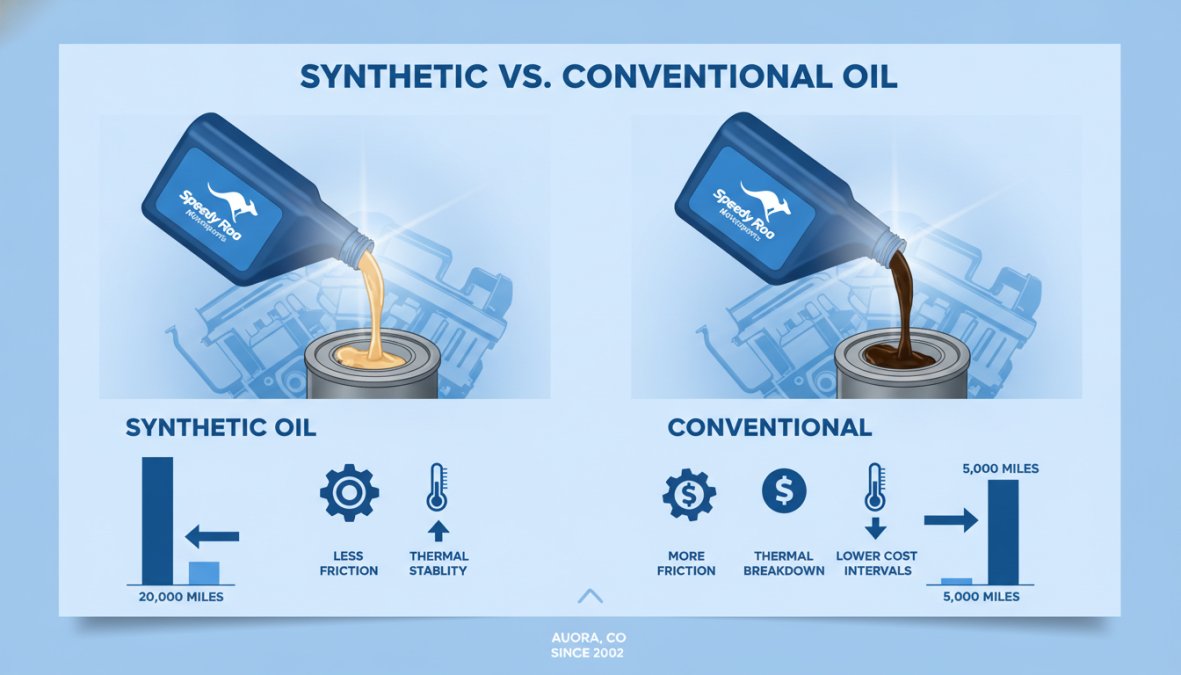
Is Synthetic Oil Worth It? The Short Answer
The real difference between synthetic and conventional oil comes down to molecular structure. Synthetic oil is engineered from chemically uniform base stocks refined at the molecular level, whereas conventional oil is simply filtered and treated crude oil. This translates into measurable advantages in engine protection at a cost premium typically 2-3 times higher per quart.
For most drivers, synthetic becomes worth the investment when combined with extended oil change intervals. Conventional oil requires changes every 3,000-5,000 miles, while synthetic can stretch to 7,500-10,000 miles depending on manufacturer specifications. Over your vehicle's life, this extended interval can actually reduce total maintenance costs despite the higher per-quart price.
The decision hinges on three factors: your vehicle's age and mileage, your typical driving conditions, and how long you plan to own the car.
Synthetic vs. Conventional Oil: What's the Real Difference
Understanding the actual performance differences requires looking at how oils behave under extreme engine conditions. Conventional mineral oil breaks down around 212°F, losing its protective viscosity layer. Synthetic oil maintains protective properties at temperatures exceeding 400°F, critical during sustained highway driving or towing.
Base Stock, Viscosity, and Thermal Stability
The base stock determines how well oil flows and protects across temperature ranges. Conventional oil uses Group I or Group II base stocks derived from crude oil, containing molecular chains of varying sizes. This inconsistency means the oil behaves differently in cold winter starts versus hot summer driving.
Synthetic oil uses Group III, Group IV, or Group V base stocks with carefully engineered uniform molecular structure. This consistency delivers superior thermal stability, the oil maintains its viscosity across a wider temperature range. When you start your Subaru on a freezing Aurora morning, synthetic oil flows instantly to critical engine components. In summer heat, it maintains the same protective film thickness without thinning out.
Viscosity ratings like 5W-30 indicate cold-start flow (the "5W") and hot viscosity at 212°F (the "30"). Synthetic oils achieve lower cold-start numbers while maintaining higher hot viscosity, a thermodynamic advantage conventional oil cannot match.
Additive Packages and Engine Protection
Synthetic oils use more sophisticated detergent and dispersant chemistry that keeps engine deposits suspended in the oil rather than allowing them to accumulate on valve stems and piston rings. Conventional oil's less effective detergents allow sludge, a thick, tar-like substance, to accumulate over time, restricting oil flow and reducing engine efficiency.
Synthetic oil's superior dispersant package actively prevents sludge formation, which is why high-mileage engines show measurable improvements in compression and horsepower after switching to synthetic. The additive package also includes anti-wear agents like zinc and phosphorus (ZDDP), which form protective layers on metal-to-metal contact points. Synthetic oils maintain these protective layers more effectively across extended oil change intervals.
Cost of Synthetic Oil Change vs. Conventional
The price difference between synthetic and conventional is immediately visible, but total cost of ownership tells a different story. A conventional oil change typically costs less per visit, but you're making that visit twice as often.
DIY vs. Professional Service Breakdown
If you change your own oil, synthetic costs roughly $8-12 per quart versus $3-5 for conventional. A typical oil change uses 4-6 quarts. Factor in the filter and you're looking at a $30-50 difference per DIY change.
Professional service with conventional oil runs $35-65 depending on your vehicle type. The same service with synthetic typically costs $60-100. Over 200,000 miles of vehicle ownership, that's significant.
The break-even calculation: if synthetic costs $25 more per service but allows you to extend intervals from 5,000 to 10,000 miles, you're reducing total oil changes by 50%. Over 200,000 miles, you'd go from 40 conventional changes to 20 synthetic changes. Even at a $25 premium per synthetic service, you're spending roughly the same total amount while getting superior engine protection.
This math changes if you keep your vehicle for only 60,000-80,000 miles, where conventional oil's lower cost per service wins.
| Scenario | Oil Type | Total Services | Cost Per Service | Total Cost | Winner |
|---|---|---|---|---|---|
| 100,000 miles, 5K intervals | Conventional | 20 | $50 | $1,000 | Conventional |
| 100,000 miles, 10K intervals | Synthetic | 10 | $75 | $750 | Synthetic |
| 200,000 miles, 5K intervals | Conventional | 40 | $50 | $2,000 | Synthetic |
| 200,000 miles, 10K intervals | Synthetic | 20 | $75 | $1,500 | Synthetic |
When to Switch to Synthetic Oil: Vehicle Age and Driving Style
The ideal time to switch to synthetic depends on your vehicle age, current mileage, and driving patterns.
New vehicles from 2015 onward often come with synthetic or synthetic blend oil from the factory. If your owner's manual specifies synthetic, the manufacturer engineered your engine's tolerances around synthetic's superior properties. Switching to conventional would reduce protection and potentially void your warranty.
Vehicles between 50,000 and 150,000 miles are the sweet spot for switching to synthetic if you haven't already. By this point, your engine has settled and you have clear data on how you drive. If you've taken short trips in cold weather, synthetic's superior cold-start protection becomes valuable. If you tow or drive in dusty conditions, synthetic's better detergent package prevents sludge buildup.
High-Mileage Engines and Sludge Buildup
Older engines with 150,000+ miles often show visible sludge buildup. Switching to synthetic can actually reverse some of this damage. Synthetic oil's superior dispersant chemistry actively breaks down existing sludge deposits and suspends them in the oil for removal at the next oil change. This process takes several oil changes but produces measurable results: improved cold starts, reduced oil consumption, and better fuel economy.
However, if an engine has severe sludge buildup, switching to synthetic too aggressively can dislodge large deposits that clog the oil filter. For vehicles showing heavy sludge, a gradual transition starting with synthetic blend, then moving to full synthetic after 10,000 miles, is safer.
Extreme Temperatures and Performance Demands
Synthetic truly shines in extreme temperature conditions. Aurora's winter temperatures regularly drop below zero, where synthetic oil's cold-start viscosity becomes critical. Conventional oil thickens dramatically in extreme cold, forcing your starter motor to work harder and reducing oil flow during those first critical seconds of operation.
Synthetic oil with a 0W or 5W rating flows instantly at sub-zero temperatures, protecting your engine from cold-start wear. Similarly, if you drive in desert heat or do sustained highway driving that pushes engine temperatures above 220°F, synthetic maintains its protective film thickness where conventional oil thins out.
Performance driving also favors synthetic. The sustained high temperatures and aggressive acceleration break down conventional oil faster. Synthetic's superior thermal stability means your engine stays protected even under extreme stress.
Synthetic Oil Change Intervals: Extended Protection
One of the most misunderstood aspects of synthetic oil is the extended oil change interval. Many drivers think they can simply use synthetic and extend intervals without checking manufacturer specifications. This is incorrect.
Your vehicle manufacturer determines the maximum safe oil change interval based on engine design, oil circulation rate, and filter capacity. Always follow your owner's manual, not what the oil bottle claims. Most modern vehicles specify 7,500-10,000 mile intervals with synthetic, but some specify 5,000 miles regardless of oil type.
The extended interval works because synthetic oil resists oxidation, the chemical breakdown that occurs as oil circulates through your hot engine. Conventional oil loses its protective properties around 5,000 miles. Synthetic maintains its protective additive package and viscosity stability through 10,000 miles.
Engine Longevity and Wear Protection: Does It Really Add Years?
Engines protected with synthetic oil from new show measurably less wear at high mileage compared to engines using conventional oil throughout their life. Piston rings wear more slowly, cylinder walls maintain their finish longer, and bearing clearances stay tighter. For a vehicle driven 200,000 miles, the difference in internal engine wear is visible during teardown.
However, "extending engine life" differs from "preventing engine failure." An engine protected with conventional oil doesn't fail at 150,000 miles and then last to 250,000 miles with synthetic. Rather, synthetic slows the rate of wear, meaning your engine stays within acceptable operating parameters longer. A conventional-oil engine might show signs of wear at 150,000 miles, while a synthetic-oil engine might not show those same signs until 200,000 miles.
For Japanese vehicles, which Speedy Roo Motorsports specializes in, this advantage is particularly pronounced. Toyota, Honda, Lexus, Subaru, and Nissan engines respond extremely well to synthetic oil's superior protection. Owners who follow manufacturer recommendations for synthetic consistently report vehicles running reliably past 200,000 miles with minimal major repairs.
Environmental Impact and Sustainability Considerations
Synthetic oil's environmental impact is more complex than marketing suggests. Synthetic is manufactured through energy-intensive chemical processes, whereas conventional oil is simply refined crude oil. From a manufacturing perspective, conventional has a lower carbon footprint.
However, the lifecycle analysis becomes more favorable for synthetic when factoring in extended oil change intervals. Fewer oil changes means fewer quarts of used oil requiring disposal. The reduced fuel consumption from cleaner engines (synthetic reduces friction and sludge buildup, improving fuel economy by 1-3%) offsets some manufacturing impact over the vehicle's lifetime.
For drivers concerned about sustainability, the most impactful choice is keeping your vehicle running reliably for 200,000+ miles rather than replacing it every 5-7 years. A well-maintained 2010 Toyota with synthetic oil has a far lower lifetime environmental impact than buying a new vehicle every few years.
The decision of whether synthetic oil is worth it ultimately depends on your specific situation. If you plan to keep your Japanese vehicle beyond 100,000 miles, drive in extreme temperatures, or want maximum engine protection, synthetic delivers measurable benefits that justify the higher cost. If you trade vehicles every 5-7 years or drive primarily in moderate conditions, conventional oil is perfectly adequate.
At Speedy Roo Motorsports, we've seen firsthand how synthetic oil keeps high-mileage Subarus, Toyotas, and Hondas running strong well past 200,000 miles. Our experienced technicians can evaluate your specific vehicle and driving habits to recommend whether synthetic makes sense for your situation. We handle all Japanese automobile brands and pride ourselves on transparent communication about maintenance decisions, no pressure, just honest advice from technicians who've been servicing these vehicles since 2002.
Toyota Owner's Manual Synthetic Oil Specifications
American Petroleum Institute Motor Oil Standards and Certification
SAE Viscosity Grades and Engine Oil Classification
Frequently Asked Questions
Is synthetic oil worth it if I drive a newer car?
For newer vehicles, especially those with manufacturer specifications calling for synthetic or synthetic blend oils, it's often worth the investment. Synthetic oil provides superior thermal stability, better friction reduction, and extended oil change intervals, meaning fewer service visits. Check your owner's manual for API certification requirements and SAE grade specifications. Many newer Japanese vehicles benefit from synthetic's cold start protection and oxidation resistance, which can extend engine longevity.
How much more does synthetic oil cost than regular oil?
Synthetic oil typically costs more upfront than conventional mineral oil, but the premium price is often offset by longer oil change intervals and reduced engine wear. Rather than comparing per-quart cost, consider the total cost per mile driven. With synthetic's extended intervals, you'll visit the shop less frequently, potentially saving money on labor and filter replacements over time. Contact Speedy Roo Motorsports for a current pricing quote tailored to your specific vehicle.
Can I switch from conventional to synthetic oil in my older car?
Yes, you can typically switch to synthetic oil in older vehicles, but there are considerations. High-mileage engines with existing sludge buildup may experience issues as synthetic's superior detergents clean deposits, potentially dislodging material. If your older Japanese vehicle has high mileage, consider a synthetic blend as a transition step. Always verify your manufacturer specifications and API certification requirements. Our technicians at Speedy Roo can assess your specific engine and recommend the best approach for your vehicle's age and condition.
How often should you change synthetic oil compared to conventional?
Synthetic oil change intervals are typically much longer than conventional oil, often 7,500 to 10,000 miles or more, depending on your vehicle and driving conditions. Conventional oil usually requires changes every 3,000 to 5,000 miles. This extended interval is due to synthetic's superior shear stability and oxidation resistance. However, always follow your manufacturer's specifications and consult your owner's manual. Speedy Roo Motorsports can help you establish the right maintenance schedule for your specific Japanese vehicle.