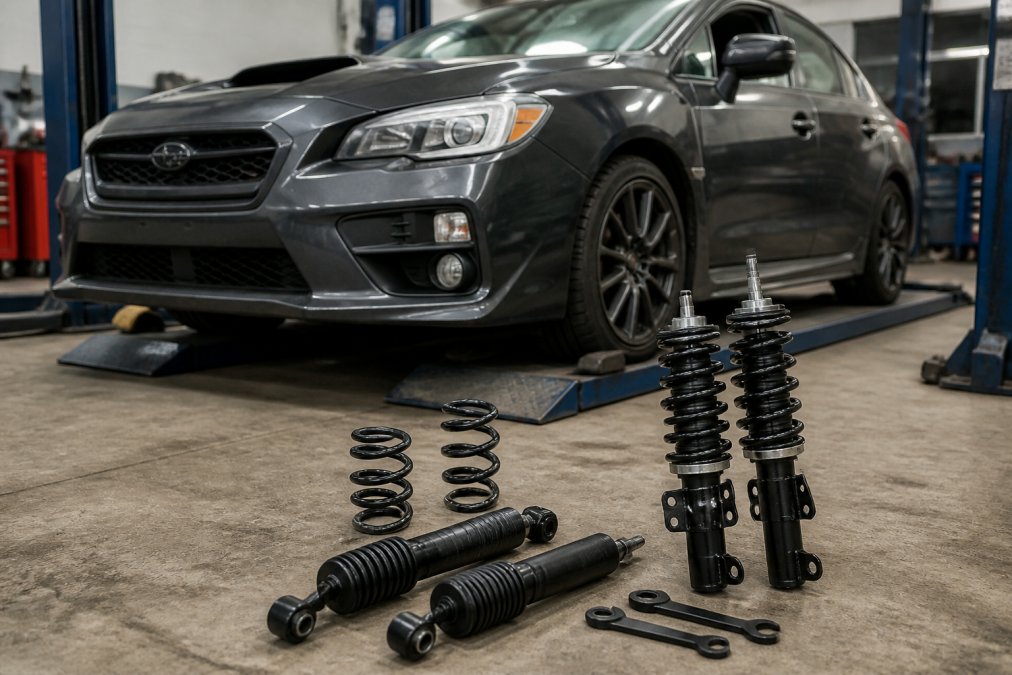
 listicle
Is Aftermarket Suspension Worth It for Subaru
Table of Contents
- Is Aftermarket Suspension Worth It for Subaru: The Real Performance Gains
- Stock vs. Aftermarket Suspension Performance
- How Suspension Upgrades Affect Subaru Warranty
- Signs Your Subaru Needs New Struts
- Subaru Coilover Installation Cost and Options
- Handling Dynamics and Long-Term Durability
- Making Your Decision: Is It Worth the Investment
- Conclusion
- Frequently Asked Questions
Last Updated: August 31, 2026
Is Aftermarket Suspension Worth It for Subaru: The Real Performance Gains
When you're considering whether to upgrade your Subaru's suspension, the question isn't whether aftermarket options exist, it's whether the investment actually delivers the improvements you need. At Speedy Roo Motorsports, we've worked on countless Subaru suspensions, and the honest answer depends on what you're trying to achieve. Some owners see dramatic handling improvements. Others spend thousands only to realize the gains don't justify the cost for their driving style.
The suspension system is one of the few upgrades that genuinely changes how your car feels every single day. Unlike cosmetic modifications, suspension work affects ride quality, handling dynamics, body roll, and even how predictable your Subaru is in corners or on rough roads. But here's what most guides get wrong: the best upgrade for a track-focused driver is terrible for someone commuting daily on city streets. The decision comes down to matching the right suspension solution to your actual needs.
Below, we'll break down the real performance gains you can expect, the hidden costs nobody talks about, and how to decide if an aftermarket suspension is worth the investment for your specific situation.
Stock vs. Aftermarket Suspension Performance
Your Subaru's factory suspension is engineered as a compromise. The manufacturer balances ride comfort, handling, durability, and cost to appeal to the broadest audience. Stock dampers absorb road imperfections and control body roll, but they're tuned conservatively. They prioritize comfort over responsiveness.
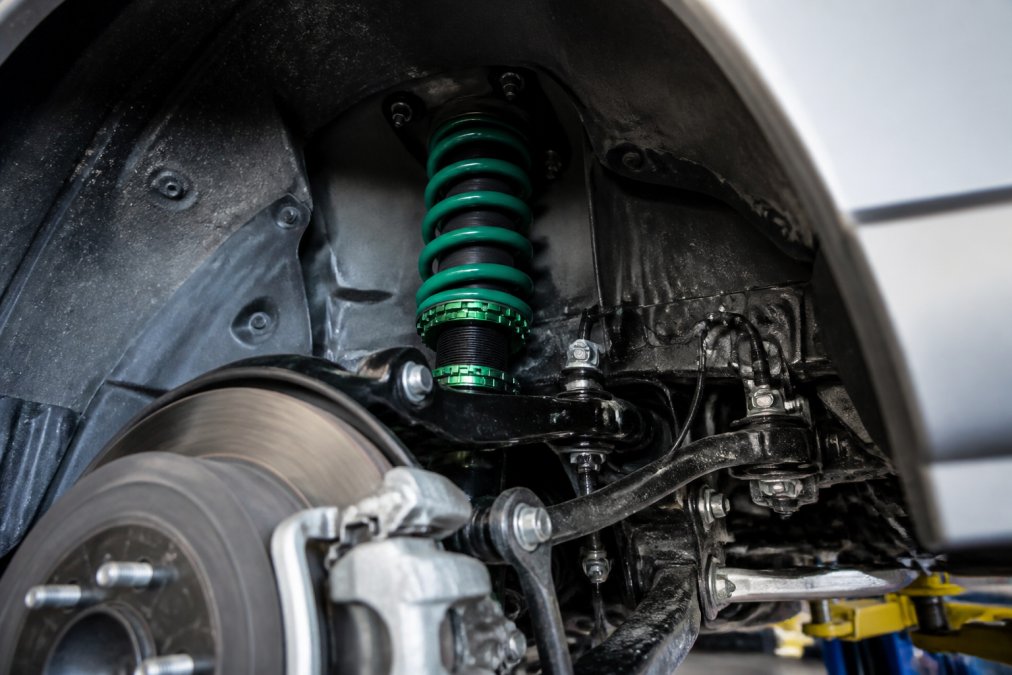
Aftermarket suspensions attack this differently. A quality coilover system, for example, uses independently adjustable compression and rebound damping (bilstein.com). This means you control how the suspension responds to bumps (compression) and how quickly it recovers (rebound). OEM struts can't do this, they're fixed at the factory. Aftermarket shock absorbers and coilovers typically offer stiffer spring rates and faster dampening response, which reduces body roll and improves cornering grip.
The performance difference is real. Aftermarket setups lower your center of gravity, which improves chassis stability during aggressive driving. They reduce suspension travel compliance, meaning less flex in the bushings and more direct steering response. If you're pushing your Subaru hard in corners or on technical roads, you'll notice tighter handling and more predictable behavior. The suspension won't dive as much under braking, and it won't lean as aggressively during cornering.
But here's the tradeoff: this responsiveness comes at a cost. Stiffer springs and dampers mean more vibration transfer to the cabin. Every pothole, expansion joint, and road imperfection becomes more noticeable. For daily drivers on rough pavement, this can become fatiguing. Some owners upgrade to premium coilovers like Feal Suspension 441 Coilovers or KW Suspensions V3 Coilovers specifically because they've engineered better compliance, better damping technology that handles both comfort and performance. Entry-level aftermarket options sometimes sacrifice ride quality too aggressively.
How Suspension Upgrades Affect Subaru Warranty
This is the part most owners overlook until it's too late. Your factory warranty covers the suspension system, but installing aftermarket components creates gray areas.
If you install a complete coilover system or replace OEM struts with aftermarket shock absorbers, you're modifying the suspension geometry. Subaru's warranty explicitly excludes coverage for any component that's been replaced with non-OEM parts (subaru.com). That's not negotiable. If something fails, a bushing, a bearing, even an unrelated component, the dealer can deny the claim if they trace the issue to your suspension modification.
This doesn't mean you're completely unprotected. Most reputable aftermarket suspension manufacturers offer their own warranty on the components they sell. Feal Suspension, KW, and Bilstein all back their products. But their warranty covers manufacturing defects, not wear and tear. And if your modification caused a failure in another system, say, your suspension alignment goes bad and it wears out your tires prematurely, the tire manufacturer won't cover that either.
The real risk is indirect. A stiffer suspension can increase stress on related components: wheel bearings, CV joints, and transmission mounts all experience different loads. If something fails, proving the suspension upgrade caused it becomes a legal argument. Dealers are trained to document any modification, and they'll use it as use to deny warranty claims.
Before upgrading, check your vehicle's warranty status. If you're still under the manufacturer's powertrain or comprehensive warranty, consult with a suspension specialist about which upgrades carry the least risk. At Speedy Roo Motorsports, we help customers understand these implications before they commit to modifications.
Signs Your Subaru Needs New Struts
Not every Subaru owner needs an aftermarket suspension system. Some need to replace worn factory struts first. Knowing the difference saves you money.
Factory struts degrade over time. As the dampening fluid breaks down and internal seals wear, the strut loses its ability to control rebound and compression effectively. The suspension becomes softer, less responsive, and less stable. Here's what to watch for:
Excessive body roll during cornering. If your Subaru leans noticeably when turning, or if the suspension takes longer to settle after a turn, your struts are likely worn. The vehicle should feel planted and responsive, not wobbly.
Nose dive during hard braking. When you brake aggressively, the front end should dip slightly, then stabilize. If it dives excessively or bounces excessively or slowly, the front struts are losing dampening force.
Bouncing after hitting a bump. Drive over a pothole or speed bump and count how many times the suspension bounces. A healthy suspension bounces once, maybe twice, then settles (nhtsa.gov). Worn struts bounce multiple times, sometimes three, four, or more oscillations before settling.
Uneven tire wear. Worn struts affect alignment and load distribution. You'll see cupping (scalloped wear patterns) on the tire tread, or accelerated wear on the inside or outside edges of the tires.
Visible fluid leaks. If you see oily residue on the outside of the strut assembly, the internal seal has failed. The strut is no longer sealed and won't perform properly.
These are signs you need replacement struts, not necessarily an upgrade to performance coilovers. Bilstein B6 Performance Shocks and Struts are a solid middle ground: they're a direct replacement for worn factory struts but with better damping characteristics than OEM. They cost less than coilovers and maintain more of your original ride comfort while improving handling.
Subaru Coilover Installation Cost and Options
If you've decided an upgrade is worth it, coilovers are the most popular choice for Subaru owners. They offer the most adjustability and the biggest performance gains. But the installation process and costs vary significantly.
What you're paying for: A complete coilover kit includes new dampers, springs, and ride-height adjustment mechanisms. You're replacing the entire strut assembly. Installation requires removing the wheel, disconnecting the brake line and ABS sensor, unbolting the strut from the knuckle, and installing the new assembly. It sounds straightforward, but alignment is critical. After installation, you need a full wheel alignment to ensure the suspension geometry is correct.
Labor costs depend on complexity. A straightforward coilover installation on a standard Subaru Impreza or Outback typically takes 2-4 hours per corner. Some models are trickier, newer WRX or STI models with more complex brake and suspension geometry take longer. Independent shops like Speedy Roo Motorsports can usually complete the work efficiently because we specialize in Japanese vehicles.
Parts costs vary dramatically. Entry-level coilovers (basic monotube dampers with fixed valving) start around $400-600 per corner. Mid-range options like Feal Suspension 441 Coilovers run approximately $1,999 for a complete kit. Premium systems like KW Suspensions V3 Coilovers, which feature independently adjustable compression and rebound damping, range from $3,214 to $4,074 depending on the model. For budget-conscious owners, Bilstein B6 Performance Shocks offer a simpler upgrade path at roughly $970 for a kit, though they're not full coilovers, they work with your existing springs.
Beyond the suspension components themselves, you may need additional parts: camber plates (for adjustable front geometry), new sway bars or endlinks to complement the stiffer suspension, and potentially new bushings if the old ones are worn. These add-ons can increase total cost by $500-1,500.
The real question is whether the performance justifies the expense. For a daily driver on street roads, a Bilstein B6 kit offers 80% of the performance gain at 25% of the coilover cost. For someone planning regular track days or serious canyon driving, coilovers are the right choice. For casual owners who want a slightly better-handling car but don't push hard, consider whether sway bars and endlinks alone might be enough.
Handling Dynamics and Long-Term Durability
This is where aftermarket suspension truly shines, and where the long-term picture gets complicated.
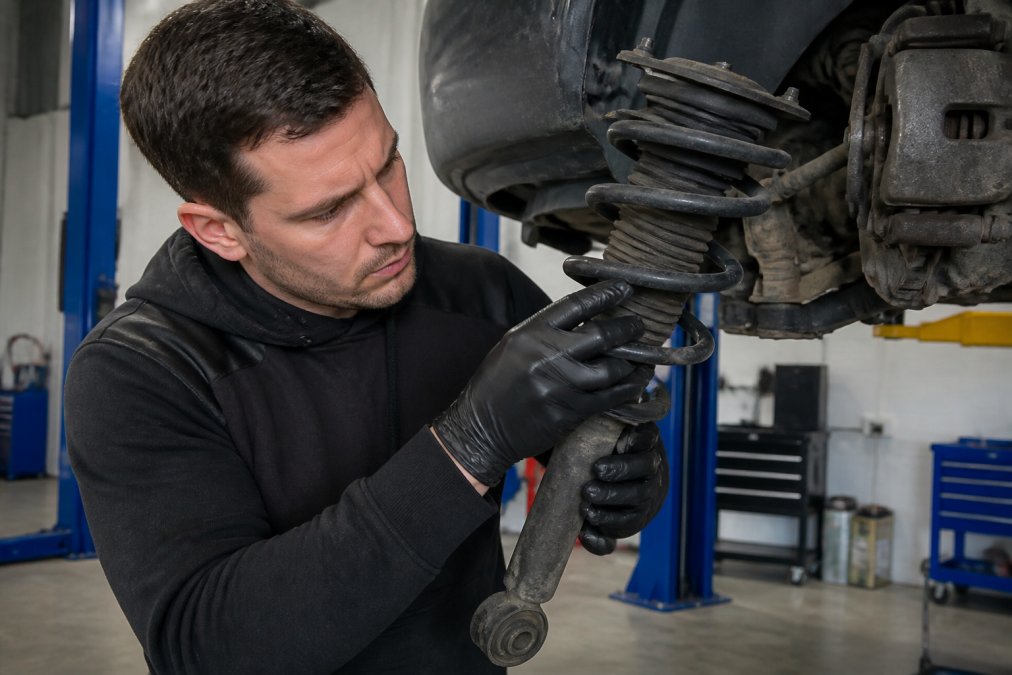
A quality aftermarket suspension dramatically improves handling dynamics. Stiffer spring rates reduce body roll, meaning the chassis stays more level during cornering. Improved damping control means the suspension responds faster to input and settles quicker. Reduced compliance in bushings and mounts translates to sharper steering response and more direct feedback. If you drive a technical road or autocross course, these improvements are immediately obvious.
But durability is the hidden variable. Stiffer suspensions mean higher loads on related components. Wheel bearings, CV joints, and engine mounts all experience increased stress. Bushings wear faster under aggressive driving. If you're running stiff springs and dampers, you're accelerating wear on these supporting components.
Real-world longevity depends on three factors: the quality of the components, your driving style, and maintenance discipline. A premium coilover system from Feal or KW is engineered to handle sustained performance driving. The dampers are rebuildable, meaning you can service them after years of use instead of replacing them. Entry-level coilovers often aren't rebuildable, when they wear out, you replace the entire unit.
Maintenance intervals change, too. With a stiffer suspension, you should inspect bushings, bearings, and related components more frequently. Wheel alignment should be checked every 6,000-10,000 miles if you're doing aggressive driving. Regular inspections catch wear before it becomes dangerous or expensive.
The durability question also depends on your Subaru's age and mileage. A newer vehicle with fresh bushings and bearings can handle a suspension upgrade without issue. An older Subaru with 100,000+ miles might benefit from a full suspension refresh, new bushings, bearings, and mounts, before upgrading to performance components. Otherwise, you're putting new dampers on a chassis that's already wearing out underneath.
Making Your Decision: Is It Worth the Investment
The honest answer: it depends on four factors.
Your driving style. If you commute on highways and city streets, rarely push hard in corners, and prioritize comfort, an aftermarket suspension is probably overkill. Stock struts or a Bilstein B6 upgrade will feel noticeably better without the ride harshness. If you drive technical roads, autocross, or track your car, coilovers are worth every penny.
Your budget. A quality suspension upgrade isn't cheap. Factor in parts, labor, alignment, and potential additional components. For many owners, the total cost exceeds $2,500-4,000. That's significant money. Ask yourself: could that budget go toward other reliability improvements, tires, or brakes? All of those affect how your car performs and feels.
Your vehicle's condition. An older Subaru with worn bushings and tired struts needs a full suspension refresh before you layer on performance upgrades. A newer car with fresh components can jump straight to coilovers. Have a pre-upgrade inspection to understand what you're working with.
Your long-term plans. If you're keeping your Subaru for another 5-10 years and plan to drive it hard, the investment in quality coilovers makes sense. If you're selling in the next 2-3 years, the resale value gain is minimal. Buyers care about reliability and condition, not whether the suspension is upgraded.
Here's what we've seen work best: most Subaru owners fall into the middle ground. They don't need full coilovers, but they want more than stock. A combination of Bilstein B6 shocks, quality sway bars like Whiteline, and upgraded endlinks delivers noticeable handling improvement without the cost or ride quality sacrifice of full coilovers. This approach typically costs $1,500-2,500 total and gives you 70-80% of the performance gain of a full coilover system.
For owners who want the best handling and are willing to invest, coilovers are absolutely worth it. The performance gains are substantial, the adjustability is valuable, and quality systems from Feal or KW will last for years with proper maintenance.
Conclusion
Whether aftermarket suspension is worth it for your Subaru comes down to matching the upgrade to your actual driving needs and budget. A casual commuter might be perfectly happy with a Bilstein B6 upgrade and quality sway bars. A performance-focused driver will find coilovers transformative. The worst investment is upgrading without a clear reason, just because the option exists.
If you're considering suspension work on your Subaru, talk to a specialist who understands both the technical side and the real-world implications. Speedy Roo Motorsports has been working on Subaru suspensions since 2002, and we can help you evaluate whether an upgrade makes sense for your vehicle and driving style. We'll inspect your current suspension, discuss your goals, and recommend the approach that delivers the best value. Contact us for a suspension evaluation and let's figure out what's actually worth the investment for your car.
Frequently Asked Questions
Is aftermarket suspension worth it for daily driving?
For daily commuting, the value depends on your priorities. Aftermarket suspension improves body roll control, cornering grip, and overall handling response, which enhances safety and driver confidence. However, some upgrades sacrifice ride comfort for performance. If you drive aggressively or frequently on winding roads, the improved chassis stability and reduced drivability issues justify the cost. For purely highway commuting, the gains may be less noticeable. Quality aftermarket options like Feal Suspension or Bilstein B6 maintain reasonable comfort while delivering meaningful performance benefits.
Does upgrading suspension void my Subaru factory warranty?
Suspension upgrades can affect your warranty coverage depending on the modification and Subaru's warranty terms. Full coilover kits or significant lowering may void coverage for related components like struts and springs. However, many aftermarket manufacturers, including Feal Suspension and KW, design their products to preserve warranty eligibility when installed correctly. The safest approach is to consult your dealership before upgrading or have a trusted independent shop like Speedy Roo Motorsports review the compatibility and warranty implications of your specific upgrade.
What's the difference between coilovers and lowering springs?
Coilovers integrate the spring and damper into one adjustable unit, allowing independent control of ride height, compression damping, and rebound. This gives precise tuning for both comfort and performance. Lowering springs simply replace your factory springs with stiffer, lower-sitting units while retaining the original shock absorbers. Coilovers cost more but offer superior adjustability and performance tuning. Lowering springs are a budget-friendly option that improves handling without the complexity, though they provide less fine-tuning capability and may feel harsher on rough roads.
How do I know when my Subaru needs new struts?
Common signs include excessive body roll during cornering, a bouncy or unstable ride after bumps, uneven tire wear, and audible clunking from the suspension. If your Subaru feels less planted at highway speeds or requires longer braking distances, worn struts are likely the culprit. Most Subaru struts last 50,000 to 100,000 miles depending on driving conditions and road quality. A professional inspection at a shop like Speedy Roo Motorsports can confirm wear through visual checks of damping performance and bushing condition, helping you decide whether OEM replacement or an aftermarket upgrade makes sense for your goals.