 how-to
Honda Check Engine Light Diagnosis: What to Do First
Table of Contents
- What a Honda Check Engine Light Actually Tells You
- Solid vs. Flashing Check Engine Light Meaning
- The Most Common Causes on Honda Engines
- Using an OBD-II Scanner for Honda Diagnosis at Home
- Honda Check Engine Light Diagnostic Cost: DIY vs. Shop
- Model-Specific Codes Honda Owners See Most
- P0420, Catalyst System Efficiency Below Threshold (Bank 1)
- P0300-P0304, Random or Cylinder-Specific Misfire
- P0171, System Too Lean (Bank 1)
- P0135, O2 Sensor Heater Circuit (Bank 1, Sensor 1)
- P1457, EVAP System Leak (Canister Side)
- P2646 / P2647, VTEC System Performance (Rocker Arm Oil Pressure)
- P0420 vs. P0430, Bank 1 vs. Bank 2
- Why the Same Code Isn't the Same Fix
- Resetting the Light Safely (And Why Clearing Codes Too Soon Backfires)
- When to Stop Driving and Book a Diagnostic
- Frequently Asked Questions
Last Updated: September 22, 2026
What a Honda Check Engine Light Actually Tells You
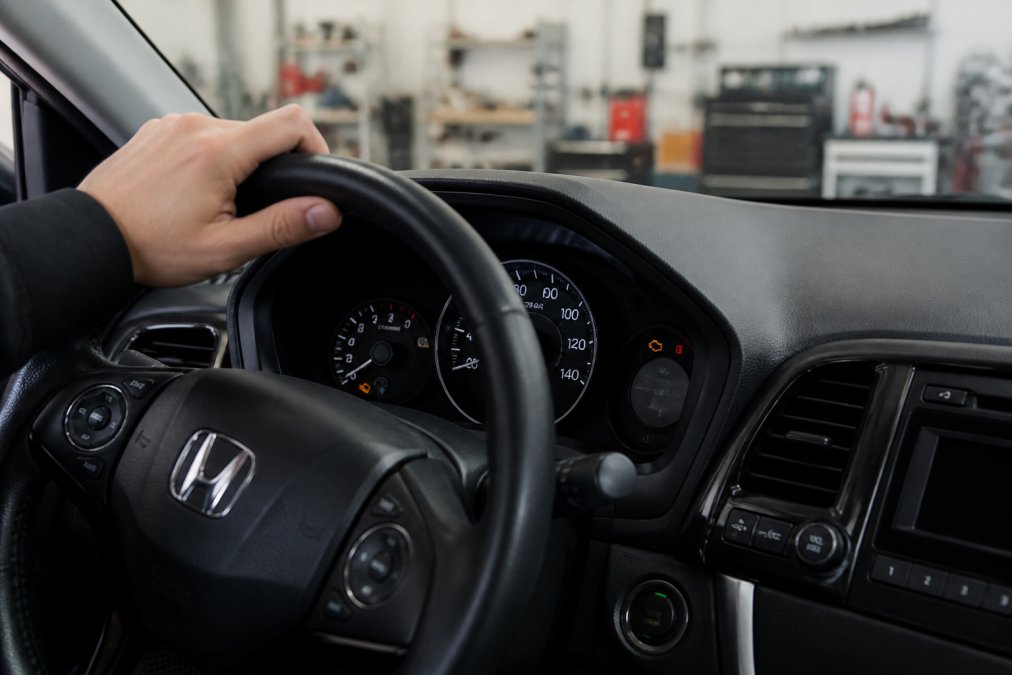
A Honda check engine light means your car's computer logged a fault in the engine or emissions system. It's not a diagnosis, and it's not a death sentence.
Solid vs. Flashing Check Engine Light Meaning
A solid check engine light means a fault is stored but your engine isn't in immediate danger. A flashing light means a serious misfire is happening right now, stop driving.
So what should you do?
- Solid light: Keep driving if the car runs normally. Scan the code soon.
- Flashing light: Pull over safely. Shut the engine off. Do not keep driving.
- Flashing plus rough idle: Stop immediately and call for a tow.
The Most Common Causes on Honda Engines
The most common causes of a Honda check engine light are a loose gas cap, a failing oxygen sensor, ignition misfires, and a dirty mass airflow sensor, these four account for most codes we see. Honda engines are reliable, but sensors age, seals dry out, and spark plugs foul.
Loose or Failing Gas Cap
A loose gas cap is the easiest cause to rule out: the cap seals your fuel system, and a bad seal lets vapor escape and trips the light. Twist it until it clicks, clear the code, and drive a few days, if the light stays off, you fixed it for free.
Oxygen Sensor and Catalytic Converter
The oxygen sensor measures oxygen in your exhaust and tells the PCM how to adjust fuel trim; when it fails, the engine runs rich or lean and fuel efficiency drops. Hondas commonly use two sensors, one before the catalytic converter and one after, with the downstream sensor confirming the converter works.
Spark Plugs, Ignition Coils, and Engine Misfire
An engine misfire is the most urgent common cause. Worn spark plugs or a failing ignition coil stop a cylinder from firing correctly, causing a shake at idle and hesitation on acceleration. Honda's coil-on-plug design gives each cylinder its own coil, so a failure produces a specific misfire code that points straight to the problem.
Mass Airflow Sensor and Vacuum Leaks
The mass airflow sensor measures how much air enters your engine, and the PCM uses that number to calculate fuel. When the sensor gets dirty, the reading goes off and your engine hesitates, often you can clean it with the right spray rather than replace it.
Using an OBD-II Scanner for Honda Diagnosis at Home
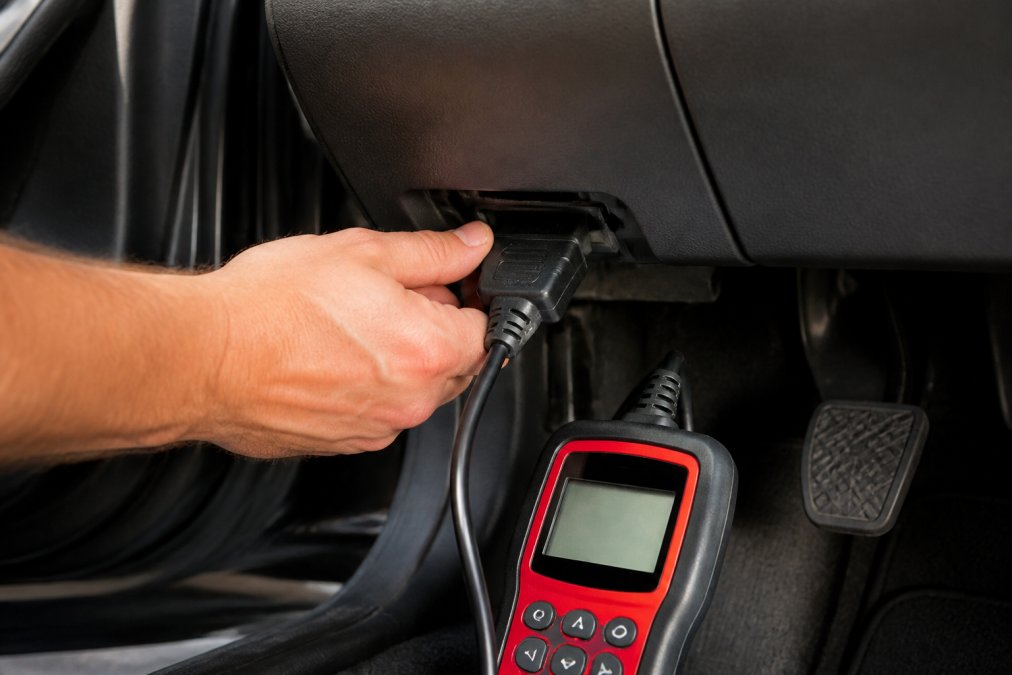
An OBD-II scanner for Honda diagnosis is the fastest way to know what your car is actually complaining about. A basic scanner costs well under one shop diagnostic visit and reads the same data the dealer pulls.
What Kind of Scanner You Actually Need
Not every scanner does the same job:
- Basic code reader: Reads and clears generic powertrain codes (P0xxx). Cheapest option, fine for a loose gas cap or a single misfire code.
- Mid-tier scan tool: Adds live data, freeze frame, and pending/permanent codes. The sweet spot for DIY diagnosis.
- Advanced tool with Honda-specific software: Reads manufacturer-specific codes (P1xxx and body/chassis codes), runs bidirectional tests, and commands components like the EVAP purge valve or an individual ignition coil. This is what an independent Honda shop uses.
For most owners, a mid-tier tool covers the job. If you own more than one Honda, the advanced tier pays for itself the first time it saves a diagnostic fee.
Where the OBD-II Port Is on Common Hondas
The port is always within reach of the driver's seat, but the exact spot varies:
- Civic (most generations): Under the driver's side dash, just left of the steering column, often behind a small removable panel.
- Accord: Under the driver's side dash near the hood release.
- CR-V: Under the driver's side dash, slightly inboard of the door jamb.
- Pilot and Odyssey: Under the driver's side dash, near the parking brake pedal area.
The Diagnostic Process, Step by Step
- Find the OBD-II port under the dashboard.
- Plug in the scanner with the ignition off.
- Turn the key to the "on" position without starting the engine.
- Let the scanner connect and read the codes.
- Write down every code, not just the first one.
- Record the freeze frame data for each code.
- Look up each code's meaning before you touch anything.
Read More Than the Code
The code is the starting point, not the answer. Live data lets you watch the sensors the PCM watches:
- Short-term and long-term fuel trim: Positive numbers mean the engine is adding fuel for a lean condition (vacuum leak, dirty MAF); negative means it's pulling fuel (rich condition, leaking injector).
- O2 sensor voltage: A healthy upstream sensor switches rapidly between roughly 0.1V and 0.9V. A lazy or flat-lined sensor is a suspect.
- Mass airflow grams per second: Compare idle and steady-cruise readings against the expected range. A dirty sensor reads low.
- Coolant temperature: A stuck-low reading can keep the PCM in open loop and set fuel-trim codes.
- Misfire counters: Per-cylinder counts tell you which cylinder is the problem, not just that one exists.
Modes Most Owners Never Use
A capable scanner pulls more than stored codes:
- Mode 06: Onboard test results for individual monitors, including misfire and catalyst efficiency. Useful when there's no stored code but the light is on.
- Mode 07: Pending codes from the current or last drive cycle, which often appear before a code matures into a stored fault.
- Mode 09: Vehicle information, including VIN and calibration ID, handy for ordering the right part.
Readiness Monitors Matter
If you're chasing an emissions test, the scanner's readiness monitor screen matters as much as the codes. Clearing codes resets every monitor to "not ready," and the car must complete specific drive cycles before they set again. A scanner shows which monitors are ready and which are pending, so you know whether you can pass before driving to the test station.
Honda Check Engine Light Diagnostic Cost: DIY vs. Shop
Check engine light diagnostic cost depends on who does the work: a scanner is a one-time fee, while a shop charges for labor and time.
| Approach | What You Pay For | Best For | Trade-off |
|---|---|---|---|
| DIY scan | One-time scanner cost | Simple codes, quick checks | You interpret the code yourself |
| Shop diagnostic | Labor time and testing | Complex or multiple codes | You pay for expertise |
| Dealer service | Higher labor rates | Warranty work, newer models | Often the priciest option |
Model-Specific Codes Honda Owners See Most
Certain codes show up again and again across Honda models, and the same code often has a different root cause depending on the model and engine. Here are the codes Honda owners see most, with the models where each tends to cluster.
P0420, Catalyst System Efficiency Below Threshold (Bank 1)
Where it shows up: Older Civic (especially 2001-2005 and 2006-2011), Accord (2003-2012 four-cylinder), CR-V (2002-2011), Element.
P0300-P0304, Random or Cylinder-Specific Misfire
Where it shows up: Nearly every Honda engine, but especially higher-mileage four-cylinders (Civic, Accord, CR-V) and V6 models (Accord V6, Odyssey, Pilot).
P0171, System Too Lean (Bank 1)
Where it shows up: Civic (especially 2001-2005 and 2012-2015), Accord four-cylinder, CR-V, Fit.
P0135, O2 Sensor Heater Circuit (Bank 1, Sensor 1)
Where it shows up: Most Hondas with a heated upstream O2 sensor, commonly around 80,000-120,000 miles.
P1457, EVAP System Leak (Canister Side)
Where it shows up: Late-1990s and 2000s Accord, Civic, Odyssey, and Pilot.
P2646 / P2647, VTEC System Performance (Rocker Arm Oil Pressure)
Where it shows up: Civic Si, Accord V6, CR-V, and other VTEC-equipped engines.
P0420 vs. P0430, Bank 1 vs. Bank 2
On V6 Hondas, P0420 is bank 1 (the bank containing cylinder 1) and P0430 is bank 2. If both set at once, suspect a shared cause like an exhaust leak or a fuel-trim issue rather than two failed converters.
Why the Same Code Isn't the Same Fix
A 2010 Civic and a 2020 CR-V won't throw identical codes for the same symptom, and the same code on two models can have two different root causes. P0171 on one Honda might be a vacuum leak; on another, a failing sensor.
Resetting the Light Safely (And Why Clearing Codes Too Soon Backfires)
Resetting the check engine light safely means fixing the cause first, then clearing the code and confirming it stays off. Clearing codes before a repair wipes the evidence a technician needs. The safe order:
- Scan and record all codes and freeze frame data.
- Diagnose and repair the actual fault.
- Clear the codes with your scanner.
- Drive through a full drive cycle.
- Rescan to confirm the light stays off.
When to Stop Driving and Book a Diagnostic
Stop driving and book a diagnostic when the light is flashing, the engine is overheating, or you feel a serious loss of power, signs of active damage, not a stored fault. Also stop if you smell burning or see smoke, the engine knocks or shakes hard, or oil pressure or temperature warnings appear.
Frequently Asked Questions
What are the most common reasons a Honda check engine light turns on?
A loose or worn gas cap, a failing oxygen sensor, and engine misfire from worn spark plugs or ignition coils top the list. Catalytic converter and mass airflow sensor problems follow. Because the powertrain control module stores a diagnostic trouble code for every fault, reading codes with an OBD-II scanner is the fastest way to narrow it down. A flashing light signals an active misfire and should be treated as urgent.
Is it safe to keep driving with the check engine light on?
A steady light usually means you can drive to a shop soon, but a flashing light means stop driving and get it towed. A flashing check engine light typically indicates a misfire dumping unburned fuel into the catalytic converter, which can overheat and destroy it. If the light is solid but the car hesitates, idles rough, or loses power, limit driving and schedule a diagnostic.
Can a loose gas cap really trigger a Honda check engine light?
Yes. The emissions system pressurizes the fuel tank to check for vapor leaks, and a cracked or loose gas cap seal breaks that seal. The result is a code like P0455 for a large evaporative emissions leak. Tighten the cap until it clicks, then drive a few cycles. If the light stays on, the cap may need replacing or the leak is elsewhere.
How much does a Honda check engine light diagnostic cost?
Independent shops typically charge a diagnostic fee that covers hooking up a scan tool, reading codes, and inspecting the affected system. Many shops apply that fee toward the repair if you approve the work. Call ahead for current pricing, and ask whether the fee is credited toward repairs.