 listicle
Best Performance Shops for Subaru: 2026 Guide
Table of Contents
- What Makes a Great Performance Shop for Subaru
- How to Choose a Car Tuner for Your Subaru
- Subaru Dyno Tuning Benefits and What to Expect
- Subaru WRX Engine Build Cost and Options
- Legal and Emissions Compliance for Tuned Vehicles
- Maintenance Schedules for Tuned Engines
- Finding Your Ideal Subaru Performance Shop
- Frequently Asked Questions
Last Updated: August 7, 2026
What Makes a Great Performance Shop for Subaru
Finding the right performance shop for your Subaru separates a smooth, reliable upgrade path from a costly nightmare. The best performance shops combine certified technician expertise, AWD dyno tuning capabilities, and deep specialization in Subaru platforms. A great shop doesn't just install aftermarket components, it understands the engineering behind them. Your Subaru's horizontally-opposed boxer engine, symmetrical AWD system, and factory ECU tuning create unique demands that generic performance shops simply can't meet.
Certified Technician Expertise
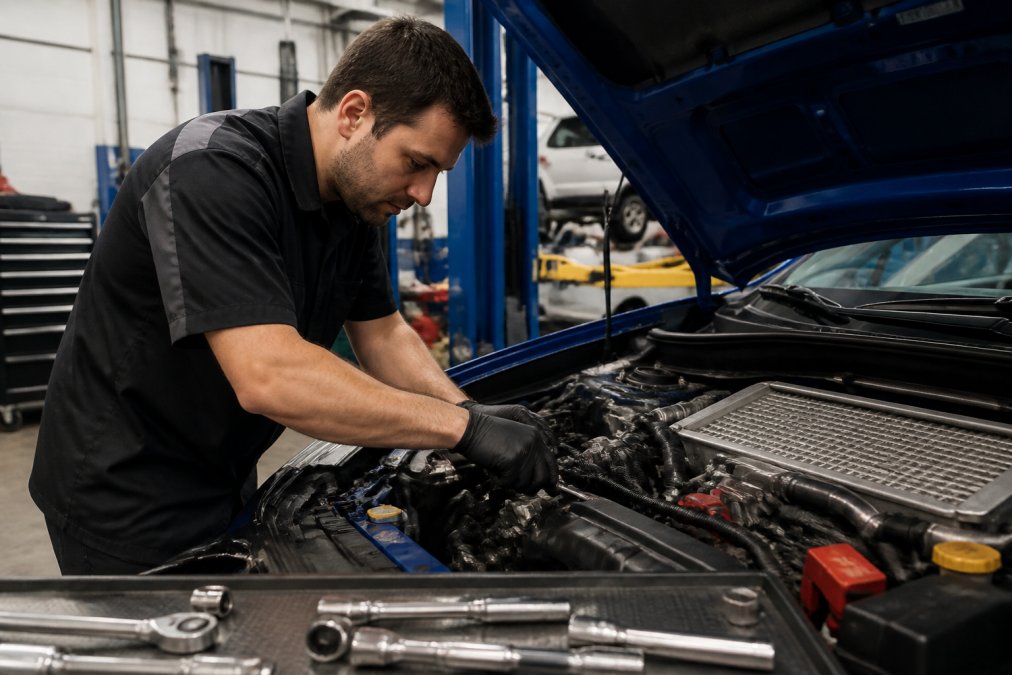
Certified technicians matter more than most car owners realize. A shop with ASE-certified technicians, Subaru factory training, or COBB Tuning certification brings accountability and depth that self-taught mechanics cannot match. These certifications require ongoing education, passing rigorous exams, and maintaining standards.
When you walk into a shop, ask directly: Are your Subaru specialists ASE-certified? Have they completed Subaru factory training programs? Are they COBB Tuning Certified Protuners? These credentials prove someone has tested their knowledge against industry standards and passed.
AWD Dyno Tuning Capabilities
Not all dynos are created equal. A standard two-wheel dyno tells you nothing about how power transfers through your Subaru's symmetrical AWD system. You need an all-wheel-drive dyno, equipment that's expensive, requires technical expertise to operate, and separates serious shops from hobbyists.
AWD dyno tuning captures real-world drivetrain behavior, measuring how torque splits between front and rear wheels and how your tuning changes power delivery across all four wheels. Without it, you're guessing. With it, you get precision calibration that maximizes horsepower while protecting the drivetrain.
Subaru Model Specialization
A shop that handles Subarus alongside Hondas, Nissans, and Toyotas isn't a Subaru specialist, it's a generalist. The WRX's EJ-series engine behaves differently than the STI's. The newer FA20DIT in the 2015+ WRX requires different tuning approaches than earlier models. A true specialist knows these distinctions cold and understands which upgrades work well together and which create conflicts.
How to Choose a Car Tuner for Your Subaru
Choosing a car tuner is one of the most consequential decisions you'll make as a performance car owner. A bad choice costs you money, time, and potentially engine longevity. A good choice transforms your car into something genuinely better.
Vetting Checklist for Performance Shops
Before committing to any shop, work through this checklist:
Technical Capabilities:
- Do they have AWD dyno access (in-house or verified partnership)?
- Can they explain their tuning methodology and data logging process?
- Do they offer base maps, custom tuning, or both?
- Can they work with your specific ECU platform (COBB, EcuTek, standalone)?
- Do they provide before-and-after dyno sheets showing actual power gains?
Certifications and Experience:
- Are key technicians ASE-certified or Subaru factory-trained?
- Are they COBB Tuning Certified Protuners or equivalent?
- How long have they specialized in Subarus specifically?
- Can they reference builds they've completed on your exact model year?
Customer Service and Transparency:
- Do they provide written estimates before starting work?
- Can you speak directly with the technician working on your car?
- Do they explain what they're doing and why in language you understand?
- What's their warranty or guarantee on tuning work?
- How do they handle complications or unexpected issues?
Track Record:
- Do they have verifiable customer reviews (Google, Yelp, forums)?
- Can they provide references from customers with similar builds?
- Do their reviews mention reliability and customer service consistency?
- Are there any red flags in negative reviews (missed deadlines, poor communication, quality issues)?
Emissions and Legal Compliance:
- Do they understand emissions regulations in your state?
- Can they tune for both performance and emissions compliance?
- Will they provide documentation of any emissions testing?
Track Record and Customer Reviews
Reviews tell you what a shop is actually like to work with. Read beyond star ratings and look for patterns. Do reviews consistently mention communication? Do people feel respected? Do they get their cars back on time?
Pay special attention to reviews from people with similar builds to yours. A shop might excel at bolt-on tuning but struggle with full engine builds. Red flags include missed deadlines without explanation, poor communication, recurring quality issues, and customers feeling pressured to buy unwanted upgrades.
Subaru Dyno Tuning Benefits and What to Expect
Dyno tuning is where theory meets reality. It's the difference between a shop that installs parts and a shop that engineers performance.
Data Logging and Custom Mapping
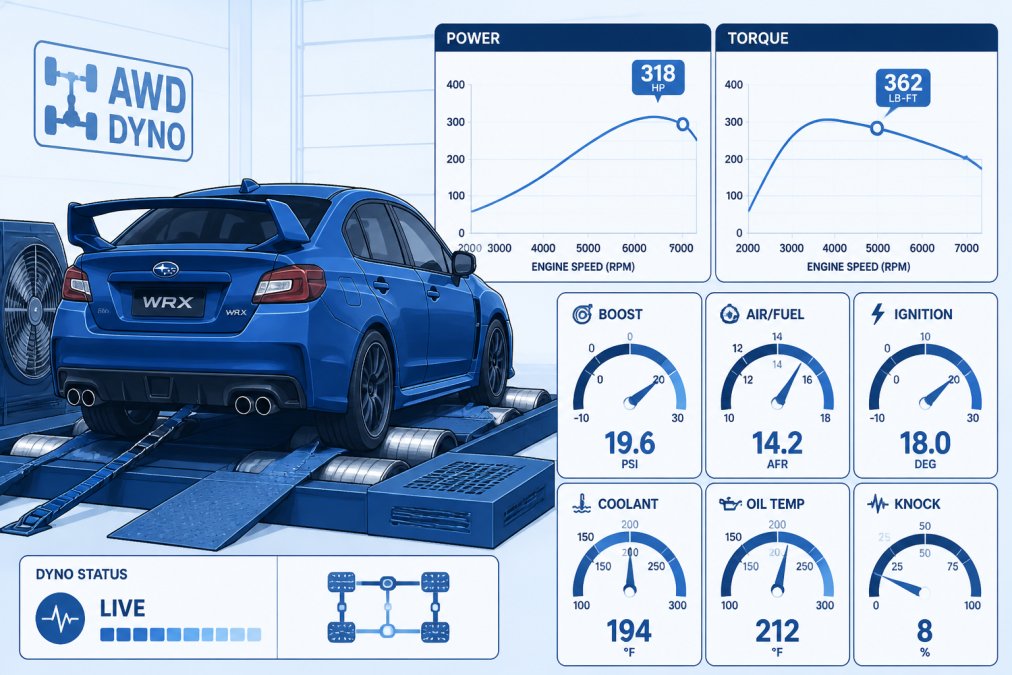
Data logging is the foundation of professional tuning. During a dyno session, the shop captures hundreds of data points per second, fuel pressure, ignition timing, boost levels, air-fuel ratios, knock detection, and more. This data tells the tuner exactly how your engine is responding to each adjustment.
Custom mapping optimizes your specific engine. No two cars are identical. Factory tolerances, altitude, fuel quality, ambient temperature, and engine wear all affect how your car responds to tuning. A custom map accounts for these variables; a base map doesn't. The best shops log data continuously during tuning runs, adjust the map based on what they see, and log again, an iterative process involving 8-12 separate runs.
Horsepower Gains and Torque Curves
Horsepower numbers matter, but torque curves matter more. Torque across the RPM range is what you feel when driving. A well-tuned Subaru shows smooth torque delivery across the usable RPM range with peak power arriving predictably and controllably.
When a shop shows you dyno results, ask for the full torque curve graph, not just the peak number. Ask what the baseline (stock) numbers were. A shop that won't provide before-and-after comparisons isn't confident in their work.
Subaru WRX Engine Build Cost and Options
Engine building decisions define your entire performance trajectory.
Engine Building and Rebuilds
An engine rebuild addresses internal wear without fundamentally changing performance. It's appropriate when you have high mileage, metal in the oil, or declining compression. A rebuild restores the engine to factory specifications.
An engine build goes further, replacing factory components with upgraded alternatives, forged pistons, stronger connecting rods, performance camshafts, ported cylinder heads, upgraded fuel systems. A built engine handles higher boost pressure, more aggressive tuning, and sustained performance driving without failing.
The decision depends on your goals. If you want reliable daily driving with modest power gains, a rebuild with bolt-on upgrades might suffice. If you're targeting significant horsepower increases or track use, a full build is the right path.
Forced Induction Systems and Bolt-Ons
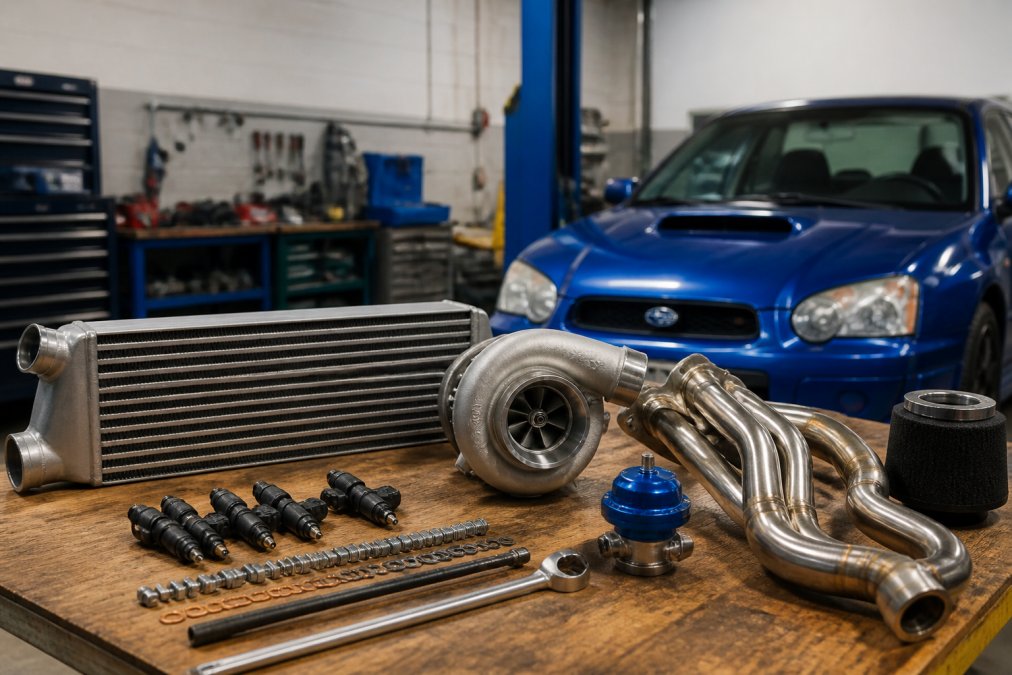
Forced induction, turbochargers and superchargers, is the most direct path to significant power gains. The factory turbo in a WRX is conservative by design. Upgrading to a larger turbo or optimizing the entire forced induction system unlocks real performance.
Bolt-on upgrades work alongside forced induction. An upgraded intercooler reduces intake air temperatures. A performance fuel system delivers consistent pressure at higher flow rates. An exhaust system reduces backpressure. A performance intake improves airflow to the turbo. The key is integration, these systems work together, not as random parts.
Legal and Emissions Compliance for Tuned Vehicles
This is where many performance shops fail their customers. They'll tune your car to make power but won't ensure it passes emissions testing.
Emissions regulations vary by state. California has the strictest standards. Know your state's requirements before modifying your car. A professional shop understands these regulations and can tune for both performance and compliance. They'll know which modifications are emissions-legal and provide documentation showing your car still meets standards. If a shop dismisses emissions concerns or suggests workarounds, find another shop.
Maintenance Schedules for Tuned Engines
A tuned engine demands more from its components. Maintenance schedules that work for stock cars don't apply.
Preventative Maintenance and Engine Longevity
Tuned engines run hotter, experience higher pressures, and work harder than stock engines. Oil breaks down faster. Fuel filters clog sooner. Spark plugs wear quicker. A professional shop provides a maintenance schedule specific to your build, accounting for your tuning level, driving style, and goals.
Track your maintenance religiously. A well-maintained tuned engine will outlast a neglected stock engine. Common maintenance items for tuned Subarus include oil changes at reduced intervals, fuel filter replacement, spark plug inspection, boost pressure monitoring, fuel system pressure testing, compression testing, and leak-down testing.
Finding Your Ideal Subaru Performance Shop
The best shop for your Subaru combines technical expertise, honest communication, and genuine specialization. It's not the cheapest option, it's the one that understands your car, respects your goals, and delivers reliable results.
Start with the vetting checklist. Narrow your options to shops that meet technical and certification requirements. Then read customer reviews and speak directly with technicians. Ask specific questions about your build. Listen for whether they explain things clearly or hide behind jargon.
When you find the right shop, the relationship extends beyond the initial build. You're looking for a partner who understands your car, supports your goals, and keeps you informed as your vehicle evolves.
| Evaluation Criteria | What to Look For | Red Flag |
|---|---|---|
| Technician Credentials | ASE certification, Subaru factory training, COBB Tuning certification | No certifications or vague experience claims |
| Dyno Capability | In-house AWD dyno or verified partnership | Two-wheel dyno only or no dyno access |
| Specialization | Dedicated Subaru focus with multiple model builds | Generalist shop handling all Japanese brands equally |
| Communication | Clear explanations, written estimates, accessible technicians | Vague answers, pressure to buy upgrades, limited access to technician |
| Track Record | Consistent positive reviews mentioning reliability and service quality | Complaints about missed deadlines, poor communication, recurring issues |
| Emissions Knowledge | Understands state regulations, tunes for compliance, provides documentation | Dismisses emissions concerns or suggests workarounds |
| Transparency | Before-and-after dyno sheets, detailed work explanations, warranty terms | Refuses to share data, vague about what was done, no warranty |
Frequently Asked Questions
What should I look for in a Subaru performance shop?
Look for shops with certified technicians experienced in Subaru models, AWD dyno tuning capabilities, and a track record of successful builds. Verify they use proper diagnostic equipment, offer warranty coverage on work, and can provide references from past customers. A reputable shop should communicate transparently about costs, timelines, and what upgrades suit your specific vehicle and driving goals.
How do I know if a Subaru tuner is reputable?
Check customer reviews and ask for references from vehicles they've tuned. Reputable tuners are certified by major tuning platforms like COBB, use professional-grade dyno equipment, and document their work with data logs. They should explain their tuning methodology, offer warranties on services, and be transparent about pricing. Long-standing shops with years in business and strong community reputation are generally safer choices.
What are the benefits of Subaru dyno tuning?
Dyno tuning optimizes your engine's performance by custom mapping the ECU based on your specific modifications and driving conditions. Benefits include increased horsepower and torque, improved throttle response, better fuel efficiency, and enhanced drivability. Data logging during tuning ensures reliability by monitoring engine parameters and preventing damage from aggressive calibrations. A professional tune maximizes the return on your performance upgrades.
How much does Subaru WRX engine build cost?
Engine build costs vary widely depending on your target horsepower, parts selection, and labor. Short blocks start around $4,100, while fully built engines with upgraded internals, turbochargers, and fuel system upgrades can cost significantly more. Contact performance shops directly for quotes tailored to your goals. Budget for installation, dyno tuning, and testing on top of parts costs.
Do performance shops offer warranties on engine builds?
Most reputable performance shops offer warranties on their engine builds and tuning work, typically covering defects in parts and labor for a specified period. Warranty terms vary by shop and may depend on how the vehicle is driven and maintained. Always ask about warranty coverage, what's included, and any conditions before committing to work. Get warranty details in writing.
Finding the right performance shop for your Subaru determines whether your investment pays off or becomes an expensive regret. Speedy Roo Motorsports has earned trust across the Denver Metro area by combining technical expertise with genuine respect for customers. Get started with a consultation to discuss your specific goals, and experience the difference that professional specialization makes in your Subaru's performance and reliability.