 blog
blog
Benefits of Independent Repair Shops: Why Local Matters
Table of Contents
- Benefits of Independent Repair Shops vs. Dealerships
- Cost of Independent Auto Repair: What You Actually Pay
- Personalized Car Service and Customer Relationships
- Warranty Coverage and Your Right to Repair Act Protection
- Digital Diagnostics and Technology Parity
- Sustainability and Eco-Friendly Repair Practices
- Why Independent Repair Shops Build Lasting Trust
- Conclusion: Making the Switch to Independent Repair
- Frequently Asked Questions
- Supporting Sources
Benefits of Independent Repair Shops: Why Local Matters
Last Updated: July 30, 2026
When your vehicle needs repair, you face a choice: the dealership or an independent shop. Many vehicle owners assume dealerships are the only trustworthy option, but independent repair shops often outperform their dealership counterparts. At Speedy Roo Motorsports, we've spent over two decades helping Aurora and Denver Metro drivers understand why independent facilities deliver superior value through transparency, expertise, personalized service, and genuine accountability.
Benefits of Independent Repair Shops vs. Dealerships
Independent repair shops operate with lower overhead than dealerships. They don't maintain sprawling facilities, extensive advertising budgets, or manufacturer-mandated staffing levels. That efficiency translates directly to your repair bill, you're paying for the technician's expertise and parts, not corporate infrastructure.
Independent shops use the same advanced scan tools as dealerships but apply them with flexibility. An independent technician can use years of real-world experience with similar vehicles to pinpoint problems dealerships might miss on the first attempt.
Transparent Pricing and Cost-Effectiveness
Dealerships operate on fixed labor rates set by manufacturers, often 40-60% higher than independent shops charge for identical work. You'll receive an itemized estimate before work begins, with clear explanations of what's being done and why.
Independent shops also offer parts flexibility. Many source OEM (Original Equipment Manufacturer) parts at competitive prices, but also offer quality aftermarket alternatives. You choose. Dealerships restrict you to OEM parts with premium markups. For routine maintenance, quality aftermarket parts perform identically to OEM equivalents at a fraction of the cost.
Faster Turnaround Times
Dealership service departments operate on appointment schedules stretching weeks into the future. Independent shops prioritize getting you back on the road quickly. Dealerships often quote "3-5 business days" for work completed in a single day.
ASE-Certified Technicians and Diagnostic Expertise
ASE (Automotive Service Excellence) certification proves a technician has passed rigorous exams demonstrating competency across all vehicle systems. Many independent shop technicians hold multiple ASE certifications. For Japanese vehicles, specialized knowledge is critical. A technician who has worked on hundreds of Subarus understands their symmetrical all-wheel-drive systems. Independent shops often develop deep expertise in specific brands because they choose their focus.
Cost of Independent Auto Repair: What You Actually Pay
In the Aurora and Denver Metro area, independent shop labor rates typically range from $75-$120 per hour, compared to dealership rates of $150-$200 per hour for the same work. Diagnostic fees at independent shops are typically $50-$100 per hour, often waived if you proceed with the repair.
Labor Rates and Repair Estimates
Labor rates at independent shops reflect the local market and technician experience. The estimate should itemize work, parts needed, and total cost. Reputable shops provide written estimates before beginning work and contact you if additional issues emerge. Independent shops have no incentive to pad time estimates, they succeed through customer loyalty and reputation.
OEM vs. Aftermarket Parts: Quality Without Markup
OEM parts are manufactured by the original equipment manufacturer. Aftermarket parts are made by third-party manufacturers. Quality varies among aftermarket suppliers, but reputable brands like Bosch, Denso, and Motorcraft produce parts meeting or exceeding OEM specifications at lower costs.
Independent shops source parts from suppliers offering competitive pricing while maintaining quality standards. You have genuine choice. Dealerships restrict you to OEM parts with substantial markups, often 50-100% above wholesale cost.
| Repair Type | Independent Shop (OEM) | Independent Shop (Aftermarket) | Dealership (OEM Only) |
|---|---|---|---|
| Brake Pads | $180-$250 | $120-$180 | $280-$350 |
| Air Filter | $40-$60 | $25-$40 | $80-$120 |
| Alternator | $400-$550 | $300-$450 | $700-$950 |
| Water Pump | $350-$500 | $250-$400 | $600-$850 |
Personalized Car Service and Customer Relationships
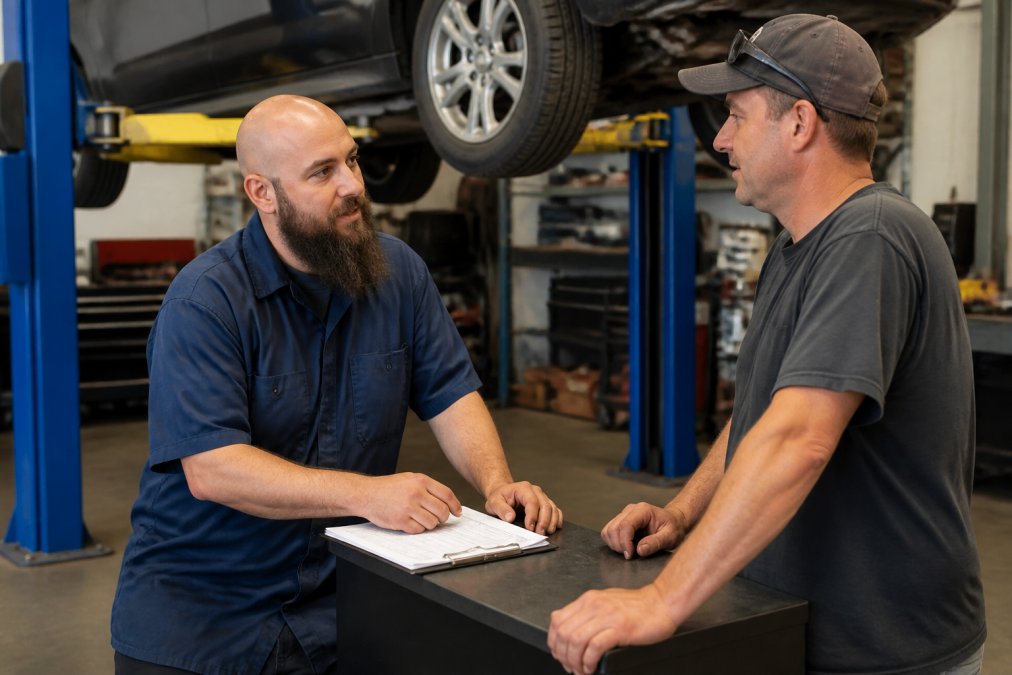
When you visit an independent shop regularly, service advisors and technicians learn your vehicle's history, maintenance preferences, and concerns. Dealership service departments treat every customer as a transaction.
Long-Term Service History and Vehicle Knowledge
An independent shop maintains detailed service records for your vehicle. When a problem develops, the technician can reference years of history to understand what's been done and what patterns have emerged. Your vehicle's service history informs preventative maintenance recommendations, extending vehicle longevity and preventing expensive emergency repairs.
Direct Communication with Your Service Advisor
At an independent shop, you work with the same service advisor consistently. You can call with questions and discuss maintenance concerns before they become problems. When repairs are completed, you get a detailed explanation of what was done and why.
Warranty Coverage and Your Right to Repair Act Protection
Independent shops stand behind their work with warranties protecting you if something goes wrong. A typical independent shop warranty covers repairs for 12 months or 12,000 miles, whichever comes first. If a repair fails within that period, the shop fixes it at no charge.
Understanding Repair Warranties at Independent Shops
A repair warranty at an independent shop is straightforward. The shop guarantees that work performed will function properly for a specified period. If the repaired component fails during that warranty period due to the shop's work, they'll fix it again at no charge. This creates accountability, the shop has financial incentive to do the work correctly the first time.
Get the warranty in writing and ask the shop to explain what's covered.
Federal Right to Repair Act and Your Legal Protections
The Right to Repair movement has gained significant momentum, with several states and the federal government recognizing consumers' legal right to repair their own vehicles or use independent repair shops without losing warranty coverage. Federal right to repair protections prevent manufacturers from restricting access to repair information, diagnostic tools, or parts. A dealership cannot void your vehicle's manufacturer warranty simply because you used an independent shop.
Digital Diagnostics and Technology Parity
Modern diagnostic scan tools are available to any shop willing to invest in them. Independent shops use professional-grade diagnostic scan tools from manufacturers like Bosch, Snap-on, and Launch. These tools access the same vehicle data as dealership equipment. The difference isn't the equipment, it's how the equipment is used.
Advanced Scan Tools and Software Updates
Quality diagnostic equipment costs $3,000-$8,000 for comprehensive systems, but serious independent shops invest in this technology because it's essential for accurate diagnosis. Independent shops can perform many software updates using professional scan tools and manufacturer-approved software. The advantage is flexibility, an independent technician can use diagnostic data creatively and apply experience to solve problems.
Technical Bulletins and Factory-Trained Expertise
Technical bulletins are manufacturer-issued guidance on known issues and repair procedures. Well-run independent shops stay current with technical bulletins relevant to the vehicles they service. Many independent shop technicians have attended manufacturer training programs. A shop specializing in a particular brand often has more factory training depth than a general dealership.
Sustainability and Eco-Friendly Repair Practices
Independent repair shops often prioritize sustainable practices more than dealerships. They recycle used parts and properly dispose of fluids. Remanufactured parts, components rebuilt to like-new condition, are environmentally superior to new parts. They require less manufacturing energy and reduce landfill waste while costing less than new parts.
Why Independent Repair Shops Build Lasting Trust
Trust is earned through consistent transparency, quality work, and genuine accountability. Independent repair shops build trust because you see the same technician repeatedly and can speak directly with the person who worked on your vehicle.
Local Economy Impact and Community Reputation
Independent shops are owned by people in your community. This creates genuine accountability. An independent shop owner answers to the community, they care about their reputation because their livelihood depends on it. Supporting an independent shop supports your local economy. Community reputation matters enormously to independent shops, creating incentive to ensure customer satisfaction.
Convenience and Accessibility for Daily Drivers
Independent shops are typically located conveniently within residential or commercial areas. You can drop your car off on the way to work and pick it up on the way home. Many independent shops offer extended hours for working professionals. Speedy Roo Motorsports provides local rental arrangements and towing services to ensure you're never stranded without transportation.
Conclusion: Making the Switch to Independent Repair
Switching from dealership service to an independent repair shop saves money while improving service quality. The benefits, transparent pricing, faster turnaround, personalized service, and genuine expertise, compound over time.
If you're driving a Japanese vehicle in the Aurora or Denver Metro area and tired of dealership service, Speedy Roo Motorsports offers a transparent alternative. Our team specializes in Subaru, Toyota, Lexus, Honda, Acura, Nissan, Infiniti, Mitsubishi, and Mazda vehicles. We provide detailed service records, ASE-certified technicians, advanced diagnostic equipment, and local convenience including rental vehicles and towing services. Contact Speedy Roo Motorsports to schedule your first appointment and experience independent repair service that actually prioritizes your vehicle and your time.
Frequently Asked Questions
Are independent repair shops really cheaper than dealerships?
Independent repair shops typically offer lower labor rates and more flexible parts sourcing than dealerships, which can reduce overall repair costs. However, pricing depends on the specific repair, parts needed, and your location. The key difference is transparency, independent shops usually provide detailed repair estimates upfront, allowing you to understand exactly what you're paying for. For routine maintenance and standard repairs, independent shops often cost 20-40% less than dealerships, though complex diagnostic work may vary. Contact your local independent shop for a specific quote.
Do independent repair shops have the same diagnostic tools as dealerships?
Modern independent repair shops invest in advanced scan tools and diagnostic equipment that rivals dealership capabilities. Many ASE-certified technicians have access to the same software updates and technical bulletins as factory-trained dealership mechanics. However, not all independent shops are equal, look for shops that explicitly invest in current diagnostic technology and maintain certifications. Specialized independent shops for Japanese vehicles often maintain equipment specifically calibrated for brands like Subaru, Toyota, Honda, and Nissan, sometimes exceeding general dealership capabilities for those makes.
What warranty or guarantee should I expect from independent repair shops?
Reputable independent repair shops typically offer warranties ranging from 12 months to the lifetime of the repair, though terms vary by shop and repair type. Unlike dealerships, independent shops aren't bound by manufacturer warranty restrictions, in fact, federal Right to Repair Act protections ensure you can use independent shops without voiding your vehicle's coverage for unrelated systems. Always request warranty details in writing before authorizing work. A shop that stands behind its repairs with a clear, documented guarantee demonstrates confidence in its workmanship and builds customer trust.
Can independent repair shops handle complex diagnostics on newer vehicles with advanced technology?
Yes, qualified independent repair shops can diagnose and repair newer vehicles with sophisticated onboard systems. ASE-certified technicians with specialized training in specific brands (like Japanese luxury vehicles) often excel at complex diagnostics. The key is verifying that your chosen shop has invested in current diagnostic software, maintains technical certifications, and has documented experience with your vehicle's make and model. Specialized independent shops that focus on particular brands typically stay current with manufacturer updates and technical bulletins, ensuring they can handle everything from routine maintenance to advanced software diagnostics.
Supporting Sources
[EXTERNAL_LINK: Federal Trade Commission Right to Repair guidance | ftc.gov]
[EXTERNAL_LINK: ASE Certification standards and technician requirements | asecert.org]
[EXTERNAL_LINK: Consumer Reports independent repair shop ratings and recommendations | consumerreports.org]