 ultimate-guide
Benefits of Following Manufacturer Service Intervals
Table of Contents
- Why Manufacturer Service Intervals Matter for Your Vehicle
- Preserving Your Warranty Coverage Through Scheduled Maintenance
- Understanding the 30-60-90 Maintenance Schedule Explained
- Preventative Maintenance vs. Reactive Repair Costs: The Financial Reality
- Does Maintenance History Affect Trade-In Value and Resale Potential
- How Routine Inspections Prevent Major Component Failures
- Building a Digital Service Record for Long-Term Vehicle Health
- Conclusion
- Frequently Asked Questions
Last Updated: August 29, 2026
Why Manufacturer Service Intervals Matter for Your Vehicle
Following manufacturer service intervals isn't optional maintenance, it's the difference between a vehicle that runs reliably for 200,000 miles and one that leaves you stranded on the side of the road. At Speedy Roo Motorsports, we've spent over two decades watching what happens when owners stick to their schedule versus those who ignore it. The pattern is unmistakable.
Your vehicle's manufacturer didn't guess at these intervals. Engineers tested thousands of hours under real-world conditions, analyzing component wear patterns, fluid degradation rates, and failure points. The service intervals they publish represent the sweet spot where preventative maintenance costs far less than reactive repairs. Ignoring them transforms manageable maintenance into expensive emergencies.
The core issue most owners face is simple: manufacturer service intervals feel like suggestions rather than requirements. You might skip an oil change, extend tire rotations by a few thousand miles, or delay that transmission fluid service because the car still runs fine. But running fine today doesn't mean the damage isn't accumulating. Each missed interval compounds the next one, accelerating wear on components designed to last much longer.
This guide covers why following manufacturer service intervals protects your investment, preserves your warranty, and keeps your vehicle operating at peak performance. We'll walk through the real financial implications, how maintenance history affects resale value, and the specific inspection points that prevent catastrophic failures.
Preserving Your Warranty Coverage Through Scheduled Maintenance
Your vehicle's warranty is only as good as your maintenance records. Manufacturers reserve the right to deny warranty claims if you can't demonstrate that you've followed the recommended service schedule. This isn't theoretical, it happens regularly when owners attempt to claim coverage for failures that could have been prevented through routine maintenance.
The relationship between manufacturer service intervals and warranty coverage is explicit in your owner's manual. Most manufacturers require documented proof that you've performed maintenance at the intervals specified. Missing even one scheduled service can create a gap in your maintenance history that gives the dealer grounds to reject a claim, even if that specific missed service wasn't directly related to the failure.
What makes this particularly important for Japanese vehicles is that manufacturers like Toyota, Subaru, Honda, and Lexus maintain strict documentation requirements. They track service records through their dealer networks and increasingly through digital logbooks. When you bring your vehicle in for warranty work, they pull up your complete service history. A clean record strengthens your claim; gaps weaken it.
The cost of a denied warranty claim often exceeds the cost of the missed maintenance by thousands of dollars. A transmission failure that would have cost $150 for fluid service becomes a $3,000+ repair when you're paying out of pocket because the manufacturer found a maintenance gap in your records.
Understanding the 30-60-90 Maintenance Schedule Explained
The 30-60-90 maintenance schedule is a framework that breaks vehicle care into three critical service windows, each addressing different components and systems. At 30,000 miles, you're typically looking at oil changes, filter replacements, and visual inspections. At 60,000 miles, more comprehensive work begins, transmission fluid, coolant, and brake system evaluations. By 90,000 miles, major component inspections intensify, with many manufacturers recommending transmission fluid changes, spark plug replacement, and detailed suspension checks.
These intervals exist because component wear doesn't happen uniformly. Oil degrades predictably over time and mileage, which is why oil changes cluster around 5,000 to 10,000-mile intervals. Transmission fluid, by contrast, can last significantly longer but requires replacement at higher mileage intervals, often 60,000 to 100,000 miles depending on the manufacturer (peer-reviewed research). Spark plugs may last 30,000 miles or 100,000 miles depending on type. The schedule coordinates these different service needs into manageable intervals.
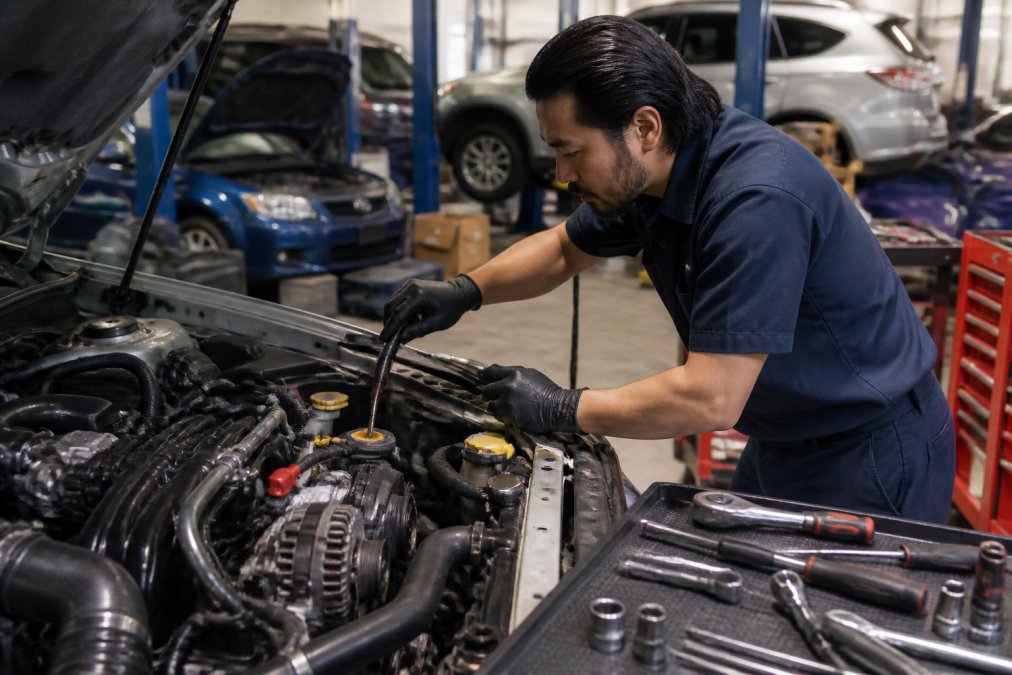
The 30-60-90 framework also reflects how different systems age. Brake pads wear gradually and need inspection regularly. Suspension components show wear patterns that become visible at specific mileage points. Cooling system hoses and belts degrade over time and temperature cycles. By spacing services across these intervals, you're catching each system at the point where preventative intervention prevents failure.
What most owners don't realize is that the 30-60-90 schedule is a minimum, not a maximum. Some manufacturers recommend additional services between these major intervals, tire rotations every 5,000 to 7,500 miles, for example, or brake fluid flushes at 30,000-mile intervals. Your specific vehicle's owner's manual provides the exact schedule for your model year and engine type. Deviations from that schedule are where problems begin.
Preventative Maintenance vs. Reactive Repair Costs: The Financial Reality
The financial case for following manufacturer service intervals is straightforward: preventative maintenance costs a fraction of what reactive repairs cost. An oil change costs roughly what a diagnostic fee costs. A transmission fluid service costs far less than a transmission rebuild. A coolant flush costs less than replacing a head gasket.
But the real savings go deeper. When you follow the schedule, you're catching problems before they cascade. A worn serpentine belt replacement during a scheduled service prevents alternator failure. A coolant flush removes corrosion that would otherwise eat through the water pump. Fresh brake fluid prevents corrosion of brake components. Each of these preventative steps stops a chain reaction that would multiply repair costs.
Consider what happens when you skip transmission fluid service. Transmission fluid degrades over time, losing its ability to protect gears and bearings. That degradation accelerates as the fluid ages. The transmission still works, for a while. But wear accelerates. Eventually, internal components fail. A transmission fluid service at 60,000 miles costs a few hundred dollars. A transmission rebuild at 120,000 miles costs $2,000 to $4,000 or more. The math is brutal.
The same pattern repeats across every system. Coolant that's never flushed becomes acidic and corrodes internal engine passages. Spark plugs that are never replaced foul and cause misfires. Brake fluid that's never changed absorbs moisture and loses braking effectiveness. Air filters that are never changed restrict airflow and reduce fuel efficiency. Each missed service creates conditions for the next failure.
Does Maintenance History Affect Trade-In Value and Resale Potential
Maintenance history is one of the first things serious buyers check when evaluating a used vehicle. A complete service record, especially one showing adherence to manufacturer service intervals, signals that the vehicle has been cared for properly. Vehicles with documented maintenance histories command higher resale values than those without, sometimes by thousands of dollars.
Dealers and private buyers use maintenance history as a proxy for overall vehicle condition. A car with a complete logbook showing regular oil changes, fluid services, and inspections suggests the owner didn't neglect other aspects of care either. Conversely, a vehicle with gaps in service history raises red flags. Even if the car runs fine, buyers worry about what damage might be hidden.
The depreciation impact is measurable. A Japanese vehicle with pristine service records typically retains 10-15% more resale value than an identical vehicle with incomplete records (nada.org). That difference can mean $2,000 to $5,000 on a used car sale. Over the life of vehicle ownership, that's a significant financial consequence of skipping maintenance.
Documentation matters as much as the maintenance itself. Digital service records, receipts from reputable shops, and manufacturer-verified service history all strengthen resale value. Speedy Roo Motorsports maintains detailed service records for every vehicle we work on, providing documentation that supports your resale value when the time comes.
:::bestfor Owners planning to sell or trade in their vehicle within the next 3-5 years. Maintaining a complete service record during this period directly increases the vehicle's market value and makes the sale process smoother.
How Routine Inspections Prevent Major Component Failures
Routine inspections are where preventative maintenance becomes visible. During a comprehensive inspection, technicians examine components before they fail, identifying wear patterns and addressing them while repairs are still minor. A technician might notice brake pad wear that suggests uneven braking pressure, catching a caliper problem before it damages the rotor. They might spot a leaking seal before it contaminates the transmission fluid. They might find a cracked hose before it ruptures and causes overheating.
These inspections follow the manufacturer's specifications, checking specific components at specific intervals. At 30,000 miles, inspections focus on wear items like brake pads, air filters, and fluid levels. At 60,000 miles, inspections deepen to include suspension components, belt condition, and cooling system integrity. By 90,000 miles, inspections examine components that typically show significant wear by that point, spark plugs, transmission fluid condition, brake fluid condition, and suspension bushings.
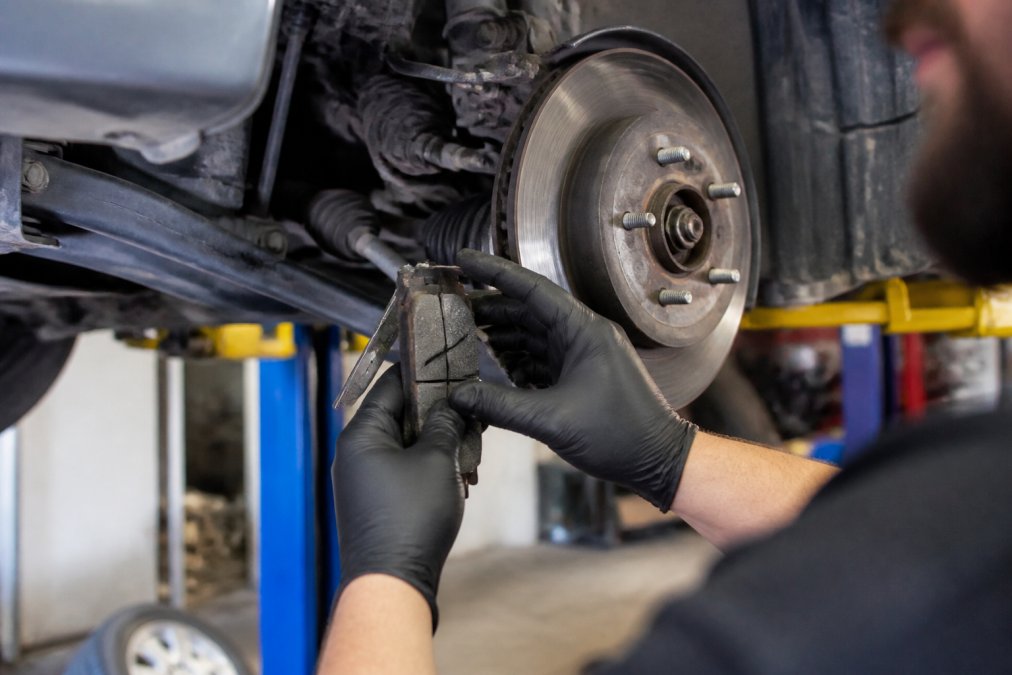
The preventative power of routine inspections lies in catching failure patterns early. Brake pads that are wearing unevenly suggest a caliper or suspension issue. Transmission fluid that's dark or has a burnt smell indicates internal wear. Coolant that's discolored suggests corrosion inside the engine. Spark plugs that are fouled indicate combustion problems. Each observation points to a specific issue that, if addressed immediately, prevents catastrophic failure.
What distinguishes a thorough inspection from a cursory one is specificity. A technician doesn't just look at brake pads, they measure pad thickness, assess rotor condition, evaluate caliper function, and check brake fluid color and condition. They don't just check fluid levels; they evaluate fluid condition, color, and smell. This detailed approach catches problems that a quick visual check would miss.
Building a Digital Service Record for Long-Term Vehicle Health
Digital service records have transformed how owners track maintenance. Instead of keeping paper receipts in a glove compartment, modern tools let you maintain a comprehensive, searchable, cloud-backed history of every service your vehicle receives. This matters for warranty claims, resale documentation, and your own understanding of your vehicle's maintenance history.
Several digital solutions exist for tracking maintenance. CARFAX Car Care provides free service tracking with automatic updates from participating shops. Loggy offers a free app that lets you manually log services and attach photos or videos of work performed. FIXD combines an OBD2 sensor with an app that tracks maintenance needs and provides explanations of diagnostic codes. MyAutoLog uses an AI assistant to help you understand your vehicle's maintenance needs and track service history.
The value of a digital record extends beyond convenience. When you sell or trade in your vehicle, you can quickly generate a complete service history document. When you take your vehicle to a new shop, you can share your maintenance records instantly. When you need to file a warranty claim, you have timestamped proof of every service performed. Digital records eliminate the "I think I had that done" uncertainty and replace with documented proof.
For Japanese vehicles specifically, digital records are increasingly important. Many manufacturers now accept digital service documentation from independent shops when evaluating warranty claims, provided the records are complete and verifiable. Speedy Roo Motorsports provides detailed digital documentation for every service performed, supporting your long-term vehicle health record and protecting your warranty coverage.
Conclusion
Following manufacturer service intervals is the single most effective decision you can make for your vehicle's long-term reliability. It protects your warranty, preserves your resale value, prevents catastrophic failures, and costs a fraction of what reactive repairs cost. The intervals exist because engineers tested them under real-world conditions, ignoring them isn't saving money, it's deferring costs that compound over time.
At Speedy Roo Motorsports, we've worked on thousands of Japanese vehicles. The ones that reach 150,000 or 200,000 miles without major failures share one thing: owners who followed the manufacturer's service schedule. The ones that fail prematurely almost always have maintenance gaps in their history. That pattern is consistent, measurable, and predictable.
If you're ready to commit to your vehicle's long-term health, start with your owner's manual. Identify your specific manufacturer service intervals. Schedule those services before they become overdue. Keep detailed records of every service performed. Speedy Roo Motorsports can help you execute that plan with reliable service, transparent communication, and the expertise to handle every Japanese vehicle model properly. Start with your vehicle's owner's manual or manufacturer website to confirm your exact service intervals, then reach out to discuss how we can support your maintenance schedule.
=== FAQ ANSWERS (audit these too, same rules) ===
[1] Q: What happens to my warranty if I don't follow the manufacturer service intervals? A: Skipping manufacturer service intervals can void your warranty coverage. Manufacturers require documented preventative maintenance at specified mileage and time intervals to honor warranty claims. If a component fails and you cannot show proof of following the service schedule, the manufacturer may deny coverage for that repair. This is especially critical for powertrain and emissions systems, which carry longer warranty periods. Always keep detailed service records to protect your coverage.
[2] Q: How does following a maintenance schedule improve my vehicle's resale value? A: Vehicles with complete, documented service histories command higher trade-in values and sell faster than those with spotty maintenance records. Buyers and dealers view a full service history as proof of proper care, reduced component wear, and lower risk of hidden mechanical problems. A well-maintained vehicle can retain 10-15% more value at resale. Digital service records and physical documentation both demonstrate warranty compliance and responsible ownership, directly affecting what buyers will pay.
[3] Q: What is the 30-60-90 maintenance schedule, and why does it matter? A: The 30-60-90 rule refers to critical service intervals at 30,000, 60,000, and 90,000 miles. At 30K miles, vehicles typically need air filter replacement and fluid checks. At 60K miles, transmission fluid, coolant, and spark plugs often require attention. At 90K miles, major powertrain components may need inspection or replacement. These intervals align with manufacturer recommendations to catch wear before catastrophic failure occurs. Following this schedule prevents unexpected breakdowns and extends vehicle longevity.
[4] Q: Is preventative maintenance really cheaper than waiting for repairs? A: Yes, preventative maintenance costs significantly less than reactive repairs. An oil change every 5,000 miles helps prevent engine sludge buildup that could require a costly engine overhaul. Routine brake inspections can catch worn pads before rotors are damaged, avoiding additional repairs. Fluid flushes and filter replacements address wear gradually, while ignoring them can lead to sudden, expensive failures. Most vehicle owners save money over a vehicle's lifetime by following the service schedule.
Frequently Asked Questions
Q: What happens to my warranty if I don't follow the manufacturer service intervals?
A: Skipping manufacturer service intervals can void your warranty coverage. Manufacturers require documented preventative maintenance at specified mileage and time intervals to honor warranty claims. If a component fails and you cannot show proof of following the service schedule, the manufacturer may deny coverage for that repair. This is especially critical for powertrain and emissions systems, which carry longer warranty periods. Always keep detailed service records to protect your coverage.
Q: How does following a maintenance schedule improve my vehicle's resale value?
A: Vehicles with complete, documented service histories command higher trade-in values and sell faster than those with spotty maintenance records. Buyers and dealers view a full service history as proof of proper care, reduced component wear, and lower risk of hidden mechanical problems. A well-maintained vehicle can retain 10-15% more value at resale. Digital service records and physical documentation both demonstrate warranty compliance and responsible ownership, directly affecting what buyers will pay.
Q: What is the 30-60-90 maintenance schedule, and why does it matter?
A: The 30-60-90 rule refers to critical service intervals at 30,000, 60,000, and 90,000 miles. At 30K miles, vehicles typically need air filter replacement and fluid checks. At 60K miles, transmission fluid, coolant, and spark plugs often require attention. At 90K miles, major powertrain components may need inspection or replacement. These intervals align with manufacturer recommendations to catch wear before catastrophic failure occurs. Following this schedule prevents unexpected breakdowns and extends vehicle longevity.
Q: Is preventative maintenance really cheaper than waiting for repairs?
A: Yes, preventative maintenance costs significantly less than reactive repairs. An oil change every 5,000 miles helps prevent engine sludge buildup that could require a costly engine overhaul. Routine brake inspections can catch worn pads before rotors are damaged, avoiding additional repairs. Fluid flushes and filter replacements address wear gradually, while ignoring them can lead to sudden, expensive failures. Most vehicle owners save money over a vehicle's lifetime by following the service schedule.