 listicle
5 Best Practices for Toyota Camry Maintenance
Table of Contents
- Follow the Factory Service Schedule for Toyota Camry Maintenance
- Perform Oil Changes and Filter Replacements Every 5,000 Miles
- Rotate Tires and Monitor Tire Pressure Regularly
- Understand the 30-60-90 Maintenance Service Framework
- Diagnose and Address Why Your Toyota Is Vibrating
- Inspect Brake Systems and Fluid Levels Monthly
- Replace Air Filters and Maintain Fluid Levels for Long-Term Health
- Frequently Asked Questions
Last Updated: September 4, 2026
Owning a Toyota Camry often means years of dependable driving, but that reliability isn't automatic. Consistent care is what separates a car that runs smoothly past 200,000 miles from one that starts costing you at 100,000. This guide from Speedy Roo Motorsports covers the five best practices for Toyota Camry maintenance that protect your investment and keep your daily driver on the road.
The core principle is simple: preventative maintenance is always cheaper than emergency repairs. Following the factory service schedule prevents small issues from becoming major failures, and it keeps your warranty compliance intact. Below, we'll show you exactly how to structure your care plan, what the key mileage milestones mean, and where most owners get their routine wrong.
Follow the Factory Service Schedule for Toyota Camry Maintenance
The single most important habit is adhering to the factory service schedule. Your owner's manual outlines the Toyota Camry maintenance schedule based on time and mileage, and it exists to keep every system operating within design specifications. Ignoring these intervals is the fastest way to void warranty coverage and accelerate component wear.
Your vehicle's service light is the first indicator that maintenance is due. However, the light often triggers based on driving conditions, so cross-reference it with your owner's manual for the specific task required. A common mistake is resetting the light without performing the service, which only delays the inevitable repair.
Perform Oil Changes and Filter Replacements Every 5,000 Miles
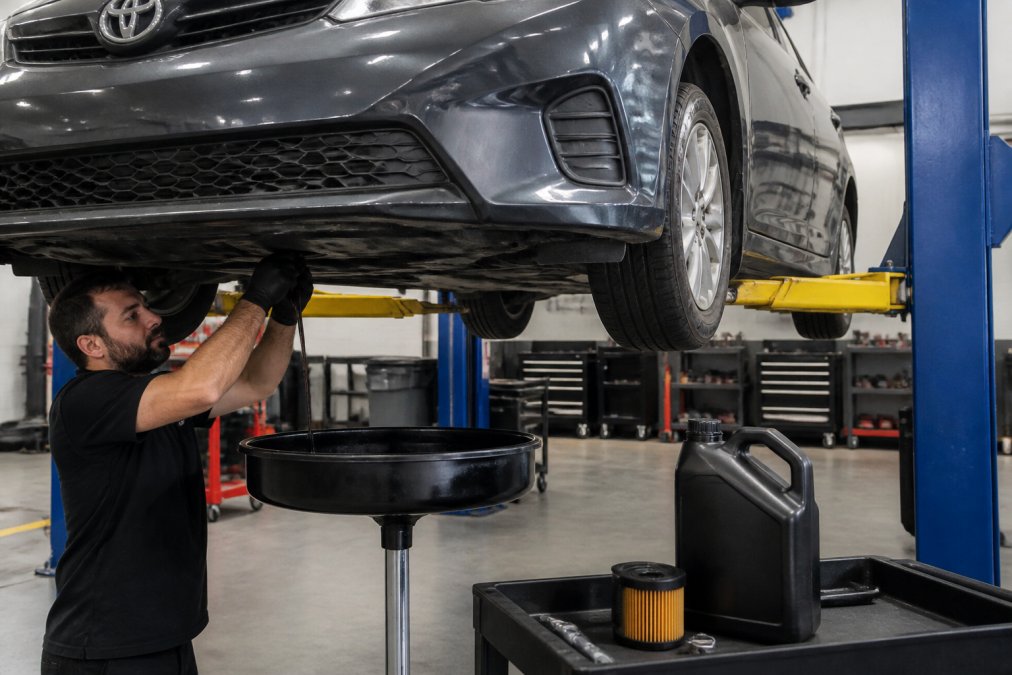
Regular oil changes are the lifeblood of your Camry's engine. The recommended interval is every 5,000 miles or six months, whichever comes first, using the correct viscosity of full synthetic oil (toyota.com). This protects internal components from friction and heat buildup that degrades performance over time.
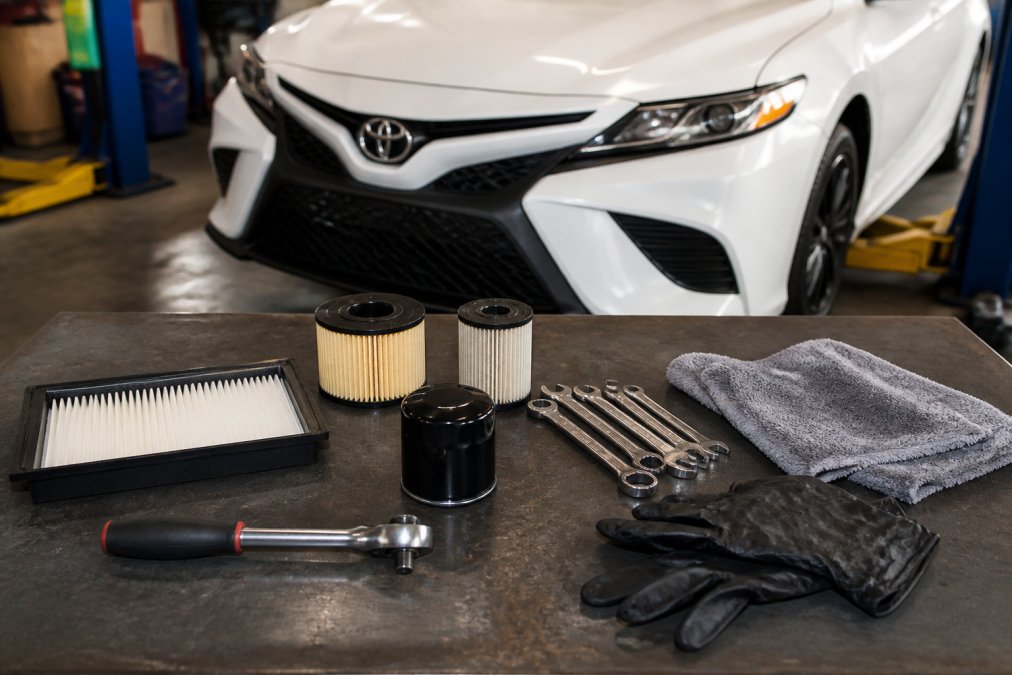
The oil filter should be replaced at every oil change. A clogged filter restricts oil flow, starving critical engine parts of lubrication. While some owners push intervals to 7,500 or 10,000 miles, the 5,000-mile mark is a safer bet, especially if you drive in stop-and-go traffic or extreme temperatures common in Colorado.
Rotate Tires and Monitor Tire Pressure Regularly
Tire maintenance is about safety, fuel economy, and even wear. Rotate your tires every 5,000 to 7,500 miles to ensure all four wear at a similar rate. Front tires on a front-wheel-drive Camry wear faster because they handle steering, power, and most of the braking force.
Check tire pressure monthly, including the spare, using the pressure listed on the driver's door jamb sticker. Your Camry's tire pressure monitoring system (TPMS) will alert you to a significant drop, but it won't catch a slow leak or the 1-2 PSI lost per month from normal permeation. Properly inflated tires also protect your wheel alignment and suspension components from unnecessary stress.
| Maintenance Task | Recommended Interval | Key Benefit |
|---|---|---|
| Oil and filter change | Every 5,000 miles | Prevents engine wear |
| Tire rotation | Every 5,000-7,500 miles | Ensures even tread wear |
| Tire pressure check | Monthly | Maximizes fuel economy |
| Brake inspection | Every 10,000 miles | Catches worn pads early |
| Air filter replacement | Every 15,000-30,000 miles | Maintains engine performance |
Understand the 30-60-90 Maintenance Service Framework
The 30-60-90 maintenance service refers to the major mileage milestones of 30,000, 60,000, and 90,000 miles. At each interval, the scope of service expands beyond basic oil changes to include critical drivetrain and fluid services. This framework is the backbone of any long-term Toyota Camry maintenance schedule, but understanding what happens at each milestone, and the real cost of skipping them, is what separates owners who keep their cars running from those who face unexpected repairs.
At 30,000 miles: Replace the engine air filter and cabin air filter, and perform a thorough brake system inspection. The engine air filter is especially critical if you drive in dusty or high-traffic conditions; a clogged filter reduces fuel economy by 5-10% and throttle response noticeably suffers. The cabin air filter prevents musty odors and allergen buildup. The brake inspection catches pad wear before rotors are damaged, replacing pads alone costs $150-$300, while rotor replacement adds another $400-$600 per axle.
At 60,000 miles: This is where many owners make costly mistakes. The transmission fluid drain and refill is non-negotiable, even if the transmission shifts smoothly. Transmission fluid degrades under heat and shear stress, losing its ability to protect internal clutches and seals (peer-reviewed research). Skipping this service accelerates wear on the transmission bands and planetary gears; by 100,000 miles, a neglected transmission often exhibits harsh downshifts, delayed engagement, or slipping, repairs that cost $2,500-$4,000 or more for a rebuild. A 60,000-mile fluid service costs $150-$250 and adds years of reliable shifting.
At 60,000 miles, also perform a coolant flush. Coolant becomes acidic over time and loses corrosion inhibitors, allowing rust to form inside the cooling passages and radiator (sae.org). A failed coolant system can lead to overheating, a warped cylinder head, or a cracked engine block, repairs exceeding $1,500-$3,000. A coolant flush at 60,000 miles costs $100-$150 and prevents catastrophic engine damage.
Inspect the serpentine belt and hoses for cracks, fraying, or soft spots. A belt failure leaves you stranded and can damage the alternator or water pump if the belt breaks under load. Hose failure can cause coolant leaks or loss of power steering fluid.
At 90,000 miles: Replace spark plugs (if original equipment; modern plugs often last 100,000+ miles, check your manual). Worn spark plugs increase fuel consumption and reduce engine responsiveness. Replace the brake fluid, which absorbs moisture from the air and becomes corrosive to brake lines and calipers over time. Perform a full safety inspection of the suspension, including struts, control arm bushings, and ball joints. Suspension wear accelerates tire wear and compromises handling and braking performance.
For high-mileage vehicles (100,000+ miles): The 30-60-90 framework continues to apply, but the inspection intervals become more critical. At 120,000 miles, consider a second transmission fluid service if you tow, drive in stop-and-go traffic, or live in a hot climate, these conditions accelerate fluid degradation. Inspect the water pump and timing belt tensioner for wear; a water pump failure can damage the engine if coolant leaks internally. Have the fuel filter inspected and replaced if clogged, as a restricted fuel filter reduces fuel pressure and engine performance.
Diagnose and Address Why Your Toyota Is Vibrating
Vibrations are never normal, and they are your car's way of telling you something is wrong. If you feel shaking through the steering wheel, floorboard, or seat, diagnosing the source early can prevent a minor issue from becoming a stranded vehicle or a safety hazard. The location, frequency, and conditions under which the vibration occurs tell you which system is failing, and how urgently you need to address it.
Vibration at highway speeds (45+ mph): A vibration that appears only at highway speeds and disappears below 40 mph usually points to tire or wheel issues. Check for uneven tire wear, bulges, or flat spots on the sidewalls. Have the tires balanced at a tire shop; an out-of-balance tire creates a rhythmic pulsing that worsens as speed increases. If balancing doesn't resolve it, the issue may be a bent wheel rim or a failing wheel bearing. A wheel bearing produces a grinding or humming sound alongside the vibration and requires immediate attention, a failed bearing can seize and lock the wheel.
If vibration is accompanied by pulling to one side, the problem is likely wheel alignment. Misalignment causes uneven tire wear and steering vibration; it also stresses the suspension and reduces fuel economy. Have a four-wheel alignment performed at a professional shop.
Vibration when braking: Shaking when you apply the brakes almost always means warped brake rotors or severely worn brake pads. Warped rotors create a pulsing sensation in the brake pedal and steering wheel as the pad contacts high and low spots on the rotor surface. This is a safety issue, braking distance may be compromised. Worn brake pads that have worn through the friction material and are metal-on-metal also cause vibration and severe rotor damage. Replace pads and have rotors resurfaced or replaced. If vibration occurs only when braking hard (panic stop), the issue may be brake fade or a stuck caliper; have the brake system inspected by a professional.
Vibration during acceleration: A vibration that intensifies when you step on the gas often indicates a failing engine mount, CV axle, or driveline component. Engine mounts isolate engine vibration from the chassis; when they wear out, engine shake transfers directly to the steering wheel and floorboard. A failing CV axle (on front-wheel-drive Camrys) produces a clicking or clunking sound alongside vibration during hard acceleration or tight turns. A worn driveline component, such as a universal joint or transmission mount, creates a shudder that worsens under load. These repairs require professional diagnosis but are essential for safety and drivability.
Vibration at idle or low speeds: If your Camry vibrates while stopped at a red light or during slow-speed driving, the issue is usually engine-related. Check that all spark plugs are firing correctly; a misfiring cylinder causes rough idle and vibration. A clogged fuel injector, vacuum leak, or failing ignition coil can also cause this symptom. Have the engine scanned for diagnostic trouble codes (DTCs) using an OBD-II scanner; many auto parts stores offer free scanning. If no codes appear, the issue may be a worn engine mount or transmission mount.
Vibration in the steering wheel only: If vibration is isolated to the steering wheel and doesn't affect the floorboard or seat, the problem is likely in the front end: wheel balance, alignment, a bent tie rod, or a failing wheel bearing. Have the front end inspected and the wheels balanced. Do not ignore steering wheel vibration, it can mask a safety-critical issue like a failing suspension component.
:::warning Addressing a vibration early is the most cost-effective approach. What starts as a simple tire balance can escalate into a worn suspension component, damaged wheel bearing, or premature tire replacement if left unchecked for thousands of miles. A vibration that worsens over weeks or months indicates a progressive failure; have it diagnosed before the component fails completely and leaves you stranded or compromises braking or steering.
Inspect Brake Systems and Fluid Levels Monthly
Your brake system is your primary safety feature, and it deserves a monthly visual inspection. Check the brake fluid level in the reservoir and look at the pads through the wheel spokes. If pad material is thinner than a quarter of an inch, they need replacement soon. Catching worn brake pads early saves your rotors from damage.
Monthly fluid checks should also cover engine oil, coolant, and windshield washer fluid. Low coolant can cause overheating, while low brake fluid indicates a leak or worn pads. These checks take five minutes and give you a clear picture of your car's health between scheduled services.
Replace Air Filters and Maintain Fluid Levels for Long-Term Health
Your Camry has two air filters that need regular attention. The engine air filter protects the engine from dirt and debris, while the cabin air filter cleans the air you breathe inside the car. Both should be inspected at every oil change and replaced according to your driving environment.
If you drive on dusty roads or in heavy traffic, replace the engine air filter closer to the 15,000-mile mark. A clogged engine air filter reduces airflow, hurting fuel economy and throttle response. The cabin air filter replacement is a simple DIY task, and it prevents musty odors and reduces allergens for you and your passengers.
A comprehensive fluid maintenance plan covers engine oil, transmission fluid, coolant, and brake fluid. Each fluid has a specific service life, and following the intervals in your owner's manual ensures every hydraulic and lubrication system operates at peak efficiency. Using OEM parts for these services guarantees the correct formulation and fit.
Keeping a Toyota Camry reliable for the long haul comes down to consistency: follow the factory schedule, change the oil on time, and address small problems before they compound. At Speedy Roo Motorsports, our technicians have specialized in Japanese vehicles since 2002, and we treat every customer with respect and transparent communication. Whether you need routine service or a complex diagnostic, our experience with Toyota vehicles across the Aurora and Denver Metro area ensures quality work under the hood. Get started with Speedy Roo Motorsports and keep your Camry running like new.
Frequently Asked Questions
What is the recommended maintenance schedule for a Toyota Camry?
Toyota recommends following the factory service schedule, which typically includes oil changes every 5,000 miles, tire rotations every 7,500 miles, and major services at 30,000, 60,000, and 90,000-mile intervals. After that, consult your owner's manual or use the maintenance schedule provided by Toyota to stay on track. Following this schedule prevents premature wear and maintains your vehicle's reliability.
What is the 30-60-90 rule for car maintenance?
The 30-60-90 maintenance service framework marks critical service intervals at 30,000, 60,000, and 90,000 miles. At 30,000 miles, replace the engine air filter and inspect brake components. At 60,000 miles, consider transmission fluid service and replace the cabin air filter. At 90,000 miles, perform a comprehensive inspection of the drivetrain, coolant system, and suspension. These milestones help catch wear before it becomes expensive and ensure your Camry runs smoothly for years.
Why is my Toyota vibrating while driving?
Vibration in a Toyota Camry can stem from several causes: unbalanced or misaligned tires, worn brake pads or rotors, a faulty serpentine belt, or issues with the suspension system. Check your tire pressure first using a tire pressure monitoring system or manual gauge. If tires are properly inflated, have the brake system inspected and wheels balanced. Vibration during braking suggests brake rotor damage, while vibration at highway speeds often indicates wheel alignment or balance issues. A professional inspection identifies the exact cause.
How often should I change the oil in my Toyota Camry?
Change your Camry's oil every 5,000 miles or every 6 months, whichever comes first. Use full synthetic oil (typically 0W-16 or 0W-20 viscosity) as specified in your owner's manual to maintain optimal engine protection and fuel efficiency. Regular oil changes prevent sludge buildup, reduce friction, and extend engine life. Always replace the oil filter during each change. If you drive in severe conditions like frequent short trips or towing, follow the severe service schedule for more frequent changes.
What should I check during monthly maintenance on my Camry?
Monthly checks should include tire pressure (use a tire pressure monitoring system or manual gauge to ensure proper PSI), fluid levels (oil, coolant, brake fluid, and windshield washer), battery health, and visual inspection of brake pads and rotors. Check that all warning lights are off and listen for unusual noises. These simple checks catch problems early and prevent costly repairs.