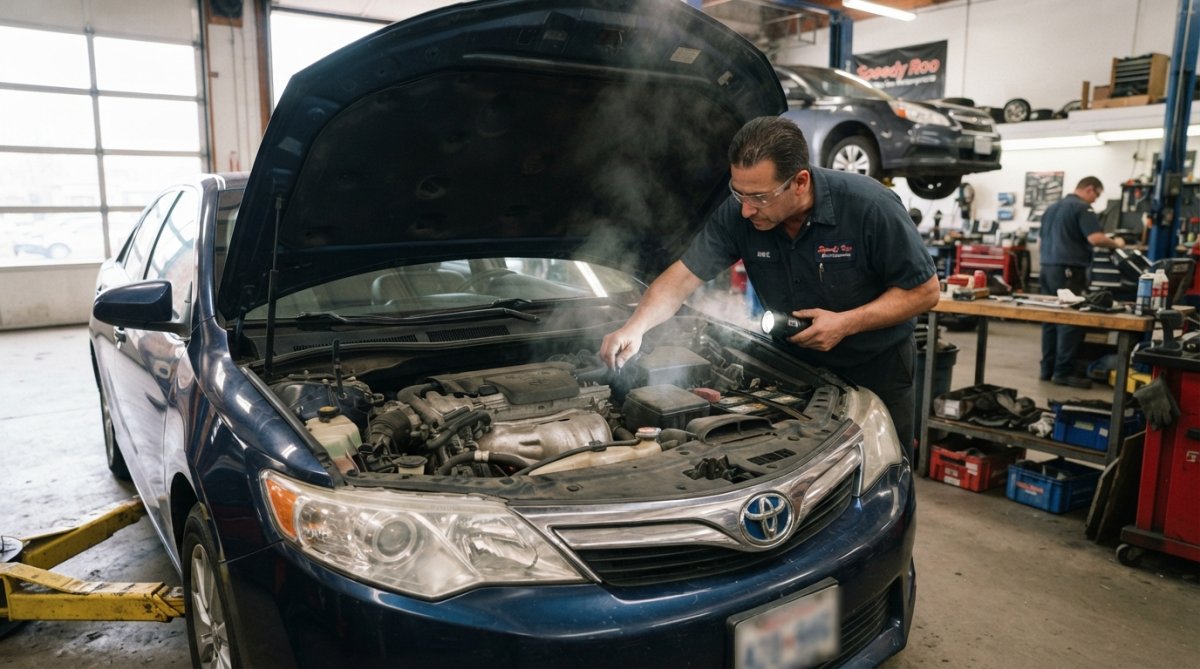
 how-to guide
Why Is My Toyota Overheating: 7 Common Causes & Fixes
Table of Contents
- Why Is My Toyota Overheating: Common Causes at a Glance
- Toyota Coolant Leak Symptoms: How to Spot a Problem Early
- Bad Water Pump Symptoms Toyota Owners Should Know
- Thermostat Failure: Recognizing a Seized Thermostat
- Radiator Flush Toyota: Blockages, Damage, and Prevention
- Toyota Thermostat Replacement Cost and When It's Worth It
- What to Do When Your Toyota Overheats on the Road
- DIY Diagnostics vs. Professional Repair: What You Can Check Yourself
- Frequently Asked Questions
Why Is My Toyota Overheating: 7 Common Causes & Fixes
Last Updated: July 24, 2026
If you're asking "why is my toyota overheating," you're not alone. Engine overheating is one of the most common problems Toyota owners face, ranging from a simple coolant top-off to serious mechanical failure requiring professional repair. At Speedy Roo Motorsports, we've diagnosed and fixed thousands of overheating issues across all Toyota models since 2002. The good news: most overheating problems are preventable with proper maintenance and can be caught early if you know what warning signs to look for.
The cooling system is one of your engine's most critical components. When something goes wrong, your engine temperature climbs rapidly and driving becomes dangerous. Continued operation of an overheating engine can cause catastrophic damage, warped cylinder heads, blown head gaskets, and seized pistons that cost thousands to repair.
Why Is My Toyota Overheating: Common Causes at a Glance
Engine overheating happens when your cooling system can't remove heat from the combustion chamber fast enough. The most frequent culprits are coolant leaks, thermostat failure, water pump malfunction, and radiator blockages.
| Common Cause | Primary Symptom | Severity | DIY Check Possible |
|---|---|---|---|
| Low coolant | Steady temperature creep | Low | Yes |
| Coolant leak | Puddles under car | Low to Medium | Yes |
| Thermostat failure | Rapid spike to hot | High | No |
| Water pump failure | Grinding noise + heat | High | No |
| Radiator blockage | Slow heat buildup | Medium | Limited |
| Cooling fan failure | No fan spinning | High | Yes |
| Head gasket failure | White smoke + overheating | Critical | No |
Toyota Coolant Leak Symptoms: How to Spot a Problem Early
The most common reason your toyota overheating occurs is a coolant leak. Your cooling system is pressurized, meaning even small leaks can drain your coolant reservoir quickly. Once coolant levels drop, your engine has nothing to absorb and carry away the heat generated during combustion.
Visual Signs Under Your Car
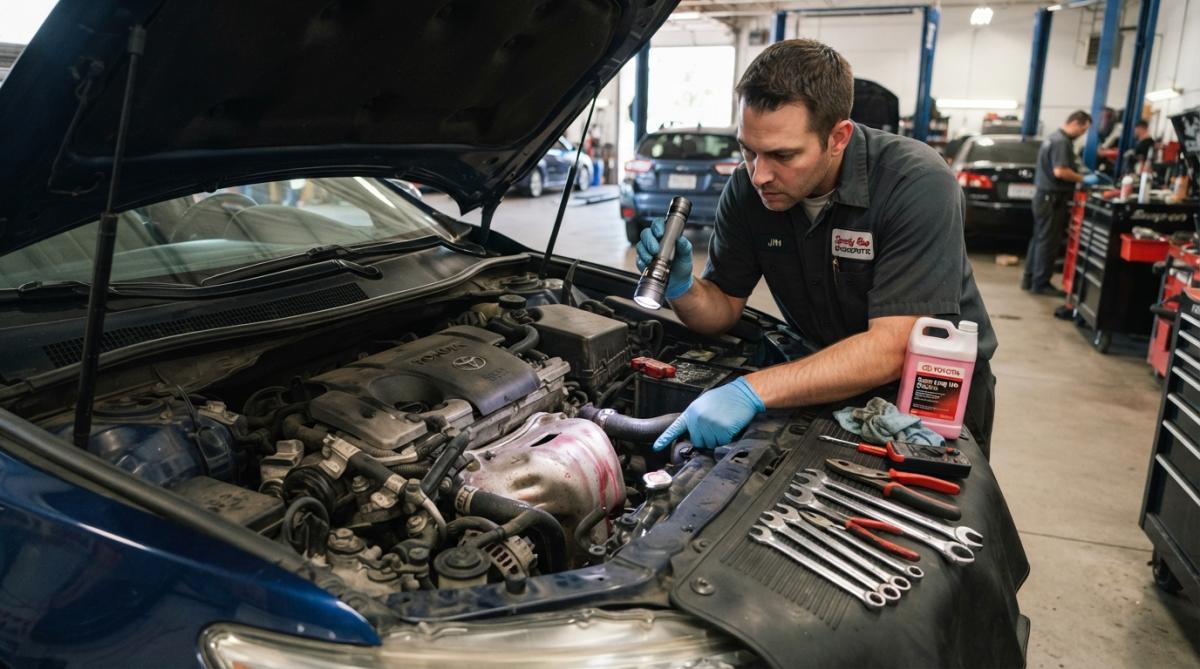
The easiest way to spot a coolant leak is to look under your vehicle after it's been parked for a few hours. Coolant is typically bright green, orange, or pink, colors that stand out against pavement. Check the hoses running from the radiator to the engine block and water pump. Over time, rubber hoses crack and split, especially in vehicles over ten years old. Inspect the radiator itself for small holes or corrosion, and check the coolant reservoir for cracks. Don't ignore small leaks; a leak that loses a quart of coolant per week will empty your system in a month or two.
Dashboard Warning Lights and Gauges
Your Toyota's dashboard gives you real-time feedback about engine temperature. Most vehicles have a temperature gauge showing a needle moving from cold to hot as the engine warms. If that needle climbs into the red zone, your engine is overheating. Many modern Toyotas also have a warning light, usually a thermometer symbol or "CHECK ENGINE," that illuminates when coolant levels drop or temperature spikes.
The coolant reservoir under the hood has minimum and maximum fill lines. When the engine is cold, coolant should sit at or near the maximum line. If it's below minimum, you have a leak or your system needs a coolant flush and refill.
Bad Water Pump Symptoms Toyota Owners Should Know
The water pump is the heart of your cooling system. It circulates coolant through the engine block, radiator, and hoses. When a water pump fails, coolant stops moving and your engine temperature spikes within minutes.
Listen for grinding, squealing, or whining noises coming from the front of the engine. A grinding sound often indicates bearing failure. A failing water pump often leaks coolant from a small drain hole at the pump's base, appearing as a puddle directly under the pump (located at the front of the engine, near the serpentine belt).
Water pump replacement is not a DIY job for most owners. The pump is buried under the serpentine belt, pulleys, and sometimes the timing cover. Professional mechanics have the tools and experience to remove and replace it correctly. Expect the repair to take 2-4 hours depending on your Toyota model.
Thermostat Failure: Recognizing a Seized Thermostat
A thermostat is a small valve that opens and closes to regulate coolant flow through the radiator. When the engine is cold, the thermostat stays closed, allowing the engine to warm up quickly. As temperature rises, the thermostat opens, sending hot coolant to the radiator where it cools down before circulating back through the engine.
When a thermostat seizes in the closed position, coolant can't reach the radiator and your engine temperature climbs rapidly, even if your coolant level is full and your water pump is working correctly. The symptom is unmistakable: your temperature gauge shoots into the red zone within a few minutes of starting the engine.
A seized thermostat cannot be repaired; it must be replaced. The good news is that thermostats are relatively inexpensive parts. Thermostat replacement typically takes 1-3 hours depending on your Toyota's engine layout.
Radiator Flush Toyota: Blockages, Damage, and Prevention
Your radiator is a heat exchanger. Hot coolant flows through thin metal fins inside the radiator, and air passes over those fins, cooling the liquid before it returns to the engine. Over time, coolant breaks down and deposits sediment, rust, and mineral buildup inside the radiator tubes, restricting coolant flow and reducing cooling efficiency.
A radiator flush removes this buildup and restores proper heat transfer. A radiator flush should be performed every 30,000-50,000 miles or every 3-5 years, depending on your Toyota's maintenance schedule.
If your radiator becomes severely blocked, coolant flow slows to a trickle and your engine temperature climbs because the radiator can't cool the coolant fast enough. Physical damage to the radiator is also common. Road debris, accidents, or corrosion can puncture or crack the radiator core, causing coolant leaks and loss of cooling capacity.
Toyota Thermostat Replacement Cost and When It's Worth It
A seized thermostat is one of the most straightforward overheating problems to fix, but cost varies depending on your Toyota model and where you have the work done. At an independent shop like Speedy Roo Motorsports, thermostat replacement typically costs less than dealership pricing because we focus on honest labor rates without unnecessary upsells.
The thermostat itself is inexpensive, usually $15-50 depending on the part quality and your model year. Labor is where the cost adds up. Accessing the thermostat housing requires removing hoses, belts, and sometimes intake components. Expect 1-3 hours of labor depending on engine layout.
When is thermostat replacement worth it? Always. A seized thermostat will overheat your engine on every drive. Continuing to drive an overheating engine risks catastrophic damage, blown head gaskets, warped cylinder heads, and seized pistons that cost $2,000-5,000 to repair. A $200-400 thermostat replacement is cheap insurance against that scenario.
What to Do When Your Toyota Overheats on the Road
If your temperature gauge climbs into the red zone while you're driving, your first priority is safety. An overheating engine can fail suddenly, leaving you stranded.
Immediate Steps to Take
Turn off the air conditioning immediately. Your AC compressor adds load to the engine, which generates more heat. Shift to neutral or park (if stopped in traffic) and rev the engine gently to 2,000 RPM. This increases coolant circulation and helps the water pump move heat away from the engine more efficiently. If the temperature doesn't drop or continues climbing, pull over safely and turn off the engine.
Let the engine cool for at least 15-20 minutes before opening the hood. The cooling system is pressurized, and opening the radiator cap on a hot engine releases scalding coolant and steam that can cause severe burns. Once cool, check your coolant level in the reservoir. If it's low, add pre-mixed coolant. If the level is normal, do not drive the vehicle. Call for a tow truck. A normal coolant level with overheating symptoms points to thermostat failure, water pump failure, or a cooling fan problem, none of which you can fix roadside.
When to Call for Help
Call a professional mechanic or towing service immediately if your temperature gauge enters the red zone and stays there, you see steam coming from under the hood, your engine is overheating despite normal coolant levels, you hear grinding or squealing noises from the front of the engine, or you smell burning coolant or see white smoke from the exhaust.
Do not attempt to drive to a repair shop if your engine is actively overheating. Towing is the safe option. If you're in the Denver Metro area and your Toyota is overheating, Speedy Roo Motorsports can diagnose the problem quickly. We offer same-day diagnostics for overheating issues and have helped thousands of Toyota owners get back on the road safely. We also offer local towing services and loaner vehicles so you're not stranded while we work.
DIY Diagnostics vs. Professional Repair: What You Can Check Yourself
Some overheating problems are easy to diagnose yourself. Others require specialized equipment and training.
What you can check yourself:
Your coolant level is the easiest check. Open your hood when the engine is cold and locate the coolant reservoir, a translucent plastic tank with min/max lines. If coolant is below the minimum line, top it off with pre-mixed coolant and monitor the level over the next week. If it drops again, you have a leak that needs professional repair.
Visually inspect hoses for cracks, bulges, or soft spots. Check under the car for coolant puddles and look at the radiator for obvious dents, corrosion, or holes. Listen for unusual noises from the front of the engine, grinding, squealing, or whining often indicate water pump or serpentine belt problems. Note when the noise occurs and describe it to your mechanic.
What requires professional diagnosis:
Thermostat failure cannot be reliably diagnosed without specialized temperature sensors and diagnostic tools. A mechanic connects a scanner to your vehicle's computer and monitors coolant temperature sensors while the engine runs. Water pump failure requires listening with a stethoscope and feeling for vibration in the pump housing. Radiator blockage is diagnosed by comparing coolant temperature at the radiator inlet versus outlet. A professional diagnostic typically costs $75-150 and takes 30-45 minutes.
Engine overheating is serious, but it's also one of the most preventable problems if you stay on top of maintenance. Regular coolant flushes, prompt attention to warning lights, and quick action when symptoms appear can save your Toyota from catastrophic damage. If you're experiencing overheating and need a professional diagnosis, Speedy Roo Motorsports specializes in cooling system repair for all Toyota models. Our technicians have over two decades of experience diagnosing and fixing overheating issues, and we stand behind every repair with a warranty. Contact us today for a same-day diagnostic and get your Toyota running cool again.
Frequently Asked Questions
What are the most common reasons a Toyota overheats?
The primary causes of Toyota overheating include low coolant levels from leaks, a failed or seized thermostat, malfunctioning cooling fan, water pump failure, radiator blockages or damage, and head gasket failure. Each affects your cooling system's ability to regulate engine temperature. A coolant leak is often the easiest to spot, look for puddles under your car or a dropping coolant reservoir level. Thermostat failure prevents proper coolant circulation, while a broken cooling fan can't dissipate heat effectively. Professional diagnosis is recommended if you're unsure which component is failing.
What should I do immediately if my Toyota starts overheating while driving?
First, turn off the air conditioning and turn your heater to high, this pulls heat away from the engine. Reduce speed and find a safe place to pull over. Once stopped, do not open the radiator cap immediately, as pressurized coolant can cause severe burns. Turn off the engine and wait 15-20 minutes for it to cool. Check your coolant level only after the engine has cooled. If coolant is low, add distilled water or coolant as a temporary measure. Do not drive further until you understand the cause. Contact a mechanic or towing service if the temperature gauge remains high after cooling.
How can I tell if my Toyota has a coolant leak versus another overheating cause?
Check your coolant reservoir level regularly, a consistently low level despite topping off indicates a leak. Look under your car for green, orange, pink, or blue puddles (depending on coolant type). Inspect hoses, clamps, and the radiator for visible cracks or wet spots. Listen for hissing sounds near the engine, which suggest steam escaping from a leak. If the coolant level stays stable but the engine still overheats, the problem is likely a thermostat, water pump, or cooling fan rather than a leak. A mechanic can perform a pressure test to confirm a leak's location.
Does a radiator flush prevent overheating, and how often should I do one?
A radiator flush removes sediment and debris that reduce cooling efficiency and can block coolant flow, so it supports long-term thermal performance. However, a flush is preventative maintenance, not a cure for active overheating. Follow your Toyota's maintenance schedule, typically every 30,000 to 50,000 miles or every 3 to 5 years, though this varies by model year and coolant type. Regular flushes help maintain coolant effectiveness and prevent blockages that could trigger overheating. If your car is already overheating, address the underlying cause (leak, thermostat, water pump) first; a flush alone won't solve a failed component.