 how-to guide
How to Check Transmission Fluid: Step-by-Step Guide
Table of Contents
- What You'll Need Before Checking Transmission Fluid
- How to Check Transmission Fluid: Step-by-Step Process
- Understanding Transmission Fluid Color Chart and Condition Signs
- Transmission Fluid Symptoms: When to Check and When to Watch For
- Types of Transmission Fluid and Compatibility Matters
- Sealed Transmission Fluid Check: Modern Systems Explained
- Common Mistakes to Avoid When Checking Transmission Fluid
- When to Check Transmission Fluid and Maintenance Schedule
- Frequently Asked Questions
Last Updated: July 16, 2026
Knowing how to check transmission fluid is one of the most important maintenance tasks you can perform on your vehicle. Transmission fluid provides lubrication, cooling, and hydraulic pressure that keeps everything running smoothly. When fluid levels drop or the fluid degrades, transmission problems follow quickly, and they're expensive to fix.
This guide walks you through the exact process of checking your transmission fluid, interpreting what you see, and knowing when to add more or seek professional service.
What You'll Need Before Checking Transmission Fluid
Gather these essentials before you start: your vehicle's owner's manual (non-negotiable, as dipstick locations vary widely), a lint-free rag, a funnel, the correct transmission fluid type, work gloves, and a flashlight. Ensure your vehicle sits on a level surface, parking on an incline gives false readings.
The correct transmission fluid type matters critically. Different manufacturers specify different formulations: Dexron-VI, Mercon ULV, CVT fluid, or proprietary blends. Using the wrong type can damage your transmission. Check your owner's manual or the transmission pan label for the exact specification.
How to Check Transmission Fluid: Step-by-Step Process
Step 1: Park on a Level Surface and Engage the Parking Brake
Park your vehicle on completely level ground. Transmission fluid readings taken on slopes are worthless. Engage the parking brake firmly and ensure the vehicle is in Park (for automatic transmissions) or Neutral (for manual transmissions).
Let the engine idle for a minute or two. Most modern vehicles require you to check transmission fluid while the engine is running and the transmission is at operating temperature. Transmission fluid expands as it heats up, so a cold check will show artificially low levels.
Step 2: Locate the Transmission Dipstick Under the Hood
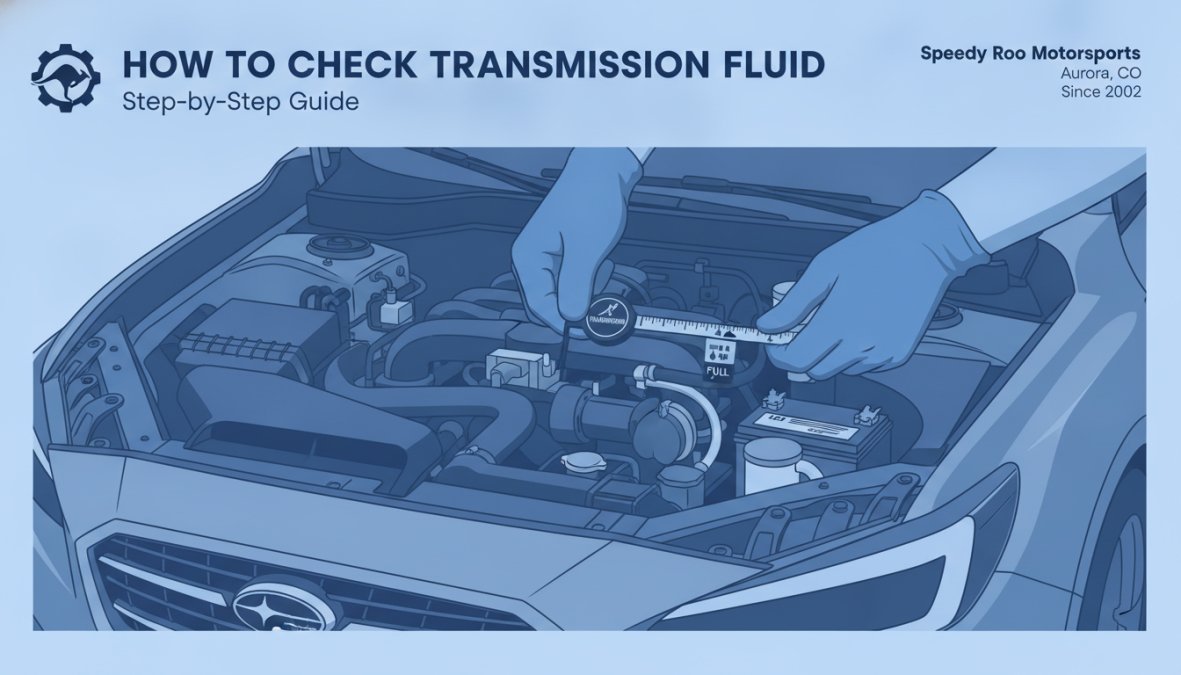
Open your hood and locate the transmission dipstick using your owner's manual, dipstick locations differ dramatically between vehicles. On many automatic transmissions, it's a yellow or red handle located near the back of the engine bay.
If you cannot find a dipstick, your vehicle likely has a sealed transmission system requiring different checking procedures. Don't force anything or pull on unknown handles. Once you've located the dipstick, pull it straight out with a steady motion.
Step 3: Check Fluid Level While Engine Is Running
Wipe the dipstick completely clean using your lint-free rag. Reinsert it fully until it seats completely, then pull it out again. Look at the markings, most have a "full" mark and an "add" mark. The fluid level should be at or very near the full mark when the engine is at operating temperature. If it's at or below the add mark, you need to add transmission fluid.
Step 4: Interpret Fluid Color and Smell
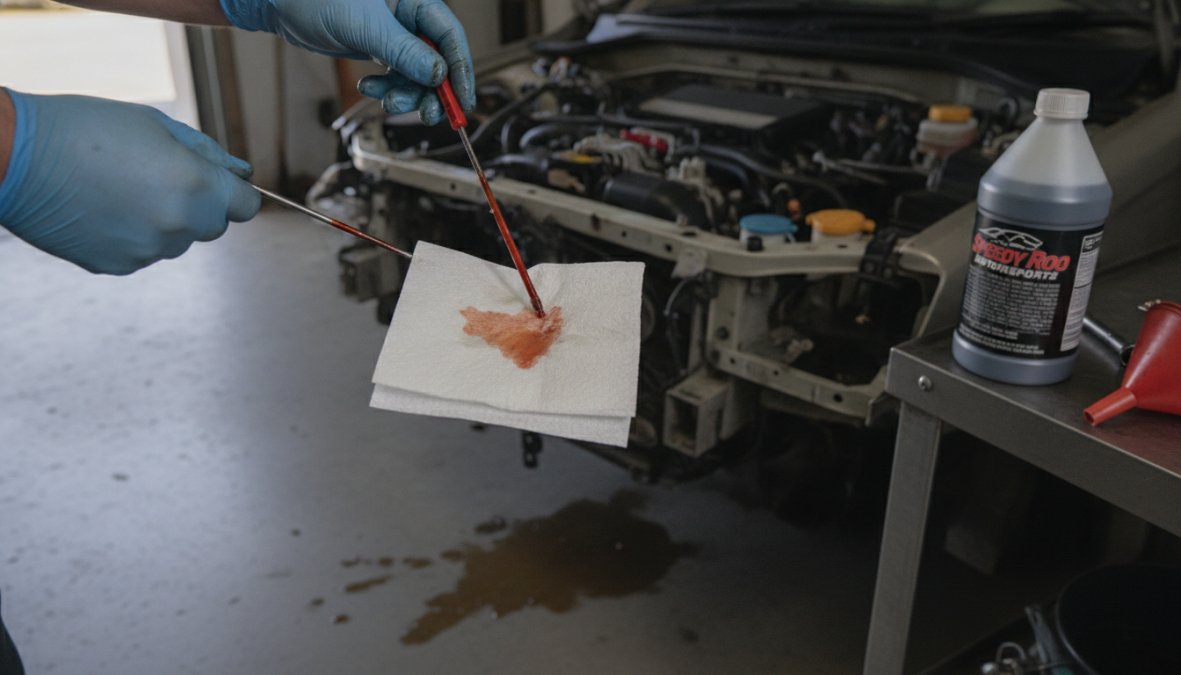
Examine the fluid color and smell carefully. Healthy transmission fluid is bright red or pink. Dark brown or blackish fluid indicates oxidation and degradation. Burnt smell is a serious warning sign, if the fluid smells acrid, your transmission has been overheating or operating under extreme stress. Schedule service immediately.
Varnish buildup on the dipstick appears as a sticky, dark coating, indicating the fluid has oxidized significantly and needs replacement soon.
Understanding Transmission Fluid Color Chart and Condition Signs
Bright red fluid indicates fresh fluid with full protective properties intact. Medium brown fluid suggests aging but still functional fluid, common in vehicles with 60,000 to 100,000 miles. Dark brown or burnt orange fluid has oxidized significantly and should be replaced within the next service interval. Black fluid indicates severe oxidation and requires immediate professional service.
Transmission fluid oxidation happens naturally over time as the fluid experiences heat cycles and chemical reactions. This is why transmission maintenance schedules recommend fluid changes every 30,000 to 60,000 miles depending on your vehicle and driving conditions.
Transmission Fluid Symptoms: When to Check and When to Watch For
Check your transmission fluid immediately if you notice low fluid, harsh or delayed shifting, burning smell from under the hood, transmission fluid leaks visible under your vehicle, slipping gears (engine revving without corresponding acceleration), or whining or grinding noises from the transmission area.
Low transmission fluid causes poor gear engagement and transmission overheating. Harsh or delayed shifting indicates degraded or low fluid. Burning smell points to transmission overheating. Transmission fluid leaks must be addressed immediately, your transmission loses fluid continuously, and driving with a leak risks catastrophic failure. Slipping gears happen when fluid pressure is too low or friction modifiers have degraded. Whining or grinding noises indicate the transmission is operating without adequate lubrication.
Regular fluid checks catch 80% of transmission problems before they become expensive repairs.
Types of Transmission Fluid and Compatibility Matters
Automatic transmission fluid (ATF) comes in several formulations. Dexron-VI is used by General Motors and many other manufacturers. Mercon ULV is Ford's specification. Each formulation has specific viscosity, friction modifier, and additive packages designed for particular transmission designs.
CVT fluid is completely different from traditional automatic transmission fluid. Continuously variable transmissions use a belt-and-pulley system, and CVT fluid has different viscosity and friction characteristics. Using automatic transmission fluid in a CVT transmission will cause immediate transmission damage.
Manual transmission fluid is another category entirely. Some manual transmissions use gear oil similar to differential fluid, while others use lighter fluid. Check your owner's manual for the exact specification.
Synthetic fluids last longer and handle temperature extremes better than conventional fluids. Mixing synthetic and conventional is acceptable, but switching entirely to synthetic in an older vehicle may change shift characteristics slightly.
Sealed Transmission Fluid Check: Modern Systems Explained
Many modern vehicles have sealed transmission systems with no accessible dipstick. This design reflects manufacturer confidence in fluid longevity and keeps the transmission completely isolated from outside contamination, which slows oxidation.
Without a dipstick, checking sealed transmission fluid requires different methods. Some vehicles have a fill plug and level check plug on the transmission pan. Other sealed systems require professional diagnostic equipment to check fluid condition through the transmission control module.
CVT transmissions are often sealed systems, as continuously variable transmissions are particularly sensitive to fluid condition. The downside is that owners cannot perform quick visual checks to monitor fluid condition. Sealed transmission maintenance relies more heavily on following manufacturer service schedules.
Common Mistakes to Avoid When Checking Transmission Fluid
The most common mistake is checking transmission fluid with the engine off. Cold fluid gives false low readings. Always check with the engine running at operating temperature.
Checking on an inclined surface creates false readings. Always use a level surface. Overfilling the transmission causes serious problems, too much fluid increases pressure, which can blow seals and damage gaskets. Add fluid in small amounts, a quarter quart at a time, and recheck after each addition.
Using the wrong transmission fluid type is critical. Mixing incompatible fluids causes shifting problems, overheating, and internal transmission damage. Ignoring dark or burnt-smelling fluid allows small problems to become large ones. Not consulting the owner's manual for dipstick location and checking procedure leads to errors.
When to Check Transmission Fluid and Maintenance Schedule
Check your transmission fluid at least monthly, more frequently if your vehicle is older than 10 years or has more than 100,000 miles. Check immediately after long highway drives or towing, before long trips, and whenever you notice symptoms.
Transmission fluid replacement schedules vary by manufacturer. Many vehicles recommend replacement every 30,000 to 60,000 miles. Research shows that more frequent changes correlate with longer transmission life, even when manufacturers recommend longer intervals.
Severe driving conditions, towing, frequent stop-and-go traffic, hot climates, or mountain driving, require more frequent fluid changes. If you tow regularly, consider changing fluid every 30,000 miles rather than 60,000.
Keep records of every fluid check and change. Documentation helps you track degradation patterns and predict when replacement is needed.
| Maintenance Task | Frequency | Why It Matters |
|---|---|---|
| Visual fluid check | Monthly | Catches leaks and low levels early |
| Fluid color assessment | Every 3 months | Tracks oxidation and degradation |
| Fluid replacement | 30,000-60,000 miles | Restores lubrication and cooling properties |
| Professional service check | Annually | Identifies problems diagnostic equipment detects |
| Sealed system check | Per manufacturer schedule | Maintains warranty and system integrity |
Transmission maintenance separates vehicles that run reliably for 200,000 miles from those that fail at 100,000. The difference often comes down to fluid checks and timely replacement. If your transmission is showing signs of problems, slipping, delayed shifting, burning smell, or dark fluid, the solution starts with a proper fluid check and likely ends with professional service.
Frequently Asked Questions
What color should transmission fluid be, and what do different colors mean?
Healthy automatic transmission fluid should be bright red and transparent. Dark brown or black fluid indicates oxidation and degradation, suggesting your fluid needs replacement soon. A burnt smell accompanying dark fluid signals overheating or friction modifier breakdown. If fluid appears cloudy or milky, water contamination may be present. Always consult your owner's manual for your vehicle's specific fluid color specifications, as some transmissions use different fluid types with varying baseline colors.
How often should you check transmission fluid, and when is the best time?
Most manufacturers recommend checking transmission fluid every 30,000 to 60,000 miles or during regular maintenance intervals, consult your owner's manual for your vehicle's specific schedule. The best time to check is when the engine is at operating temperature with the vehicle parked on a level surface and the parking brake engaged. Checking while the engine runs gives the most accurate reading, as transmission fluid expands when warm. Some modern sealed transmission systems don't require regular checks; verify your vehicle's type in the owner's manual.
Can you check transmission fluid when the engine is cold, and does it matter?
Checking transmission fluid when the engine is cold will give an inaccurate reading because automatic transmission fluid contracts when cool. For the most reliable level check, allow your engine to reach operating temperature first. However, if you notice signs of low transmission fluid or a leak, checking the cold level can help you assess the severity. Always return to a warm engine check for final confirmation before adding fluid, as the full mark and add mark on the dipstick are calibrated for operating temperature.
What should I do if my vehicle has a sealed transmission system?
Sealed transmission systems, common in newer vehicles, don't have traditional dipsticks and aren't designed for routine fluid checks by owners. These systems use specialized CVT fluid or sealed automatic transmission fluid and require dealership service for level verification and fluid changes. If you suspect a fluid leak or transmission problems in a sealed system, contact your dealer or a qualified technician immediately. Attempting to service a sealed transmission without proper equipment can damage the system and void your warranty. Check your owner's manual to confirm whether your vehicle has a sealed transmission.