 how-to
Why Is My Mitsubishi Check Engine Light On? (2026 Guide)
Table of Contents
- First: Check for Immediate Danger
- What Does a Flashing Check Engine Light Mean?
- The 5 Most Common Causes for a Mitsubishi Check Engine Light
- Use an OBD-II Scanner for Mitsubishi Diagnostics
- How to Reset Check Engine Light Mitsubishi: DIY vs. Professional
- Driving with the Light On: Safety and Cost Considerations
- Why Choose an Independent Mitsubishi Specialist
- Conclusion: Next Steps for Your Mitsubishi
- Frequently Asked Questions
Last Updated: September 9, 2026
First: Check for Immediate Danger
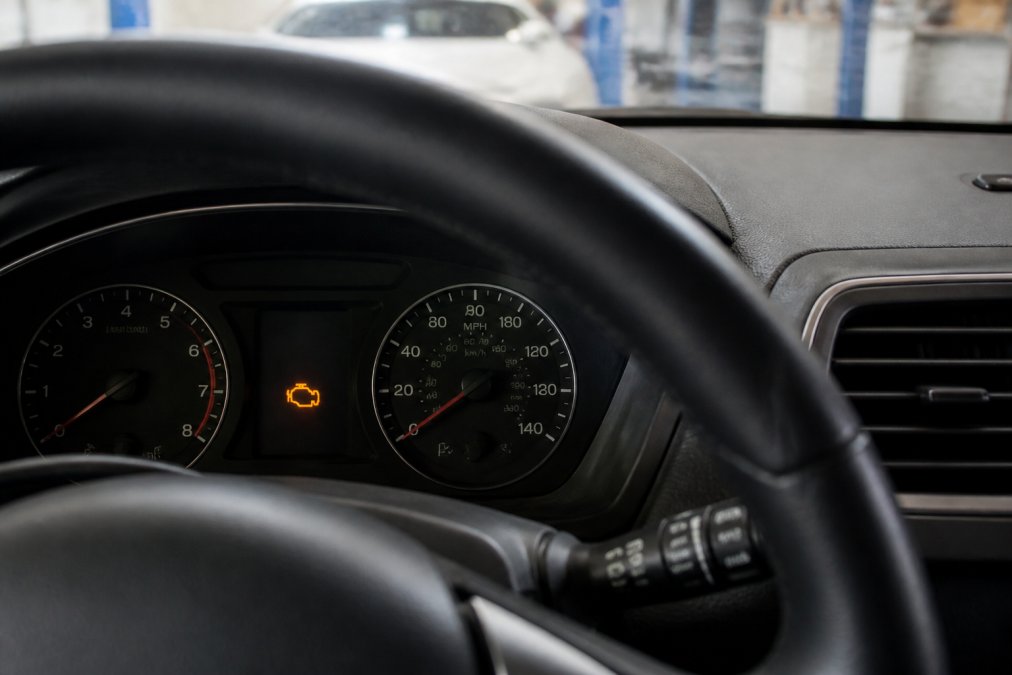
A glowing check engine light on your Mitsubishi dashboard is one of the most common reasons drivers search for answers. The first step is to assess whether the situation is urgent or can wait for a scheduled service appointment.
Before doing anything else, look at the light itself. A steady, solid check engine light typically indicates a non-emergency issue like a sensor error or emissions system fault. However, if the light is flashing, that signals a serious problem requiring immediate attention, and you should pull over safely as soon as possible.
Speedy Roo Motorsports has served the Aurora and Denver Metro area since 2002, specializing in expert maintenance and repair for Japanese automobiles. Understanding the difference between an urgent warning and a routine maintenance issue determines your next move and your safety on the road.
What Does a Flashing Check Engine Light Mean?
A flashing check engine light means you have a severe misfire that is actively damaging your catalytic converter or engine components (nhtsa.gov). This is the malfunction indicator lamp (MIL) telling you to stop driving now, not just schedule a repair for later.
When the light flashes, the engine control unit (ECU) has detected a misfire severe enough that unburned fuel is entering the exhaust system. That excess fuel can overheat and destroy your catalytic converter, turning a relatively simple repair into an expensive one. Pull over, turn off the engine, and arrange for a tow rather than risk further damage.
The 5 Most Common Causes for a Mitsubishi Check Engine Light
Knowing which failures are statistically likely for your specific Mitsubishi model helps more than generic lists. While no two cars fail identically, certain platforms share well-documented weak points. Here are five common causes, with model-specific context that matters.
Loose or Faulty Gas Cap
This is the cheapest and most common fix across all brands, and Mitsubishi is no exception. The system performs an evaporative emissions (EVAP) leak test when the engine is off (the EPA). A loose, cracked, or missing cap allows fuel vapors to escape, setting a code like P0455 (large leak) or P0456 (small leak).
Model-specific note: On the Mitsubishi Outlander and Outlander Sport, the fuel filler neck is prone to corrosion in states that use road salt, which can cause a leak even with a new cap. If you replace the cap and the code returns within a week, have the filler neck inspected before assuming a sensor is bad.
Tighten the cap until you hear three distinct clicks. Drive for 20-30 minutes, then allow the car to sit overnight. The light often resets itself after several successful drive cycles. If it returns, the cap may need replacement, a part costing roughly $15-$30.
Oxygen Sensor Failure
Oxygen sensors (O2 sensors) monitor the fuel mixture by measuring oxygen in the exhaust stream (energy.gov). A failing sensor sends incorrect data to the ECU, which then adjusts the fuel mixture improperly, hurting engine performance and fuel economy. On Mitsubishi vehicles, the upstream (before catalytic converter) sensors typically fail first.
Model-specific note: The Mitsubishi Lancer and Lancer Evolution are known for premature rear (downstream) O2 sensor failure, often triggered by water intrusion into the connector. If you see code P0138 or P0141, inspect the connector for green corrosion before replacing the sensor.
A worn O2 sensor is a normal wear item on higher-mileage Mitsubishis. Replacing it restores proper fuel trims and often improves gas mileage if the sensor was badly degraded. For current pricing, please contact Speedy Roo Motorsports.
Catalytic Converter Problems
The catalytic converter reduces harmful emissions, failing when the engine runs rich or suffers from repeated misfires. A clogged or failed converter triggers a check engine light (commonly P0420 for catalyst efficiency below threshold) and may cause acceleration issues, a rotten-egg smell, or loss of power at highway speeds.
Model-specific note: The Mitsubishi Mirage (2014-2020) has a documented pattern of premature catalytic converter failure, often linked to the engine running rich due to a faulty coolant temperature sensor that never reaches operating temperature. If your Mirage throws P0420, check the coolant sensor first, it's a part that can save you a converter replacement.
This is one of the more expensive repairs, which is why addressing a flashing light immediately matters. Preventative maintenance on spark plugs and ignition coils protects your converter from premature failure.
Spark Plugs and Ignition Coils
Worn spark plugs or failing ignition coils cause misfires that trigger the check engine light. Mitsubishi engines are sensitive to maintenance intervals, and skipping plug replacements invites coil failure. A misfire typically produces a distinct code like P0301 or P0302, indicating which cylinder is affected.
Model-specific note: The Mitsubishi Outlander with the 2.4L 4B12 engine is prone to ignition coil failure on cylinder 1 or 4, often due to heat soak from the exhaust manifold. If you replace one coil, replace all four, they fail in sequence, and you'll save labor by doing it once. OEM coils are available; aftermarket options are also available but vary in reliability. For current pricing, please contact Speedy Roo Motorsports.
Replacing plugs and coils together often resolves the issue and restores smooth idle quality. Use iridium plugs (NGK is the OEM supplier for most Mitsubishi engines) and torque them to spec, over-tightening cracks the porcelain and causes a hard-to-diagnose misfire.
Mass Airflow (MAF) Sensor Issues
The mass airflow sensor measures incoming air to calculate proper fuel delivery. When dirty or failed, the engine runs with an incorrect fuel mixture, causing rough idle, hesitation, or poor acceleration. On Mitsubishi vehicles, the MAF sensor sits between the air filter box and the throttle body.
Model-specific note: The Mitsubishi Eclipse Cross and Outlander with the 1.5L turbo engine are sensitive to aftermarket air filters that over-oil, coating the MAF sensor's hot wire and causing false readings. If you've recently installed a K&N or similar oiled filter and the light came on, cleaning the MAF sensor with CRC MAF cleaner (not brake cleaner) often resolves the issue.
If the sensor itself is faulty, replacement restores proper engine timing and performance. OEM MAF sensors are available depending on model; aftermarket units are also available but sometimes cause driveability issues. For current pricing, please contact Speedy Roo Motorsports. Cleaning the sensor first is always worth the 15 minutes it takes.
Use an OBD-II Scanner for Mitsubishi Diagnostics
An OBD-II scanner is the essential tool for diagnosing why your check engine light is on, because it reads the diagnostic trouble code stored in your vehicle computer. Every Mitsubishi built after 1996 has a standard OBD-II port under the dashboard near the steering column.
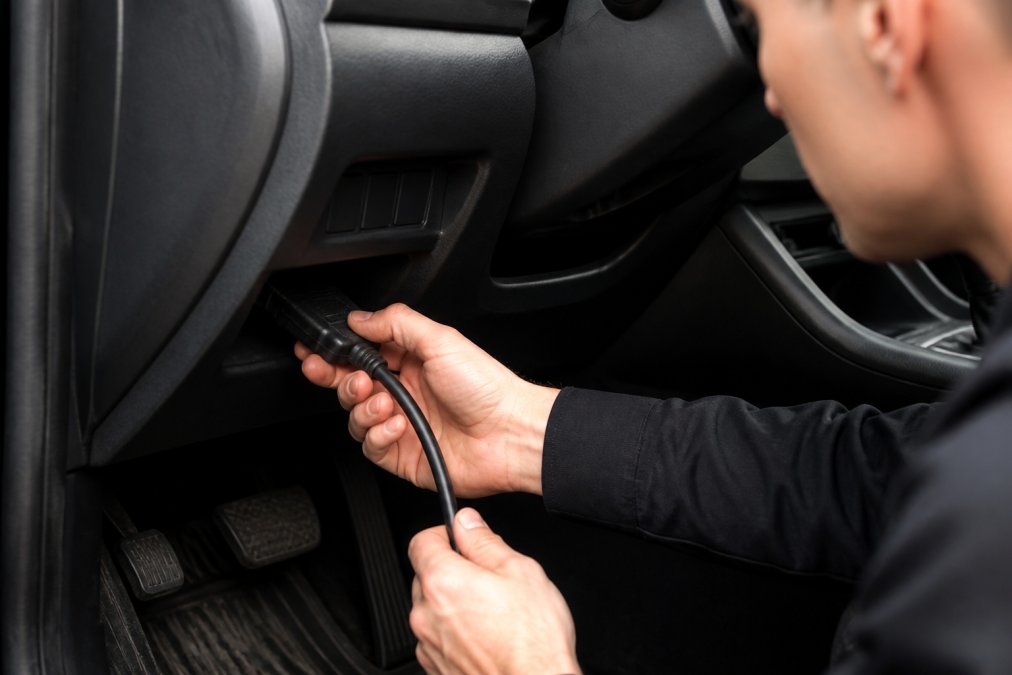
Plug in the scanner, turn the ignition to "on" without starting the engine, and read the code displayed. Write down the exact code, such as P0420 for catalytic converter efficiency or P0300 for random misfire. This code gives you and your mechanic a precise starting point for troubleshooting.
Many auto parts stores offer free code reading. Understanding the code helps you decide whether the fix is a simple sensor replacement or requires professional diagnosis.
How to Reset Check Engine Light Mitsubishi: DIY vs. Professional
Resetting your Mitsubishi check engine light is straightforward once the underlying issue is fixed, but clearing the code without repairing the problem only delays the warning. The correct sequence is to diagnose the fault, complete the repair, then reset the light. Here's what works, what doesn't, and why the light sometimes returns after a successful reset.
Method 1: Battery Disconnect (The 15-Minute Rule)
Disconnecting the negative battery cable for 15 minutes clears the ECU's volatile memory, including stored diagnostic trouble codes. This works on every Mitsubishi built after 1996, but there are caveats:
- What it resets: DTCs, fuel trims, idle learning values, and adaptive transmission shift points.
- What it doesn't reset: The MIL will turn off, but if the underlying fault is still present, the light will return after the ECU completes its next drive cycle, typically 20-50 miles of mixed driving.
- Side effects: Your radio presets, clock, and power window auto-up function will need to be reset. On some Mitsubishi models (notably the Outlander with the Rockford Fosgate audio system), you may need the radio security code if the battery has been disconnected for more than a few minutes.
Pro tip: After reconnecting the battery, turn the ignition to "ON" (without starting) for 10 seconds, then off. Repeat twice. This forces the ECU to reinitialize properly and prevents a false P0335 (crankshaft position sensor) code that sometimes appears after a hard battery disconnect.
Method 2: OBD-II Scanner Clear (The Precise Method)
A scanner with a clear-code function erases the DTC without affecting other vehicle settings. This is the method we recommend for anyone who owns a scanner, it's faster and cleaner than pulling the battery.
How to do it:
- Plug the scanner into the OBD-II port under the dashboard.
- Turn the ignition to "ON" without starting the engine.
- Navigate to "Read Codes" and write down every code you see.
- Select "Erase Codes" or "Clear Codes."
- Turn the ignition off, then start the engine.
The light should be off. If it returns immediately or within a few miles, the fault is still active, you haven't fixed the root cause.
Why the Light Comes Back After a Reset
This is the #1 frustration we hear from Mitsubishi owners. You clear the code, the light stays off for a day, then it's back. Here's why:
- Intermittent faults: Some failures (like a loose gas cap or an intermittent coil misfire) only trigger a code under specific conditions. The ECU needs to see the fault occur across two consecutive drive cycles to set the MIL. If the fault is intermittent, the light may not return for days.
- Pending codes: Your scanner may show a "pending" code that doesn't illuminate the MIL yet. If you clear only the confirmed code but the pending code remains, the light will return once the fault becomes confirmed.
- Monitor readiness: Clearing codes resets the emissions monitors to "not ready." If you clear a code and immediately take your Mitsubishi for an emissions test, you'll fail because the monitors haven't completed their self-test cycle. You need to drive 50-100 miles through a mix of city and highway driving to set the monitors.
When to Skip the DIY Reset and Go Professional
| Approach | Effort | Best For |
|---|---|---|
| Battery disconnect | 15 minutes, no tools beyond a wrench | Quick reset after confirmed fix |
| OBD-II scanner clear | 5 minutes with scanner | Precise reset, preserves settings |
| Professional scan | Professional diagnosis | Unknown cause, persistent codes, or emissions test preparation |
The professional route becomes valuable when the light returns after a DIY reset, or when preparing for an emissions test. A shop with Mitsubishi-specific diagnostic equipment can perform deeper testing on the emissions and exhaust systems, identifying intermittent faults that basic OBD-II scanners miss. They can also read manufacturer-specific codes for CVT temperature warnings and battery management that won't show up on a basic scanner.
Paying for professional diagnosis once beats replacing parts blindly based on a single code. Professional diagnosis can be more cost-effective than replacing parts based on a single code when the real problem is a minor issue.
Driving with the Light On: Safety and Cost Considerations
Driving with a steady check engine light is generally safe for short trips, but ignoring it long-term risks bigger problems and higher repair costs. The critical question is whether the light is steady or flashing, a flashing light demands immediate action.
A steady light often indicates emissions-related issues that do not compromise immediate drivability. You can typically drive to a shop or work, but schedule a diagnostic scan soon. Delaying allows minor issues like a failing oxygen sensor to strain the catalytic converter, turning a few hundred dollar repair into a much larger one.
If your Mitsubishi fails an emissions test due to an illuminated check engine light, you cannot renew your registration in many states. Addressing the code promptly keeps your vehicle legal and avoids the inconvenience of failed inspections.
Why Choose an Independent Mitsubishi Specialist
Dealerships are not your only option for Mitsubishi diagnostics; independent specialists often provide comparable expertise with more transparent communication. A shop focused on Japanese vehicles offers depth of experience across the brand's common failure patterns.
Speedy Roo Motorsports has served the Aurora and Denver Metro area since 2002, building a reputation for honest diagnosis and quality work on Mitsubishi and other Japanese brands. Our technicians see these exact check engine light codes regularly, which means faster diagnosis and repairs done right the first time. We offer local rentals and towing services, so you are never stranded when a flashing light forces you off the road.
Conclusion: Next Steps for Your Mitsubishi
Your check engine light is a communication tool, not a crisis. Start by checking for immediate danger, understand what the light is telling you, and use an OBD-II scanner to gather the diagnostic trouble code before making decisions.
When the cause is unclear or the repair exceeds your comfort level, professional diagnosis protects your investment. Contact Speedy Roo Motorsports for Mitsubishi check engine light diagnostics and experience the difference of a shop that treats you with respect and delivers reliable service you can count on.
Frequently Asked Questions
Why is my Mitsubishi check engine light on if it seems to run fine?
A steady check engine light often signals an emissions-related issue that hasn't yet affected performance, like a loose gas cap or a failing oxygen sensor. These problems can reduce fuel economy and increase emissions before you feel any drivability changes. While it's safe to drive short distances, have the diagnostic trouble code (DTC) read soon. Ignoring it could allow the issue to damage the catalytic converter or other expensive components.
Can I drive my Mitsubishi with the check engine light flashing?
No. A flashing check engine light indicates a severe misfire that is sending raw fuel into the exhaust system. This can quickly overheat and destroy the catalytic converter. You should reduce your speed, avoid hard acceleration, and pull over to a safe location. Continuing to drive could turn a relatively simple repair into a costly one. Call a tow service to get your vehicle to a professional.
How do I reset the check engine light on my Mitsubishi?
The proper method is to use an OBD-II scanner to read and clear the diagnostic trouble codes after the underlying issue is fixed. Simply disconnecting the battery for 15 minutes will reset the light, but the problem will likely return. A professional diagnostic will pinpoint the root cause. Fixing the issue first is the only way to ensure the light stays off and your vehicle passes emissions testing.
What is the most common cause for a Mitsubishi check engine light?
A loose or faulty gas cap is the most frequent trigger. The cap seals the fuel system to maintain pressure and prevent fuel vapors from escaping. If the computer detects a leak in the evaporative emissions system, it will turn on the light. Check to see if the cap is tight. If it is, a faulty cap or a leak in the system may require professional diagnosis.