 how-to
Signs of Failing Subaru CVT: A Diagnostic Guide
Table of Contents
- What Is a CVT Transmission?
- Common Signs of Failing Subaru CVT
- DIY Diagnostic Steps for Your Subaru CVT
- How Maintenance History and Mileage Impact CVT Failure
- Cost to Replace Subaru CVT and Repair Options
- Subaru CVT Extended Warranty Program Coverage
- Software Updates vs. Mechanical Repair
- Frequently Asked Questions
Last Updated: August 5, 2026
What Is a CVT Transmission?
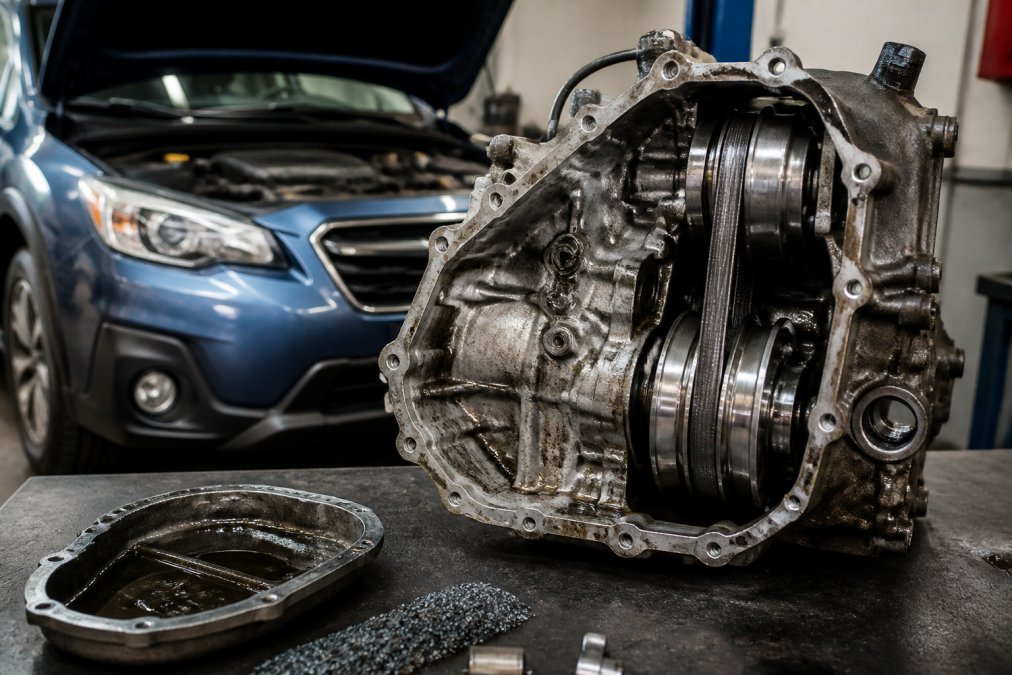
A continuously variable transmission (CVT) is an automatic transmission system that provides seamless power delivery without traditional fixed gear ratios. Unlike conventional automatics that shift between discrete gears, a CVT uses a belt-and-pulley system to adjust the gear ratio infinitely, allowing the engine to operate at its optimal RPM for any driving condition.
Subaru has relied on CVT technology for nearly two decades across its lineup. When functioning properly, the system delivers fuel efficiency and smooth acceleration. However, CVT transmissions are prone to specific failure patterns that differ significantly from traditional automatic transmissions. At Speedy Roo Motorsports, we've spent over two decades diagnosing Subaru drivetrain issues, and CVT failures represent one of the most common expensive repairs we see. The good news: many early warning signs are detectable before catastrophic failure occurs.
Common Signs of Failing Subaru CVT
CVT problems rarely announce themselves with a single dramatic failure. Instead, they build gradually, with specific symptoms appearing in a predictable sequence.
Shuddering and Vibration
Shuddering during acceleration is one of the earliest indicators of CVT distress. You'll feel a rhythmic vibration or jerking sensation, particularly when the transmission is under load. This happens because the belt and pulley system is losing its grip on the drive surfaces, causing momentary slippage followed by re-engagement.
The shuddering typically worsens when accelerating from a stop or climbing grades. In some model years, particularly 2010-2014 Outbacks and Legacys, this symptom appears as early as 60,000 miles. If you feel this vibration, schedule a diagnostic immediately. The longer you drive with a slipping belt, the faster the damage accelerates, as metal shavings from the pulley system contaminate the transmission fluid.
Delayed Acceleration and Slipping
Delayed acceleration is a hallmark of CVT failure. You press the accelerator and the engine revs, but the car doesn't respond with proportional power delivery. There's a lag before the wheels actually accelerate.
This hesitation happens because the transmission is struggling to maintain the correct gear ratio. You might also notice the RPM climbing while vehicle speed lags behind, a condition called "flare" or slipping. The 2013-2016 Subaru Crosstrek experienced widespread CVT slipping issues, with many owners reporting problems before 80,000 miles. The 2015-2017 Outback had similar patterns.
High-Pitched Whining or Droning Noises
A high-pitched whining or droning sound coming from the transmission area is a red flag. This noise typically increases with engine RPM and is most noticeable during highway driving at steady throttle.
The sound originates from the pulley system or the belt itself. As components wear, they no longer operate smoothly. If you hear this, the transmission is already experiencing significant wear.
Check Engine Light and Warning Indicators
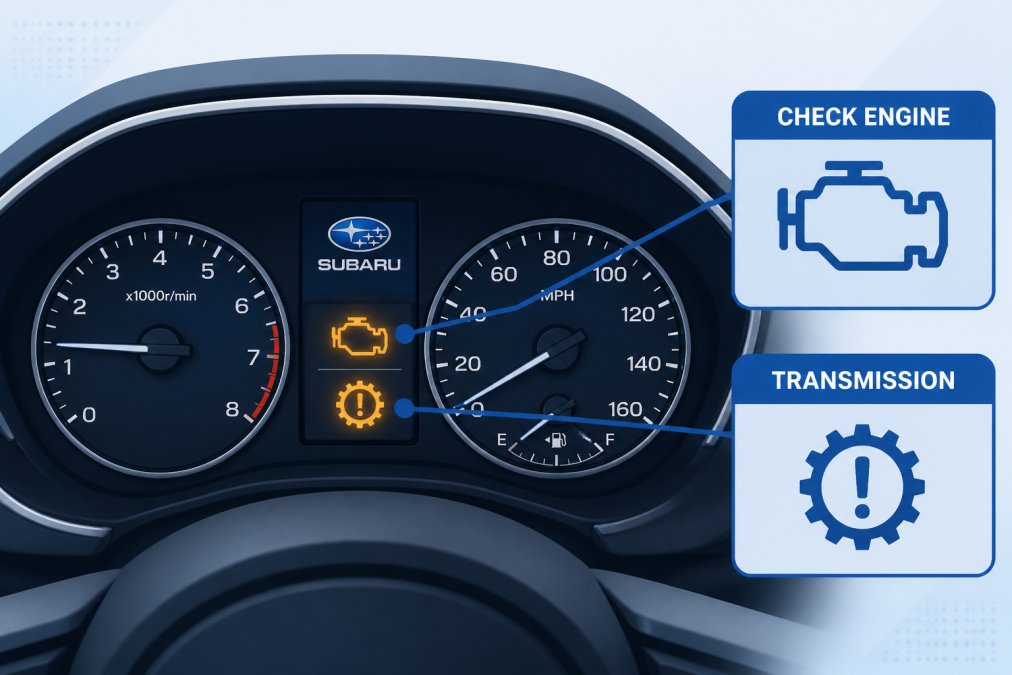
The check engine light appears when the transmission control module detects a problem. This could be a fluid temperature sensor malfunction, a solenoid failure, or a loss of hydraulic pressure.
Don't assume the check engine light is minor. With CVTs, the light often indicates transmission-specific problems that will worsen quickly. When you see any transmission warning light, pull over safely and schedule a diagnostic immediately.
DIY Diagnostic Steps for Your Subaru CVT
Before scheduling professional service, you can perform basic diagnostics to confirm CVT issues and gather information for your technician.
Step 1: Check for Diagnostic Trouble Codes
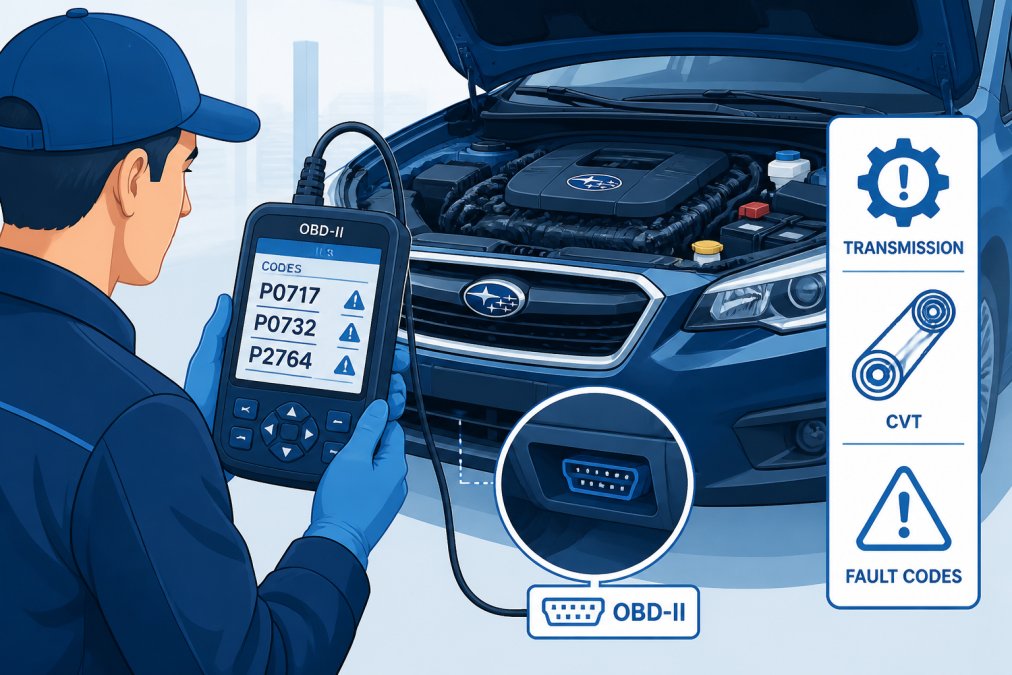
Purchase or borrow an OBD-II scanner (basic models cost under $30). Connect it to the diagnostic port under your Subaru's steering column. CVT-specific codes include P0700 (transmission control system malfunction), P0711 (transmission fluid temperature sensor), and P0960-P0962 (transmission solenoid issues). Document these codes for your technician.
Step 2: Inspect Transmission Fluid
Pull the transmission fluid dipstick while the engine is warm. Healthy CVT fluid is bright red or pink. Degraded fluid appears dark brown or black, indicating oxidation and contamination. Burned fluid smells acrid or scorched.
Step 3: Test Acceleration Response
In an empty parking lot, accelerate gently from a stop and note the response. Repeat the test on a slight incline. CVTs often show slipping symptoms more clearly under load.
Step 4: Listen for Transmission Noise
Drive in a quiet area at steady highway speed (around 60 mph). Listen carefully for whining, droning, or grinding sounds from the transmission.
Step 5: Monitor Warning Lights
Keep a log of when warning lights appear. This pattern helps your technician identify whether the issue is heat-related, load-related, or systemic.
How Maintenance History and Mileage Impact CVT Failure
CVT longevity depends heavily on maintenance discipline. Subaru specifies CVT fluid changes at specific intervals, and skipping these services dramatically accelerates failure.
The transmission fluid serves three critical functions: cooling, lubrication, and hydraulic pressure generation. As the fluid ages, it loses viscosity and oxidizes. Oxidized fluid cannot cool the system effectively or maintain proper pressure, creating a cycle where the transmission works harder, generating heat, which further degrades the fluid.
Subaru's official guidance recommends CVT fluid inspection every 30,000 miles and replacement every 60,000 miles for vehicles in severe driving conditions. We've seen consistent patterns at Speedy Roo Motorsports: vehicles with documented fluid changes at recommended intervals rarely experience CVT failure before 120,000 miles. Vehicles with no fluid change history often fail between 60,000 and 100,000 miles.
If you've neglected CVT fluid maintenance and your Subaru is approaching 80,000 miles, have the fluid inspected immediately. If it's dark, thick, or contains metal particles, a fluid change may buy you time, but the transmission is already compromised.
Cost to Replace Subaru CVT and Repair Options
CVT repair costs vary dramatically depending on the problem's severity and your location.
Minor repairs (solenoid replacement, valve body service, fluid flush) typically range from $500 to $1,500. Major repairs (belt replacement, pulley service, internal rebuild) cost $2,000 to $3,500. Full transmission replacement runs $4,000 to $6,000 for parts and labor at independent shops, with dealership replacement typically exceeding $6,500.
The decision between repair and replacement depends on transmission age, mileage, and overall vehicle condition. A 2010 Outback with 120,000 miles might warrant replacement if the transmission is failing. A 2020 Crosstrek with 70,000 miles might be worth a $2,500 rebuild.
Request a written estimate before authorizing work, and don't hesitate to ask questions about the diagnosis.
Subaru CVT Extended Warranty Program Coverage
Subaru's powertrain warranty covers the transmission for 5 years or 60,000 miles on new vehicles. Extended warranty plans can extend coverage to 7 years or 100,000 miles, depending on the plan purchased.
However, warranty coverage has limitations. Damage caused by neglected maintenance, such as failure to change transmission fluid at recommended intervals, is typically not covered. Additionally, warranty coverage varies by model year. Some older Subaru generations (2010-2012) had extended coverage for CVT issues due to widespread failures.
If you purchased an extended warranty, review the specific terms and call Subaru customer service with your VIN to confirm what's covered.
Software Updates vs. Mechanical Repair
Subaru has released transmission control module software updates for certain model years, addressing CVT hesitation and slipping issues. These updates reprogram how the transmission control module manages shift logic and pressure delivery.
Software updates are worth pursuing if your Subaru is experiencing early-stage symptoms (slight hesitation, minor shuddering) and the transmission fluid is in good condition. An update costs $100-$300 at a dealership and takes 1-2 hours.
However, software updates are not a cure-all. If the belt is already slipping, the pulleys are worn, or the fluid is degraded, a software update won't fix mechanical problems. Before authorizing a software update, confirm the actual problem through diagnosis. If trouble codes point to a solenoid malfunction or fluid temperature sensor issue, those are hardware problems requiring repair, not software fixes.
Recognizing signs of failing Subaru CVT early is the difference between a manageable repair and a catastrophic breakdown. Shuddering, hesitation, whining noises, and warning lights are your transmission's way of signaling distress. The moment you notice these symptoms, schedule a diagnostic.
At Speedy Roo Motorsports in Aurora, we specialize in Subaru transmission diagnostics and repair. Our technicians have spent over two decades working on Japanese vehicles, including hundreds of CVT systems. We provide transparent diagnostics, honest repair recommendations, and fair pricing. If your Subaru is showing CVT warning signs, contact Speedy Roo Motorsports for a diagnostic appointment. We'll identify the problem, explain your repair options, and help you make the right decision for your vehicle's longevity.
Frequently Asked Questions
How do I know if my Subaru CVT transmission is going bad?
Watch for shuddering or vibration during acceleration, delayed response when pressing the gas pedal, or a high-pitched whining noise from the transmission. You may also notice the check engine light appearing on your dashboard or feel the engine RPM fluctuating erratically. If your transmission fluid appears dark or contains metal shavings, that's a sign of internal wear. Using an OBD-II scanner to check for diagnostic trouble codes related to the transmission control module can confirm CVT issues before they become critical.
What does a 'shuddering' sensation mean in a Subaru CVT?
Shuddering indicates the transmission's pulley system or belt is slipping or wearing unevenly, causing jerky power delivery instead of the smooth acceleration a continuously variable transmission should provide. This often happens during acceleration from a stop or when climbing hills. Shuddering can result from low or degraded transmission fluid, worn belt components, or mechanical failure inside the valve body. The sooner you address shuddering, the better, ignoring it can lead to more severe transmission damage and higher repair costs.
Does Subaru offer an extended warranty for CVT transmission problems?
Subaru's powertrain warranty covers CVT defects for 5 years or 60,000 miles, whichever comes first. Some Subaru CVT extended warranty programs are available for purchase and can extend coverage beyond the factory warranty period, protecting you from costly repairs if the transmission fails. Coverage terms and costs vary depending on the model year and your vehicle's mileage at the time of purchase. Contact your Subaru dealer or an authorized service center for details on extended warranty eligibility and pricing for your specific vehicle.
What is the average life of a Subaru CVT?
A well-maintained Subaru CVT can last 100,000 to 150,000 miles or more, though some fail earlier depending on driving habits and maintenance. Regular transmission fluid changes every 30,000 to 60,000 miles significantly extend CVT lifespan by reducing fluid degradation and metal shavings buildup. Aggressive driving, towing, or neglecting service intervals shortens CVT life considerably. Certain model years are more prone to early failure, so checking your vehicle's history and following the manufacturer's service schedule is critical to maximizing transmission longevity.