 how-to
Mitsubishi Service in Aurora, CO: Complete Maintenance Guide
Table of Contents
- Why Mitsubishi Service in Aurora Matters
- Understanding Your Mitsubishi Maintenance Schedule
- Mitsubishi Warranty Service Requirements and Coverage
- Common Mitsubishi Repair Issues in Colorado
- Choosing Between Dealership and Independent Mitsubishi Service
- What to Expect During Your Service Appointment
- DIY Maintenance vs. Professional Service: When to Do Each
- Conclusion
- Frequently Asked Questions
Last Updated: August 9, 2026
Why Mitsubishi Service in Aurora Matters
Your Mitsubishi deserves proper maintenance to protect your investment, ensure safety on Colorado roads, and avoid costly repairs. At Speedy Roo Motorsports, we've worked on thousands of Japanese vehicles since 2002 and seen firsthand what happens when owners skip preventative maintenance. A well-maintained Mitsubishi runs reliably for 200,000 miles or more; neglect it, and you'll face transmission problems, electrical failures, and engine issues that could have been prevented with basic service intervals.
This guide covers everything you need to know about Mitsubishi service in Aurora, from understanding your maintenance schedule to choosing between dealership and independent repair shops.
Understanding Your Mitsubishi Maintenance Schedule
Your Mitsubishi's maintenance schedule is your roadmap to long-term reliability. Manufacturers design these intervals based on engineering data about when components wear out and when fluid breakdown accelerates.
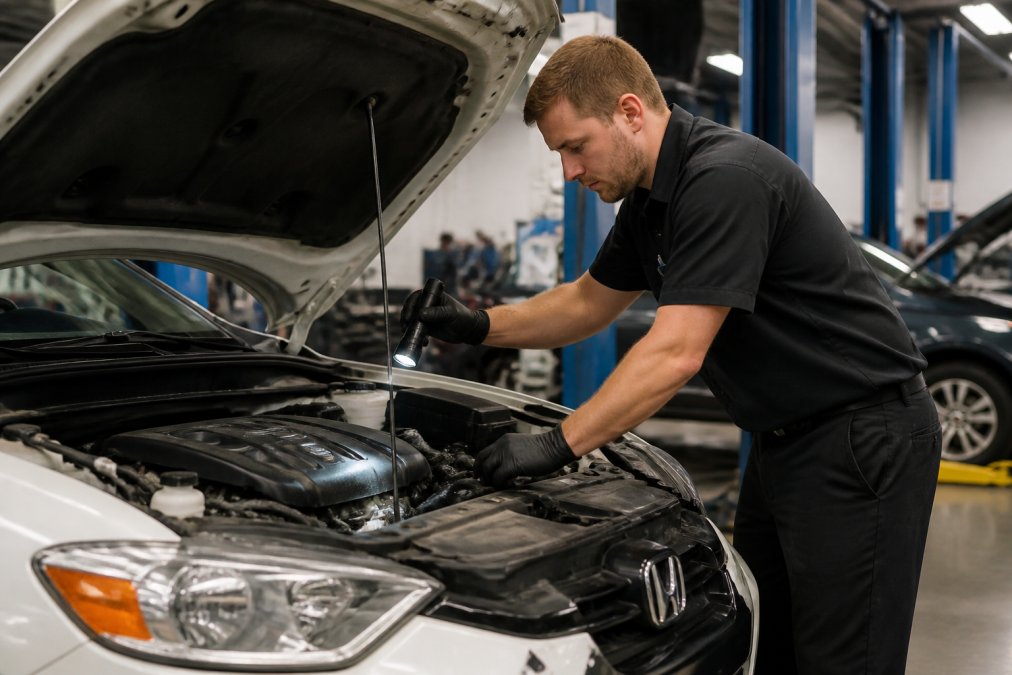
Most Mitsubishi models follow a similar pattern with critical services at 5,000 miles, 10,000 miles, 30,000 miles, 60,000 miles, and beyond. The 30,000-mile and 60,000-mile intervals are where major preventative work happens: transmission fluid checks, coolant flushes, and timing belt evaluations.
Mitsubishi's factory maintenance schedule typically specifies service intervals every 7,500 to 10,000 miles for oil changes. Colorado's high altitude and temperature swings stress engine oil faster than moderate climates, making more frequent servicing worthwhile. If you drive in severe conditions, stop-and-go traffic, towing, or dusty roads, service more often than the standard schedule recommends.
Oil Changes and Fluid Services
Oil changes are the foundation of engine health. Your engine oil lubricates, cools, cleans, and protects against corrosion. When oil breaks down, these functions fail, leading to sludge buildup and eventual engine failure.
Mitsubishi engines perform best with synthetic or synthetic-blend oils that meet manufacturer specifications. For most Aurora drivers, switching to synthetic at your first service pays for itself in extended intervals and engine longevity.
Beyond oil, your Mitsubishi needs regular fluid checks and exchanges:
- Transmission fluid: Automatic transmissions need fresh fluid every 30,000 to 60,000 miles. Dark, burnt-smelling fluid means internal wear is accelerating.
- Coolant: Mitsubishi coolant systems need flushing every 30,000 miles or every three years. Old coolant loses its ability to protect against corrosion and freezing.
- Brake fluid: Hydraulic brake fluid absorbs moisture over time, lowering its boiling point and reducing braking performance. Replace every two years.
- Power steering fluid: Low or degraded fluid causes steering stiffness and pump noise.
A transmission fluid flush costs a few hundred dollars. A transmission replacement costs several thousand.
Brake Pads, Filters, and Belt Replacements
Brake pads wear predictably: front pads typically last 40,000 to 60,000 miles; rear pads last longer. Colorado's mountain driving accelerates wear. When pads get thin, metal-to-metal contact damages rotors. Replacing pads early costs $150 to $300 per axle; waiting until rotors are damaged doubles the cost.
Your Mitsubishi has multiple filters needing regular replacement:
- Engine air filter: Replace every 15,000 to 30,000 miles, more often on dusty roads.
- Cabin air filter: Replace annually or every 15,000 miles.
- Fuel filter: Replace every 30,000 to 60,000 miles.
Serpentine belt failure leaves you stranded but causes no engine damage. Timing belt failure destroys your engine. Mitsubishi timing belts typically need replacement between 60,000 and 100,000 miles, don't skip this service.
Mitsubishi Warranty Service Requirements and Coverage
Understanding your warranty is critical because improper service can void coverage. Mitsubishi's factory warranty typically covers five years or 60,000 miles on most components, with longer coverage on the powertrain (10 years, 100,000 miles for most models).
The warranty requires that you follow the manufacturer's maintenance schedule exactly. If you skip oil changes or ignore service intervals, Mitsubishi can deny warranty claims for related failures. Warranty-approved repairs must be performed at authorized Mitsubishi dealers or shops that follow factory specifications. Speedy Roo Motorsports uses OEM-equivalent parts and follows Mitsubishi's service protocols, keeping your warranty intact.
The warranty covers manufacturer defects but not wear items like brake pads, filters, and belts. Electrical failures, transmission issues, and engine problems are typically covered if they occur within the warranty period and you can prove you followed the maintenance schedule.
Common Mitsubishi Repair Issues in Colorado
Colorado's climate and terrain create specific challenges for Mitsubishi owners. High altitude, temperature swings, and mountain driving stress certain components.
Electrical system issues are common in older models. Colorado's dry air and temperature fluctuations accelerate corrosion on battery terminals and connectors. Regular battery testing and terminal cleaning prevent most problems.
Transmission problems show up frequently in Mitsubishi automatics, particularly in models from the 2000s and early 2010s. Symptoms include delayed engagement, slipping between gears, or a burning smell. Early diagnosis through transmission fluid analysis can catch wear before catastrophic failure.
Cooling system failures accelerate in Colorado. Hard water and temperature swings corrode radiators. A failing radiator leaks slowly at first, then catastrophically. You'll notice your temperature gauge creeping up, coolant pooling under the car, or steam from under the hood.
Suspension wear accelerates on Colorado roads. Potholes and mountain passes stress struts, shocks, and control arm bushings. A clunking sound over bumps or uneven tire wear signals suspension problems.
Brake issues go beyond pad wear. Colorado's mountain driving means constant braking, which stresses brake fluid, hoses, and calipers. Brake fade or a soft pedal indicates fluid degradation, a safety issue needing immediate attention.
Choosing Between Dealership and Independent Mitsubishi Service
The dealership versus independent shop decision comes down to cost, expertise, and convenience.
Dealerships have factory-trained technicians specializing in Mitsubishi vehicles with access to the latest diagnostic equipment, OEM parts, and factory service bulletins. If your Mitsubishi is under warranty, dealership service keeps that coverage intact. The tradeoff is cost, dealerships charge higher labor rates and typically recommend more services.
Independent shops like Speedy Roo Motorsports offer deep expertise in Japanese vehicles. Our technicians have decades of experience diagnosing and fixing Mitsubishi models. We use quality aftermarket and OEM-equivalent parts at lower cost than dealerships with competitive labor rates and transparent communication.
For warranty considerations: independent shops can perform warranty-covered work if they follow factory specifications. However, if a repair goes wrong, the independent shop is accountable.
Take your vehicle to a dealership for warranty work, recalls, and complex problems you can't diagnose. Use an independent shop for routine maintenance, oil changes, brake service, and repairs where you trust the shop's expertise.
What to Expect During Your Service Appointment

When you arrive, the service advisor will ask about any issues you've noticed. This conversation is critical, don't minimize problems or assume they're not worth mentioning.
Your vehicle then goes to the service bay for scheduled work. For routine maintenance, this takes one to two hours. During service, technicians perform a multi-point inspection, checking brakes, fluids, belts, hoses, filters, and suspension. They'll identify components wearing but not yet failed.
If problems are found, a good shop explains them clearly, showing you the worn component and explaining why it matters. When service is complete, you should receive an itemized invoice showing what was done, what parts were used, and what was recommended for future service.
DIY Maintenance vs. Professional Service: When to Do Each
Oil changes and air filter replacement are accessible DIY tasks. Brake pad replacement gets more complicated and requires specialized tools. Timing belt replacement, transmission service, electrical diagnostics, and suspension work are professional-only territory.
DIY simple maintenance that doesn't affect safety or warranty. Pay professionals for anything requiring specialized tools, diagnostic equipment, or affecting your vehicle's safety or warranty coverage.
Conclusion
Keeping your Mitsubishi running reliably in Aurora requires understanding your vehicle's needs, following the manufacturer's maintenance schedule, and finding a trusted shop combining expertise with transparent service.
Speedy Roo Motorsports has served Aurora's Japanese vehicle owners for over two decades. Our technicians specialize in Mitsubishi maintenance and repair, use quality parts meeting factory specifications, and treat every customer with respect and clear communication. Contact us to schedule your next service appointment.
Frequently Asked Questions
How often should a Mitsubishi be serviced?
Most Mitsubishi vehicles require oil changes every 3,000 to 5,000 miles, depending on whether you use conventional or synthetic oil. Beyond that, your Mitsubishi maintenance schedule includes brake inspections, tire rotations, and fluid checks at regular intervals. Consult your owner's manual for the complete Mitsubishi maintenance schedule specific to your model year. Staying on schedule prevents costly repairs and keeps your warranty valid.
Does my Mitsubishi warranty cover service at independent shops in Aurora?
Mitsubishi warranty service requirements can be met at both authorized dealerships and qualified independent repair shops. However, the specifics depend on your warranty type and coverage period. If you have factory warranty coverage, verify with your dealer or review your warranty documents before choosing an independent shop. Many independent shops in Aurora, like Speedy Roo Motorsports, are experienced with Mitsubishi warranty service requirements and can perform covered maintenance without voiding your protection.
What are the most common maintenance tasks my Mitsubishi needs?
Regular Mitsubishi maintenance includes synthetic oil changes, air filter and cabin air filter replacements, brake pad inspections, tire pressure monitoring system checks, battery testing, coolant flushes, and serpentine belt inspections. Your service interval determines when each task is due. Factory-trained technicians use diagnostic equipment to identify issues early. Staying current with these preventative maintenance tasks extends your vehicle's lifespan and maintains reliable performance.
How do I know if an independent shop can handle my Mitsubishi's diagnostic needs?
Look for shops with ASE-certified technicians who specialize in Japanese vehicles and have modern diagnostic equipment for engine diagnostics and electrical system checks. Ask if they've worked on your specific Mitsubishi model and request examples of past repairs. Shops like Speedy Roo Motorsports have over two decades of experience with Mitsubishi vehicles and can handle everything from routine maintenance to complex transmission repair and suspension work. Verify they offer transparent communication about findings and warranty on their repairs.