 how-to
Japanese Car Pre-Purchase Inspection Aurora
Table of Contents
- What Is a Pre-Purchase Inspection and Why It Matters for Japanese Vehicles
- Why Japanese Vehicles Require Specialized Inspections
- Common Issues Found in Used Japanese Imports
- Used Car Inspection Checklist for Japanese Vehicles
- How Long Does a Car Inspection Take in Aurora
- Independent Mechanic vs. Dealership: Which Is Right for Your Japanese Car
- How to Schedule Your Pre-Purchase Inspection in Aurora
- Conclusion
- Frequently Asked Questions
Last Updated: August 10, 2026
What Is a Pre-Purchase Inspection and Why It Matters for Japanese Vehicles
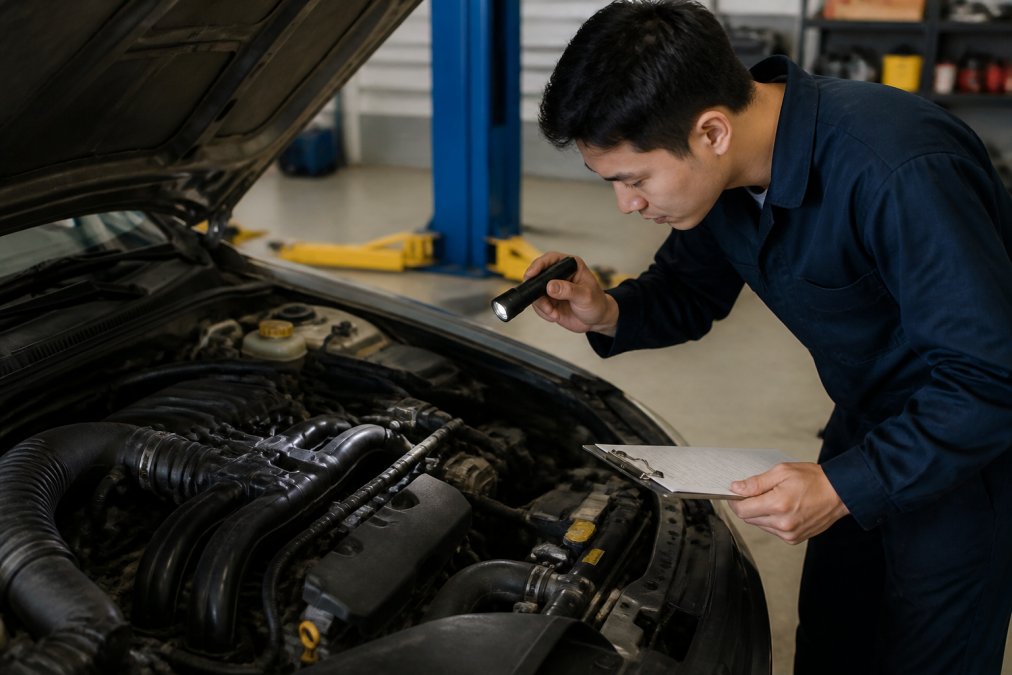
A pre-purchase inspection is a comprehensive mechanical evaluation performed by a certified technician before you buy a used vehicle. This independent assessment identifies existing problems, hidden damage, and potential repair costs so you can make an informed purchasing decision. For Japanese vehicles specifically, this step is essential because many imports carry unique maintenance histories and model-specific issues that require specialized knowledge to properly diagnose.
When you're considering a used Japanese car, whether it's a Subaru, Toyota, Honda, Lexus, or another brand, a pre-purchase inspection gives you use in negotiations and protects you from expensive surprises after the sale closes. The inspection covers everything from engine compression and transmission health to suspension components, brake system wear, and electrical system integrity. At Speedy Roo Motorsports, we've seen countless buyers avoid costly mistakes by investing in this assessment upfront.
Most people assume a test drive is enough. It isn't. A test drive tells you how the car feels on the road. An inspection tells you what's actually broken, what's about to break, and what repairs will cost. This distinction matters enormously when you're spending thousands of dollars.
Why Japanese Vehicles Require Specialized Inspections
Japanese automobiles have earned their reputation for reliability, but they also have specific maintenance intervals, component designs, and common failure points that differ significantly from domestic vehicles. A technician who specializes in Japanese vehicles knows these patterns and can spot problems that a generalist might miss entirely.
Timing belt intervals, for example, vary dramatically between Japanese manufacturers. A Toyota might need a timing belt replacement at 60,000 miles, while a Subaru might go to 105,000 miles. Missing this detail during an inspection could mean discovering a failed belt months after purchase, a repair that costs $800 to $2,000 depending on the model. A specialist knows to check this immediately and assess whether the interval is approaching.
Subaru's horizontally-opposed engine design, AWD drivetrain integrity, and head gasket history require understanding specific to that brand. Honda's transmission characteristics and Acura's luxury components demand different diagnostic approaches than you'd use on a Ford or Chevrolet. Lexus vehicles often have complex electrical systems and hybrid components that need proper OBD-II scanning equipment and training to evaluate correctly.
The diagnostic scan itself matters. A basic code reader might tell you a check engine light is on. A comprehensive diagnostic scan performed by someone familiar with Japanese vehicles will tell you whether it's a sensor issue, a catalytic converter problem, or something more serious. The difference between these diagnoses is hundreds of dollars.
Common Issues Found in Used Japanese Imports
Certain problems appear repeatedly in used Japanese vehicles, and knowing what to look for helps you evaluate inspection reports more effectively. These aren't universal, every car has its own history, but these issues are common enough that your inspector should specifically check for them.
Head gaskets on older Subarus remain one of the most frequent problems. Subaru's horizontally-opposed engine design, while excellent for handling and balance, has historically been prone to head gasket failure around 100,000 to 150,000 miles. A failed head gasket means coolant leaks into the oil, overheating issues, and eventual engine damage if not addressed. The repair typically costs $1,200 to $2,500 depending on labor rates and whether additional damage has occurred.
Transmission concerns appear in several Japanese models. Some Honda Accords and Odysseys from certain years have experienced transmission shuddering or delayed engagement. Toyota's earlier CVT transmissions had issues in some models. Nissan CVT transmissions have had documented problems. During inspection, your technician should perform a thorough test drive evaluating transmission engagement, shifting smoothness, and any hesitation or shuddering.
Electrical system complexity in luxury Japanese vehicles like Lexus and Infiniti means that a failing alternator, battery, or electrical component can trigger multiple warning lights and confuse a less experienced technician. A comprehensive diagnostic is essential here.
Suspension component wear accelerates in vehicles that have been driven in harsh conditions or with deferred maintenance. Struts, control arm bushings, and stabilizer links wear out and affect handling and ride quality. An inspection should include checking for play in steering, listening for clunking sounds during turning, and visually inspecting suspension components for damage or excessive wear.
Brake system assessment needs to include rotor thickness measurement, pad material inspection, and brake fluid condition evaluation. Japanese vehicles often use higher-quality brake components than domestic cars, but they still require proper maintenance.
Used Car Inspection Checklist for Japanese Vehicles
A thorough pre-purchase inspection follows a systematic process. Understanding what should be checked helps you ask better questions and evaluate your inspector's report more critically.
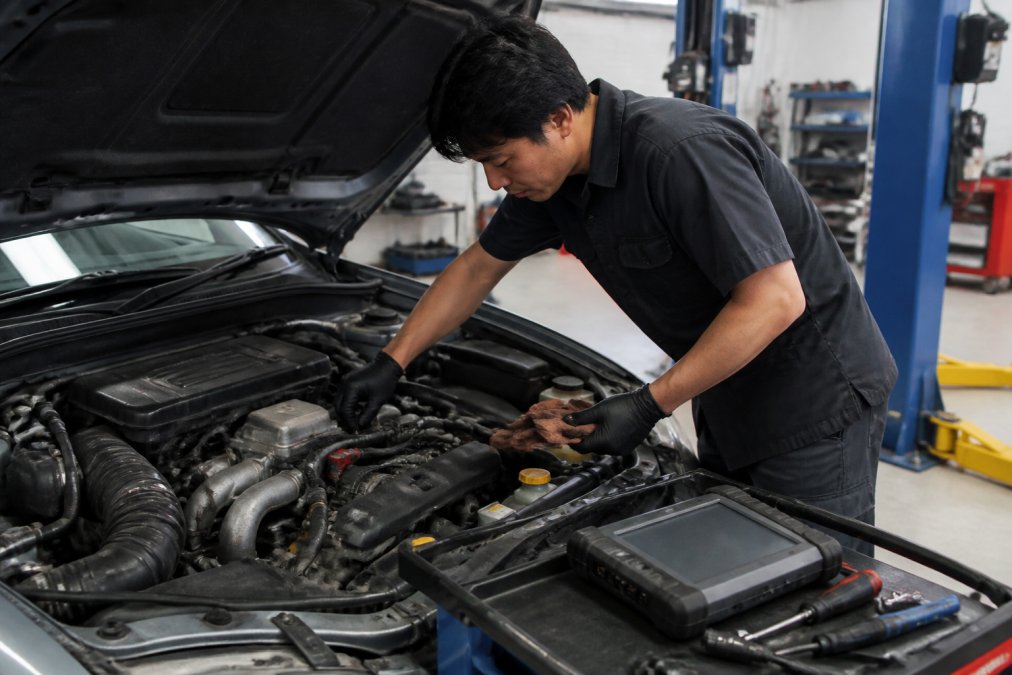
Engine and mechanical systems form the foundation of any inspection. The technician should check oil level and condition, coolant color and concentration, transmission fluid color and smell, and brake fluid condition. Engine compression testing determines whether cylinders are sealing properly. A visual inspection of belts, hoses, and connections identifies leaks or deterioration. The diagnostic scan retrieves any stored or pending trouble codes that reveal problems the driver might not have noticed yet.
Drivetrain evaluation includes transmission engagement and shift quality during a test drive, differential condition in AWD vehicles, and clutch operation in manual transmissions. For Japanese vehicles, this also means checking AWD system functionality and ensuring the center differential isn't binding or showing signs of wear.
Suspension and steering require both visual inspection and road testing. The technician should check for play in the steering wheel, listen for clunking or squeaking during turns, visually inspect struts and shocks for leakage, measure suspension ride height, and check for uneven tire wear indicating alignment or suspension problems.
Brake system assessment includes measuring rotor thickness, inspecting pad material and condition, checking brake fluid color and level, and testing brake pedal feel and responsiveness during the test drive. Brake system integrity is non-negotiable for safety.
Electrical and lighting systems need a complete check. Every light should function, headlights, taillights, brake lights, turn signals, interior lights, and dashboard illumination. Electrical components like power windows, locks, and seat adjustments should operate smoothly. For luxury Japanese vehicles, this includes checking infotainment systems and any advanced driver assistance features.
Exterior and undercarriage inspection identifies rust, frame damage, and previous accident repairs. The technician should check for paint overspray indicating repainting, examine the undercarriage for rust or damage, and verify that body panels align properly.
Tires and wheels should be evaluated for tread depth, wear patterns, and condition. Uneven wear suggests alignment, suspension, or inflation problems. The spare tire and jack should be present and functional.
The inspection report should be detailed and specific. It should list every component checked, note any problems found with severity levels, and include recommendations for repairs or further evaluation. A vague report that says "vehicle looks good" is worthless. You need specifics.
How Long Does a Car Inspection Take in Aurora
Most comprehensive pre-purchase inspections require 60 to 90 minutes for a complete evaluation. This timeframe allows the technician to perform all necessary checks without rushing through critical assessments. For Japanese vehicles with more complex systems or higher mileage, the inspection might extend to two hours.
The breakdown typically looks like this: 15 to 20 minutes for the initial visual inspection and documentation, 20 to 30 minutes for under-hood evaluation and fluid checks, 15 to 20 minutes for the test drive, 10 to 15 minutes for undercarriage and exterior inspection, and 10 to 15 minutes for diagnostic scanning and report compilation.
If you're in the Aurora or Denver Metro area, scheduling the inspection at a facility like Speedy Roo Motorsports means you'll get a technician who knows Japanese vehicles specifically. That familiarity actually speeds up the inspection because they know exactly what to look for and where problems typically appear in specific models.
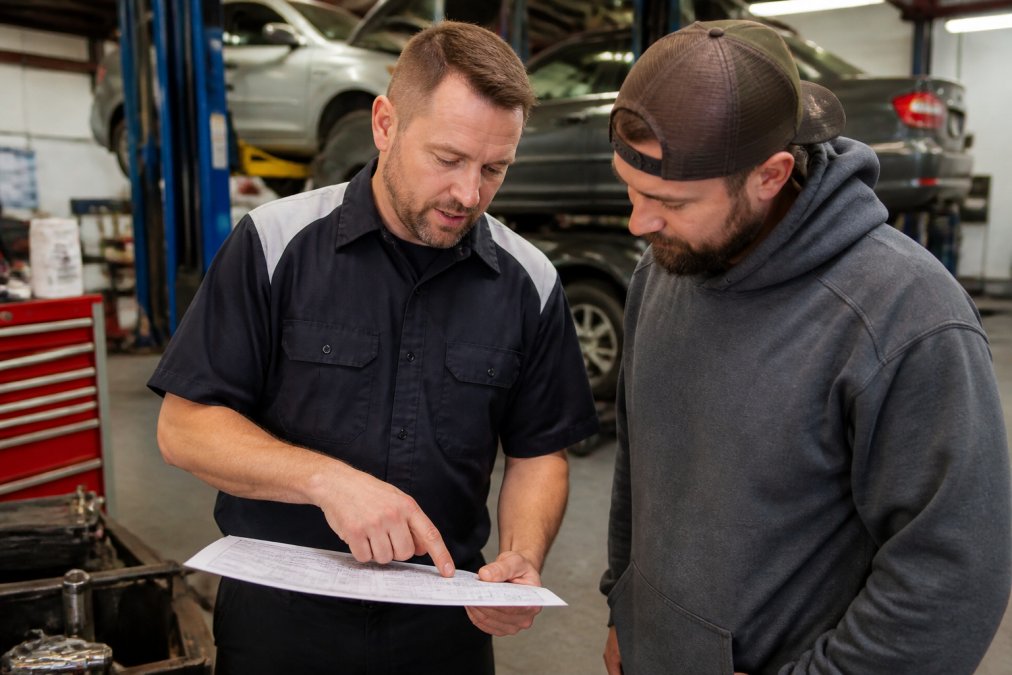
Many buyers ask whether they should attend the inspection. The answer is yes, absolutely attend if possible. A good inspector will walk you through findings, explain what they found, show you specific problems, and answer your questions. This transparency helps you understand the vehicle's actual condition and make better negotiation decisions.
Plan for the inspection to take longer if the vehicle has higher mileage, shows signs of deferred maintenance, or has warning lights illuminated. A vehicle with 180,000 miles needs more thorough evaluation than one with 80,000 miles.
Independent Mechanic vs. Dealership: Which Is Right for Your Japanese Car
The choice between an independent mechanic and a dealership for your pre-purchase inspection involves trade-offs in cost, expertise, and bias.
Dealership inspections offer factory-level knowledge of specific models. The technician has access to original manufacturer specifications, recalls, and service history if the vehicle was previously serviced at that dealership. For luxury brands like Lexus or Infiniti, dealership technicians have specialized training on those specific vehicles. The downside: dealerships have financial incentive to sell you the vehicle. Their inspection might be less critical than an independent evaluation, and pricing tends to be higher.
Independent mechanics like those at Speedy Roo Motorsports bring unbiased evaluation. They have no stake in whether you buy the vehicle, so their report reflects actual conditions without pressure to minimize problems. For Japanese vehicles, an independent specialist has seen hundreds of examples across multiple brands and model years, giving them broad pattern recognition. They typically charge less than dealerships. The potential limitation: they don't have access to dealer-specific service records unless the vehicle was previously serviced independently.
For most buyers, an independent mechanic who specializes in Japanese vehicles offers the best combination of expertise, objectivity, and value. They understand the specific issues common to Japanese brands without the dealership's financial incentive to downplay problems.
The real differentiator is specialization. A general independent mechanic might miss model-specific issues. A Japanese vehicle specialist, someone who works on Subarus, Toyotas, Hondas, and Lexus vehicles regularly, will catch problems a generalist overlooks.
How to Schedule Your Pre-Purchase Inspection in Aurora
Scheduling your inspection involves several steps, and timing matters significantly in the purchase process.
First, identify the right facility. Look for an independent repair shop that explicitly specializes in Japanese vehicles. Check their experience with your specific vehicle brand. Read customer reviews that mention inspection quality and transparency. In the Aurora area, Speedy Roo Motorsports has been serving Japanese vehicle owners since 2002, and their technicians have deep experience with Subaru, Toyota, Honda, Lexus, Acura, Nissan, Infiniti, Mitsubishi, and Mazda vehicles.
Second, call and describe your vehicle. Give the shop the year, make, model, and current mileage. Ask whether they can accommodate your timeline. A good shop will be honest about their schedule and may be able to fit you in the same day or next day for an urgent purchase situation.
Third, clarify what's included in the inspection. Confirm that the inspection covers all major systems, engine, transmission, suspension, brakes, electrical, and undercarriage. Ask whether diagnostic scanning is included. Understand the final report format and whether you'll receive it in writing.
Fourth, arrange for the vehicle to be present. If you haven't purchased the vehicle yet, coordinate with the seller to have it available at the inspection facility at your scheduled time. Some sellers are cooperative; others require you to pick up the vehicle and return it. This is negotiable.
Fifth, plan to attend the inspection. Being present allows you to ask questions, see problems firsthand, and understand the technician's concerns in real time. This also prevents miscommunication about what was actually found.
Finally, get a written report. The inspection should produce a detailed written report that lists all components checked, problems identified with severity levels, and recommendations for repairs. Don't accept a verbal summary alone. You need documentation to reference during negotiations or if problems emerge later.
Most facilities in the Aurora area can schedule inspections within 24 to 48 hours. If you're buying from a private seller, the inspection typically costs between what a dealership charges and what a quick lube shop charges, it's a legitimate investment in avoiding a bad purchase.
Conclusion
A pre-purchase inspection is the single most important step you can take before buying a used Japanese vehicle. It transforms a risky purchase into an informed decision, gives you negotiation use, and protects you from inheriting someone else's deferred maintenance and hidden problems.
At Speedy Roo Motorsports, we've performed thousands of inspections on Japanese vehicles throughout the Aurora and Denver Metro area. Our technicians understand the specific systems, common failure points, and maintenance requirements of every major Japanese brand. We provide detailed written reports, transparent communication, and the expertise to catch problems that generalist mechanics miss. When you're ready to schedule your inspection, contact Speedy Roo Motorsports to protect your investment and drive home with confidence.
Frequently Asked Questions
Is a pre-purchase inspection worth getting for a used Japanese car?
Yes. A pre-purchase inspection uncovers hidden mechanical issues, fluid leaks, transmission wear, and suspension problems that could cost thousands to fix after purchase. For Japanese vehicles specifically, an inspection by a certified technician familiar with brands like Subaru, Toyota, and Lexus identifies model-specific concerns, like timing belt intervals or known transmission issues, that a standard inspection might miss. It gives you negotiation leverage and post-purchase peace of mind.
What specific components do mechanics check during a Japanese car pre-purchase inspection?
A comprehensive inspection covers engine compression, OBD-II diagnostic codes, transmission health, drivetrain integrity, suspension components, brake system wear, electrical system function, coolant system integrity, tire tread depth, fluid analysis, and emissions testing. For Japanese vehicles, technicians also verify timing belt condition and maintenance history. The mechanic will generate an unbiased report detailing any wear, fluid leaks, or safety concerns found during the chassis inspection and test drive.
How long does a typical pre-purchase inspection take?
Most comprehensive inspections take 1.5 to 2.5 hours. This includes a visual chassis inspection, engine compartment review, diagnostic scan for OBD-II codes, test drive, and fluid analysis. The exact duration depends on vehicle age, mileage, and whether additional testing (like compression or emissions) is needed. You'll receive a detailed report within 24 hours in most cases, allowing you time to review findings before making a purchase decision.
What are red flags to watch for during a pre-purchase inspection on a used Japanese import?
Watch for transmission slipping, rough idle, check engine lights, metal particles in fluid analysis, suspension clunking, uneven brake wear, timing belt wear beyond manufacturer intervals, coolant leaks, and electrical system failures. For Japanese vehicles, also check service records for preventative maintenance history, gaps in maintenance are a warning sign. If the inspection report shows multiple unrelated issues or evidence of accident damage, these suggest either poor maintenance or hidden structural problems that could affect long-term reliability.