 how-to
How to Diagnose Toyota Hybrid Battery Issues
Table of Contents
- Start With the 12V Auxiliary Battery
- Common Toyota Hybrid Battery Warning Lights
- Use an OBD2 Scanner for Hybrid Battery Health
- Monitor Fuel Economy and Performance Cues
- Test Battery Modules With a Multimeter and Load Test
- Safety Protocols for High-Voltage Systems
- Understanding Hybrid Battery Replacement Cost
- Preventative Maintenance to Extend Battery Life
- Frequently Asked Questions
Last Updated: September 6, 2026
When a Toyota hybrid's dashboard lights up with a hybrid system warning, most owners assume the worst: a failing traction battery and a stinging repair bill. At Speedy Roo Motorsports, we've observed that the main battery pack is often not the culprit. The first step in learning how to diagnose Toyota hybrid battery issues is understanding that several smaller, cheaper components fail more frequently. This guide walks you through a logical, safety-first diagnostic process that separates a simple fix from an expensive replacement.
Start With the 12V Auxiliary Battery
Most hybrid "battery issues" trace back to the small 12V auxiliary battery, not the high-voltage pack. This conventional battery powers the computers and control modules that manage the entire hybrid system, and when its voltage drops even slightly, the vehicle's electronics behave erratically.
A failing auxiliary battery mimics a dead traction battery: clicking sounds when starting, dim interior lights, and random warning lights. Check the resting voltage with a multimeter (around 12.6 volts when the car is off), then perform a load test to verify it holds voltage under stress.
The auxiliary battery lasts three to five years and is inexpensive to replace. Confirm it is healthy before investigating deeper, as its condition affects every diagnostic reading you take afterward.
Common Toyota Hybrid Battery Warning Lights
The "Check Hybrid System" warning is the most common alert owners encounter, but it does not automatically mean the battery pack is dead. This light illuminates when the hybrid control module detects an abnormality anywhere in the system, including the inverter, cooling fan, or even a loose connector.
Other lights include the master warning light (an exclamation mark inside a triangle) and the check engine light. When these appear together, the system often stores diagnostic trouble codes. The dashboard may also display a reduced power message or suggest pulling over safely.
Note which lights appear and when. A warning on cold mornings or after heavy rain points to a different root cause than one during highway driving. These patterns give your technician valuable clues before they plug in a scanner.
Use an OBD2 Scanner for Hybrid Battery Health
An OBD2 scanner is the most important tool for how to diagnose Toyota hybrid battery issues, as it reads the diagnostic trouble codes stored by the hybrid control module. A basic code reader shows generic powertrain codes, but a scan tool with hybrid-specific software accesses live data from the battery management system.
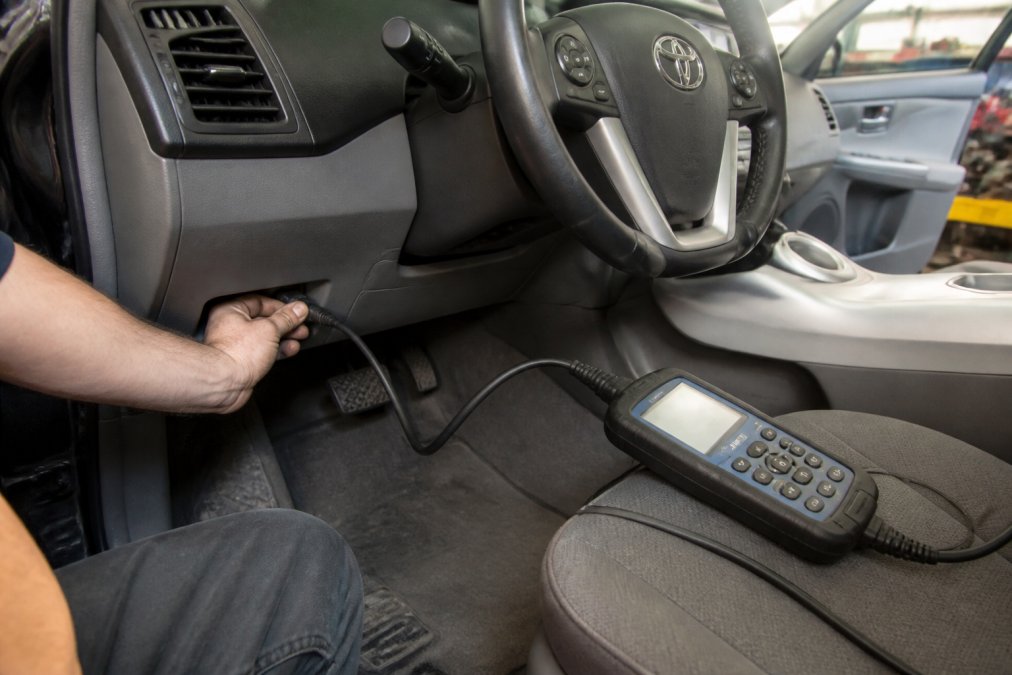
Look for data on battery state of charge, individual module voltages, and temperature readings. The scan tool reveals whether the battery operates within factory specifications or shows degradation. For DIY owners, a capable OBD2 scanner with hybrid functions can be a valuable tool.
Professional shops use factory-level software that reads every module, revealing intermittent faults that generic scanners miss. This is why experienced independent shops can pinpoint issues effectively.
Key Diagnostic Trouble Codes (DTCs) to Watch For
Certain diagnostic trouble codes appear repeatedly in Toyota hybrids and point to specific failure modes. The P0A80 code indicates a problem with the hybrid battery pack, while P3000 relates to the battery control system. Codes in the P0A7F range signal battery module degradation, and P0A94 points to an issue with the DC-to-DC converter.
Each code narrows the path. P0A80 requires testing individual modules to find the weak cell, while a converter code sends you elsewhere. Write down every code, including pending ones, and bring them to your technician.
Monitor Fuel Economy and Performance Cues
A subtle but reliable indicator of hybrid battery health is a gradual decline in fuel economy. The traction battery assists the gasoline engine during acceleration, and when it cannot deliver adequate power, the engine works harder and fuel consumption rises.
Performance cues also reveal battery condition: reduced power during acceleration, especially on hills, or the gasoline engine running more frequently. The engine may run rough at idle as it recharges a weak battery, and a loud or constant cooling fan signals the battery is running hot.
Test Battery Modules With a Multimeter and Load Test
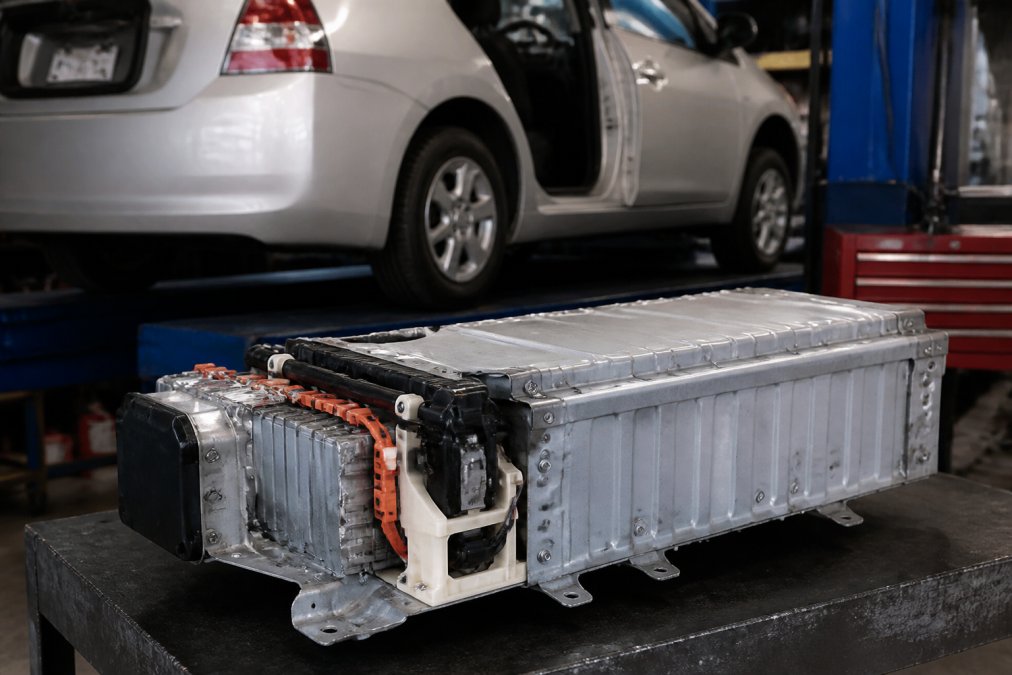
When the diagnostic codes point to the traction battery itself, the next step is testing individual battery modules. The high-voltage pack contains multiple modules, and typically one or two weak cells cause the entire system to underperform.
Testing requires a multimeter and a load tester designed for hybrid batteries. Measure each module's resting voltage and look for imbalance; a healthy pack shows consistent readings. A load test applies a controlled draw to check how each module holds voltage under stress.
This process is meticulous. Replacing a single failed module can often restore performance at a fraction of the cost, provided the rest of the pack is healthy.
Safety Protocols for High-Voltage Systems
Toyota hybrid traction batteries operate at 201.6V (Gen 2 Prius) to 244.8V (Gen 3 Prius and RAV4 Hybrid), spiking above 300V under load. This is lethal voltage requiring the same respect as any industrial electrical system. The following protocols are the minimum standard for module-level diagnostics.
Personal protective equipment (PPE) is non-negotiable. You need Class 0 insulated gloves rated for 1,000V AC/1,500V DC, stamped with the ASTM D120 standard, and tested within the last six months (the test date is printed on each glove). Wear leather outer gloves to protect the rubber from punctures. Remove all metal jewelry, rings, watches, necklaces, before approaching the vehicle. Wear safety glasses rated for electrical work. Do not wear loose clothing that could snag on components.
The orange cables are the danger zone. Every orange cable carries high-voltage DC, running from the battery pack under the rear seat to the inverter under the hood. Never touch one with bare skin, even with the vehicle off. The system can hold a lethal charge for minutes after shutdown.
The proper shutdown sequence takes 10 minutes and is not optional:
- Turn off the vehicle and remove the key fob from the cabin. Wait at least 5 minutes for the system to fully power down.
- Disconnect the 12V auxiliary battery negative terminal. This kills power to the system's control relays.
- Locate and remove the service plug (also called the service disconnect). On most Toyota hybrids, it is a bright orange handle located at the rear of the battery pack, accessible from the trunk or under the rear seat. Pulling this plug physically splits the battery pack into two halves, interrupting the high-voltage circuit.
- Wait the manufacturer-specified time, typically 5 to 10 minutes, for the capacitors in the inverter to discharge. These capacitors can store a lethal charge even after the service plug is removed.
- Verify zero voltage with a CAT III-rated digital multimeter. Measure across the service plug terminals and between the positive and negative high-voltage bus bars. The reading must be 0V before you touch anything.
Insulated tools are mandatory. Standard tools can arc across a high-voltage terminal and cause severe burns. Use tools rated for 1,000V, marked with IEC 60900, and inspect them before each use. The 10mm socket for module bolts is the most common tool, buy a dedicated insulated set and use it for nothing else.
One-person rule. Never work on a high-voltage system alone. If you are shocked, you may not be able to call for help or remove yourself from the circuit. A second person who knows how to de-energize the system and perform CPR should be present for any module-level work.
What you should never attempt at home. Module-level testing requires removing the 100-150 lb battery pack and working with exposed bus bars that remain live even after the service plug is removed. Without PPE, insulated tools, and a second person, stop at the OBD2 stage and take your findings to a professional. The potential savings are not worth the risk of a 300V shock.
The professional standard. Certified technicians may use a high-voltage insulation tester (megohmmeter) to verify the pack's insulation resistance. This can help detect issues a multimeter might not, contributing to a safe repair.
Understanding Hybrid Battery Replacement Cost
Replacement cost varies by vehicle model, whether you choose OEM or remanufactured, and labor rates. A full replacement is a major expense, but it is not the only option when the battery degrades.
Toyota's official guidance on hybrid battery care emphasizes that the hybrid battery is designed to last the life of the vehicle under normal driving conditions. Many owners, however, see degradation after a decade or more of service, particularly in hot climates where thermal stress accelerates battery aging.
Before committing, get a professional assessment of the battery's condition. A shop with hybrid diagnostic experience can tell you whether module replacement, reconditioned, or full OEM makes sense. The right diagnosis prevents overpaying for a solution that does not address the real problem.
Preventative Maintenance to Extend Battery Life
The battery's lifespan depends heavily on driving and maintenance habits. Its thermal management system relies on a cooling fan and intake filter; keeping these clean ensures the pack stays within its optimal temperature range.
Regularly maintaining the cooling fan filter, typically near the rear seat, is one of the simplest and most effective measures. A clogged filter restricts airflow, causing the battery to run hot. Check and replace it per your owner's manual schedule.
Driving habits also influence battery health. Avoiding frequent full-throttle acceleration, which draws maximum current from the pack, and not letting the vehicle sit unused for extended periods both reduce stress on the battery cells. The US Department of Energy's hybrid vehicle information notes that understanding how hybrid systems operate helps owners make informed decisions about maintenance and driving practices.
Diagnosing a Toyota hybrid battery issue requires a methodical approach that starts with the simplest components and progresses to the complex. The 12V auxiliary battery, warning light patterns, OBD2 data, and performance trends each tell part of the story, and understanding the full picture prevents unnecessary and costly replacements. At Speedy Roo Motorsports, our technicians have diagnosed and repaired Toyota hybrid systems since 2002, combining factory-level diagnostic equipment with honest communication about your options. If your hybrid is showing warning signs, our team's approach to hybrid diagnostics starts with a thorough evaluation and ends with a clear explanation of what your car needs. Get in touch with Speedy Roo Motorsports and let us help you make the right call for your vehicle and your budget.
Frequently Asked Questions
Can a 12V battery cause hybrid system warning lights?
Yes. A weak 12V auxiliary battery is one of the most common causes of false hybrid system warning lights. The hybrid control module needs stable low-voltage power to operate correctly. If the 12V battery drops below roughly 9.6 volts during a load test, replace it first and clear the codes. Many Toyota owners discover their traction battery is fine after replacing a dying 12V battery, saving hundreds on unnecessary diagnostics.
What are the common battery issues in Toyota hybrids?
The most frequent issues are voltage imbalance between battery modules, high internal resistance from age, and degraded battery cells that reduce state of charge. Symptoms include poor fuel economy, reduced power output, and the 'Check Hybrid System' warning light. The cooling fan and thermal management system can also fail, causing the battery pack to overheat. Less commonly, the hybrid control module or inverter develops faults that mimic battery failure.
What is the life expectancy of a Toyota hybrid battery?
Most Toyota hybrid traction batteries last between 150,000 and 250,000 miles, with many lasting the life of the vehicle. Battery degradation depends on climate, driving habits, and maintenance. Extreme heat accelerates degradation, while moderate climates extend life. Regular maintenance, keeping the cooling fan clean, and avoiding full discharge cycles help maximize battery health. A professional diagnostic test can measure state of health and give you a realistic estimate of remaining life.
How much does a hybrid battery health check cost?
A professional hybrid battery health check typically involves a full OBD2 scan, module voltage test, and load test. At Speedy Roo Motorsports, we recommend calling for current pricing since the cost depends on the specific diagnostic work required. A thorough health check can help determine whether you need a simple repair or a full battery replacement.