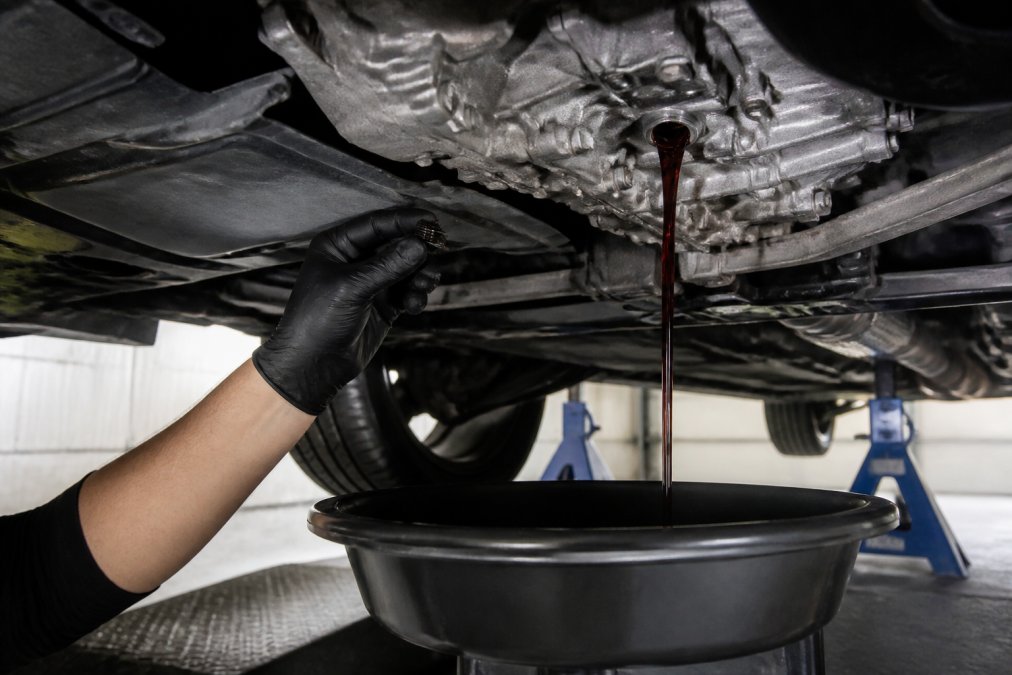
 how-to
How to Change Transmission Fluid Yourself: 2026 Guide
Table of Contents
- Tools and Materials You'll Need for a Transmission Fluid Change
- Transmission Flush vs Drain and Fill: Which Is Right for Your Car?
- Step-by-Step: Draining Old Fluid and Replacing the Transmission Filter
- How to Check Transmission Fluid Level and Spot Problems
- Torque Specs, Sealed Transmissions, and Other Details That Trip People Up
- Best Transmission Fluid for Japanese Cars: What to Look For
- How Much Does a Transmission Fluid Change Cost?
- Fluid Disposal and Post-Change Troubleshooting
- Frequently Asked Questions
Last Updated: September 14, 2026
Tools and Materials You'll Need for a Transmission Fluid Change
Learning how to change transmission fluid yourself is one of the highest-value maintenance jobs a Japanese car owner can take on. At Speedy Roo Motorsports, we've watched too many DIY jobs stall over a missing $12 part. Here's what you need:
- Fluid: The correct ATF for your model (more on this below)
- New transmission filter and gasket (or reusable pan gasket, depending on the car)
- Jack stands and a floor jack, or ramps rated for your vehicle's weight
- Socket set with the sizes your pan bolts use, plus a torque wrench
- Catch pan or drain pan that holds at least 6 quarts
- Funnel and a long-neck fluid pump for hard-to-reach fill tubes
- Waste oil container for transport to a recycling center
- Nitrile gloves, safety glasses, and plenty of shop rags
Transmission Flush vs Drain and Fill: Which Is Right for Your Car?
For most high-mileage Japanese vehicles, a drain and fill is safer. A flush forces fluid through the system under pressure, dislodging clutch material and metal shavings sitting harmlessly in the pan. On a transmission with 100,000+ miles that has never been serviced, that debris can migrate into the valve body and cause shifting problems.
A drain and fill replaces roughly a third to half of the fluid, depending on the pan size. Many shops recommend doing it two or three times with a few hundred miles of driving between services to gradually refresh the fluid. A Consumer Reports guide to transmission maintenance makes the same point: gradual fluid exchange is gentler on older transmissions than a single aggressive flush.
If your car is under 60,000 miles and has been serviced on schedule, a flush is generally fine. If it's a mystery-mileage used car, drain and fill only.
Step-by-Step: Draining Old Fluid and Replacing the Transmission Filter
This is the core of learning how to change transmission fluid yourself. Budget 90 minutes to two hours for a first attempt.
Step 1: Raise the Vehicle and Locate the Transmission Pan
Drive the car for five minutes to warm the fluid, then shut it off. Warm fluid drains faster and carries more suspended debris. Raise the front end, secure it on jack stands, and slide your catch pan under the transmission. The pan is bolted to the bottom of the transmission, usually behind the engine oil pan. Front-wheel-drive Japanese cars often have a drain plug on the pan itself; many Subarus and older Toyotas don't, so you'll loosen the pan bolts to drain.
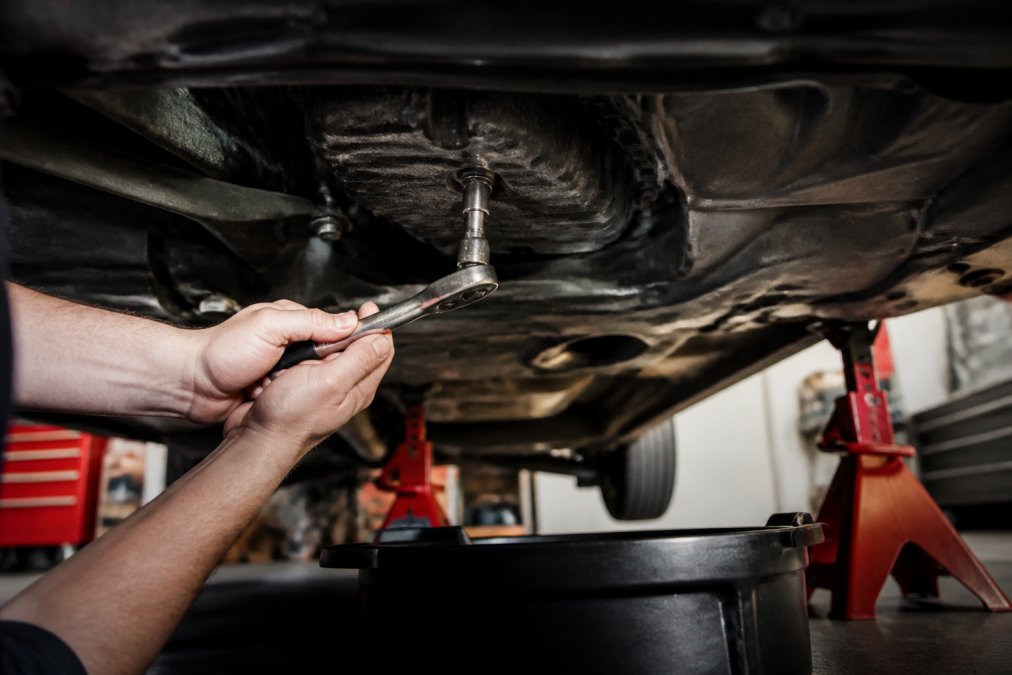
Step 2: Drain the Old Fluid and Remove the Pan
If there's a drain plug, remove it with the correct socket and let the fluid flow. If not, loosen the pan bolts in a crisscross pattern, leaving two corner bolts threaded in. Pry the pan loose and let one corner drop so fluid pours out in a controlled stream. Support the pan, remove the last two bolts, and lower it carefully. Expect two to four quarts of dark, warm fluid. A thin film of gray paste on the pan magnet is normal clutch material; chunky metal shavings or a burnt smell are not.
Step 3: Replace the Filter and Clean the Gasket Surface
Most serviceable Japanese transmissions use a flat screen or felt-style cartridge filter held by a few bolts. Remove the old filter, note the orientation, and install the new one with its included O-ring or gasket. Scrape old gasket material off the pan and case with a plastic scraper, never a metal putty knife on an aluminum case. Wipe both surfaces with a lint-free rag and brake cleaner.
Step 4: Reinstall the Pan and Refill With New Fluid
Set the new gasket on the pan, align it with the bolt holes, and lift the pan into place. Thread every bolt by hand first, then torque in a crisscross pattern to the spec in your owner's manual (typically 7-9 ft-lb for small pan bolts, but check yours). Over-tightening is the most common DIY mistake, it warps the pan and causes leaks. Refill through the dipstick tube or fill plug in half-quart increments, checking the level between additions.
How to Check Transmission Fluid Level and Spot Problems
Checking transmission fluid level is straightforward on cars with a dipstick and more involved on sealed units. With the engine warmed up, the car on level ground, and the transmission in Park, pull the dipstick, wipe it, reinsert it fully, and read the level, it should sit between the "hot" marks. Fresh ATF is reddish and translucent; dark brown or black fluid with a burnt smell signals overheating or worn clutches.
What if my car doesn't have a dipstick?
Many newer Japanese models, including a large share of recent Toyotas and Hondas, use a sealed transmission with a check plug instead. You verify level by removing the check plug with the engine running and fluid at a specific temperature: if fluid trickles out slowly, the level is correct; if nothing comes out, you're low. This process is fussy and easy to get wrong, which is why sealed transmissions are best left to a shop with a scan tool that can read live fluid temperature. If you're in the Aurora or Denver Metro area, Speedy Roo Motorsports handles sealed-unit fluid services on Subaru, Toyota, Honda, Nissan, and Mazda vehicles every week.
Torque Specs, Sealed Transmissions, and Other Details That Trip People Up
Torque specs. Transmission pan bolts are small, and the aluminum case they thread into strips easily. Always use a torque wrench, in a crisscross pattern, to the spec in your owner's manual. If you don't have the spec, don't guess, a stripped pan bolt means drilling and tapping, turning a two-hour job into a two-day one.
Sealed transmissions. If your car has no dipstick and no drain plug on the pan, it's a sealed unit. Some can be serviced through a check plug and fill port, but that requires precise fluid temperature and a scan tool. Attempting a drain and fill without the right equipment risks overfilling or underfilling, both of which can destroy the unit, this is the job where DIY usually costs more than it saves.
Best Transmission Fluid for Japanese Cars: What to Look For
The best transmission fluid for Japanese cars is the exact fluid your manufacturer specifies, not a "universal" ATF. Japanese automakers use specific friction characteristics, and the wrong fluid changes how clutches engage.
What to check before you buy:
- Owner's manual spec: Look for a designation like Toyota WS, Honda DW-1, Nissan Matic S, or Subaru ATF-HP
- Synthetic vs. conventional: Most modern Japanese transmissions call for synthetic fluid, which holds up better under heat
- Viscosity: Match the spec exactly. "Close enough" is not close enough on a transmission
- Brand: Idemitsu, Aisin, and Genuine OEM fluids are common safe choices for Japanese cars
How Much Does a Transmission Fluid Change Cost?
A transmission fluid change cost breaks into three buckets: fluid, parts, and labor (or your time).
DIY drain and fill. For a typical serviceable transmission, you're buying 4 to 6 quarts of ATF, a filter, and a gasket:
- Conventional or OEM-spec ATF: roughly $8 to $15 per quart, so $40 to $90 for fluid
- Full-synthetic ATF (Toyota WS, Honda DW-1, Nissan Matic S equivalents): roughly $10 to $20 per quart, so $50 to $120 for fluid
- Filter kit (filter + gasket): roughly $20 to $60 depending on whether it's a flat screen or a felt cartridge
- Total DIY parts and fluid: commonly $70 to $180 for a single drain and fill
Because a drain and fill only replaces a third to half the fluid, many owners do two or three services spaced a few hundred miles apart, multiplying fluid cost but not filter cost if you reuse the pan gasket.
Shop-performed drain and fill. A shop adds labor, disposal fees, and often a multi-point inspection. Expect roughly two to three times the DIY parts cost, with sealed-transmission services at the higher end because they require a scan tool and precise fluid-temperature checks.
What drives the price up:
- Sealed units, no dipstick, no pan drain plug, fluid level set by a check plug at a specific temperature
- Synthetic-only specs, some manufacturers require a specific fluid that only comes from the dealer
- Filter location, a filter buried inside the case (some CVTs and newer units) means more labor
- Fluid capacity, a large SUV or truck transmission can hold 10+ quarts even for a partial change
What keeps it cheap: a serviceable pan with a drain plug, a reusable gasket, and a widely available OEM-spec fluid. If your car checks those boxes, DIY is one of the best dollar-per-hour jobs you can do.
We don't publish flat pricing because it genuinely depends on your model, fluid type, and whether the pan needs to come off. Call Speedy Roo Motorsports or check our site for a quote specific to your vehicle. For a general sense of what shops charge in a given region, RepairPal's transmission service estimator is a reasonable starting point.
Fluid Disposal and Post-Change Troubleshooting
Where to actually take used transmission fluid
Used ATF is regulated as hazardous waste in most states, and dumping it down a drain, into the trash, or onto the ground is illegal in many jurisdictions. Disposal is usually free and easy if you follow the right channels.
Best options, in order of convenience:
- Auto parts stores that accept waste oil. Many national chains accept used motor oil and ATF from DIYers, typically capped at a few gallons per visit. Call ahead, policies vary by store and state.
- Municipal household hazardous waste (HHW) facilities. Most counties run a permanent HHW drop-off or periodic collection events, accepting ATF, brake fluid, and coolant, often free to residents.
- Recycling centers that handle waste oil. Some transfer stations and private recyclers accept ATF alongside motor oil.
How to transport it safely:
- Pour the drained fluid into a sealed container, the original ATF jug works well, or a dedicated waste-oil container with a screw cap
- Label it clearly as used transmission fluid
- Don't mix ATF with coolant, brake fluid, or solvents; many facilities reject contaminated fluid
- Keep the container upright and secured so it doesn't tip in your trunk
A single drain and fill produces 3 to 6 quarts of waste fluid, so one trip usually handles the whole job. If you're doing multiple drain-and-fill cycles, consolidate into one container and make a single drop-off.
What to do if the car shifts poorly after the change
Before you blame your work, know that a drain and fill is preventative maintenance, not a repair. If the transmission was already slipping, shuddering, or flaring, fresh fluid won't fix worn clutches or a failing valve body, and in rare cases it can make an existing problem more noticeable.
| Symptom | Likely Cause | Fix |
|---|---|---|
| Slight slipping in first few miles | Fluid level low or air in the system | Check level warm, top off, drive gently for 20 miles |
| Harsh or delayed shifts | Wrong fluid type or overfilled | Verify fluid spec against owner's manual, recheck level |
| Leak at pan | Gasket pinched or bolts under-torqued | Re-torque in crisscross pattern, replace gasket if torn |
| Burning smell | Fluid overheating or wrong spec | Stop driving, have a shop inspect immediately |
| Shudder or vibration under light throttle | Wrong friction spec (common with universal ATF) | Drain and refill with the exact OEM-spec fluid |
| No improvement in shifting | Worn clutches or valve body issue | This is beyond a fluid change, get a diagnostic |
The pre-change check that saves people money: if your transmission already slips badly, shudders, or has burnt-smelling, dark-brown fluid with visible debris, a fluid change may not help and could accelerate an existing failure. Get a diagnostic first. A drain and fill on a healthy transmission is cheap insurance; on a dying one, it's often money down the drain.
Frequently Asked Questions
Is it hard to change your transmission fluid yourself?
It's a moderate DIY job, not a beginner's oil change. You'll need to safely raise the car on jack stands, remove the transmission pan, replace the filter, and refill with the correct fluid. The trickiest parts are reaching the fill plug on sealed transmissions and tightening pan bolts to the right torque. Most home mechanics with basic tools can finish in two to four hours. If your car has a sealed transmission with no dipstick, the job requires more care and a fluid pump.
What tools do I need to change transmission fluid at home?
You'll need a floor jack and jack stands, a socket set, a torque wrench, a catch pan, a funnel, and a fluid pump for sealed units. Also grab a new transmission filter, gasket, and the correct ATF for your model. A drip tray and waste oil container help keep things clean. Check your owner's manual for the exact fluid spec and pan bolt torque. Many Japanese cars use specific ATF types, so matching the fluid matters more than brand.
Why do mechanics say not to change transmission fluid?
That advice usually applies to high-mileage cars that have never had a fluid change. If the transmission is already slipping, new fluid can dislodge clutch material and make problems worse. For a healthy transmission with regular service intervals, changing the fluid is preventative maintenance that extends life. If your car has over 100,000 miles with no service history, have a shop inspect it first. A drain and fill is gentler than a full flush in those cases.
How often should you change transmission fluid?
Most manufacturers recommend every 30,000 to 60,000 miles for normal driving, though some newer cars list 100,000 miles under ideal conditions. Stop-and-go commuting, towing, and mountain driving count as severe service and shorten that interval. Check your owner's manual for the specific schedule. If the fluid smells burnt or looks dark, change it sooner. Regular changes protect shifting performance and help you avoid costly repairs down the road.