 how-to
How to Diagnose a Subaru Head Gasket Leak
Table of Contents
- Symptoms of Blown Head Gasket
- Step 1: Check Your Engine Oil for Contamination
- Step 2: Inspect the Radiator and Coolant System
- Step 3: Perform a Compression Test
- Step 4: Use a Combustion Leak Test Kit
- Distinguishing Between Weeping and Blown Head Gaskets
- When to Seek Professional Diagnostics
- Subaru Head Gasket Replacement Cost and Next Steps
- Frequently Asked Questions
Last Updated: August 16, 2026
Symptoms of Blown Head Gasket
A blown head gasket fails to seal combustion gases, coolant, and oil properly, creating a cascade of engine problems. The gasket sits between your cylinder head and engine block. When it fails, specific warning signs point directly to this failure.
White Smoke from the Tailpipe
Thick, persistent white plume from your exhaust that smells distinctly sweet indicates coolant burning in the combustion chamber. When the gasket fails, coolant leaks into the cylinders, gets heated to extreme temperatures, and vaporizes through the exhaust system. Consistent white smoke during acceleration or sustained driving is a red flag; occasional vapor on cold mornings is normal.
Engine Overheating and Coolant Loss
Your temperature gauge climbing into the danger zone combined with a mysteriously empty coolant reservoir points to an internal leak. A failing head gasket allows coolant to escape into the combustion chambers or crankcase. You'll top off your coolant and watch it disappear within days without visible puddles underneath your car. This silent, hidden leak demands immediate attention because an overheating engine can warp your cylinder head or cause complete engine seizure.
Rough Idle and Misfires
A failing head gasket creates uneven sealing across the cylinder head, allowing combustion gases to escape unpredictably. You'll feel noticeable roughness when idling, and the engine may shake or vibrate. Under acceleration, you might experience misfires where cylinders fail to ignite properly. Your engine control computer detects this and may trigger a check engine light with a misfire code.
Step 1: Check Your Engine Oil for Contamination
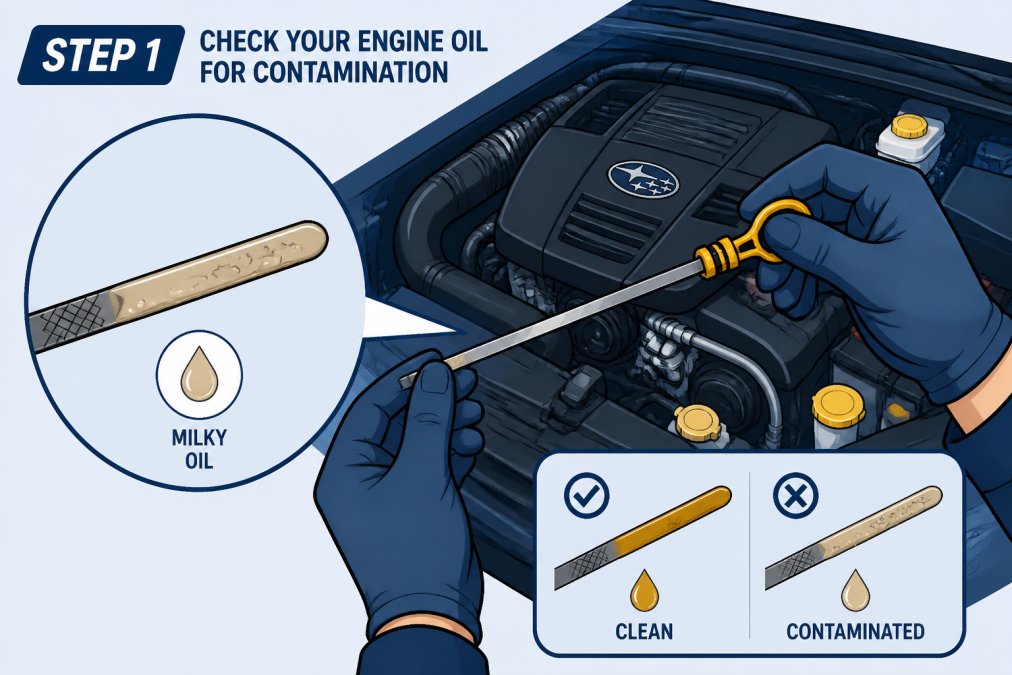
Pull the dipstick, wipe it clean, reinsert it fully, then pull it out again for an accurate reading. Healthy oil is amber to dark brown and flows smoothly. Oil contaminated by a head gasket leak becomes milky, foamy, or light tan, almost like a latte. This happens because coolant (water-based) mixes with your oil. Even small amounts create this distinctive look, and the mixture loses its ability to protect your engine.
If you see this contamination, don't just top off the oil and keep driving. Schedule a professional inspection immediately. Speedy Roo Motorsports can perform a detailed oil analysis to confirm coolant contamination and assess how far the gasket failure has progressed.
Step 2: Inspect the Radiator and Coolant System
Open your radiator cap when the engine is completely cold, never when hot. Look at the coolant color. Fresh coolant is bright (red, green, orange, or pink depending on type), but contaminated coolant from a head gasket leak appears rusty, brown, or murky. You might see oil residue floating on top or a greasy film.
Check your radiator overflow reservoir. The coolant level should be at the "full cold" mark. If it's consistently low with no visible leaks underneath the car, you have an internal leak. Top it off and monitor it over the next few days. Rapid loss without visible external leaks strongly suggests coolant is entering the combustion chamber or crankcase. Examine hose connections at the radiator, water pump, and heater core for weeping or seepage.
Step 3: Perform a Compression Test
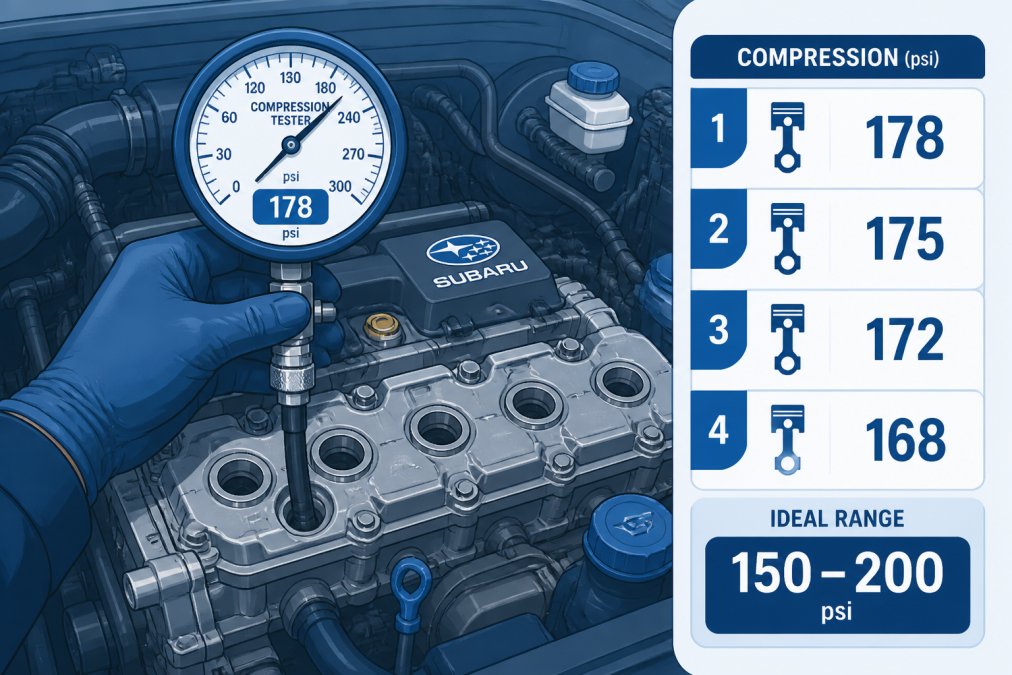
A compression test measures the pressure your cylinders build during the compression stroke, revealing whether they're sealing properly. You'll need a compression tester, spark plug socket, and socket wrench. Remove all spark plugs and set them aside safely.
Screw the compression tester into the first spark plug hole. Have someone crank the engine over while you watch the gauge. Take three readings and note the highest one. Repeat for each cylinder. A healthy cylinder typically reads between 150-200 PSI. Cylinders within 10% of each other indicate good sealing.
A failed head gasket shows one or more cylinders reading significantly lower than the others, sometimes 30-50 PSI lower. If two adjacent cylinders are low, that's a classic sign of head gasket failure. If you get low readings on one cylinder, squirt a small amount of oil into that spark plug hole and retest. If pressure jumps up significantly, you likely have a piston ring problem. If it stays low, you have a valve or head gasket issue.
Step 4: Use a Combustion Leak Test Kit
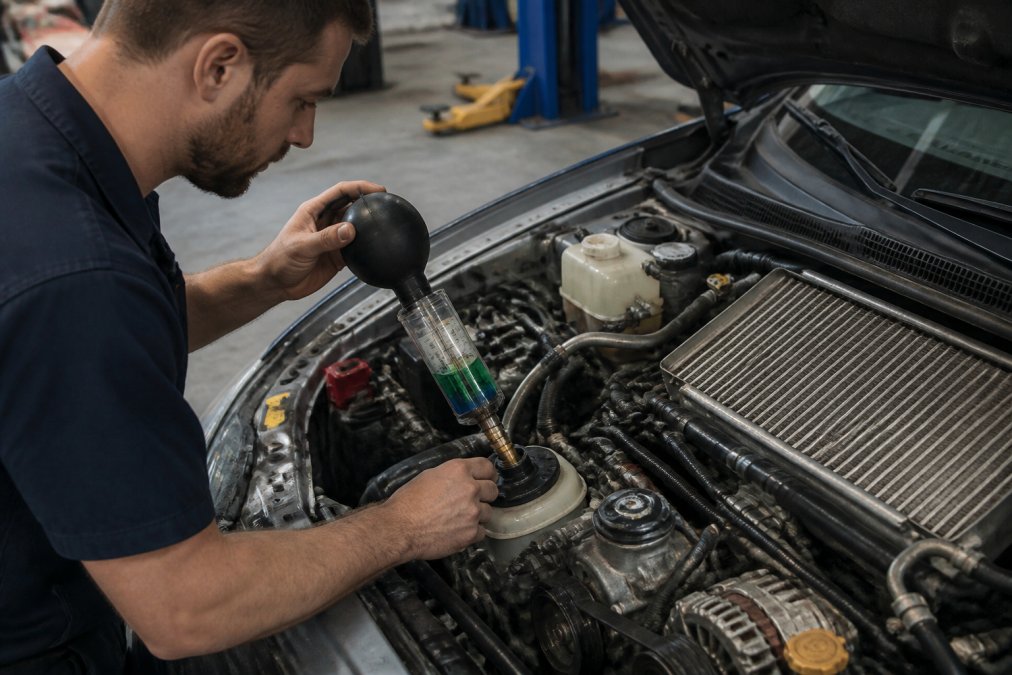
A combustion leak test kit detects exhaust gases in your coolant system, which only happens when combustion leaks past the head gasket into the cooling system. Let the engine cool completely, remove the radiator cap, and insert the test kit's probe into the coolant. If the reagent changes color (typically from blue to yellow), exhaust gases are present in your cooling system. This is definitive proof of a head gasket leak.
This test is more specific than checking for milky oil or low coolant levels because it directly detects the combustion leak itself. The test takes about five minutes and costs under thirty dollars. A positive combustion leak test combined with low compression readings on adjacent cylinders confirms your head gasket has failed. Professional repair is necessary.
Distinguishing Between Weeping and Blown Head Gaskets
A weeping head gasket is partially failed, leaking slowly and allowing small amounts of coolant to seep into the oil or combustion chamber. You might notice slightly milky oil, minor coolant loss over weeks, or subtle white smoke under heavy acceleration. A weeping gasket can often be driven carefully for a period of time, though you should treat it as urgent.
A blown head gasket is completely failed. You'll see dramatic symptoms: heavy white smoke, severe overheating, rapid coolant loss, and rough running that makes the car difficult to drive. A blown gasket typically requires immediate towing because continued driving causes rapid additional damage.
When to Seek Professional Diagnostics
Professional diagnostics include thorough pressure testing of your cooling system, borescope inspection of your cylinder head, and specialized computer diagnostics to read all fault codes. Professionals can also perform a cylinder leak-down test, which is more precise than a compression test for identifying exactly where pressure is escaping.
More importantly, a professional inspection determines whether your cylinder head can be reused or whether warping requires replacement. This is critical because a head gasket replacement is only part of the repair; if the head is warped, the new gasket will fail again immediately.
Subaru Head Gasket Replacement Cost and Next Steps
A head gasket replacement requires removing the cylinder head, which means disconnecting numerous hoses, electrical connectors, and fuel lines. The timing belt may need removal depending on your Subaru's engine design. Once the head is off, the old gasket is removed and sealing surfaces are cleaned and inspected.
The cylinder head gets pressure tested to confirm it's not cracked. If warping is detected, the head must be resurfaced (machined flat) or replaced entirely. Once everything is clean and inspected, a new head gasket is installed along with new head bolts torqued to specific specifications. The head is reinstalled, all connections are restored, and the system is refilled with fresh coolant.
The timeline for this repair typically spans several days. For repair costs and specific timeline estimates for your vehicle, contact Speedy Roo Motorsports directly. Pricing depends on your specific Subaru model, engine type, and whether additional work like head resurfacing is needed.
After repair, your Subaru should run smoothly with no white smoke, normal coolant levels, and steady engine temperatures. Addressing a head gasket problem early, before additional damage occurs, keeps repair costs reasonable and your engine running reliably for years to come.
A head gasket leak doesn't fix itself, and ignoring the symptoms guarantees expensive engine damage. If your compression test shows low readings on adjacent cylinders or your combustion leak test turns positive, you need professional repair. Speedy Roo Motorsports has diagnosed and repaired countless Subaru head gasket failures since 2002. Our technicians know these engines inside and out, perform thorough diagnostics to confirm the problem, and handle the repair with precision to get your Subaru back on the road reliably. Schedule a diagnostic appointment today and stop guessing about what's wrong with your engine.
Frequently Asked Questions
How can I tell if my Subaru has a head gasket leak?
The most common signs include white smoke from the tailpipe, milky or frothy engine oil on the dipstick, coolant loss without visible leaks, and rough idle or misfiring. You can perform a compression test to check for pressure loss between cylinders, or use a combustion leak test kit to detect exhaust gases in the coolant system. If you notice multiple symptoms together, a head gasket leak is likely the culprit.
What's the difference between a weeping and a blown head gasket?
A weeping head gasket allows small amounts of coolant or oil to seep slowly, causing gradual contamination and minor overheating. A blown head gasket fails completely, allowing rapid coolant loss, severe overheating, and mixing of fluids. A weeping gasket may allow you to drive carefully to a repair shop, while a blown gasket requires immediate attention to avoid catastrophic engine damage.
How much does it cost to replace a head gasket on a Subaru?
Subaru head gasket replacement cost varies based on the model year, engine type, and whether additional components need service. Labor is typically the largest expense since the job requires significant engine disassembly. For an accurate quote on your specific vehicle, contact a trusted repair facility that can assess the damage and provide transparent pricing based on your car's condition.
Can I drive my Subaru with a head gasket leak?
Driving with a head gasket leak risks serious engine damage. Coolant loss leads to overheating, which can warp the cylinder head or crack the engine block. Continued driving also forces oil and coolant to mix, destroying your engine's lubrication. If you suspect a leak, have it diagnosed promptly and avoid extended driving until repairs are complete.