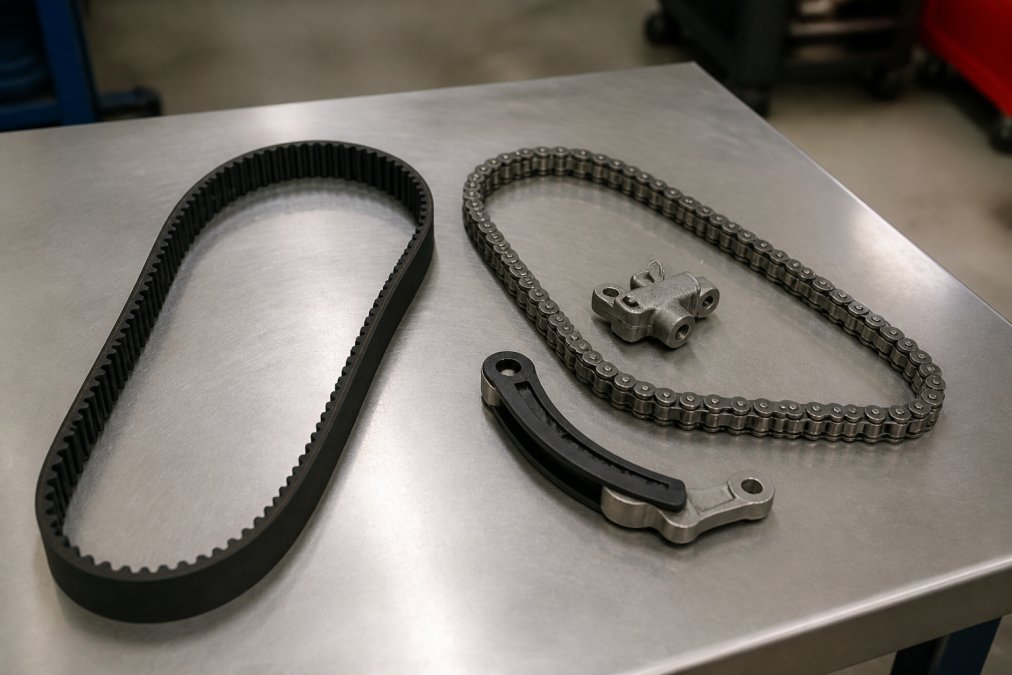
 comparison
Subaru Timing Belt vs Chain: Maintenance Guide
Table of Contents
- Timing Belt vs Timing Chain: Key Differences
- Subaru Timing Belt Replacement Interval and Maintenance
- Subaru Timing Chain Failure Symptoms and When to Replace
- Cost of Timing Belt Service vs Chain Replacement
- Interference vs Non-Interference Engine Design in Subaru
- Durability, Longevity, and Total Cost of Ownership
- How to Identify Whether Your Subaru Has a Belt or Chain
- Comparison Table: Timing Belt vs Timing Chain
- Frequently Asked Questions
Last Updated: August 21, 2026
Timing Belt vs Timing Chain: Key Differences
A timing belt is a rubber component with teeth that synchronizes your engine's crankshaft and camshaft rotation, while a timing chain is a metal component that performs the same function with greater durability. Understanding this distinction matters because it determines your maintenance schedule, replacement costs, and the risk of catastrophic engine failure. Subaru has used both designs across its model lineup, and knowing which one you have prevents costly mistakes.
How Timing Belts Work
A timing belt is a rubber-reinforced synchronous belt with precisely spaced teeth that mesh with sprockets on the crankshaft and camshaft. As your engine runs, the belt transfers rotational motion from the crankshaft to the camshaft, ensuring the intake and exhaust valves open and close at exactly the right moments relative to piston position. Even a few teeth of slippage can throw off valve timing and cause severe engine damage.
The rubber composition allows the belt to run quietly and requires no lubrication. However, rubber degrades over time due to heat, oil exposure, and constant flexing. The tensioner, a spring-loaded pulley that maintains belt tension, also wears out and loses its ability to keep the belt tight. A slack belt can slip, destroying engine synchronization in seconds.
Most Subaru EJ-series engines (found in older WRX, Legacy, and Outback models) use timing belts. These engines typically require replacement every 60,000 to 100,000 miles, depending on the model year and driving conditions.
How Timing Chains Work
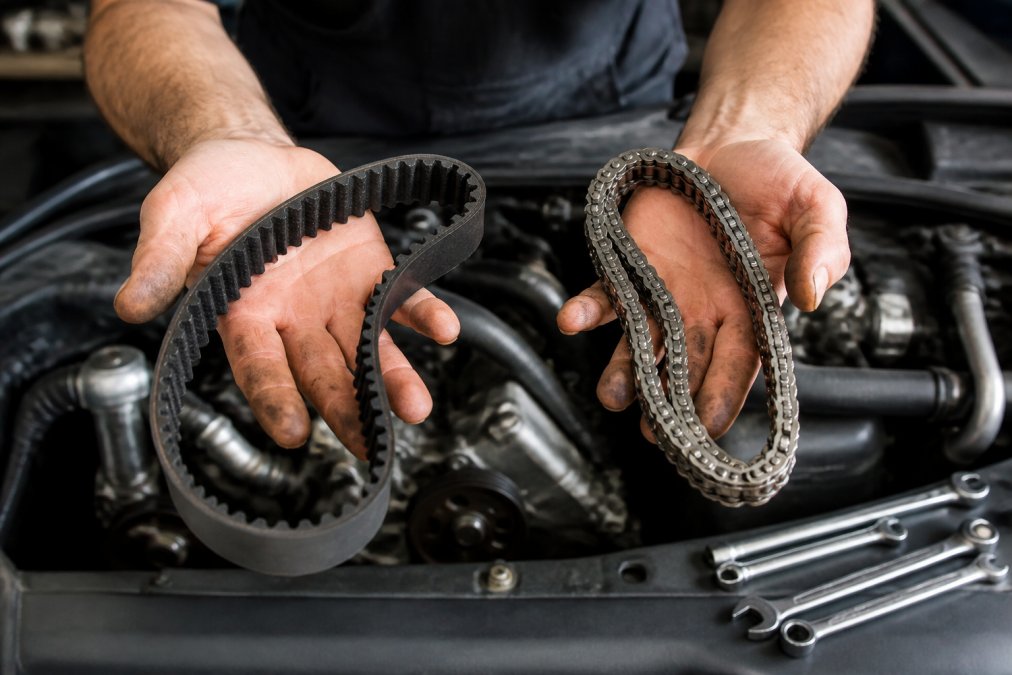
A timing chain resembles a bicycle chain but with precision-engineered links designed to mesh with sprockets on the crankshaft and camshaft. Unlike rubber belts, metal chains are inherently more durable and can withstand higher temperatures and stress. Chains are lubricated by engine oil, which flows through the engine block to coat the chain links and reduce friction.
Timing chains don't wear out as quickly as belts, and many manufacturers design them to last the lifetime of the engine, often 150,000 miles or more without replacement. However, chains are not maintenance-free. The chain guides and tensioners that keep the chain tight can wear out over time, especially if oil changes are neglected or if the engine experiences high stress from aggressive driving.
Newer Subaru models, particularly the FA and FB-series engines (found in 2015+ WRX, 2014+ Forester XT, and other modern Subarus), use timing chains.
Subaru Timing Belt Replacement Interval and Maintenance
For most EJ-series engines with timing belts, Subaru recommends replacement at 105,000 miles or every 7 years, whichever comes first. Some earlier models specify 60,000 miles, so checking your owner's manual is essential.
Rubber doesn't improve with age, it becomes brittle, loses elasticity, and can snap without warning. Heat accelerates this degradation, which is why vehicles driven in hot climates or with aggressive driving patterns may need earlier replacement.
Preventative maintenance includes regular oil changes. Oil leaks can contaminate the belt, softening the rubber and causing premature failure. If you notice oil seeping near the timing cover, have it inspected immediately. A failing tensioner also accelerates belt wear; if you hear a high-pitched squealing from the front of the engine, that's often a sign the tensioner spring is weakening.
Many shops recommend replacing the water pump, idler pulleys, and tensioner at the same time as the belt. This "full timing belt service" makes economic sense because the labor cost to access these components is identical whether you replace one part or several.
Subaru Timing Chain Failure Symptoms and When to Replace
Timing chains rarely fail suddenly, but they show warning signs when nearing the end of their service life. A worn chain develops slack, which causes a rattling noise from the front of the engine, especially during cold starts or acceleration. This rattle sounds like marbles in a can and typically comes from the chain guides.
If you hear this noise, have the timing chain inspected promptly. A slack chain can skip teeth on the sprockets, throwing off valve timing and triggering the check engine light. In severe cases, the chain can derail entirely, causing catastrophic engine damage similar to a broken timing belt.
Oil starvation accelerates timing chain wear. If you neglect oil changes, the chain guides and tensioners don't receive adequate lubrication and wear out faster. Most Subaru chains are designed to last 150,000+ miles if the engine is properly maintained, but poor maintenance can reduce this dramatically.
Another symptom of chain wear is a metal-on-metal grinding sound during startup, indicating the chain has developed enough slack that it's contacting the engine block or other components.
Timing chain replacement is significantly more labor-intensive than belt replacement. The chain sits deeper inside the engine, and accessing it often requires removing the timing cover, draining coolant, and removing hoses. Some Subaru models require partial engine removal to reach the chain. This complexity is why chain replacement costs considerably more than belt replacement, even though chains last longer. genuine vs aftermarket parts.
Cost of Timing Belt Service vs Chain Replacement
For a timing belt service, parts typically include the belt itself, tensioner, idler pulleys, and sometimes the water pump. The labor cost varies based on your vehicle's specific design, but the entire job is usually completed in 4-8 hours.
For a timing chain replacement, the parts cost is higher because chains are more durable and expensive to manufacture. More importantly, labor costs are substantially higher, often requiring 8-16 hours of labor depending on the Subaru model.
Over the life of your vehicle, you might perform 2-3 timing belt services but only 0-1 timing chain services. When you factor in total cost of ownership, a vehicle with a timing chain often costs less to maintain, despite the higher upfront replacement cost if it does eventually fail.
The trade-off is timing and predictability. With a belt, you know replacement is coming at a specific mileage. With a chain, the replacement might never happen during your ownership, but if it does, you're facing a much larger bill.
Interference vs Non-Interference Engine Design in Subaru
An interference engine is one where the piston and valve paths overlap slightly when the engine is at top dead center. If the timing belt or chain fails and the crankshaft and camshaft fall out of synchronization, the pistons can collide with the open valves, causing catastrophic internal damage: bent valves, damaged pistons, and potentially a cracked engine block.
A non-interference engine has a design where the piston and valve paths don't overlap, even if timing is lost. If the belt or chain fails, the engine stops, but the internal components don't collide.
Most modern Subaru engines, particularly the EJ-series and newer FA/FB-series, are interference engines. This means a timing belt failure isn't just an inconvenience, it's potentially catastrophic, requiring engine replacement or major rebuilding. This reality makes preventative maintenance non-negotiable for interference engines.
The risk of piston-to-valve contact creates enormous pressure to replace timing belts before they fail. One moment the engine is running fine, the next moment the belt snaps and internal damage occurs. This is why many Subaru owners replace their timing belts before the recommended interval if they're approaching a significant mileage threshold.
Durability, Longevity, and Total Cost of Ownership
When comparing timing belt vs chain durability, the numbers favor chains decisively. A timing belt's service life is finite, typically 60,000 to 100,000 miles. A timing chain, if properly maintained, can last 150,000+ miles, often the entire life of the vehicle (peer-reviewed research).
However, durability doesn't tell the whole story. Total cost of ownership includes parts, labor, and the probability of failure over your ownership period. If you own a Subaru with a timing belt and plan to keep it for 150,000 miles, you'll likely perform 1-2 timing belt services. If you own a vehicle with a timing chain, you might never need chain service.
The environmental impact also differs. Timing belts are rubber-based and eventually end up in landfills. Timing chains are metal and can be recycled. From a sustainability perspective, the longer service life of chains reduces waste and manufacturing impact.
Unlike belts, which wear uniformly, chains can develop slack if the guides or tensioners wear unevenly. A slack chain can skip teeth, causing catastrophic timing loss. This is why regular inspection is important, a stretched chain that's still functional today might fail tomorrow.
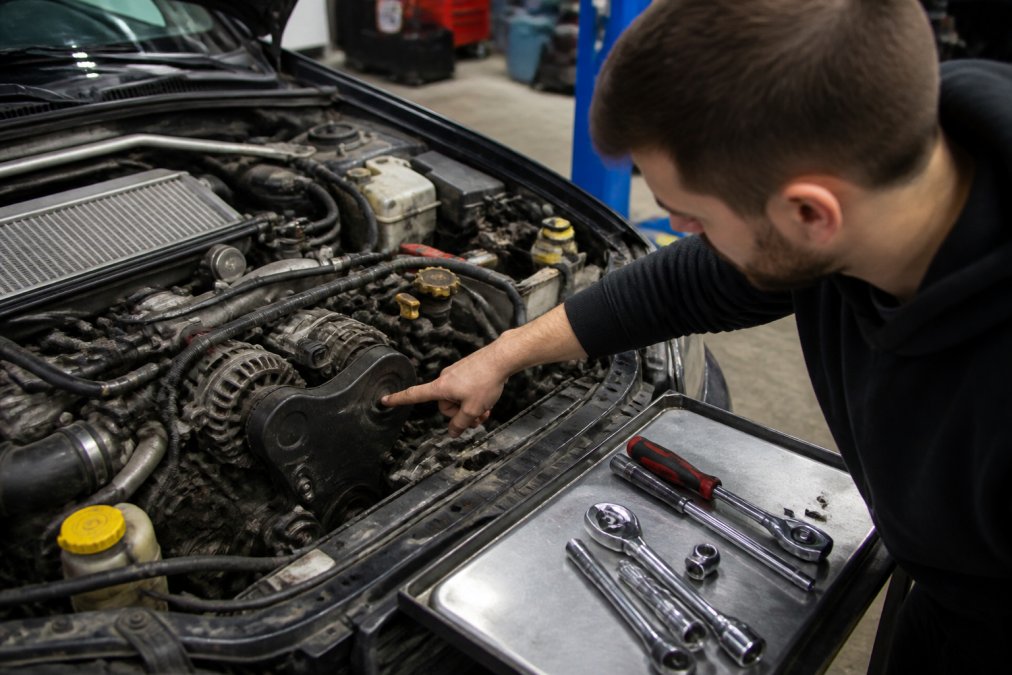
How to Identify Whether Your Subaru Has a Belt or Chain
The easiest way to determine whether your Subaru has a timing belt or chain is to check the owner's manual or contact a Subaru dealership with your vehicle identification number (VIN).
You can also know which Subaru models use which component. Most EJ-series engines (2002-2011 WRX, Legacy, Outback) use timing belts. Most FA and FB-series engines (2015+ WRX, 2014+ Forester XT, 2020+ Outback) use timing chains.
You can also listen to your engine during cold starts. A timing chain often produces a faint metallic rattle for a second or two before oil pressure builds up and dampens the noise. A timing belt is silent. If you hear that characteristic rattle, you likely have a chain.
Comparison Table: Timing Belt vs Timing Chain
| Feature | Timing Belt | Timing Chain |
|---|---|---|
| Material | Rubber with teeth | Metal links |
| Typical Service Life | 60,000-100,000 miles | 150,000+ miles |
| Maintenance Interval | Every 5-7 years | Often lifetime |
| Lubrication | Dry (no oil contact) | Oil-lubricated |
| Noise Level | Silent | Slight rattle when cold |
| Replacement Labor | 4-8 hours | 8-16 hours |
| Common Failure Mode | Snap or slip | Stretch or guide wear |
| Preventative Replacement | Highly recommended | Only if worn |
| Rotational Mass | Lower | Higher |
| Cost Predictability | High (scheduled) | Lower (unpredictable) |
Choosing between a vehicle with a timing belt versus a timing chain involves trade-offs between maintenance predictability and long-term durability. If you own a Subaru with a timing belt, prioritize preventative replacement to avoid catastrophic interference engine damage. If you have a timing chain, focus on oil change discipline and regular inspections for wear symptoms like rattling or grinding noises.
At Speedy Roo Motorsports, we've handled countless timing belt and chain services for Subaru owners throughout the Denver Metro area. Whether you're facing an upcoming belt replacement or want to inspect a chain for wear, our experienced technicians can provide transparent guidance on what your specific vehicle needs. We'll help you understand your maintenance options and ensure your Subaru's engine stays synchronized and reliable for years to come.
Frequently Asked Questions
When did Subaru switch from timing belts to timing chains?
Subaru began transitioning to timing chains in the mid-2010s with newer FA and FB series engines. Older EJ series engines (found in models like the 2002-2005 WRX) use timing belts. The shift reflected advances in engine design and the superior longevity of metal chains. If your Subaru was built before 2015, it likely has a timing belt; newer models typically feature timing chains. Check your owner's manual or consult a specialist to confirm your vehicle's configuration.
What are the maintenance intervals for a Subaru timing belt?
Most Subaru timing belts require replacement every 105,000 miles or 7 years, whichever comes first. Some older models specify 60,000 to 100,000 miles. Timing belts deteriorate from heat, oil exposure, and constant flexing, so following the manufacturer's interval is critical. Delaying replacement risks catastrophic engine failure, especially in interference engines where a broken belt allows pistons to strike valve train components. Always consult your owner's manual for your specific model year and engine type.
What happens if a Subaru timing belt fails?
A timing belt failure causes immediate engine shutdown and potential catastrophic damage. In interference engines, the pistons will strike the open valves, bending or breaking them and damaging the cylinder head and engine block. Repairs can cost thousands of dollars. Non-interference engines suffer less dramatic damage but still require engine removal and rebuild. The risk is why preventative replacement before the belt fails is essential. A broken belt leaves you stranded and facing a major repair bill.
Are timing chains maintenance-free, or do they need service?
Timing chains are designed to last the engine's lifetime and require no scheduled replacement. However, they do need proper engine oil maintenance since the chain relies on oil lubrication. Over time, chains can stretch from wear, and tensioners can fail, causing rattling or rough idle. If you hear a rattling noise from the front of the engine, have it inspected immediately. Regular oil changes and prompt repairs to chain guides and tensioners keep the system healthy and prevent premature failure.