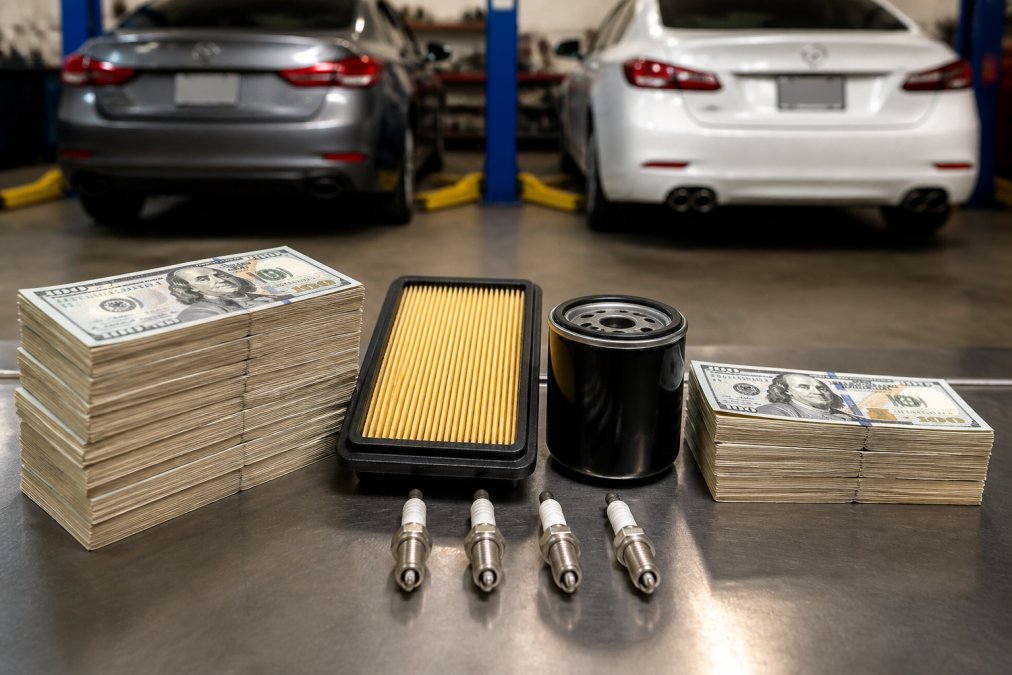
 comparison
Lexus vs Infiniti Maintenance Costs: Complete Breakdown
Table of Contents
- Lexus vs Infiniti: Maintenance Cost Comparison at a Glance
- Average Annual Maintenance Cost for Lexus and Infiniti Models
- Common Lexus Repair Issues and Typical Costs
- Common Infiniti Repair Issues and Typical Costs
- Independent vs Dealership Repair Costs for Luxury Vehicles
- Ten-Year Ownership Cost Projections
- Warranty Coverage and Out-of-Warranty Repair Planning
- Conclusion
- Frequently Asked Questions
Last Updated: August 22, 2026
Lexus vs Infiniti: Maintenance Cost Comparison at a Glance
When comparing luxury vehicles, the purchase price tells only half the story. The real financial picture emerges through maintenance, repairs, and preventative care. Understanding the differences in lexus vs infiniti maintenance costs helps you make a decision aligned with your long-term budget.
At Speedy Roo Motorsports, we've serviced both brands for over two decades. Both manufacturers build reliable vehicles, but their approach to parts availability, service intervals, and common failure points creates distinct ownership experiences.
The key insight: Lexus tends to have lower annual maintenance costs and better parts availability through independent shops, while Infiniti's advanced technology can drive higher diagnostic and repair expenses when issues arise.
Average Annual Maintenance Cost for Lexus and Infiniti Models
Lexus models follow a predictable maintenance pattern based on Toyota's proven engineering standards. Most owners report annual maintenance costs (excluding major repairs) in the moderate range for luxury vehicles. The brand's reliability reputation means fewer unexpected breakdowns, keeping annual averages stable.
Infiniti's maintenance profile reflects its technology-forward design philosophy. Advanced driver assistance systems, sophisticated climate controls, and complex engine management systems require specialized diagnostic equipment. Diagnostic fees for identifying issues with these systems can escalate quickly, pushing annual totals higher than Lexus.
Service intervals differ between brands. Lexus typically recommends oil changes every 10,000 miles, as do some Infiniti models, but Infiniti's fluid specifications and filter types often cost more. Transmission fluid changes, differential service, and coolant flushes follow different schedules, affecting how maintenance expenses cluster across ownership years.
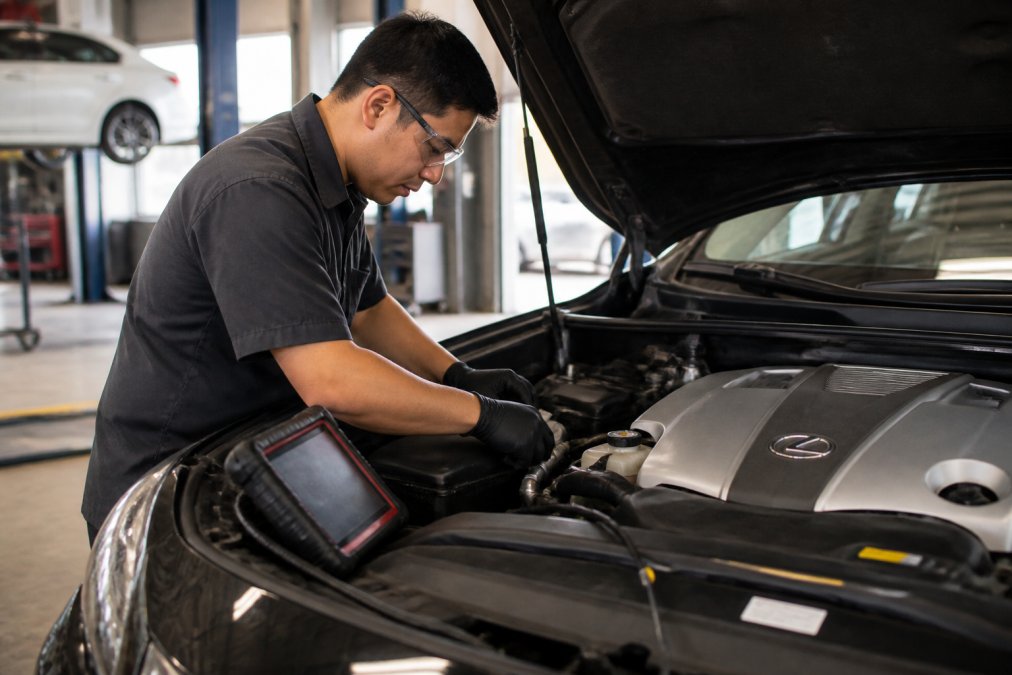
For Lexus, parts availability through independent repair shops is a major advantage. Technicians stock common components because Toyota's parts ecosystem is mature and widely distributed, reducing wait times and enabling competitive pricing.
Infiniti parts follow a different pattern. While dealerships stock components readily, independent shops must special-order many items. However, shops specializing in Japanese luxury vehicles have developed supplier relationships that mitigate this disadvantage.
Common Lexus Repair Issues and Typical Costs
Lexus vehicles exhibit predictable wear patterns with refined solutions developed over decades.
Transmission issues appear occasionally in higher-mileage vehicles, particularly models from the mid-2000s to early 2010s. Early intervention through fluid changes or seal replacements costs substantially less than waiting for catastrophic failure. Many owners who maintain fluid levels religiously avoid transmission problems entirely.
Brake system maintenance represents another predictable cost category. Lexus brake components wear at normal rates, and replacements typically run in the mid-range for luxury vehicles. Because brake systems are straightforward, independent shops handle these repairs reliably and often charge less than dealerships.
Electrical system issues crop up more frequently in older Lexus models around power window motors, door lock actuators, and climate control compressors. These components fail gradually, giving owners time to plan repairs. Replacement parts are widely available and repair procedures well-documented.

Suspension wear follows expected timelines. Front struts typically require replacement between 80,000 and 120,000 miles (toyota.com). Because suspension geometry is conventional, alignment and replacement work proceeds without surprises.
Water pump failures occur occasionally near 100,000 miles. This is a known wear item rather than a defect, and replacement is straightforward for technicians familiar with Toyota engines.
The advantage Lexus owners enjoy: most issues are well-understood, parts are readily available through multiple suppliers, and independent shops have extensive experience with solutions. This combination keeps repair costs reasonable and timelines predictable.
Common Infiniti Repair Issues and Typical Costs
Infiniti vehicles present a different repair profile shaped by the brand's emphasis on advanced technology and performance engineering.
Transmission issues sometimes involve more complex diagnostics than Lexus equivalents. Some Infiniti CVT transmissions have experienced durability concerns in specific model years. When problems emerge, they require specialized diagnostic equipment. Repairs might involve software updates, valve body replacement, or transmission rebuild. The complexity drives costs higher than traditional automatic transmissions.
Electrical and sensor-related issues appear more frequently in Infiniti vehicles, reflecting sophisticated driver assistance systems and engine management technology. Diagnosing which component has failed requires advanced diagnostic scanners that independent shops may lack. Dealership diagnostics for electrical issues can run $150-$300 just to identify the problem.
Climate control compressor failures occur at rates similar to other luxury brands, but Infiniti's integrated systems sometimes require replacement of larger component assemblies rather than simple compressor swaps, increasing parts costs and labor time.
Fuel injector deposits and carbon buildup appear in some Infiniti models with direct injection engines. While fuel system cleaning can address early-stage buildup, advanced deposits sometimes require injector replacement or intake valve cleaning.
Suspension components wear at normal rates, but Infiniti's performance-tuned geometry requires more precise alignment specifications. Alignment work costs more than average and demands technicians with Infiniti-specific knowledge.
The critical factor: many Infiniti repair issues require diagnostic expertise and specialized equipment, creating a cost premium when issues arise. However, preventative maintenance minimizes the likelihood of these problems developing.
Independent vs Dealership Repair Costs for Luxury Vehicles
This decision shapes your total cost of ownership more than any single repair.
Dealership service centers offer factory-trained technicians, extensive parts inventory, seamless warranty work, and access to latest technical bulletins. The trade-off: labor rates run higher than independent shops, diagnostic fees are steeper, and parts markups are substantial.
Independent repair shops, particularly those specializing in Japanese luxury vehicles, offer compelling alternatives. Experienced technicians understand Lexus and Infiniti systems thoroughly. Labor rates are typically lower than dealerships. Parts sourcing is efficient for common items. Personal relationships often translate to honest advice about repair necessity.
The consideration: not all independent shops are equally qualified for luxury vehicles. Shops specializing in Japanese vehicles have invested in the right equipment and training.
For routine maintenance, oil changes, filter replacements, brake pad replacement, and suspension work, independent shops deliver excellent value. For complex electrical diagnostics, software updates, or warranty-related work, dealership service may be necessary.
The optimal strategy: use independent shops for routine preventative maintenance and straightforward repairs. Reserve dealership visits for warranty work, complex diagnostics, and major powertrain service on newer vehicles.
Kelley Blue Book's service and repair guide provides fair repair price ranges for both dealership and independent shops.
Ten-Year Ownership Cost Projections
A Lexus vehicle purchased new typically depreciates more gradually than comparable Infiniti models. After ten years, a Lexus often retains 35-45% of its original purchase price. This strong depreciation profile means your actual ownership cost is lower than the sticker price suggests.
Infiniti vehicles depreciate somewhat more steeply, particularly in the first five years. After ten years, an Infiniti typically retains 25-35% of original purchase price. For original owners, this means higher true ownership costs.
Cumulative maintenance costs over ten years favor Lexus modestly. If annual maintenance averages less for Lexus, that compounds to meaningful savings. A Lexus owner might spend on maintenance over ten years, while an Infiniti owner might spend more.
Major repairs occur more frequently in Infiniti vehicles based on reliability patterns, creating an additional cost differential that's difficult to quantify precisely but real in aggregate.
Edmunds True Cost to Own data provides detailed ownership projections accounting for depreciation, fuel, insurance, and maintenance.
Over a ten-year span, the total cost of ownership difference between Lexus and Infiniti typically ranges, with Lexus generally costing less.
Warranty Coverage and Out-of-Warranty Repair Planning
Lexus offers a three-year or 36,000-mile basic warranty, five-year or 60,000-mile powertrain warranty, and five-year corrosion coverage. Infiniti's warranty structure mirrors Lexus closely with essentially equivalent terms.
The critical period begins at year four or five when basic warranty expires. Out-of-warranty repairs become your responsibility entirely, and this is where maintenance cost differences become most pronounced.
Lexus owners entering the out-of-warranty period benefit from affordable parts availability and straightforward repair procedures. Independent shops handle these repairs confidently and affordably.
Infiniti owners face higher out-of-warranty costs when complex systems fail. A transmission issue, electrical sensor problem, or advanced climate system system failure requires expensive diagnostics and specialized parts. While some repairs are no more expensive than Lexus equivalents, the average out-of-warranty repair cost runs higher.
Extended warranty options are available for both brands. For Infiniti owners concerned about out-of-warranty electrical or transmission issues, extended coverage provides peace of mind. Lexus owners typically find the cost-benefit less compelling given the brand's reliability reputation.
The out-of-warranty financial exposure for Infiniti is genuinely higher. These scenarios are less likely with Lexus vehicles, making the brand's lower out-of-warranty risk a genuine financial advantage.
Conclusion
Comparing lexus vs infiniti maintenance costs reveals that Lexus generally delivers lower long-term ownership expenses through simpler systems, better parts availability at independent shops, and stronger resale value. Infiniti's advanced technology and performance capabilities appeal to drivers who value those features, but they come with higher maintenance complexity and repair costs when issues arise.
If you own either vehicle, Speedy Roo Motorsports provides expert maintenance and repair for both Lexus and Infiniti models. Our team brings over two decades of experience with Japanese luxury vehicles, transparent communication about repair necessity, and labor rates substantially lower than dealership service. Contact us for a maintenance consultation or to discuss your vehicle's specific needs.
=== FAQ ANSWERS (audit these too, same rules) ===
[1] Q: Is a Lexus an expensive car to maintain over 10 years? A: Lexus maintenance costs are moderate for a luxury vehicle. Over 10 years, owners typically spend on scheduled maintenance and repairs, depending on mileage and model. Lexus vehicles are known for reliability, which helps keep long-term costs predictable. Powertrain reliability is particularly strong, reducing major repair expenses. Working with an independent repair shop rather than a dealership can reduce these costs while maintaining quality service.
[2] Q: Which luxury car has the lowest maintenance cost: Lexus or Infiniti? A: Lexus generally has lower maintenance costs than Infiniti. The difference stems from Lexus's reputation for long-term reliability and fewer electrical system issues. However, specific model, age, and mileage significantly affect actual costs. Both brands benefit from independent repair options, which offer transparent pricing and often undercut dealership rates.
[3] Q: What are the most common repair issues for Lexus versus Infiniti? A: Lexus owners most frequently address brake service, oil changes, suspension components, and tire alignment. Electrical system issues and transmission problems occur less often. Infiniti vehicles commonly need brake service, spark plug replacement, suspension work, and more frequent electrical diagnostic fees. Infiniti models tend to have more complex infotainment and safety systems that require specialized diagnostics. Both brands benefit from preventative maintenance to avoid costly repairs down the road.
[4] Q: Why is dealership service so much more expensive than independent shops for luxury vehicles? A: Dealerships charge higher labor rates and stock expensive OEM components. Dealerships also have higher overhead costs. Independent repair shops specializing in Japanese vehicles like Lexus and Infiniti can provide the same quality service at lower rates because they have lower overhead and often use quality aftermarket parts or OEM components sourced competitively. Many independent shops offer warranties on repair work, providing confidence without the premium pricing.
[5] Q: Should I budget differently for a newer Lexus or Infiniti with advanced technology? A: Newer luxury models with advanced infotainment, driver assistance systems, and hybrid powertrains may have higher diagnostic fees initially, but scheduled maintenance costs remain similar. Diagnostic fees at dealerships can reach $150-$300 for complex systems, while independent shops may charge less. Warranty coverage typically extends 3-4 years, protecting against major repairs during that period. After warranty expiration, budget for potential electrical and sensor replacements, which are more common in newer models with extensive tech integration.
Frequently Asked Questions
Is a Lexus an expensive car to maintain over 10 years?
Lexus maintenance costs are moderate for a luxury vehicle. Over 10 years, owners typically spend on scheduled maintenance and repairs, depending on mileage and model. Lexus vehicles are known for reliability, which helps keep long-term costs predictable. Powertrain reliability is particularly strong, reducing major repair expenses. Working with an independent repair shop rather than a dealership can reduce these costs while maintaining quality service.
Which luxury car has the lowest maintenance cost: Lexus or Infiniti?
Lexus generally has lower maintenance costs than Infiniti. The difference stems from Lexus's reputation for long-term reliability and fewer electrical system issues. However, specific model, age, and mileage significantly affect actual costs. Both brands benefit from independent repair options, which offer transparent pricing and often undercut dealership rates.
What are the most common repair issues for Lexus versus Infiniti?
Lexus owners most frequently address brake service, oil changes, suspension components, and tire alignment. Electrical system issues and transmission problems occur less often. Infiniti vehicles commonly need brake service, spark plug replacement, suspension work, and more frequent electrical diagnostic fees. Infiniti models tend to have more complex infotainment and safety systems that require specialized diagnostics. Both brands benefit from preventative maintenance to avoid costly repairs down the road.
Why is dealership service so much more expensive than independent shops for luxury vehicles?
Dealerships charge higher labor rates and stock expensive OEM components. Dealerships also have higher overhead costs. Independent repair shops specializing in Japanese vehicles like Lexus and Infiniti can provide the same quality service at lower rates because they have lower overhead and often use quality aftermarket parts or OEM components sourced competitively. Many independent shops offer warranties on repair work, providing confidence without the premium pricing.
Should I budget differently for a newer Lexus or Infiniti with advanced technology?
Newer luxury models with advanced infotainment, driver assistance systems, and hybrid powertrains may have higher diagnostic fees initially, but scheduled maintenance costs remain similar. Diagnostic fees at dealerships can reach $150-$300 for complex systems, while independent shops may charge less. Warranty coverage typically extends 3-4 years, protecting against major repairs during that period. After warranty expiration, budget for potential electrical and sensor replacements, which are more common in newer models with extensive tech integration.