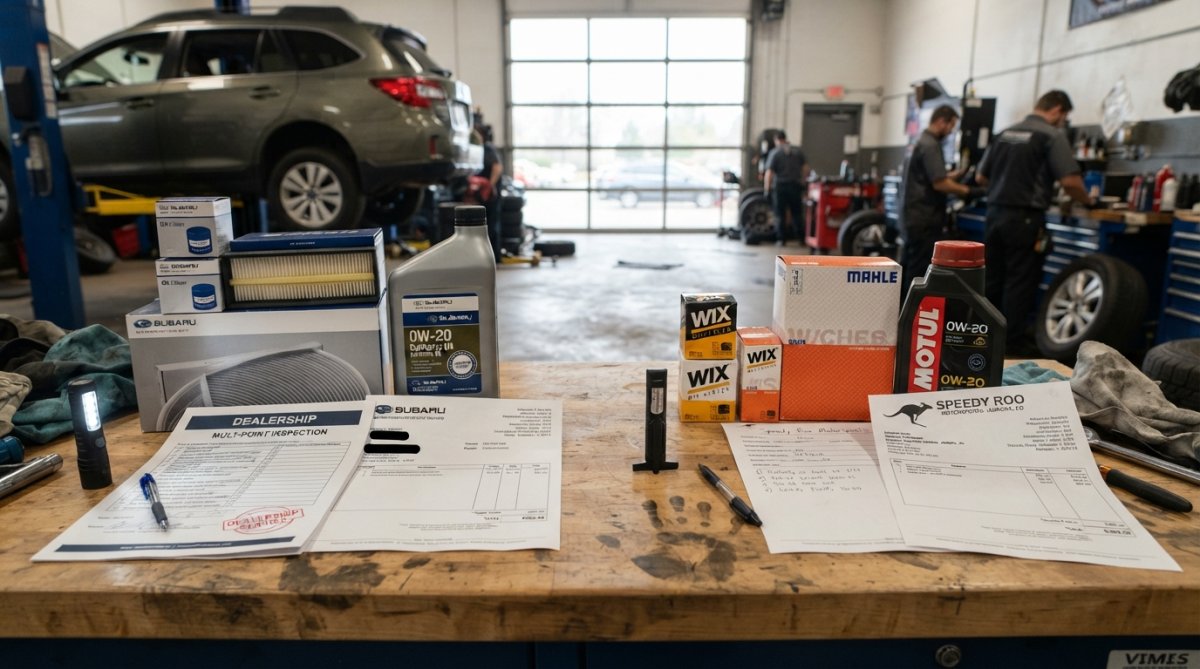
 comparison
Dealership Maintenance Worth It? Costs vs. Independent Shops
Table of Contents
- Is Dealership Maintenance Worth It? A Direct Comparison
- Dealership vs. Independent Mechanic: What You Need to Know
- Car Maintenance Cost at Dealership vs. Independent Shops
- Car Warranty and Independent Mechanic: What's Protected
- Prepaid Maintenance Plans for Cars: Are They Worth It?
- Technician Training, Expertise, and Diagnostic Capabilities
- When Dealership Maintenance Actually Matters (And When It Doesn't)
- Convenience, Location, and Customer Service Considerations
- Frequently Asked Questions
Last Updated: July 28, 2026
Is Dealership Maintenance Worth It? A Direct Comparison
The question "is dealership maintenance worth it" depends on your vehicle's age, warranty status, and budget. At Speedy Roo Motorsports, we've spent over two decades helping customers in the Denver Metro area understand when dealership service makes sense and when independent mechanics deliver better value.
Quick Comparison Table: Dealership vs. Independent Mechanic
| Factor | Dealership Service | Independent Mechanic |
|---|---|---|
| Labor Rates | $100-$200+ per hour | $60-$120 per hour |
| OEM Parts | Always OEM | Mix of OEM and aftermarket |
| Warranty Coverage | Full factory warranty | Shop warranty (typically 12 months) |
| Diagnostic Equipment | Brand-specific software | General + specialized tools |
| Convenience | Limited hours, longer waits | Flexible scheduling, faster turnaround |
| Service Records | Automatic CARFAX reporting | Manual documentation required |
| Best For | New vehicles under warranty | Older vehicles, budget-conscious owners |
Dealership vs. Independent Mechanic: What You Need to Know
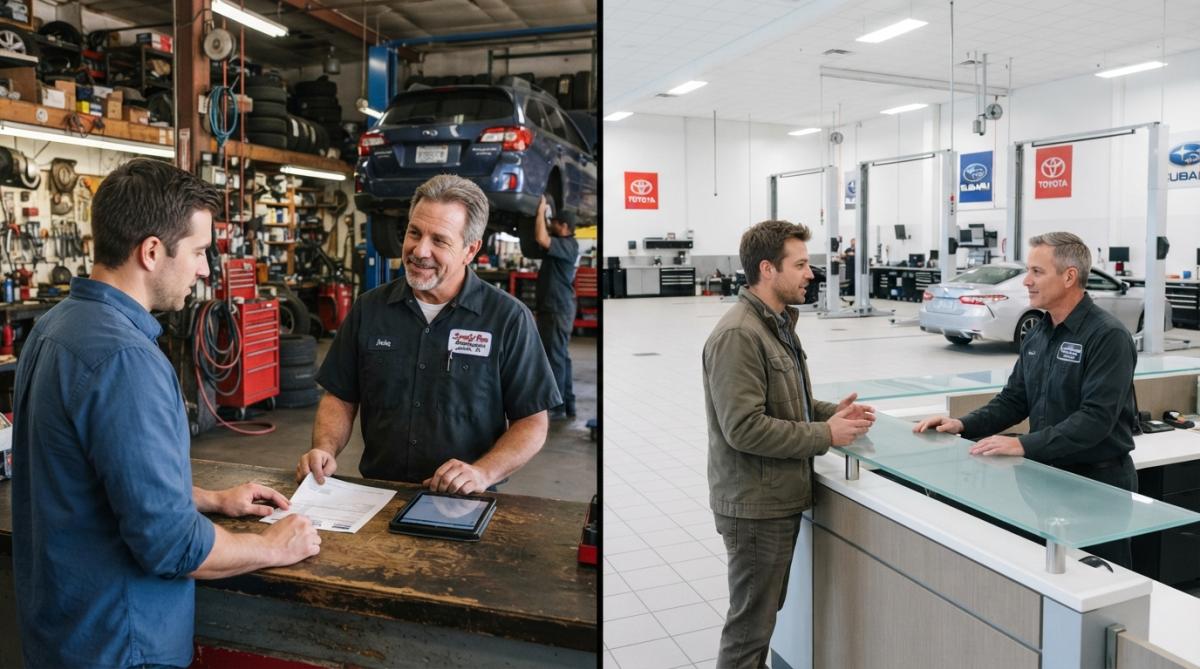
Dealerships employ factory-trained technicians who work exclusively on one brand, while independent shops serve multiple brands with experienced certified mechanics. The right choice depends on your vehicle's age, warranty status, and budget.
Dealership Service Advantages
Factory-trained technicians complete manufacturer-specific certification programs and stay current with the latest diagnostic protocols. If your Subaru has a complex transmission issue or your Lexus needs specialized electrical work, a dealership technician has seen thousands of similar cases.
Dealerships maintain the most current service records automatically. When you use a dealership, your maintenance history uploads directly to CARFAX, which matters if you ever sell your vehicle. Certified pre-owned buyers and trade-in appraisers trust dealership service records because they know the work was performed by factory-trained staff using OEM parts.
Factory warranties typically require that maintenance use OEM parts and be performed according to the manufacturer's schedule. While independent mechanics can perform scheduled maintenance without voiding your warranty under the Magnuson-Moss Warranty Act, many owners feel more secure having all work done at the dealership.
Many dealerships offer loaner vehicles and service lounges, making the experience more convenient for customers who cannot afford downtime.
Independent Mechanic Advantages
Independent mechanics typically charge 30-50% less per labor hour than dealerships. A routine oil change might cost $35-50 at an independent shop versus $60-80 at a dealership. Over the life of your vehicle, these savings compound significantly, especially if you own your car beyond the factory warranty period.
Dealerships often book appointments weeks in advance, while independent mechanics can usually fit you in within days. At Speedy Roo Motorsports, we specialize in Japanese automobiles, Subaru, Toyota, Lexus, Honda, Acura, Nissan, Infiniti, Mitsubishi, and Mazda, which means we develop deep expertise without the overhead of a full dealership operation.
You're more likely to speak directly with the technician who worked on your car at an independent shop, not a service advisor who relays information secondhand. This direct communication often means better diagnostics and fewer unnecessary upsells.
Independent shops offer flexibility in parts selection. While dealerships must use OEM parts, independent mechanics can recommend either OEM or high-quality aftermarket parts based on your budget and the repair's criticality. For non-critical maintenance like cabin air filters or wiper blades, aftermarket parts often perform identically at lower cost.
Car Maintenance Cost at Dealership vs. Independent Shops
The cost difference between dealership and independent mechanic maintenance is substantial and compounds over time.
Labor Rates and Hidden Fees
Dealership labor rates typically range from $100 to $200+ per hour depending on the brand and location. Independent mechanics generally charge $60 to $120 per hour. Beyond hourly rates, dealerships often charge diagnostic fees ($75-$150) that independent shops frequently waive if you authorize the repair.
Dealerships also tend to recommend more comprehensive services during routine visits. A simple oil change might trigger recommendations for transmission fluid flushes, cabin air filter replacements, and coolant system cleaning, some necessary, some not. Independent shops rely on reputation and repeat customers, so they're more selective about upselling.
OEM Parts vs. Aftermarket Parts Pricing
OEM (Original Equipment Manufacturer) parts cost 20-40% more than quality aftermarket equivalents. However, the decision depends on the component's function. For wear items like air filters, cabin filters, and wiper blades, quality aftermarket parts perform identically to OEM. For critical components like brake pads, suspension parts, or engine gaskets, OEM parts often provide superior reliability.
Independent mechanics can source both options and recommend based on your vehicle's needs and budget.
Car Warranty and Independent Mechanic: What's Protected
Using an independent mechanic doesn't automatically void your warranty. The Magnuson-Moss Warranty Act, a federal law, protects your rights.
Magnuson-Moss Warranty Act and Your Rights
The Magnuson-Moss Warranty Act states that manufacturers cannot void your warranty simply because you performed maintenance at an independent shop. What they can do is deny a specific warranty claim if they can prove that an independent mechanic's work caused the problem.
However, manufacturers can require that you follow their recommended maintenance schedule using their specified parts. If your owner's manual says "use Mobil 1 synthetic oil, change every 10,000 miles," and you use a different brand or go 12,000 miles between changes, the manufacturer can argue you violated the maintenance schedule and deny a claim for engine damage.
The safest approach: follow your manufacturer's maintenance schedule precisely, use the specified parts, and keep detailed records.
Service Records and Warranty Claims
Service records are your protection in a warranty dispute. CARFAX automatically captures dealership maintenance, but independent shop work requires manual documentation. Many independent shops, including Speedy Roo Motorsports, provide detailed service records that you can upload to CARFAX or keep in your vehicle's file.
When you sell your vehicle or file a warranty claim, these records prove you maintained your car according to the manufacturer's schedule.
Prepaid Maintenance Plans for Cars: Are They Worth It?
Many dealerships offer prepaid maintenance plans, essentially service contracts where you pay upfront for scheduled maintenance over a set period.
How Dealership Prepaid Plans Work
Prepaid plans typically cover scheduled maintenance for 3-8 years or up to 100,000 miles. You pay a lump sum upfront, and the dealership performs all scheduled services included in the plan at no additional cost. Plans usually cover oil changes, filter replacements, fluid top-offs, and inspections, but typically don't cover repairs, unexpected maintenance, or any service not in the manufacturer's maintenance schedule.
When Prepaid Plans Make Financial Sense
Prepaid plans make sense only if you plan to keep your vehicle for the entire plan duration and follow the manufacturer's maintenance schedule exactly. For most owners, especially those keeping vehicles beyond the factory warranty, independent mechanic maintenance costs less overall.
The exception: if you're financing a vehicle through the dealership and they're offering a prepaid plan at a discounted rate as part of the loan, run the numbers comparing the plan's cost against projected independent shop costs for the same maintenance over the plan's duration.
Technician Training, Expertise, and Diagnostic Capabilities
The quality of diagnostic work separates excellent maintenance from mediocre service.
Factory-Trained Technicians vs. Certified Independent Shops
Dealership technicians complete manufacturer-specific training programs and have access to brand-specific diagnostic software. Independent shops like Speedy Roo Motorsports employ ASE-certified technicians who have passed rigorous examinations in their specialties. While we don't have access to proprietary software, we have invested in comprehensive diagnostic equipment and years of hands-on experience with Japanese automobiles.
For common issues, both approaches work equally well. For rare or complex problems, the dealership's brand-specific software provides an advantage.
Specialized Software and Brand-Specific Equipment
Dealerships maintain subscriptions to manufacturer diagnostic software that independent shops cannot access. However, independent shops can subscribe to aftermarket diagnostic platforms that aggregate data from millions of vehicles.
For routine maintenance and common repairs, independent shops have the equipment and knowledge to handle virtually everything. For rare transmission issues, advanced electrical problems, or software-related concerns, dealership technicians have the advantage.
When Dealership Maintenance Actually Matters (And When It Doesn't)
Understanding when dealership service delivers real value versus when you're paying for convenience helps you make smarter maintenance decisions.
Vehicle-Specific Maintenance Schedules and Service Intervals
Your vehicle's maintenance schedule is the foundation of all maintenance decisions. Check your owner's manual for the manufacturer's recommended service intervals, typically oil changes every 5,000-10,000 miles, tire rotation every 6,000-8,000 miles, and major services at specific mileage milestones.
Following this schedule precisely matters far more than where you perform the maintenance. For newer vehicles still under factory warranty, dealership maintenance provides psychological security. For vehicles beyond the warranty period, independent shop maintenance delivers better value.
Upselling Psychology: How to Avoid Unnecessary Repairs
Both dealerships and independent shops can recommend unnecessary repairs. To protect yourself: ask why each recommended service is necessary, what happens if you skip it, and whether it can wait until your next visit. Legitimate maintenance recommendations come with clear explanations.
Resale Value and Service History Documentation
Service history significantly impacts your vehicle's resale value. However, this advantage shrinks if you keep detailed independent shop records. When you sell your vehicle, comprehensive documentation from a reputable independent shop (especially one specializing in your vehicle's brand) carries significant credibility.
The key is documentation. Keep all service records, upload them to CARFAX, and maintain a vehicle file with receipts and work descriptions.
Convenience, Location, and Customer Service Considerations
Maintenance decisions involve practical factors beyond cost and expertise.
Loaner Vehicles, Service Lounges, and Turnaround Time
Dealerships offer amenities that independent shops typically cannot match. Complimentary loaner vehicles and comfortable waiting lounges make dealership visits less disruptive. If you depend on your vehicle for work and cannot afford downtime, these amenities have real value.
Independent shops generally have faster turnaround times because they're not juggling multiple brand-specific repair bays. At Speedy Roo Motorsports, we offer local rental options and towing services. Most routine maintenance appointments take 1-3 hours rather than the full day dealerships often require.
Local Garage Accessibility and Digital Service History
Independent shops offer accessibility that dealerships cannot. You're more likely to find an independent mechanic within a few miles of your home or workplace. Local relationships also matter, when you work with the same independent mechanic over time, they understand your vehicle's history and driving patterns, often leading to better diagnostics and more personalized service recommendations.
Is dealership maintenance worth it? The answer depends on your vehicle's warranty status, your budget, and how much you value convenience versus cost savings. For vehicles under factory warranty, dealership service provides security and automatic documentation. For vehicles beyond the warranty period, independent mechanics like Speedy Roo Motorsports deliver superior value without sacrificing quality or expertise. We specialize in Japanese automobiles with over two decades of experience, factory-trained technician expertise, and transparent communication that treats every customer with respect.
Frequently Asked Questions
Is dealership maintenance cheaper than independent mechanics?
Not always. While dealership labor rates and OEM parts tend to be higher, independent mechanics often charge less for the same service. However, dealership maintenance may include benefits like warranty coverage, factory-trained technicians, and specialized diagnostic tools. The total cost depends on your vehicle's needs, the complexity of the repair, and the specific shops you're comparing. Getting quotes from both options is essential for making an informed decision.
Does using an independent mechanic void your car warranty?
No. The Magnuson-Moss Warranty Act protects your right to use independent mechanics for maintenance and repairs without voiding your manufacturer's warranty. However, the dealership must prove that independent service caused a specific failure to deny a warranty claim. Keep detailed service records from your independent shop to document all work performed. This protection applies to both OEM and aftermarket parts used by independent mechanics.
What's the difference between OEM parts and aftermarket parts at dealerships vs. independent shops?
OEM (Original Equipment Manufacturer) parts are made by your vehicle's manufacturer and typically cost more at dealerships. Aftermarket parts are made by third-party manufacturers and are often cheaper. Dealerships primarily use OEM parts, while independent shops may offer both options. Quality varies among aftermarket brands, but many are reliable and come with their own warranties. Independent shops give you more choice, while dealerships guarantee OEM compatibility and may provide better warranty protection.
Are prepaid maintenance plans at dealerships worth buying?
Prepaid maintenance plans can be worthwhile if you plan to keep your vehicle long-term and follow the manufacturer's service schedule closely. They lock in costs upfront, protecting you from future labor rate increases. However, they're often expensive and may include services you don't need. If you drive infrequently or plan to sell soon, a prepaid plan may not pay for itself. Compare the plan's cost against typical maintenance expenses for your vehicle model before committing.
How do I know if an independent mechanic can handle my vehicle's diagnostic issues better than a dealership?
Look for independent shops specializing in your vehicle's brand with factory-trained technicians and modern diagnostic equipment. Ask about their experience with your specific make and model, and request references or reviews from customers with similar vehicles. Many independent shops have invested in the same specialized software and diagnostic tools as dealerships. Check their certifications (ASE, brand-specific training) and ask about warranty guarantees on their work. Trustworthy shops like those specializing in Japanese automobiles often provide transparent communication about their capabilities.