 listicle
Extended Warranty for Older Cars: Worth It in 2026?
Table of Contents
- What Is an Extended Warranty for Older Vehicles?
- How Extended Warranties Work for High-Mileage Cars
- Average Cost of Car Repairs by Mileage and Vehicle Age
- Common Repair Costs for Japanese Vehicles Over 100k Miles
- Pros and Cons of Extended Warranty Coverage for Older Cars
- How to Build a Car Repair Emergency Fund
- The Verdict: Is an Extended Warranty Right for Your Older Car?
- Frequently Asked Questions
Last Updated: August 23, 2026
What Is an Extended Warranty for Older Vehicles?
An extended warranty for older cars is a service contract that covers mechanical repairs after your vehicle's factory warranty expires. Unlike a factory warranty that comes with your car at purchase, an extended warranty is purchased separately, either at the dealership, through a third-party provider, or directly from a warranty company, and extends coverage for specific mechanical breakdowns and component failures.
For vehicles over 100,000 miles or more than 5-7 years old, these contracts become increasingly relevant. They function as insurance against unexpected repair bills, covering parts and labor for mechanical failures like engine issues, transmission problems, or cooling system breakdowns. The coverage levels vary: some plans cover only the powertrain (engine, transmission, drivetrain), while others offer bumper-to-bumper protection that includes nearly every system except wear items like brakes and tires.
At Speedy Roo Motorsports, we've worked with countless owners of high-mileage Japanese vehicles who face the exact question this article addresses: whether paying for extended coverage makes financial sense. The answer depends on your vehicle's reliability history, your financial cushion for repairs, and how much peace of mind matters to you.
How Extended Warranties Work for High-Mileage Cars
Extended warranties operate differently than factory coverage. When you purchase an extended warranty, you're buying a contractual agreement with either a direct provider (who handles claims themselves) or through a third-party administrator. Each plan comes with specific terms: a coverage period (typically 3-10 years from the original purchase date), mileage limits (often capped at 150,000-300,000 miles depending on the provider), and a deductible (usually $100-$500 per claim).
Here's how the claims process typically works: you take your vehicle to an authorized repair facility, present your warranty documentation, and the facility files a claim on your behalf. The warranty company either pays the facility directly or reimburses you, depending on your plan terms. Pre-existing conditions, mechanical problems that existed before the warranty started, are almost never covered, which is why getting a pre-purchase inspection before buying an extended warranty matters for used vehicles.
One critical distinction: extended warranties are NOT the same as maintenance plans. A maintenance plan covers routine services like oil changes, filter replacements, and scheduled inspections. An extended warranty covers unexpected mechanical failures. Many people confuse the two, which leads to disappointment when they discover their warranty doesn't cover routine upkeep.
For high-mileage vehicles, the coverage terms become stricter. Providers typically won't cover vehicles with existing mechanical issues, and some require documented maintenance records proving you've kept up with service intervals. A vehicle with 120,000 miles but pristine service records is far more insurable than one with the same mileage and spotty maintenance history.
Average Cost of Car Repairs by Mileage and Vehicle Age
Understanding typical repair costs is essential to evaluating whether an extended warranty makes financial sense. Repair expenses escalate dramatically as vehicles age and accumulate mileage. A vehicle at 50,000 miles might see routine maintenance costs of $200-$500 annually (aaa.com). By 100,000 miles, you're looking at potential major repairs that can easily exceed $1,000-$3,000 depending on what fails.
Common expensive repairs include transmission work (often $2,000-$4,000), engine issues ($1,500-$5,000+), and suspension component replacement ($800-$2,500) (aaa.com). Labor rates vary by region and facility type, dealerships typically charge $150-$200 per hour, while independent shops like Speedy Roo Motorsports often run $100-$150 per hour, which can mean significant savings on the same repair.
The financial risk compounds with age. A 2015 vehicle at 100,000 miles faces different failure probabilities than a 2010 vehicle at the same mileage. Japanese vehicles (Subaru, Toyota, Honda, Lexus, Nissan, Acura) tend to hold up better at high mileage than some domestic or European brands, but they're not immune to expensive failures. The older the vehicle, the higher the probability that multiple systems will need attention within a short timeframe.
This is where warranty calculations become relevant. If you can afford to set aside $3,000-$5,000 as an emergency repair fund, you might self-insure. If an unexpected $2,500 transmission repair would strain your finances, extended coverage provides valuable protection.
Common Repair Costs for Japanese Vehicles Over 100k Miles
Japanese vehicles over 100,000 miles typically face predictable failure patterns. Subaru models often experience head gasket issues (a $1,200-$2,000 repair depending on engine type), while Toyota vehicles are more prone to transmission problems on certain model years. Honda and Acura vehicles frequently need suspension work and timing chain issues on older models. Nissan and Infiniti vehicles sometimes develop transmission concerns on high-mileage examples.
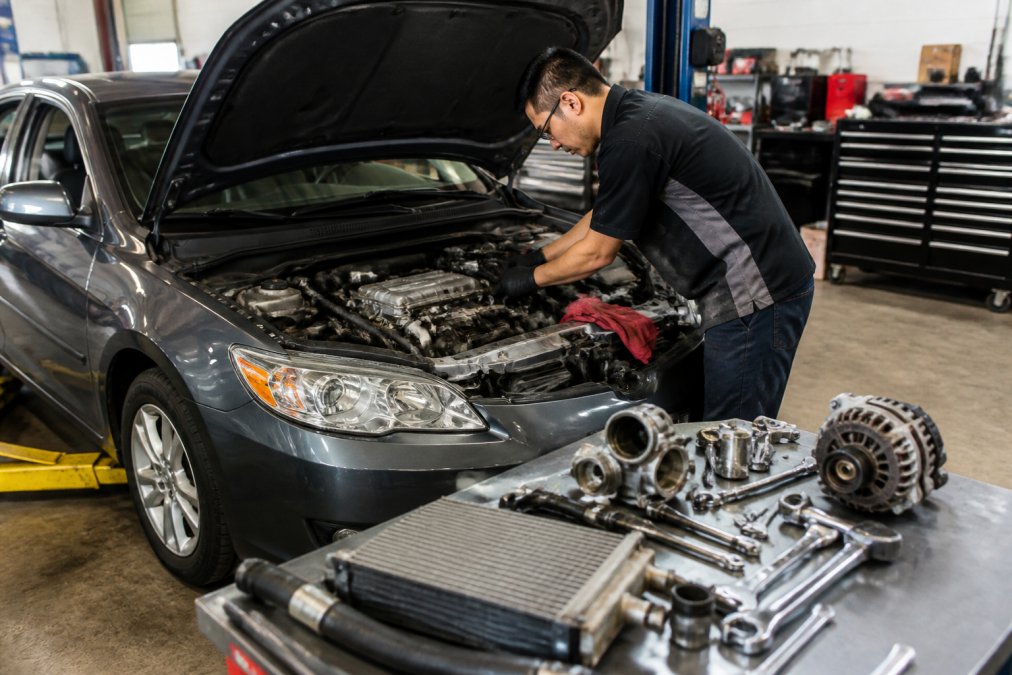
Cooling system failures are common across all Japanese brands at this mileage range, water pumps, radiators, and hoses degrade over time and heat cycles. Electrical issues also emerge, particularly in vehicles from the late 2000s and early 2010s. A failing alternator runs $400-$800 including labor. Catalytic converter failure, while sometimes covered under federal emissions warranty for certain vehicles, can cost $800-$1,500 if out of warranty (the EPA).
The cumulative effect matters. A vehicle might need a water pump replacement ($400-$600), new brake pads and rotors ($600-$1,000), and suspension work ($1,000-$1,500) within a 12-month period. That's $2,000-$3,100 in repairs spread across the year. If you're paying $100-$160 monthly for an extended warranty, you're looking at $1,200-$1,920 annually in premiums. The math becomes clearer when you see actual failure patterns for your specific vehicle model and year.
Pros and Cons of Extended Warranty Coverage for Older Cars
Pros:
Extended warranties provide genuine peace of mind. You know that a major mechanical failure won't force you to choose between a $3,000 repair and keeping a vehicle that's unreliable. This psychological benefit is real, especially for people who depend on their vehicle for work commuting.
For vehicles with questionable maintenance history or unknown provenance (purchased from a private seller rather than a dealer), extended coverage reduces your exposure to inherited problems. If the previous owner skipped services, you're protected against the consequences.
Many extended warranty plans include valuable ancillary benefits: 24/7 roadside assistance, towing coverage, rental car reimbursement while your vehicle is in the shop, and trip interruption reimbursement if you break down far from home. These add genuine value beyond the core mechanical coverage.
Transferability matters if you plan to sell the vehicle. A transferable warranty makes your used vehicle more attractive to potential buyers, which can offset some of the warranty cost when you sell.
Cons:
Extended warranties have strict limitations. Pre-existing conditions are excluded, which means any mechanical issue that existed before the warranty started isn't covered. Wear items like brake pads, tires, wiper blades, and air filters are almost never included. Normal maintenance isn't covered, only unexpected failures.
Deductibles reduce your actual savings. A $500 deductible on a $1,500 repair means you're only saving $1,000. Over multiple claims in a year, deductibles add up quickly.
Mileage limits create a ceiling on coverage. If your plan covers up to 200,000 miles and you hit that threshold, you're uninsured for any failures after that point. For active drivers, this timeline can arrive faster than expected.
Claims denials happen. Some warranty companies have reputations for scrutinizing claims closely, requesting extensive documentation, or denying coverage based on technicalities in the contract language. Reading reviews of specific providers before purchasing is essential.
The opportunity cost is real. If you pay $1,500 annually for five years ($7,500 total) and experience only minor repairs during that period, you've spent money you might have invested elsewhere. This is the fundamental gamble of any insurance product. avoiding repair scams.
How to Build a Car Repair Emergency Fund
If you decide against extended warranty coverage, building a dedicated emergency repair fund is the alternative strategy. This approach requires discipline but gives you complete control over your money and avoids the risk of claim denials or coverage gaps.

Start by determining your target fund size. For a vehicle over 100,000 miles, aim for $3,000-$5,000. This covers most common repairs without wiping out your finances. Set up a separate savings account specifically for vehicle repairs, not a general emergency fund, but a dedicated account you treat as off-limits except for car-related expenses.
Calculate your monthly contribution based on your timeline. If you want $4,000 saved within 12 months, that's roughly $330-$340 monthly. If you have 24 months, you're looking at $165-$170 monthly. Most people find it easier to commit to a smaller amount spread over longer time than a large lump sum.
Automate the transfer. Set up an automatic monthly transfer from your checking account to your repair fund account on the same day you receive your paycheck. Automation removes the temptation to skip a month or redirect the money elsewhere.
Track your vehicle's service history meticulously. Document every oil change, filter replacement, and repair. This record becomes valuable if you eventually purchase an extended warranty, clean maintenance records improve your insurability and reduce claim denial risk. It also helps you identify patterns in your vehicle's failures, which informs whether you're likely to face major repairs soon.
As your fund grows, you'll feel the psychological benefit that extended warranties promise. By the time you've accumulated $3,000-$4,000, you've essentially "self-insured" against most common failures. The difference: if you don't need the money, it stays in your account and earns interest or becomes available for other purposes. With an extended warranty, unused coverage is simply gone.
The Verdict: Is an Extended Warranty Right for Your Older Car?
Whether an extended warranty is worth it depends on three factors: your vehicle's reliability history, your financial cushion, and your tolerance for uncertainty.
Get an extended warranty if:
Your vehicle has a known history of expensive failures at high mileage. If you drive a Subaru model year with documented head gasket issues, or a Honda generation prone to transmission problems, the warranty provides targeted protection against predictable failures. You're risk-averse and the monthly premium won't strain your budget. If paying $120-$160 monthly doesn't impact your ability to cover other expenses, the peace of mind is worth it. Your vehicle is newer (2015 or later) with lower mileage (under 100,000 miles). Warranty companies offer better rates and terms for younger vehicles, and the cost-to-benefit ratio improves significantly. You drive extensively for work and can't afford downtime. If your vehicle is essential to your income, extended coverage reduces the risk of an unexpected breakdown forcing you to rent a vehicle or miss work.
Skip the extended warranty and self-insure if:
Your vehicle has a strong reliability reputation at high mileage. Toyota Camrys and Corollas, for example, frequently reach 200,000+ miles with minimal major repairs. You have $4,000-$5,000 in accessible savings already. You can absorb a major repair without financial strain. You're willing to accept the risk of expensive failures in exchange for keeping your money. Your vehicle is older (2012 or earlier) with very high mileage (150,000+). Warranty companies charge premium rates or may decline coverage entirely at this age and mileage. You're planning to sell the vehicle within 2-3 years. The warranty cost won't recoup its value in your ownership timeline.
The honest assessment: extended warranties are financial products designed to transfer risk from you to the warranty company. They make sense when the risk is high and your ability to absorb that risk is low. For owners of reliable Japanese vehicles with adequate emergency savings, self-insuring through a dedicated repair fund often makes more financial sense.
If you do purchase an extended warranty, work with a reputable provider that handles claims efficiently and has strong customer reviews. Providers like Endurance and CarShield have established track records, though all warranty companies have some customer complaints, that's the nature of the industry.
For Japanese vehicle owners in the Denver area, Speedy Roo Motorsports can help you make this decision. We've seen the long-term reliability patterns of every Japanese brand and model year. We can advise whether your specific vehicle is likely to face expensive repairs at its current mileage, and whether extended coverage aligns with your situation. Many of our customers decide against extended warranties after understanding their vehicle's actual failure risk, others choose coverage after we identify specific concerns. Either way, the decision should be informed, not emotional.
The choice between extended warranty coverage and self-insurance isn't one-size-fits-all. Your decision depends on your specific vehicle, your financial situation, and your comfort with uncertainty. If you own a high-mileage Japanese vehicle and want expert guidance on whether extended warranty coverage makes sense for your situation, Speedy Roo Motorsports can evaluate your vehicle's condition and reliability history. Contact us for a consultation, we'll help you understand the actual repair risks you face and whether warranty coverage or an emergency fund is the right strategy for your vehicle and budget.
Frequently Asked Questions
Is an extended warranty worth it for older cars with over 100,000 miles?
It depends on your vehicle's reliability history and repair costs. For older Japanese vehicles with strong reliability records, an extended warranty may not be necessary if you've built an emergency fund. However, if your car has a history of component failures or you can't absorb unexpected repair bills, a warranty provides valuable peace of mind. Calculate your break-even point: compare annual warranty premiums against your vehicle's typical repair costs over the past two years.
What does an extended warranty typically exclude for older vehicles?
Most extended warranties exclude pre-existing conditions, routine maintenance (oil changes, tire rotations), wear-and-tear items (brake pads, wiper blades), and cosmetic damage. Many also exclude coverage if you've missed scheduled maintenance or failed to keep maintenance records. Some plans have waiting periods before coverage begins, and deductibles apply per claim. Always review the specific exclusions in your contract before purchasing, as they vary significantly between providers.
How do independent repair shops handle extended warranty claims?
Independent repair shops can submit claims directly to the warranty administrator on your behalf. Most major warranty providers maintain networks of authorized independent facilities, including specialty shops. However, you should verify that your preferred repair shop is in the provider's network before purchasing. Some providers require pre-approval before repairs begin, while others process claims after the work is completed. Direct communication between the shop and warranty company streamlines the process.
What's the difference between a manufacturer warranty and a third-party service contract?
A manufacturer warranty covers defects in parts and workmanship for a set period after purchase, typically 3-5 years. A third-party service contract is an extended warranty you purchase separately, covering mechanical breakdowns after the factory warranty expires. Third-party contracts are administered by independent companies and offer more flexibility in coverage levels and terms. They're the only option for older vehicles no longer under factory warranty, and they cover unexpected repairs rather than manufacturing defects.
Are there age or mileage limits that make older cars ineligible for extended warranties?
Yes, eligibility varies by provider. Most extended warranties cover vehicles up to 10-20 years old and 150,000-300,000 miles at enrollment. Some high-mileage specialists like CarShield accept vehicles up to 300,000 miles, while others cap out at 180,000 miles. Pre-existing conditions and mechanical issues discovered during inspection may disqualify coverage. Check with multiple providers to find one that accepts your vehicle's age and mileage; eligibility varies significantly.