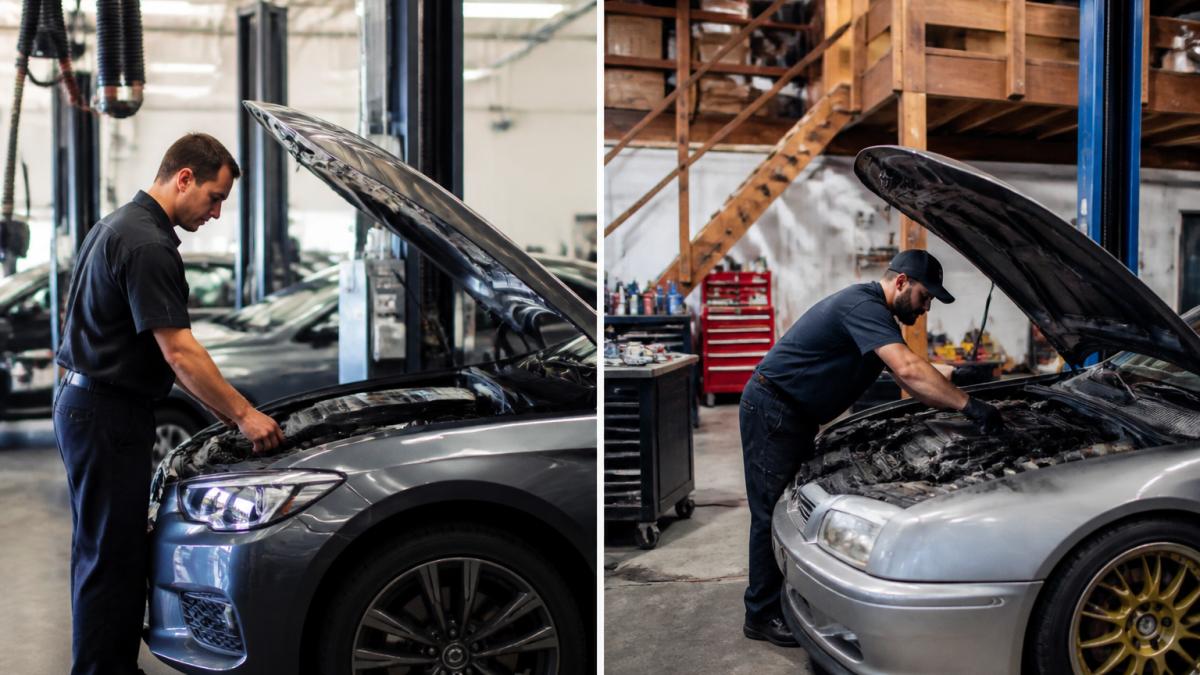
 comparison
Dealership vs Independent Mechanic for Lexus
Table of Contents
- Dealership vs Independent Mechanic: The Core Differences
- Cost Comparison: Dealer vs Independent Shop
- Warranty Coverage and the Magnuson-Moss Warranty Act
- Aftermarket vs OEM Parts: What Your Lexus Actually Needs
- Lexus Scheduled Maintenance Cost: Budgeting Over Time
- Expertise, Diagnostics, and Technical Service Bulletins
- Which Option Is Right for You? A Tiered Maintenance Strategy
- Frequently Asked Questions
Last Updated: September 30, 2026
Dealership vs Independent Mechanic: The Core Differences
When your Lexus needs service, you face a choice in the dealership vs independent mechanic decision: an authorized dealership or a specialized independent mechanic. Both have genuine advantages but operate under different business models. Dealerships employ factory-trained technicians working to manufacturer specifications; independent shops build deep platform expertise with lower overhead. The core difference is standardization versus specialization. Your choice depends on warranty status, repair complexity, budget, and whether you value personalized attention.
Cost Comparison: Dealer vs Independent Shop
Dealership service centers typically charge higher labor rates than independent shops, reflecting their overhead: factory training, diagnostic equipment, and corporate infrastructure. Independent shops offer competitive pricing because lower overhead translates directly to lower invoice rates. For routine maintenance, this difference compounds quickly.
Dealerships use OEM parts exclusively, which cost more than aftermarket alternatives. Independent shops can recommend high-quality aftermarket components for non-critical repairs, further reducing costs. Such price disparities extend beyond routine mechanical maintenance to include the significant variation in dealership key costs when compared to specialized mobile services.
Warranty Coverage and the Magnuson-Moss Warranty Act
The Magnuson-Moss Warranty Act, federal law governing consumer product warranties, protects you: a manufacturer cannot void your warranty simply because you service your vehicle at an independent shop. Your Lexus factory warranty remains valid if the mechanic performs work meeting manufacturer specifications.
The dealership must prove the independent shop's work caused the failure to deny a warranty claim.
Aftermarket vs OEM Parts: What Your Lexus Actually Needs
OEM parts are engineered to exact factory specifications for your vehicle model and carry manufacturer backing. For critical systems, engine, transmission, brakes, electronics, OEM parts are the safer choice. Aftermarket parts range widely in quality; high-quality aftermarket options often perform identically to OEM parts at lower cost for wear items.
Lexus Scheduled Maintenance Cost: Budgeting Over Time
Lexus recommends maintenance at regular intervals including oil changes, fluid inspections, brake inspections, tire rotation, filter replacements, and transmission fluid service. Dealership visits typically cost more than independent shop work. The dealership advantage emerges for warranty-covered repairs or complex electronic diagnostics. For straightforward scheduled maintenance, an independent shop with Lexus expertise offers identical results at lower cost.
Expertise, Diagnostics, and Technical Service Bulletins
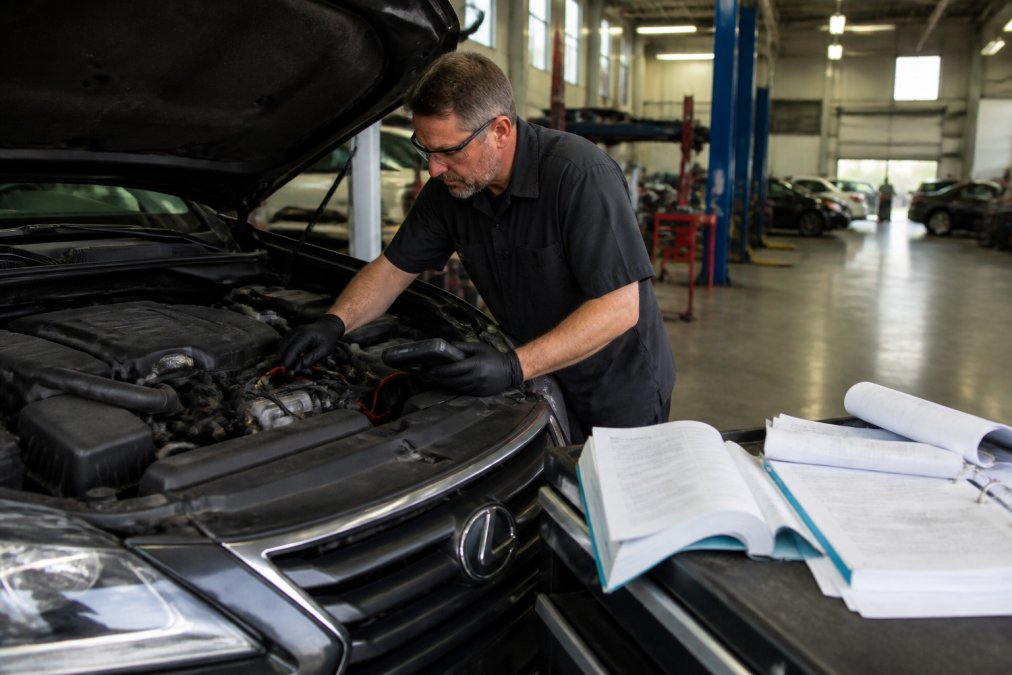
Ask these questions before committing to an independent shop: (1) Do you subscribe to Lexus technical service bulletins? (2) What diagnostic equipment do you use, Snap-on, Matco, or OEM-level tools? (3) How many Lexus vehicles have you serviced in the past year? (4) Are your technicians ASE-certified with Lexus-specific training? (5) Can you show examples of complex Lexus repairs completed? (6) What's your warranty on diagnostic work? (7) Do you maintain digital service records I can access? A capable shop will have subscription access to manufacturer databases, Lexus-specific equipment, certified technicians, case studies, diagnostic warranties, and digital record-keeping.
Which Option Is Right for You? A Tiered Maintenance Strategy
Your decision should not be binary. The most cost-effective and reliable approach is a tiered strategy: use each option for the work it handles best. This framework lets you capture the benefits of both while minimizing costs and warranty risk.
Tier 1: Dealership-Only Work
These services must go to an authorized Lexus dealership:
- Recall campaigns and technical service bulletins. Only dealerships can officially perform recalls and have that work count toward your warranty obligations. If a manufacturer issues a recall, an independent shop cannot perform it and have it satisfy the recall requirement.
- Warranty repairs under factory coverage. If your vehicle is under the factory warranty and you need a covered repair, use the dealership. This eliminates any ambiguity about warranty validity, even though the Magnuson-Moss Act technically protects you at independent shops.
- Complex electronic diagnostics and software updates. Hybrid system issues, transmission control module reprogramming, infotainment system updates, and advanced driver assistance system (ADAS) calibration require dealership-level equipment and training.
- Engine or transmission work on vehicles under 60,000 miles. These are the most expensive potential failures. On newer vehicles still under powertrain warranty, keep this work at the dealership to preserve coverage without any risk.
Tier 2: Independent Shop Work (Routine Maintenance)
- Oil and filter changes. This is the most frequent service. Routine oil changes at an independent shop can offer savings on labor compared to dealership rates.
- Brake service (pads, rotors, fluid). Brake work is mechanical and standardized. An independent shop can perform brake service to the same standard as a dealership at lower cost.
- Tire rotation, alignment, and replacement. These services don't require Lexus-specific knowledge. Any competent shop can handle them.
- Fluid top-offs and inspections. Coolant, transmission fluid, power steering fluid checks and top-offs are straightforward and don't require dealership access.
- Air filter and cabin filter replacements. These are wear items with no warranty implications.
- Wiper blade and battery replacement. Basic consumables that any shop can handle.
- Suspension and steering component replacement (struts, control arms, tie rods). These are mechanical repairs where an independent shop with good diagnostic equipment can match dealership quality at lower cost.
Tier 3: Hybrid Approach (Complex Mechanical Work)
- If your vehicle is under 60,000 miles and still under powertrain warranty: Use the dealership to preserve coverage.
- If your vehicle is over 60,000 miles or out of warranty: Use an independent shop if they have Lexus specialization and can clearly explain the diagnosis. Examples include transmission fluid service, coolant system flushes, and suspension overhauls.
- If the repair involves both mechanical and electronic components (like hybrid battery diagnostics or transmission control issues): Start with the dealership for diagnosis, then get a second opinion from an independent shop if the cost seems high. The dealership's diagnostic report will give the independent shop the information they need to verify the diagnosis.
Implementation: How to Track Service Records Across Both Options
-
Request digital records from every service. Whether you use a dealership or independent shop, ask for a digital copy of the service record (PDF or email). This should include date, mileage, work performed, parts used, and technician name.
-
Maintain a master service log. Create a simple spreadsheet or use a vehicle maintenance app (like aCar, Fuelly, or your vehicle manufacturer's app if available) that consolidates all service records in one place. Include dealership work and independent shop work side by side.
-
Provide this consolidated record to future buyers. When you sell or trade in your vehicle, having a complete, organized service history, even if it spans multiple shops, proves you maintained the vehicle properly. This documentation is worth hundreds or thousands in resale value because it demonstrates consistent maintenance regardless of where the work was performed.
-
Keep physical copies of major repairs. For any repair over $500, print and file the service receipt. This protects you if a warranty dispute arises years later.
Real-World Example: A Five-Year Maintenance Timeline
- Year 1-3 (Under warranty): Oil changes and routine maintenance at independent shop. Any warranty repairs or recalls at dealership.
- Year 3-5 (Warranty expiring): Continue routine maintenance at independent shop. For any diagnostic work on electronic systems, get a dealership diagnosis first, then have the independent shop perform the repair if it's mechanical in nature.
- Year 5+ (Out of warranty): Routine maintenance and mechanical repairs at independent shop. Return to dealership only for complex electronic issues or if you're troubleshooting an intermittent problem that requires factory diagnostic software.
Frequently Asked Questions
Does using an independent mechanic void my Lexus warranty?
Not automatically. The Magnuson-Moss Warranty Act protects your right to service your vehicle at independent shops without losing warranty coverage. However, if a dealership can prove the independent repair caused the issue you're claiming under warranty, they may deny that specific claim. Keep detailed service records and use quality parts to protect yourself. Warranty claims for manufacturer defects remain valid regardless of where routine maintenance occurs.
What's the real difference in labor rates between a dealership and an independent mechanic?
Dealerships typically charge higher labor rates due to overhead costs and specialized equipment. Independent shops generally operate with lower overhead, allowing more competitive pricing for the same quality of work. However, the difference varies by shop and complexity of the repair. For scheduled maintenance on out-of-warranty vehicles, independent specialists often provide significant savings without sacrificing quality.
Can an independent mechanic handle my Lexus's diagnostic issues as well as the dealership?
Experienced independent specialists can handle many diagnostic issues. Many use advanced diagnostic tools and have deep knowledge of Lexus-specific problems. The key difference is access to proprietary software updates and manufacturer technical service bulletins. For complex electronic issues or recalls, dealerships have advantages. For preventative maintenance and routine repairs, a reputable independent shop with Lexus expertise can deliver equally reliable results.
How long does maintenance typically take at an independent shop versus a dealership?
Independent shops can often complete scheduled maintenance efficiently. Dealerships may have longer wait times and scheduling delays. For straightforward maintenance like fluid changes and brake inspections, expect quicker turnaround at independent facilities. Specialized diagnostics or complex repairs may take similar time at either location, depending on the issue's complexity and parts availability.
If you're in the Denver Metro area and drive a Lexus, Speedy Roo Motorsports specializes in Japanese vehicle maintenance and repair with over two decades of experience. We handle everything from routine scheduled maintenance to complex diagnostics, and we're transparent about what your vehicle actually needs. Contact us for a consultation, we'll help you build a maintenance strategy that keeps your Lexus running reliably while respecting your budget.